
Comparison
Calabrian chili vs habanero: which is hotter?
Not close: the Yucatan habanero (Capsicum chinense, 100,000 to 350,000 Scoville, 9/10) is far hotter than Calabrian chili (6/10). But heat isn't the only axis. Calabrian is a briny, smoky everyday cooking chili; habanero is a fierce, fruity finisher of apricot and mango. Cook with Calabrian, season carefully with habanero.
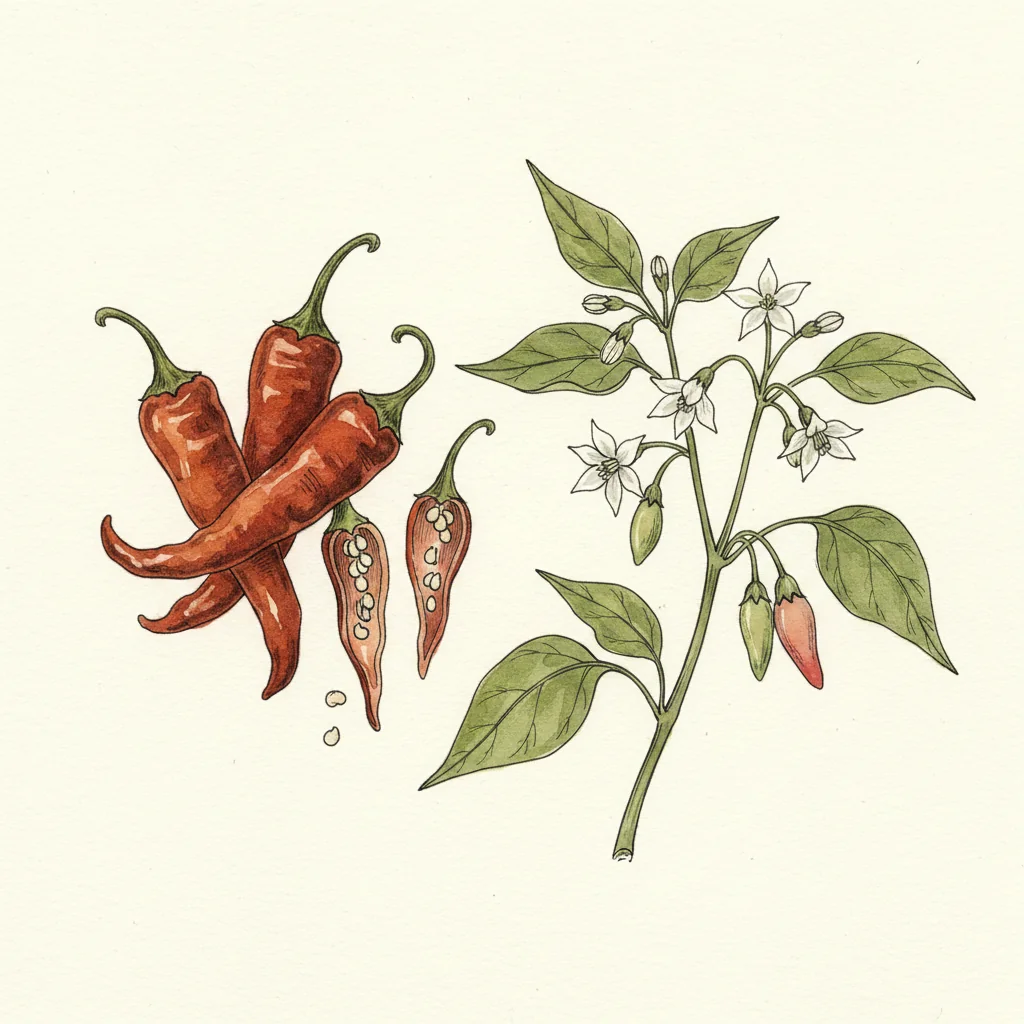
Spice · Chile
Calabrian Chili
Calabria — Diamante (Riviera dei Cedri) and the province of Cosenza, Italy
ripe-fruit heat · sun-dried tomato · smoky char
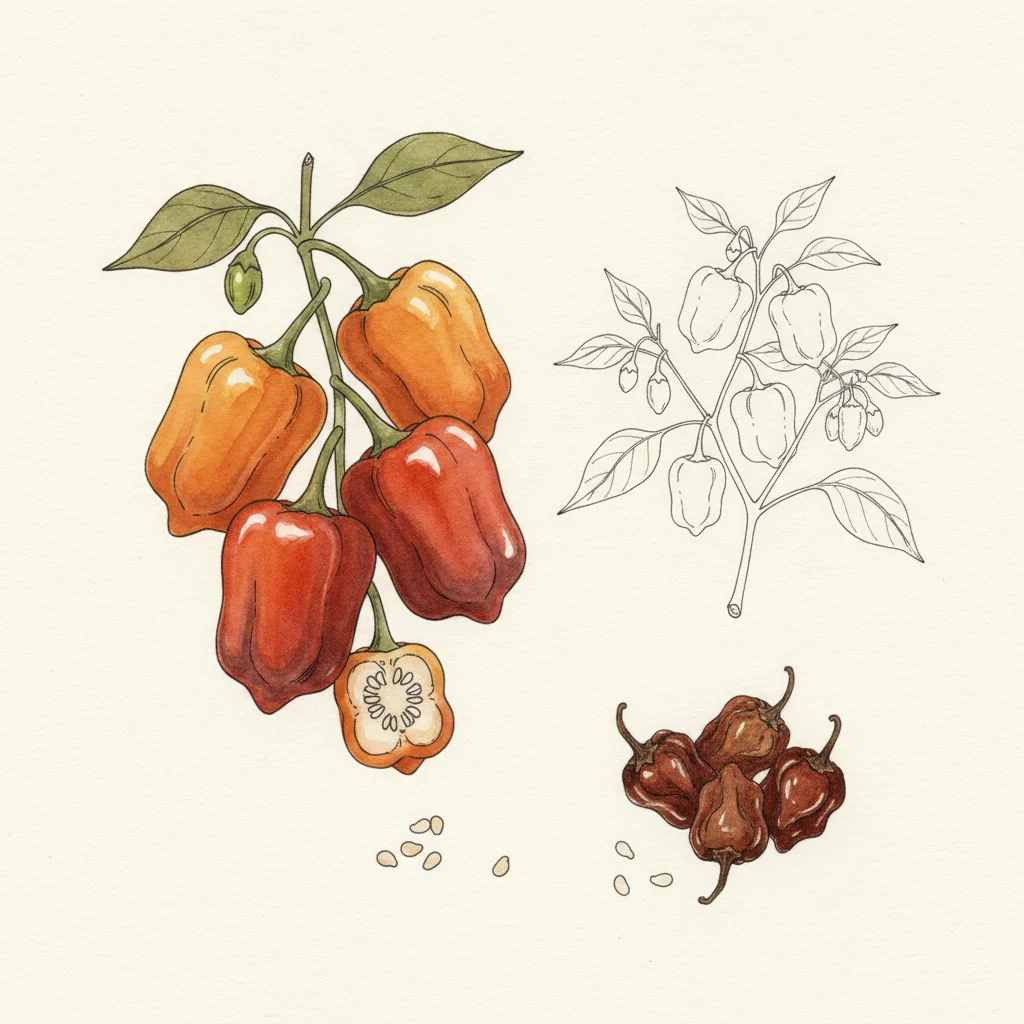
Spice · Chile
Yucatán Habanero
Yucatán Peninsula (Yucatán, Campeche, Quintana Roo), Mexico (PDO (Habanero de la Península de Yucatán, 2010))
intense fruity-floral · ripe apricot · green mango
Our verdict
Habanero is far hotter; Calabrian is the everyday cooking chili.
At a glance
| Criterion | Calabrian Chili | Yucatán Habanero |
|---|---|---|
| Origin | Calabria, Italy (Diamante, Cosenza) | Yucatan Peninsula, Mexico (PDO since 2010) |
| Species | Capsicum annuum | Capsicum chinense |
| Flavor profile | Ripe-fruit heat, sun-dried tomato, smoky char, briny | Intense fruity-floral, ripe apricot, green mango, orange blossom |
| Intensity | 6/10, building, never one-note fire | 9/10, 100,000 to 350,000 Scoville |
| Best use | Aglio e olio, arrabbiata, hot chicken, steak, greens | Salsa habanera, cochinita pibil, ceviche, hot sauce |
| Handling | No special care | Gloves non-negotiable; a quarter of one chile feeds four |
| Median price | ~$10 / 10 oz jar in oil | ~$9 / 2 oz dried whole pods |
When to choose Calabrian Chili
Calabrian chili is the everyday cooking chili, and you choose it when you want real, manageable heat you can build a dish around. Grown around Diamante and across Cosenza, you meet it as dried peperoncino flakes or the more common jar of crushed pods packed in olive oil with salt and vinegar. It carries a fruity, sun-dried-tomato warmth and a smoky, briny edge, with a building heat around 6 out of 10, hot enough to matter but nowhere near the habanero's fierce burn. This is a chili you cook with daily, not one you handle with gloves. Four scenarios where Calabrian wins over habanero. First, spaghetti aglio e olio and arrabbiata, where the crushed-in-oil paste blooms into the fat and becomes the sauce, a habanero here would simply torch the dish. Second, Nashville hot chicken and pizza, where you want a real but eatable burn with a fruity front. Third, grilled or pan-seared steak, where the smoky, briny finish flatters the beef without overwhelming it. Fourth, white beans with sausage and braised greens, where the savory edge carries the whole pot at a heat everyone at the table can handle. The rule: add it early crushed in oil so it blooms into the fat, half a teaspoon of paste per portion to start, or use dried flakes as a finish. Don't reach for it when you specifically want a knockout burn or a tropical-fruit nose, that's habanero's lane. Once opened, refrigerate the oil-packed jar, keep the paste under its oil, use within a couple of months; dried flakes hold about a year. At around $10 a jar, it's a genuine kitchen workhorse. Where this beats habanero: anytime you want heat woven through a dish that the whole family can eat.
When to choose Yucatán Habanero
The Yucatan habanero is the one you choose when you want fierce heat and a tropical-fruit nose, used with respect. It's the signature chile of the Yucatan Peninsula, PDO-protected in Mexico since 2010, known for a Scoville rating of 100,000 to 350,000, a 9 out of 10 that lands far above Calabrian's 6. But the real reason to buy it is aromatic: ripe apricot, mango and orange blossom that arrive before the burn, then a slow heat that spreads across the whole mouth and lingers 5 to 10 minutes. Four scenarios where habanero wins over Calabrian. First, salsa habanera, where its fruity-floral burst is the whole identity of the sauce. Second, cochinita pibil, the classic Yucatecan pairing where its citrus-floral note meets achiote and sour orange. Third, fish ceviche, where a fine mince adds tropical fruit and a clean, fierce heat. Fourth, homemade hot sauce, where roasting then blending rounds off the burn while keeping the apricot-mango aroma. The rule, and the warning: a quarter of one fresh chile seasons a dish for four, and gloves are non-negotiable when you handle it, the capsaicin is fierce. Finely mince it into cold sauces, or roast then blend to tame the heat. Don't put it near anything delicate like subtle raw fish or fresh goat cheese, and don't serve it to guests sensitive to chile heat. Fresh, it keeps a week in the fridge in a kraft-paper bag; dried, an airtight opaque jar holds it up to 18 months; it also freezes whole for 6 months with its heat intact. At around $9 for 2 oz of dried whole pods, a little goes a very long way. Where this beats Calabrian: when you want a chile that's genuinely hot and unmistakably fruity-floral, not a building, everyday warmth but a tropical knockout.
Where to buy?
Calabrian Chili
Links checked on
| Merchant | Price | Action |
|---|---|---|
| Amazon US (TuttoCalabria, crushed, 10 oz) | — | Amazon US (TuttoCalabria, crushed, 10 oz) |
| Burlap & Barrel | — | Burlap & Barrel |
Prices may vary depending on current promotions on the merchant site.
Yucatán Habanero
Links checked on
| Merchant | Price | Action |
|---|---|---|
| Amazon US | — | Amazon US |
| Sonoran Spice | — | Sonoran Spice |
Prices may vary depending on current promotions on the merchant site.
Frequently asked questions
- How much hotter is the habanero?
- Much. The Yucatan habanero runs 100,000 to 350,000 Scoville, a 9 out of 10, while Calabrian sits around a building 6. In practice that's the difference between a chili you cook freely with and one you mince a quarter of, wearing gloves, for four people.
- Can I swap one for the other?
- Not safely without rethinking the dose. A teaspoon of Calabrian and a teaspoon of habanero are worlds apart in heat, and the flavors differ too: Calabrian is briny and smoky, habanero is fruity-floral. If you sub habanero in, use a fraction of the amount.
- Do I really need gloves for habanero?
- Yes, non-negotiable. The capsaicin in a Yucatan habanero is fierce enough to burn your skin and anything you touch afterward, including your eyes. Calabrian needs no special handling. Glove up for the habanero, every time.
- Which has better flavor, not just heat?
- Different flavors, both good. Calabrian brings smoky, briny, sun-dried-tomato depth that flatters savory cooking. Habanero brings an intense apricot-mango-orange-blossom nose that arrives before the burn. Pick by the dish: savory Italian leans Calabrian, tropical Yucatecan leans habanero.
The best pairings
With Calabrian Chili
With Yucatán Habanero
Comparison prepared according to our methodology. Sponsored purchase links — see our affiliations.