
Calabrian Chili (Peperoncino Calabrese) — Capsicum annuum from Diamante and Cosenza, Calabria
In brief — Calabria's working chili, grown around Diamante and across Cosenza on the toe of Italy. You meet it two ways: dried into thin peperoncino flakes, or the more common jar of crushed pods packed in olive oil with a little salt and vinegar. Either form carries a fruity, sun-dried-tomato warmth and a smoky, briny edge, with a real, building heat around 6 out of 10. This is a cooking chili, not a museum piece. In the kitchen, it's best added early when crushed in oil (it blooms into the fat); finishing when dried and flaked and it pairs with spaghetti aglio e olio and pasta arrabbiata, Nashville hot chicken and pizza, roasted broccoli and charred greens. Recommended dosage: half a teaspoon of the crushed-in-oil paste per portion, or a generous pinch of the dried flakes; taste and build, the heat compounds. Expect from $8.00 to $13.00 per 10 oz (285 g) jar, crushed in olive oil (median $10.00).
Origin : Calabria — Diamante (Riviera dei Cedri) and the province of Cosenza, Italy
Capsicum annuum
« A genuinely useful cooking chili: fruity, briny, smoky, with a building heat that flatters pasta, pizza and roast greens. It loses a half point only because the oil-packed jar and the dried flakes behave so differently that buying the wrong one for the job is easy. »
Calabria's working chili, grown around Diamante and across Cosenza on the toe of Italy. You meet it two ways: dried into thin peperoncino flakes, or the more common jar of crushed pods packed in olive oil with a little salt and vinegar. Either form carries a fruity, sun-dried-tomato warmth and a smoky, briny edge, with a real, building heat around 6 out of 10. This is a cooking chili, not a museum piece.
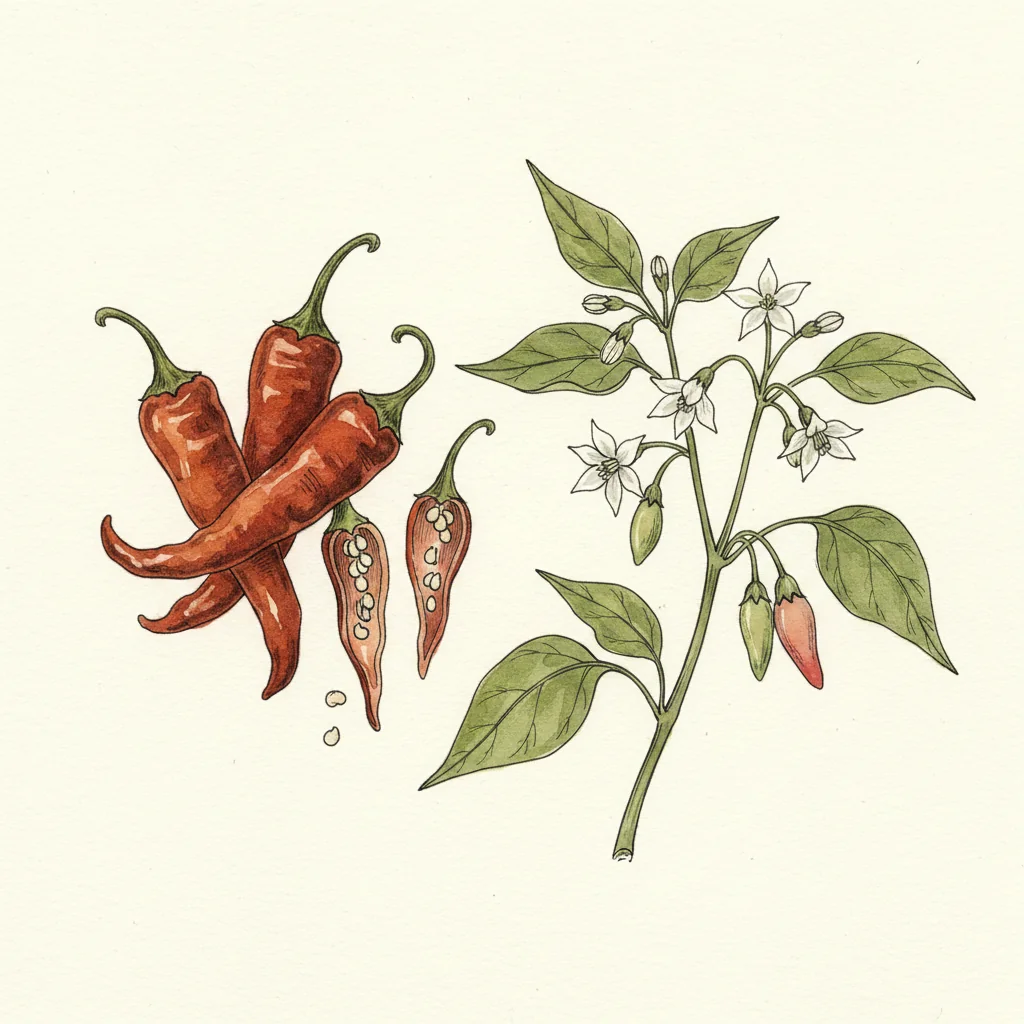
Spice · Chile
Calabrian Chili
Calabria — Diamante (Riviera dei Cedri) and the province of Cosenza, Italy
ripe-fruit heat · sun-dried tomato · smoky char
Aromatic profile
| Family | Capsicum annuum |
|---|---|
| Intensity | ●●●○○ (6/10) |
| Main notes | ripe-fruit heat · sun-dried tomato · smoky char |
| Secondary notes | salty olive brine · vinegar tang · a whisper of bell-pepper sweetness |
| Mouthfeel | a bright, forward heat that hits the front of the tongue fast, fruity and almost wine-like before the burn, never one-note fire |
| Finish length | long, the heat lingering over a savory, slightly smoky finish |
Culinary use
- When to add : early when crushed in oil (it blooms into the fat); finishing when dried and flaked
- Dosage : half a teaspoon of the crushed-in-oil paste per portion, or a generous pinch of the dried flakes; taste and build, the heat compounds
- Ideal pairings : spaghetti aglio e olio and pasta arrabbiata, Nashville hot chicken and pizza, roasted broccoli and charred greens, grilled or pan-seared steak, white beans, sausage and braised greens, vinaigrettes and compound butter
- Avoid with : delicate fish you want to taste cleanly, subtle cream sauces it will overpower, anything where you do not want a savory, briny edge
The grain in detail
Calabrian chili is the everyday heat of southern Italy, a regional Capsicum annuum grown the length of Calabria but most associated with Diamante on the Tyrrhenian coast, which throws a peperoncino festival every September, and the surrounding province of Cosenza. The pods are small, tapered and deep red, and Calabrians have been drying, crushing and preserving them for generations as the cheap, reliable way to carry summer heat through the year. You buy it in two real forms, and they are not interchangeable. The dried version is milled into fine peperoncino flakes, the same stuff scattered over pizza and stirred into aglio e olio. The more recognizable export, the one most American cooks mean when they say Calabrian chili, is the jar: ripe pods crushed to a coarse paste and packed in olive oil with salt and a touch of vinegar. That oil-packed form is the canonical product, and TuttoCalabria, making it in Calabria since 1970, is the jar you will see most often on a US shelf. The crushed-in-oil paste reads differently from a dry flake: brinier, tangier, with a sun-dried-tomato fruit and a faint smoky char, because it ferments and matures a little in the jar. The heat sits around 6 out of 10, a genuine, building warmth that lands at the front of the tongue, well above an Aleppo flake but a long way short of a bird's-eye or a habanero. Calabrian chili gained EU protection in February 2026, when the European Commission approved the Peperoncino di Calabria PGI — origin still matters: read the label and confirm the peppers were grown and packed in Calabria, not just blended under a Calabrian name. Unlike a finishing salt or a smoked salt, you cook this one. Crushed in oil, it blooms into the fat early in the pan and seasons the whole dish; the dried flakes you can scatter late. Either way, taste and build, because the heat compounds as it sits.
History & origin
Chili reached Calabria from the Americas via Spanish trade in the 16th century and took to the warm, dry coast so completely it became regional identity. Diamante, on the Riviera dei Cedri, anchors the cult with its annual Peperoncino Festival, drawing crowds every September, and the Accademia Italiana del Peperoncino is based there. Calabria's poorer southern economy leaned on the chili as a cheap preservative and flavor source, and the oil-packed crushed jar became the canonical preserved form. TuttoCalabria has produced it in the region since 1970. In February 2026 the European Commission approved the Peperoncino di Calabria PGI, giving the chili EU-protected status.
Provenance & authenticity
What sets the real thing apart — appellation, species and verification cues.
- Protected appellation
- IGP/PGI
- Register : EU (Peperoncino di Calabria PGI, approved Feb 2026)
- Year : 2026
- Authority : European Commission / MASAF (Italy)
- Species
- Capsicum annuum
How to verify the real one
- Calabrian Capsicum annuum (Diamante/Cosenza)
- sold strung in chains, whole or flaked
- PGI Peperoncino di Calabria label (approved Feb 2026)
Indicative price
Reference format : 10 oz (285 g) jar, crushed in olive oil — from $8.00 to $13.00 (median : $10.00).
Storage
The oil-packed jar keeps unopened in the pantry; once opened, refrigerate, keep the paste submerged under its oil to seal out air, and use within a couple of months. Dried flakes go in an airtight, opaque jar away from light and heat, where they hold for about a year before the fruit fades to a flat, dusty burn.
Where to buy?
Where to buy it
Links checked on
| Merchant | Price | Action |
|---|---|---|
| Amazon US (TuttoCalabria, crushed, 10 oz) | — | Amazon US (TuttoCalabria, crushed, 10 oz) |
| Burlap & Barrel | — | Burlap & Barrel |
Prices may vary depending on current promotions on the merchant site.
Alternatives if unavailable
Tags
- Italy
- Calabria
- Diamante
- Cosenza
- peperoncino
- Capsicum annuum
- crushed in oil
- TuttoCalabria
Frequently asked questions
- How do you store Calabrian Chili?
- The oil-packed jar keeps unopened in the pantry; once opened, refrigerate, keep the paste submerged under its oil to seal out air, and use within a couple of months. Dried flakes go in an airtight, opaque jar away from light and heat, where they hold for about a year before the fruit fades to a flat, dusty burn.
- What dosage for Calabrian Chili?
- half a teaspoon of the crushed-in-oil paste per portion, or a generous pinch of the dried flakes; taste and build, the heat compounds
- When should you add Calabrian Chili in cooking?
- It's best used early when crushed in oil (it blooms into the fat); finishing when dried and flaked.
- What should you avoid pairing Calabrian Chili with?
- Avoid with: delicate fish you want to taste cleanly, subtle cream sauces it will overpower, anything where you do not want a savory, briny edge.
Go further
The dishes where this calabrian chili shines
Also a recommended alternative for
As a complementary pairing with
See every dish where this product is mentioned →
Other spices to discover
Featured in these gift sets
Page prepared according to our methodology. Purchase links marked sponsored and liable to earn a commission — details on our Affiliations page.