
Comparison
Cubeb vs voatsiperifery pepper: what's the difference?
Both keep a little tail, both are resinous — but they part on flavor and timing. Cubeb is a cool eucalyptus-and-camphor pepper from Indonesia, added late to spiced braises, ras el hanout and mulled wine. Voatsiperifery is a wild Madagascar vine pepper, woody and citrus-floral, a finishing crack for game and dark chocolate. Cubeb for camphor depth, voatsiperifery for woody perfume.
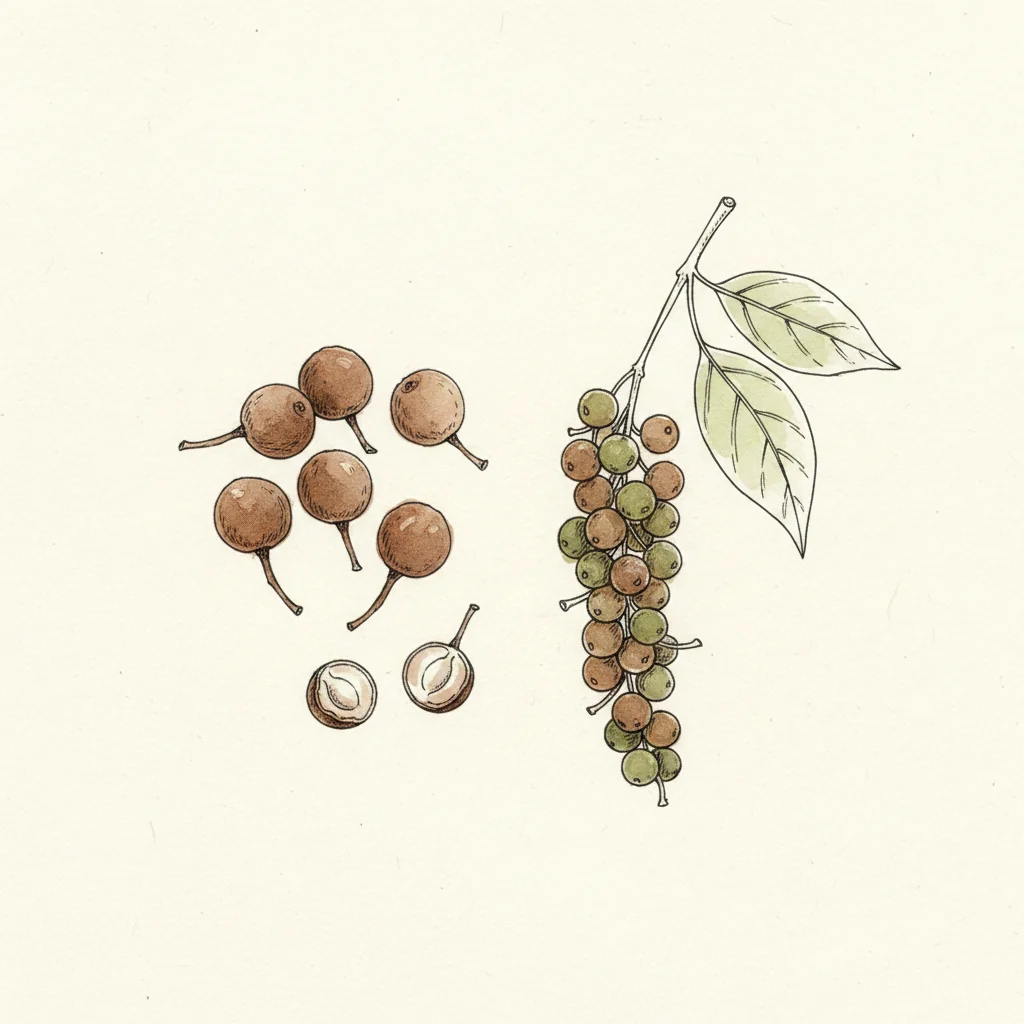
Pepper · Tailed pepper
Cubeb Pepper
Java highlands and the plateaus of Sumatra, Indonesia
eucalyptus · soft camphor · fresh nutmeg
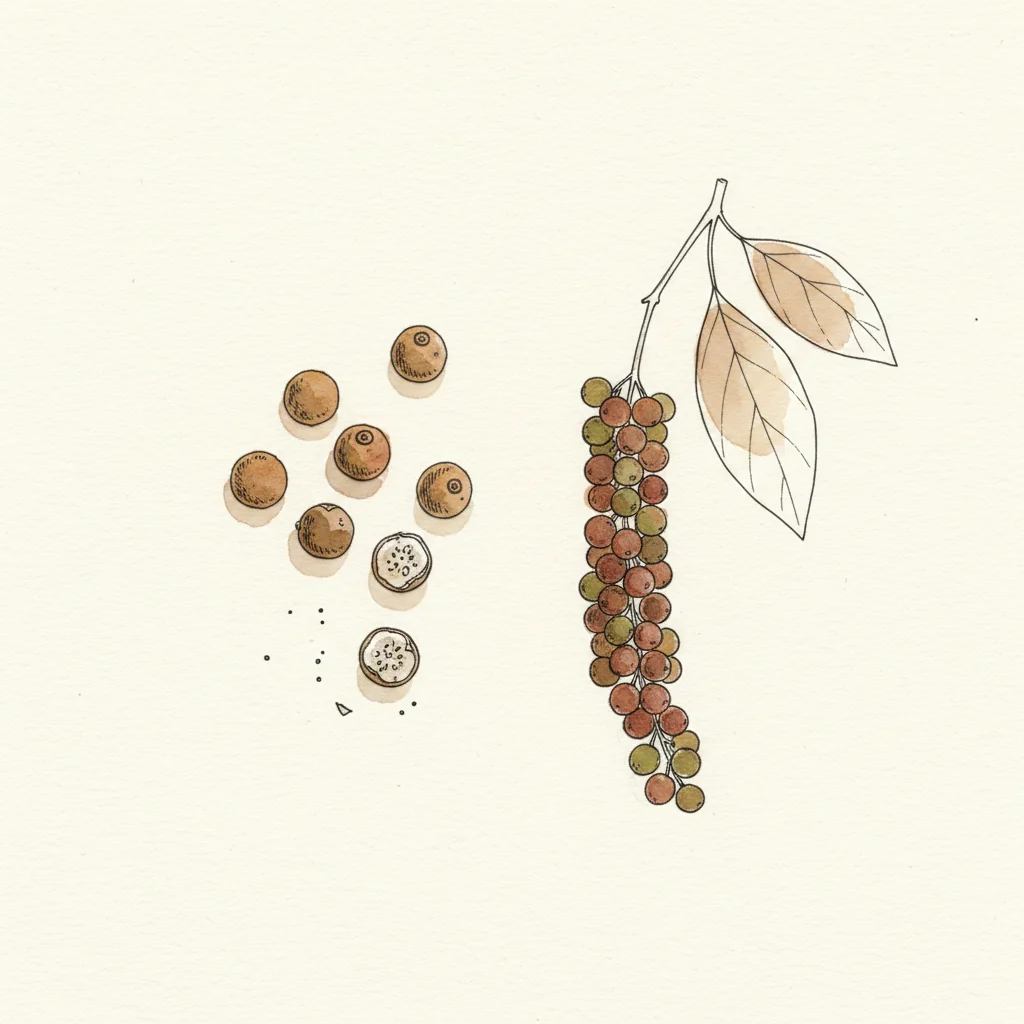
Pepper · Black pepper
Voatsiperifery Pepper
East-coast rainforest, Manakara and Mananjary districts, Madagascar
precious wood · fresh citrus · wild flowers
Our verdict
Cubeb for camphor-spiced braises, voatsiperifery to finish game and chocolate.
At a glance
| Criterion | Cubeb Pepper | Voatsiperifery Pepper |
|---|---|---|
| Origin | Indonesia, Java & Sumatra (Piper cubeba) | Madagascar east-coast rainforest (Piper borbonense) |
| Harvest | Cultivated, tailed berries | Entirely wild-harvested forest vine, tiny stem on each berry |
| Flavor | Eucalyptus, soft camphor, fresh nutmeg, pine resin | Precious wood, fresh citrus, wild flowers, amber honey |
| Sensation | Warm dry pungency, medicinal camphor coolness | Moderate, almost perfumed heat, light resinous edge |
| Intensity | 7/10 — long resinous, menthol finish | 7/10 — woody finish holds nearly a minute |
| When to add | End of cooking, or steeped whole | Finishing, off the heat at the very end |
| Best use | Lamb tagine, braised game, ras el hanout, mulled wine | Game, seared duck, dark chocolate, tarte tatin |
| Price | ~$9.50 / 50g | ~$11 / 20g — a splurge |
When to choose Cubeb Pepper
Reach for cubeb when you want a cool, medicinal, eucalyptus-and-camphor depth in a spiced braise or a winter pot. Cubeb is the pepper with a tail: each dried berry keeps its little stalk, which is how you spot the real thing. The flavor is unmistakable — eucalyptus, soft camphor and fresh nutmeg over pine resin and a cool turpentine edge, a warm dry pungency carrying an almost medicinal camphor coolness on the back of the palate, with a very long resinous finish that lingers like menthol, around 7 out of 10. This is the pepper that built medieval European and Moroccan cooking, and it still belongs in lamb tagine, braised game, duck marinades, homemade ras el hanout, mulled wine and winter pâtés. Add it at the end of cooking, one to two whole berries steeped, or a little freshly ground added late, so the volatile camphor doesn't cook flat. Keep it off raw fish and delicate crudo, where the medicinal note dominates, out of anything already heavily spiced, and away from fresh fruit desserts. Store the berries whole with their tails intact in an airtight opaque jar, grinding only when you need them; it holds its intensity about 18 months. At about $9 for 50g, with a few berries going a long way, it's an affordable and distinctive pepper. Between the two, cubeb is the cooler, more camphorous, more affordable one, and crucially it works in the cook — steeped or ground into a braise or a mulled-wine pot — where voatsiperifery is a raw finisher. If your dish is a spiced, wintery, slow-cooked thing and you want that eucalyptus-nutmeg backbone, cubeb is the grain. It's also the better value of the pair by a wide margin per gram.
When to choose Voatsiperifery Pepper
Reach for voatsiperifery when you want a rare, woody, citrus-floral perfume to crown a finished plate. Voatsiperifery is one of the only peppers still harvested entirely wild: a forest vine, Piper borbonense, that climbs Madagascar's east-coast rainforest around Manakara and Mananjary, and you spot the real thing by the tiny stem left on each berry. The flavor is precious wood, fresh citrus and wild flowers over pine resin and amber honey, a moderate, almost perfumed heat with a light resinous edge rather than a sharp bite, and a very long woody finish that holds for the better part of a minute, around 7 out of 10. It's a finishing pepper, full stop: crush two or three berries coarse in a mortar and add them off the heat at the very end, over game and venison, seared duck breast, dark-chocolate ganache, roasted tropical fruit, grilled lobster and apple tarte tatin. Keep it out of long braises and slow cooking, where the volatile aromatics cook off, out of long marinades where the perfume fades before it works, and away from anything already resinous like a juniper cure, where the notes collide. Store it in an airtight opaque jar, dry and out of the light, keeping the little stems intact, and use it within 18 months since the resinous aromatics fade with age. At about $11 for 20 grams it's a genuine splurge — far pricier per gram than cubeb — but a singular one, because nothing else gives that wild, woody-floral, minute-long finish. Against cubeb, voatsiperifery is the more aromatic, more expensive, raw-finishing choice. If you're crowning a seared duck breast, a venison dish or a dark-chocolate dessert and you want a perfume people remember, this is the grain. Just don't waste it in the cook, where its whole reason for existing burns off.
Where to buy?
Cubeb Pepper
Links checked on
| Merchant | Price | Action |
|---|---|---|
| Amazon US | — | Amazon US |
| Sous Chef UK | — | Sous Chef UK |
Prices may vary depending on current promotions on the merchant site.
Voatsiperifery Pepper
Links checked on
| Merchant | Price | Action |
|---|---|---|
| Amazon US | — | Amazon US |
| World Spice | — | World Spice |
| Sous Chef UK | — | Sous Chef UK |
Prices may vary depending on current promotions on the merchant site.
Frequently asked questions
- How do I tell real cubeb and voatsiperifery from fakes?
- Both keep a tiny tail or stem on each berry — that's the tell. Cubeb's stalk is a clear little tail; voatsiperifery shows a tiny stem from being hand-harvested wild. If the berries are clean and stemless, you may be looking at a substitute.
- Can I cook with voatsiperifery like cubeb?
- No. Cubeb survives a braise or a mulled-wine pot added late; voatsiperifery's wild, woody-floral aromatics are volatile and burn off in long cooking. Voatsiperifery is a raw finisher, crushed over the plate off the heat. Use cubeb for the actual cooking.
- Which is better value?
- Cubeb, by a wide margin — about $9.50 for 50g versus roughly $11 for just 20g of voatsiperifery. Voatsiperifery is wild-harvested and rare, so it's a splurge. Cubeb is the everyday pepper of the two; voatsiperifery is the occasional flourish.
- Are these interchangeable in ras el hanout?
- Cubeb belongs in ras el hanout — it's a classic component, cool and camphorous. Voatsiperifery's pricier, raw-finishing profile is wasted ground into a blend that gets cooked. For a homemade ras el hanout, reach for cubeb.
The best pairings
With Cubeb Pepper
With Voatsiperifery Pepper
Comparison prepared according to our methodology. Sponsored purchase links — see our affiliations.