
Cubeb Pepper (Java & Sumatra, Indonesia)
In brief — Cubeb is the pepper with a tail. Each dried berry keeps its little stalk, which is how you spot the real thing. The flavor is unmistakable: eucalyptus, camphor, fresh nutmeg, with a cool resinous edge no black pepper has. This is the pepper that built medieval European and Moroccan cooking. About $9 for 50g, and a few berries go a long way. Its aromatic profile develops notes of eucalyptus, soft camphor, fresh nutmeg, extended by pine resin and cool turpentine edge, for an intensity of 7/10. On the palate, it offers a warm, dry pungency carrying an almost medicinal camphor coolness on the back of the palate, with a very long finish, a resinous finish that lingers like menthol. In the kitchen, it's best added at the end of cooking and it pairs with lamb tagine, braised game, duck marinades. Recommended dosage: 1 to 2 whole berries steeped, or a little freshly ground, added late. Expect from $7.00 to $13.00 per 50g (median $9.50).
Origin : Java highlands and the plateaus of Sumatra, Indonesia
Piper cubeba
« A pepper that tastes like nothing else: eucalyptus and camphor over fresh nutmeg. Brilliant on slow lamb and in real ras el hanout, but its medicinal cool edge divides the table. Use sparingly. »
Cubeb is the pepper with a tail. Each dried berry keeps its little stalk, which is how you spot the real thing. The flavor is unmistakable: eucalyptus, camphor, fresh nutmeg, with a cool resinous edge no black pepper has. This is the pepper that built medieval European and Moroccan cooking. About $9 for 50g, and a few berries go a long way.
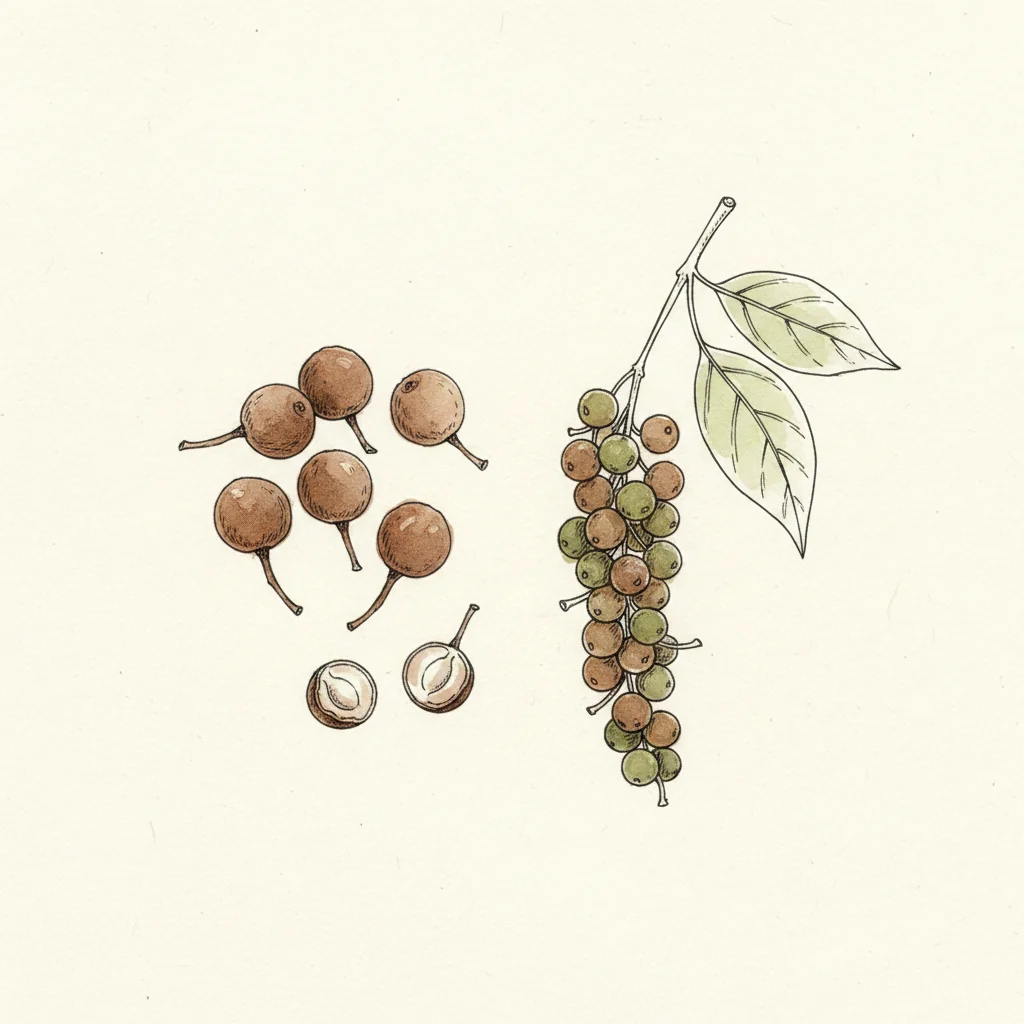
Pepper · Tailed pepper
Cubeb Pepper
Java highlands and the plateaus of Sumatra, Indonesia
eucalyptus · soft camphor · fresh nutmeg
Aromatic profile
| Family | Piper cubeba |
|---|---|
| Intensity | ●●●●○ (7/10) |
| Main notes | eucalyptus · soft camphor · fresh nutmeg |
| Secondary notes | pine resin · cool turpentine edge |
| Mouthfeel | a warm, dry pungency carrying an almost medicinal camphor coolness on the back of the palate |
| Finish length | very long, with a resinous finish that lingers like menthol |
Culinary use
- When to add : end of cooking
- Dosage : 1 to 2 whole berries steeped, or a little freshly ground, added late
- Ideal pairings : lamb tagine, braised game, duck marinades, homemade ras el hanout, mulled wine, winter pâtés
- Avoid with : raw fish and delicate crudo, anything already heavily spiced, fresh fruit desserts
The grain in detail
Cubeb (Piper cubeba) is a tailed pepper, meaning the dried berry holds onto its thin stalk, the detail that tells you it has not been swapped for cheaper black pepper. It grows on the highlands of Java and the plateaus of Sumatra, and through the Middle Ages it was one of the most expensive peppers in Europe, carried west by Arab caravans. The nose hits you straight away: eucalyptus, camphor, fresh nutmeg, with a soft pine-resin coolness behind it. That intensity comes from cubebin, an aromatic compound black pepper simply does not carry, so do not expect cubeb to behave like Piper nigrum. The pungency is warm and dry, lifted by a medicinal coolness that catches first-timers off guard. It earns its place on slow-cooked meat: lamb tagine, braised game, long daubes, where the power softens and folds in over hours. It belongs in real Moroccan ras el hanout, the complex blends that can run past two dozen ingredients, and it shows up in medieval European baking. The camphor note also makes it excellent in mulled wine, dropped in whole alongside cinnamon and clove. Buying tip: check that the berries keep their tails, and that they throw off a sharp scent the moment you crush one between your fingers. Cubeb fell out of European kitchens in the nineteenth century, undercut by cheaper Indian black pepper, and has been creeping back since the 2000s through medieval-cooking revivals and contemporary Moroccan chefs. In the US it is a specialty-shop berry rather than a supermarket one; in the UK it turns up at Sous Chef and a few good spice merchants.
History & origin
Cubeb reached Europe by the twelfth century through Venice and Marseille and shows up in nearly every medieval French cookbook, including the Viandier attributed to Taillevent. Marco Polo lists it among the prized spices of Java. In the seventeenth century the Dutch VOC made it a monopoly. Demand collapsed in the nineteenth century against cheap Indian black pepper. Production today stays small and artisanal across Java and Sumatra, kept alive largely by Moroccan and Turkish demand for traditional blends.
Provenance & authenticity
What sets the real thing apart — appellation, species and verification cues.
- Species
- Piper cubeba
How to verify the real one
- Piper cubeba - tailed pepper (visible stalk)
- Java/Sumatra origin
Indicative price
Reference format : 50g — from $7.00 to $13.00 (median : $9.50).
Storage
Airtight opaque jar; holds its intensity about 18 months. Keep the berries whole with their tails intact and grind only when you need them.
Where to buy?
Where to buy it
Links checked on
| Merchant | Price | Action |
|---|---|---|
| Amazon US | — | Amazon US |
| Sous Chef UK | — | Sous Chef UK |
Prices may vary depending on current promotions on the merchant site.
Alternatives if unavailable
Tags
- Indonesia
- Java
- Sumatra
- Piper cubeba
- tailed pepper
- medieval cooking
- ras el hanout
Frequently asked questions
- How do you store Cubeb Pepper?
- Airtight opaque jar; holds its intensity about 18 months. Keep the berries whole with their tails intact and grind only when you need them.
- What dosage for Cubeb Pepper?
- 1 to 2 whole berries steeped, or a little freshly ground, added late
- When should you add Cubeb Pepper in cooking?
- It's best used end of cooking.
- What should you avoid pairing Cubeb Pepper with?
- Avoid with: raw fish and delicate crudo, anything already heavily spiced, fresh fruit desserts.
Go further
The dishes where this cubeb pepper shines
Also a recommended alternative for
As a complementary pairing with
See every dish where this product is mentioned →
Other peppers to discover
Featured in these gift sets
Page prepared according to our methodology. Purchase links marked sponsored and liable to earn a commission — details on our Affiliations page.