
Comparison
Furikake vs tamari: which Japanese seasoning?
Different formats, different jobs. Furikake is a dry sprinkle of nori, sesame and bonito you shower over rice for crunch and umami. Tamari is a wheat-free whole-soy sauce you splash in or dip with for liquid depth. Want texture on top, buy furikake. Want savory body in or on a dish, buy tamari.
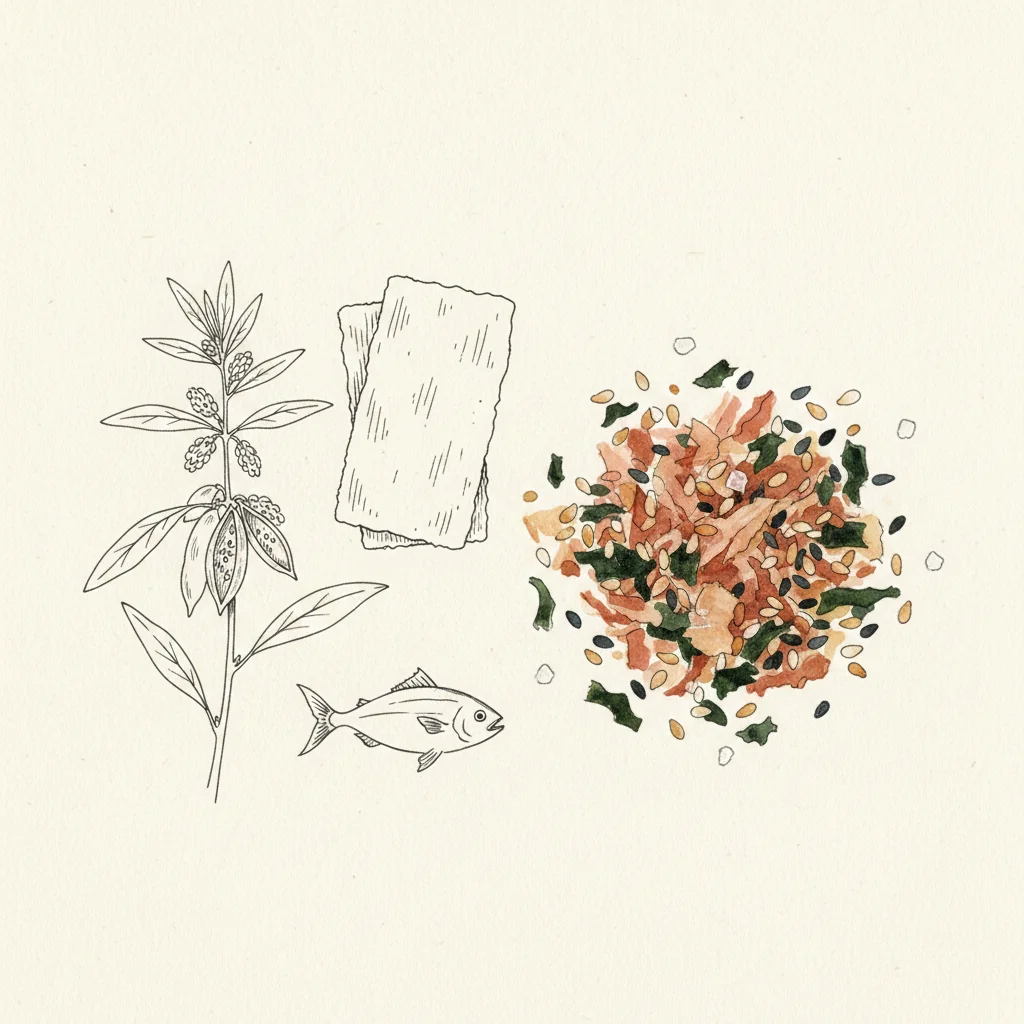
Spice · Blend
Furikake
Kumamoto Prefecture (industrial birthplace, Marumiya 1959) and nationwide, Japan
briny iodine from nori · deep bonito umami · toasted sesame
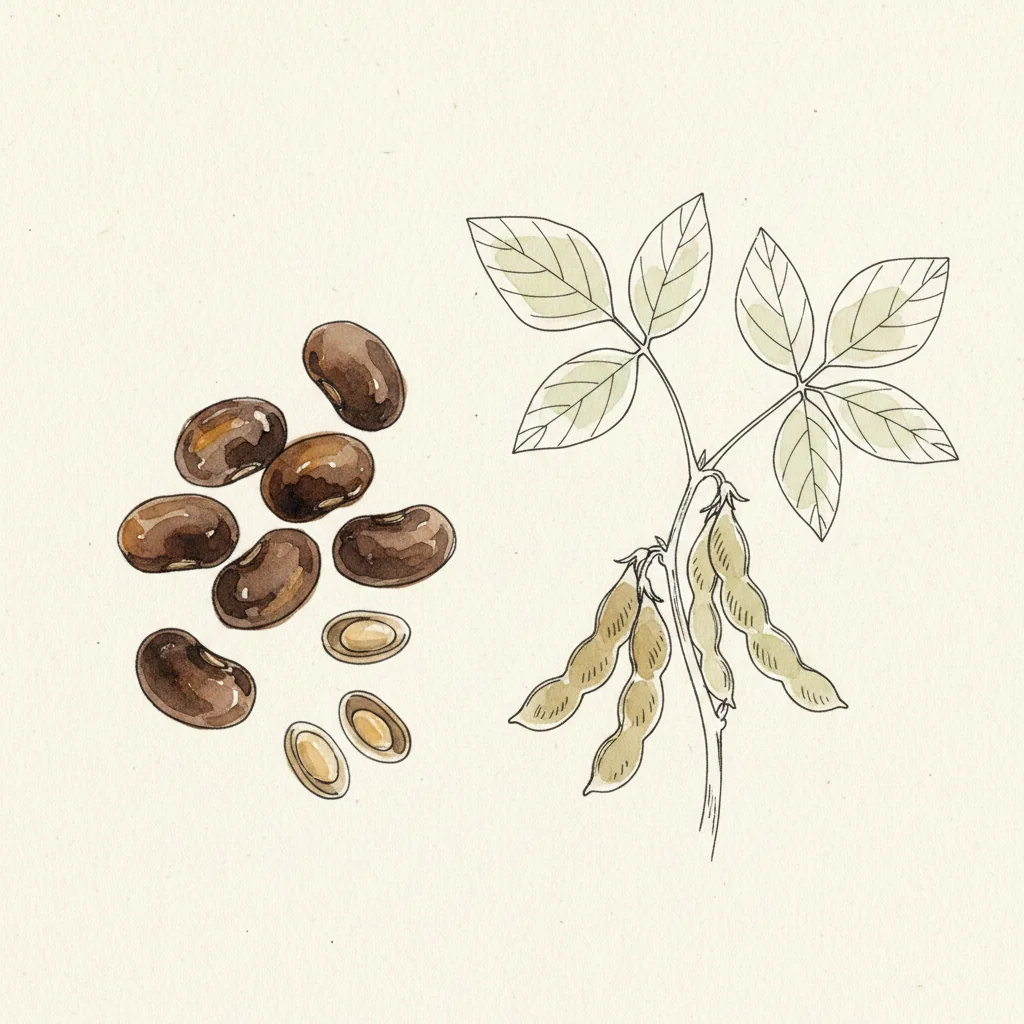
Spice · Oils, vinegars & honeys
Traditional Tamari
Aichi, Gifu and Mie — the Tōkai region around Nagoya, the historic home of whole-soybean (mame) brewing and Hatchō miso, Japan
deep roasted soy · round umami · low bitterness
Our verdict
Furikake for dry crunch on top; tamari for liquid umami depth.
At a glance
| Criterion | Furikake | Traditional Tamari |
|---|---|---|
| Profile | Briny iodine nori, deep bonito umami, toasted sesame | Deep roasted soy, round umami, low bitterness, molasses-dark malt |
| Intensity | 5/10 — salty-umami with sesame crackle, no heat | 8/10 — thicker and silkier than ordinary soy, deeply savory |
| Price | ~$9 for a ~50 g jar | ~$6 for a 10 fl oz / 300 ml bottle |
| Best use | Showered over rice, onigiri, grilled salmon, eggs, popcorn | Sashimi dipping, glazed salmon, stir-fries, roasted mushrooms |
When to choose Furikake
Reach for furikake when a finished dish needs salty-umami crunch scattered on top. It's the Japanese rice seasoning of nori, toasted sesame, dried bonito and salt — industrialized in Kumamoto by Marumiya in 1959, now a nationwide staple. At 5/10 it's salty-umami with the crackle of sesame and no heat at all: briny iodine from the nori, deep bonito savor, toasted seed. Four jobs it owns. First, a bowl of plain white rice, the original and still the best use — it turns a side into a meal. Second, onigiri rice balls, mixed through or pressed on the outside. Third, grilled salmon and scrambled eggs, where the crunch and umami land on soft protein. Fourth, steamed vegetables and, yes, buttered popcorn, where it's quietly brilliant. The technique is one rule: shower it over the plated dish at the last second, never cook it. The nori goes soggy and the sesame loses its crackle in a hot pan — its entire value is dry texture, so it has to stay dry until it hits the plate. The catch is the oily sesame: it goes rancid, so decant into an opaque glass jar after opening and use within about 6 months opened, 12 sealed. A ~50 g jar runs about $9. Keep it off already-briny dishes like raw oysters, where it just piles salt on salt. Furikake is a finisher; it does nothing stirred into a sauce.
When to choose Traditional Tamari
Reach for tamari when you want deep, round soy umami in liquid form — either cooked into a glaze or used raw as a dip. This is traditional whole-soy, wheat-free soy sauce from the Tōkai region around Nagoya, the historic home of mame brewing and Hatchō miso. At 8/10 it's thicker and silkier than ordinary soy sauce, with deep roasted-soy depth, round umami and low bitterness. Four jobs it owns. First, sashimi and sushi dipping, where its body clings to the fish better than thin soy. Second, glazed salmon and seared tuna, brushed on for a savory lacquer. Third, stir-fries and fried rice, splashed in off the heat. Fourth, roasted mushrooms and other umami-forward vegetables. The flexibility is the point: unlike furikake, you can both cook with it and use it raw — splash it in at the end for a glaze or dipping sauce, or off the heat where its body carries a dish. Being wheat-free, it's the soy sauce of choice for gluten-free cooking, and the whole-soybean brew makes it rounder and less sharp than standard shoyu. Buy a 10 fl oz / 300 ml bottle, around $6. Keep it capped in a cool, dark cupboard and refrigerate after opening to hold the aroma and color — naturally brewed tamari keeps a year or more but slowly darkens and flattens once open, so buy a size you'll finish in a few months rather than a giant jug. Where furikake is dry crunch on top, tamari is liquid depth in or on the dish; they're complements, not substitutes.
Where to buy?
Furikake
Links checked on
| Merchant | Price | Action |
|---|---|---|
| Amazon US | — | Amazon US |
| Jacobsen Salt Co. | — | Jacobsen Salt Co. |
| Spicewalla | — | Spicewalla |
Prices may vary depending on current promotions on the merchant site.
Traditional Tamari
Links checked on
| Merchant | Price | Action |
|---|---|---|
| Amazon US | — | Amazon US |
| San-J | — | San-J |
| Sous Chef UK | — | Sous Chef UK |
Prices may vary depending on current promotions on the merchant site.
Frequently asked questions
- Can furikake replace tamari?
- No — one is a dry sprinkle, the other a liquid sauce. Furikake adds crunch and umami on top; tamari adds savory liquid depth in or on a dish. Different formats, different jobs.
- Is tamari just gluten-free soy sauce?
- Essentially yes — it's a wheat-free, whole-soybean brew, which makes it both gluten-free and rounder, silkier and less sharp than standard wheat-based shoyu.
- Why shouldn't I cook furikake?
- Its value is dry texture. In a hot pan the nori goes soggy and the sesame loses its crackle. Shower it over the plated dish at the last second instead.
- Which keeps longer?
- Tamari, a year or more sealed, though it flattens once open. Furikake's oily sesame goes rancid faster — about 6 months opened. Refrigerate both after opening.
The best pairings
With Furikake
With Traditional Tamari
Comparison prepared according to our methodology. Sponsored purchase links — see our affiliations.