
Comparison
Grains of paradise vs cubeb pepper — which to use?
Grains of paradise (Aframomum melegueta, a ginger relative, around $10 a jar) brings bright ginger, cardamom and citrus with no rough bite — for beer, marinades and cakes. Cubeb (Piper cubeba, about $9.50 for 50 g) brings cool eucalyptus and camphor — for tagines, game and ras el hanout. Bright-and-citrus versus cool-and-medicinal.
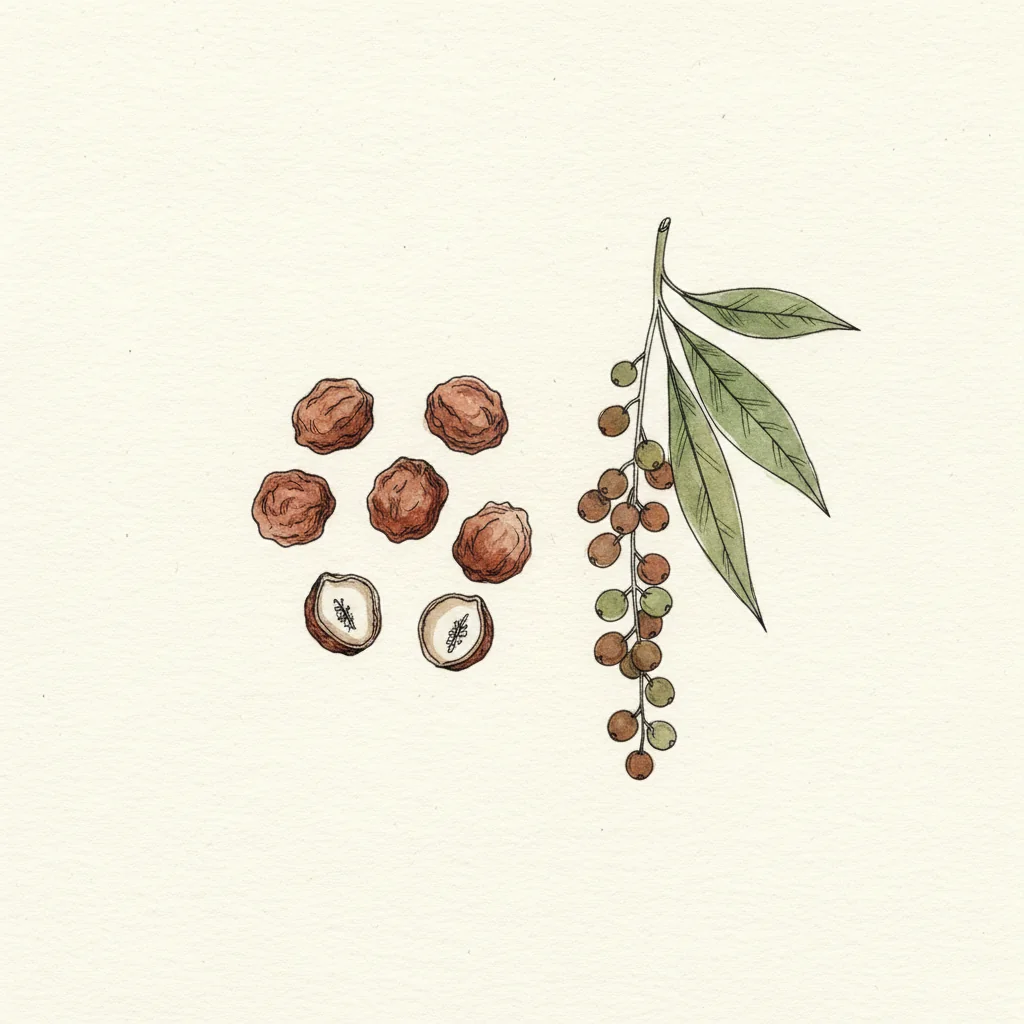
Pepper · Pepper cousin
Grains of Paradise
Gulf of Guinea coast (Ghana, Togo, Liberia, Côte d'Ivoire), Ghana
fresh ginger · green cardamom · citrus peel
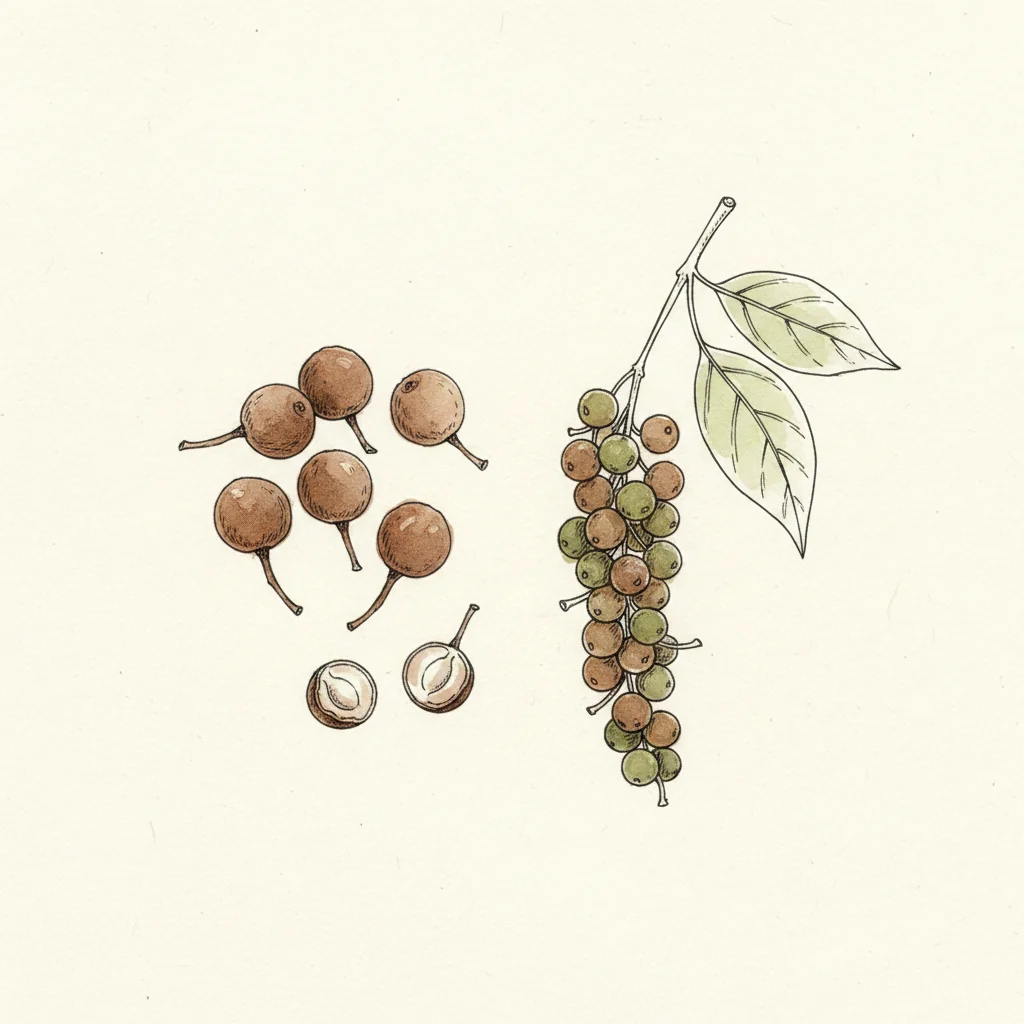
Pepper · Tailed pepper
Cubeb Pepper
Java highlands and the plateaus of Sumatra, Indonesia
eucalyptus · soft camphor · fresh nutmeg
Our verdict
Grains of paradise for bright cardamom in marinades and beer; cubeb for cool camphor in North African dishes and game.
At a glance
| Criterion | Grains of Paradise | Cubeb Pepper |
|---|---|---|
| Botany | Aframomum melegueta, ginger family | Piper cubeba, a true pepper |
| Origin | Ghana, Gulf of Guinea coast | Indonesia, Java and Sumatra highlands |
| Intensity | 7/10 — warm-and-cool, no true pepper bite | 7/10 — warm dry pungency, camphor-cool finish |
| Main notes | Fresh ginger, green cardamom, citrus peel | Eucalyptus, soft camphor, fresh nutmeg |
| Best on | Beer, fish marinades, ras el hanout, cakes | Lamb tagine, braised game, ras el hanout |
| Price | ~$10 / jar | ~$9.50 / 50 g jar |
| Value | Worth it — half a teaspoon per dish for four | Worth it — a few berries go a long way |
When to choose Grains of Paradise
Pick grains of paradise when you want brightness and aroma without burn. It's a ginger relative, not a pepper, and the mouthfeel is warm-and-cool at once, faintly camphor-like, with none of the bite of true black pepper — fresh ginger, green cardamom and citrus peel over orange blossom. Where cubeb cools the palate medicinally, grains of paradise lifts it with citrus. Four scenarios where it wins. First, craft beer and saison brewing, its signature use, where the cardamom-citrus is a classic botanical. Second, fish marinades, where its gentleness suits delicate flesh — cubeb's camphor would be too harsh on white fish. Third, spiced cakes, gingerbread and glazed carrots, where the warm-cool spice reads as sweet warmth. Fourth, mussels in cream, where the citrus cuts the richness. The move: about half a teaspoon, cracked, per dish for four — gentle enough to dose generously. Avoid it on dishes already heavily spiced, on rich reductions that bury it, and on delicate cream desserts where the camphor edge clashes. At around $10 a jar it's versatile value. The two overlap in one place — ras el hanout, where both belong — but elsewhere they split: anything bright, citrusy or delicate goes to grains of paradise. For a cool, medicinal lift on a tagine or game, you want cubeb instead.
When to choose Cubeb Pepper
Pick cubeb when you want a cool, almost medicinal note on a warm, spiced dish — it's a true pepper, Piper cubeba, with a warm, dry pungency carrying an almost medicinal camphor coolness on the back of the palate. The flavor is eucalyptus, soft camphor and fresh nutmeg over pine resin. That cooling edge is sharper and more pointed than grains of paradise's soft warmth. Four scenarios where cubeb wins. First, lamb tagine, where the camphor cuts the fat in the traditional North African way. Second, braised game, where it adds a high cool top note. Third, homemade ras el hanout, where it's a classic component. Fourth, mulled wine and winter pâtés, where the eucalyptus reads as festive. The move: steep one to two whole berries, or grind a little fresh, added late — cubeb is potent, so a few berries go a long way. Avoid it on raw fish and delicate crudo, where the camphor is jarring, on anything already heavily spiced, and on fresh fruit desserts where the medicinal edge clashes. At around $9.50 for 50 g it's good value. The overlap with grains of paradise is real in a ras el hanout, where both find a home — but for delicate marinades, beer or sweet bright cakes, cubeb is too cool and medicinal; reach for grains of paradise there. For a tagine, game or a cool lift in a winter dish, cubeb is the grain.
Where to buy?
Grains of Paradise
Links checked on
| Merchant | Price | Action |
|---|---|---|
| Amazon US | — | Amazon US |
| Burlap & Barrel | — | Burlap & Barrel |
| Steenbergs UK | — | Steenbergs UK |
Prices may vary depending on current promotions on the merchant site.
Cubeb Pepper
Links checked on
| Merchant | Price | Action |
|---|---|---|
| Amazon US | — | Amazon US |
| Sous Chef UK | — | Sous Chef UK |
Prices may vary depending on current promotions on the merchant site.
Frequently asked questions
- Are they related?
- No. Cubeb is a true pepper, Piper cubeba; grains of paradise is Aframomum melegueta, a member of the ginger family. They often appear together in ras el hanout and old spice blends, which links them historically, but botanically they're unrelated.
- Which is gentler?
- Grains of paradise reads gentler — a warm-and-cool aroma without true pepper bite, safe on delicate fish and in sweet cakes. Cubeb is more pointed, with a sharp medicinal camphor coolness that can jar on light dishes. Use grains of paradise where you want softness, cubeb where you want a cool edge.
- Do they overlap anywhere?
- In ras el hanout, yes — both are traditional components and play well together there. Outside spice blends they split: grains of paradise for marinades, beer and bright cakes; cubeb for tagines, game and a medicinal-cool lift. In a blend you might even use both.
- Can I use cubeb in a fish marinade?
- It's risky. Cubeb's camphor is strong enough to overpower delicate white fish, where grains of paradise's gentle citrus-ginger is the safer, more flattering choice. Save cubeb for richer, spiced dishes like lamb tagine and game where its cool edge has something to cut through.
The best pairings
With Grains of Paradise
With Cubeb Pepper
Comparison prepared according to our methodology. Sponsored purchase links — see our affiliations.