
Grains of Paradise / Melegueta Pepper (Gulf of Guinea coast, Ghana)
In brief — Grains of paradise isn't a pepper at all — it's a cousin of cardamom and ginger from the Gulf of Guinea. The reddish-brown seeds give a warm pepperiness laced with fresh ginger, green cardamom and citrus. It ruled medieval European kitchens, then vanished; now it's back in craft beer and fine marinades. A jar runs about $10. Its aromatic profile develops notes of fresh ginger, green cardamom, citrus peel, extended by orange blossom and cool menthol, for an intensity of 7/10. On the palate, it offers a warm-and-cool pepperiness at once, faintly camphor-like, with none of the bite of true black pepper, with a medium to long finish, a spiced freshness that lingers without burning. In the kitchen, it's best added as a finishing touch or late in the cook and it pairs with craft beer and saison brewing, fish marinades, ras el hanout blends. Recommended dosage: about half a teaspoon, cracked, per dish for four. Expect from $8.00 to $14.00 per 1-2.6 oz jar (median $10.50).
Origin : Gulf of Guinea coast (Ghana, Togo, Liberia, Côte d'Ivoire), Ghana
Aframomum melegueta
« A genuine one-of-a-kind: ginger, green cardamom and citrus with a cool camphor edge no pepper matches. Sourcing stays artisanal and uneven, so quality wanders jar to jar. Worth seeking out. »
Grains of paradise isn't a pepper at all — it's a cousin of cardamom and ginger from the Gulf of Guinea. The reddish-brown seeds give a warm pepperiness laced with fresh ginger, green cardamom and citrus. It ruled medieval European kitchens, then vanished; now it's back in craft beer and fine marinades. A jar runs about $10.
Pepper · Pepper cousin
Grains of Paradise
Gulf of Guinea coast (Ghana, Togo, Liberia, Côte d'Ivoire), Ghana
fresh ginger · green cardamom · citrus peel
Aromatic profile
| Family | Zingiberaceae (ginger family) |
|---|---|
| Intensity | ●●●●○ (7/10) |
| Main notes | fresh ginger · green cardamom · citrus peel |
| Secondary notes | orange blossom · cool menthol |
| Mouthfeel | a warm-and-cool pepperiness at once, faintly camphor-like, with none of the bite of true black pepper |
| Finish length | medium to long, a spiced freshness that lingers without burning |
Culinary use
- When to add : finishing or late in the cook
- Dosage : about half a teaspoon, cracked, per dish for four
- Ideal pairings : craft beer and saison brewing, fish marinades, ras el hanout blends, spiced cakes and gingerbread, glazed carrots, mussels in cream
- Avoid with : dishes already heavily spiced, very rich reduction sauces that bury it, delicate cream desserts where the camphor edge clashes
The grain in detail
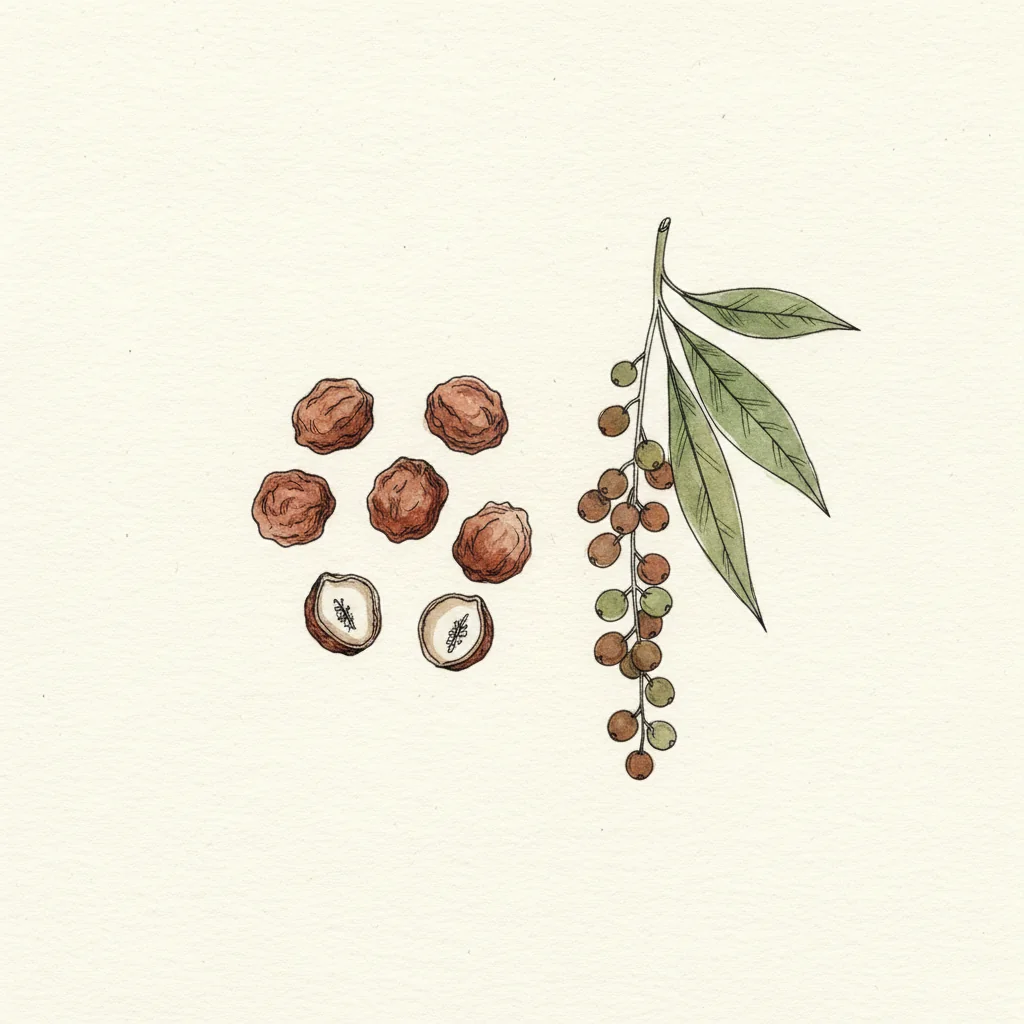
Grains of paradise (Aframomum melegueta), also called melegueta pepper or Guinea grains, is botanically a member of the ginger family, a close cousin of cardamom. The small reddish-brown seeds, 3 to 4 mm across, grow inside a fleshy red pod on a herbaceous plant of the humid forests along the Gulf of Guinea. Harvest is by hand, at full ripeness, mainly in Ghana, Liberia, Côte d'Ivoire and Togo. Crack a few seeds and the nose is immediate: fresh ginger, green cardamom, candied citrus, with a floral lift of orange blossom. On the palate the heat is warm and cool at the same time, faintly camphor-like, without the bite of Piper nigrum. That aromatic signature, more layered than ordinary pepper, is why it became the favorite spice of medieval European cooking — it flavored spiced wines, gingerbread and sweet-and-sour sauces. In the fifteenth century it cost more than pepper. Largely forgotten from the seventeenth century on, it has come back through two doors: craft brewing (Belgian saisons and American microbreweries use it as an aromatic) and contemporary fusion cooking, which slips it into fish marinades, glazed carrots and spice cakes. It still appears in some Moroccan ras el hanout blends. The West African supply chain stays small-scale, with independent gatherers selling to local traders. Crack the seeds in a mortar just before use — the essential oils are volatile and fade fast once ground.
History & origin
Carried into Europe from the thirteenth century along trans-Saharan caravan routes, grains of paradise made the fortune of Portuguese trading posts on the Pepper Coast (modern Liberia). It dominated spiced Western cooking until the East Indies opened a cheaper route for black pepper. The revival comes from two camps: Belgian brewers who found it in medieval beer recipes, and contemporary chefs working with West African flavors. Cultivation in Ghana remains largely for subsistence, with no structured export channel.
Provenance & authenticity
What sets the real thing apart — appellation, species and verification cues.
- Species
- Aframomum melegueta
How to verify the real one
- Aframomum melegueta (Zingiberaceae, not Piper)
- Gulf of Guinea / West Africa origin
- a.k.a. grains of paradise
Indicative price
Reference format : 1-2.6 oz jar — from $8.00 to $14.00 (median : $10.50).
Storage
Opaque airtight jar, keeps 12 to 18 months; crack the seeds only as you need them.
Where to buy?
Where to buy it
Links checked on
| Merchant | Price | Action |
|---|---|---|
| Amazon US | — | Amazon US |
| Burlap & Barrel | — | Burlap & Barrel |
| Steenbergs UK | — | Steenbergs UK |
Prices may vary depending on current promotions on the merchant site.
Alternatives if unavailable
Tags
- West Africa
- Ghana
- Aframomum
- melegueta pepper
- medieval cooking
- craft beer
Frequently asked questions
- How do you store Grains of Paradise?
- Opaque airtight jar, keeps 12 to 18 months; crack the seeds only as you need them.
- What dosage for Grains of Paradise?
- about half a teaspoon, cracked, per dish for four
- When should you add Grains of Paradise in cooking?
- It's best used finishing or late in the cook.
- What should you avoid pairing Grains of Paradise with?
- Avoid with: dishes already heavily spiced, very rich reduction sauces that bury it, delicate cream desserts where the camphor edge clashes.
Go further
The dishes where this grains of paradise shines
Also a recommended alternative for
As a complementary pairing with
See every dish where this product is mentioned →
Other peppers to discover
Featured in these gift sets
Page prepared according to our methodology. Purchase links marked sponsored and liable to earn a commission — details on our Affiliations page.