
Dish × condiment pairing
Which spice-pepper for jollof rice?
Season : all-year · Occasion : weekend, celebration
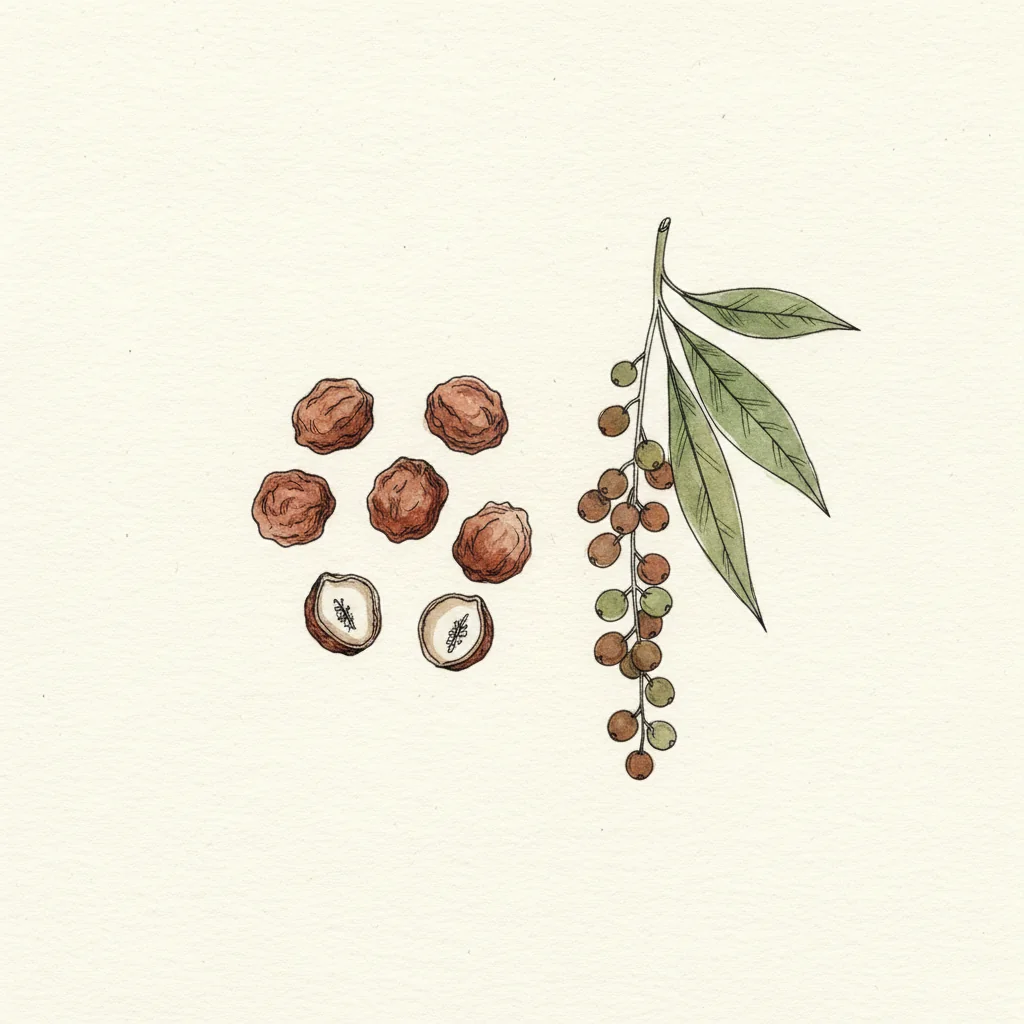
Grains of paradise, cracked into the base. It is a West African native, a ginger cousin from the Gulf of Guinea, so it belongs in jollof in a way black pepper never quite does. Its warm pepperiness laced with ginger, cardamom and citrus deepens the tomato-pepper base without a sharp bite.
In detail
The spice-pepper for jollof rice is grains of paradise (Aframomum melegueta), a West African native from the Gulf of Guinea coast, also called melegueta or Guinea grains. It is botanically a ginger cousin, not a true pepper, and it belongs in jollof in a way imported black pepper never quite does, since it comes from the same region as the dish. Cracked into the tomato-and-pepper base, the reddish-brown seeds bring a warm-and-cool pepperiness laced with fresh ginger, green cardamom and citrus peel, deepening the base without a sharp bite. Add it early so it infuses the rice as it cooks, and crush the seeds just before use because the essential oils are volatile and fade fast once ground. About half a teaspoon, cracked, suits a pot for four. The supply chain is small-scale across Ghana. A jar costs about $10.
Our recommendation
Pepper · Pepper cousin
Grains of Paradise
Gulf of Guinea coast (Ghana, Togo, Liberia, Côte d'Ivoire), Ghana
fresh ginger · green cardamom · citrus peel
Jollof rice is a West African dish, and grains of paradise is a West African spice from the same Gulf of Guinea coast, so the pairing is a homecoming, not a fusion stunt. The seeds bring warm-and-cool pepperiness with fresh ginger, green cardamom and citrus peel that lift the tomato-and-pepper base. Crack about half a teaspoon into the cook. A jar runs about $10.
Intensity 7/10
Where to buy it
Links checked on
| Merchant | Price | Action |
|---|---|---|
| Amazon US | — | Amazon US |
| Burlap & Barrel | — | Burlap & Barrel |
| Steenbergs UK | — | Steenbergs UK |
Prices may vary depending on current promotions on the merchant site.
Affiliate links — La Pincée may earn a commission on some sales, at no extra cost to you. Read more.
The catch
Black pepper is the lazy default in jollof, and grains of paradise is the homecoming. This is a West African spice from the same Gulf of Guinea coast as the dish, native to the region, not a fusion stunt parachuted in. Its warm pepperiness with ginger, cardamom and citrus deepens the tomato-pepper base where plain black pepper just adds a flat sharp bite. Use the spice that belongs.
Chef's note
Crack the seeds in a mortar just before they go in, since the essential oils are volatile and fade fast once ground. Add about half a teaspoon, cracked, to the tomato-and-pepper base early so the warmth infuses the rice as it cooks. It is warm, not fiery, so it seasons and perfumes the pot rather than adding raw heat. Taste and adjust.
Tasting note
fresh ginger · green cardamom · citrus peel · about $10 a jar, and half a teaspoon spices a whole pot. Worth it to season jollof with the spice that actually comes from West Africa.
These three sections appear on every one of our pairing pages — our methodology.
Alternatives to explore
-
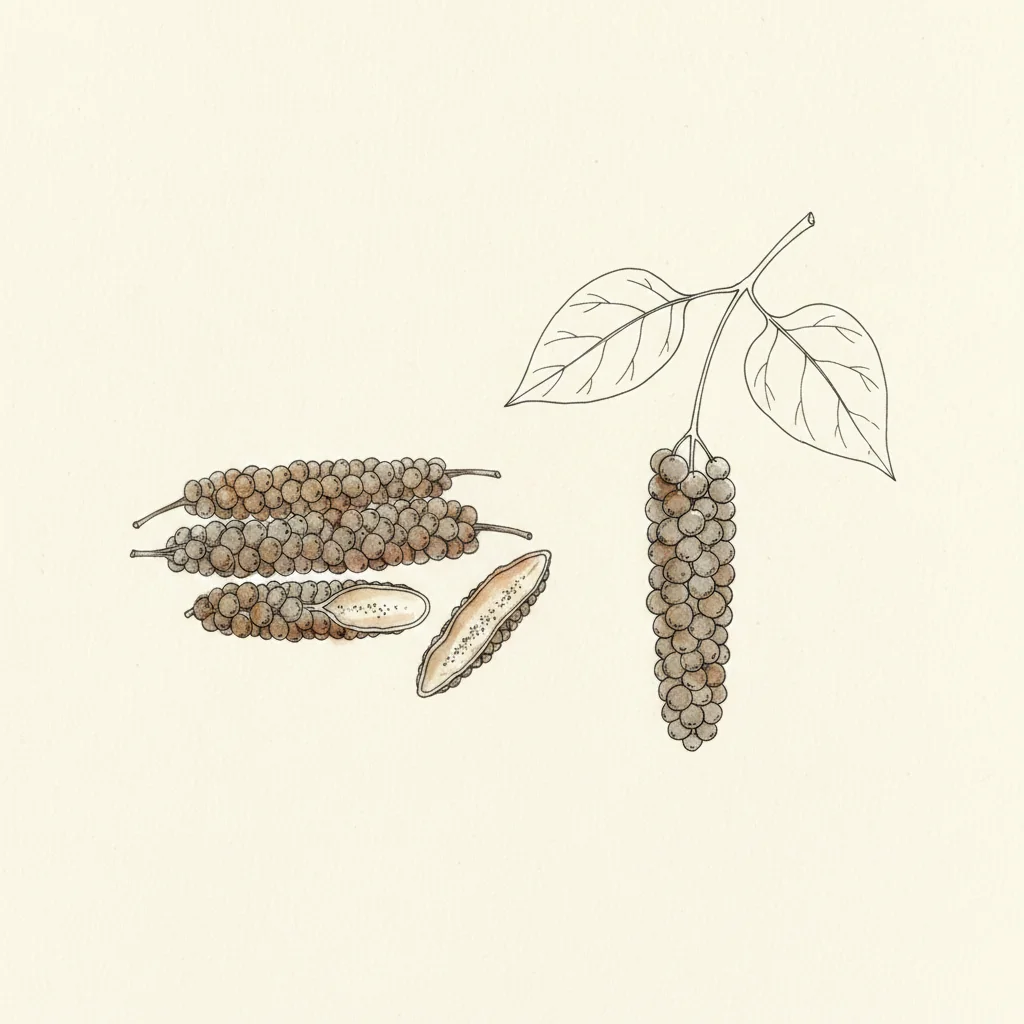
Pepper · Long pepper
Long Pepper
Java and Sumatra, Indonesia
Intensity 6/10
Long pepper brings a slow-building heat with cocoa and cinnamon. A deeper, more warming jollof, though it leans sweet-spiced and pulls the dish away from its bright West African profile.
Frequently asked questions
- Is grains of paradise actually used in West African cooking?
- Yes. Grains of paradise (Aframomum melegueta), also called melegueta or Guinea grains, grows along the Gulf of Guinea coast in Ghana, Togo, Liberia and Côte d'Ivoire, and is native to the region. It belongs in West African dishes like jollof in a way imported black pepper does not.
- When do I add grains of paradise to jollof rice?
- Crack the seeds and add them to the tomato-and-pepper base early, so the warm pepperiness infuses the rice as it cooks. Crush them just before use, since the essential oils are volatile and fade fast once ground.
- How much grains of paradise for a pot of jollof?
- About half a teaspoon, cracked, per pot for four. It is warm rather than fiery, so it deepens the base instead of adding raw heat; taste and adjust, since the ginger-cardamom note builds gently.
This pairing was validated according to our methodology. Purchase links are marked sponsored and may earn a commission — details on our Affiliations page.