
Comparison
Guajillo Chile vs Chimayó Chile
Both are mild red chiles, but they pull in different directions. Guajillo is Mexico's cheap workhorse — tart, berry-bright, the color and backbone of birria and salsa roja. Chimayó is a pricier New Mexico landrace with a sweeter cherry-and-earth depth. Use guajillo for Mexican sauces where its tang carries the dish; spend on Chimayó for true New Mexico red chile.
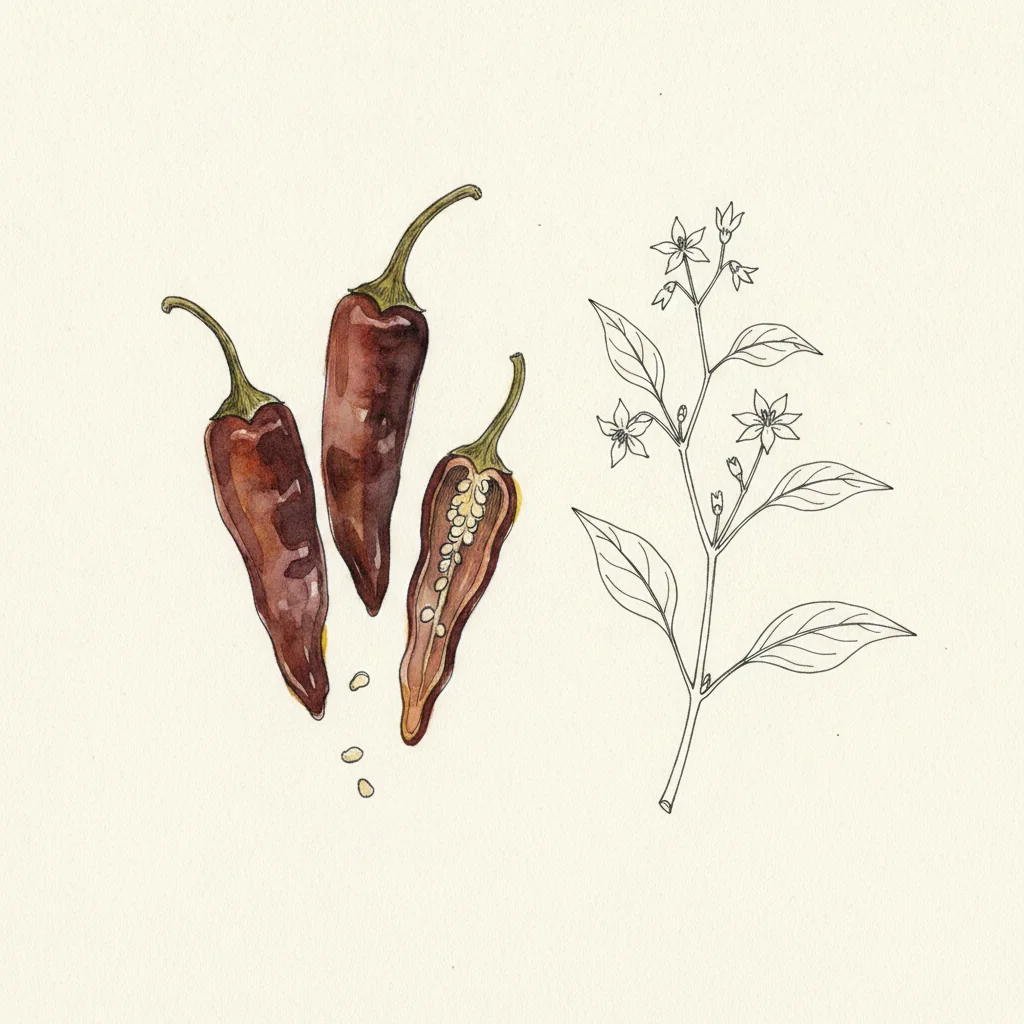
Spice · Chile
Guajillo Chile
Zacatecas and Durango (the dry highland Bajío-to-north belt where mirasol is grown), Mexico
bright berry-tart · dried cranberry · green tea
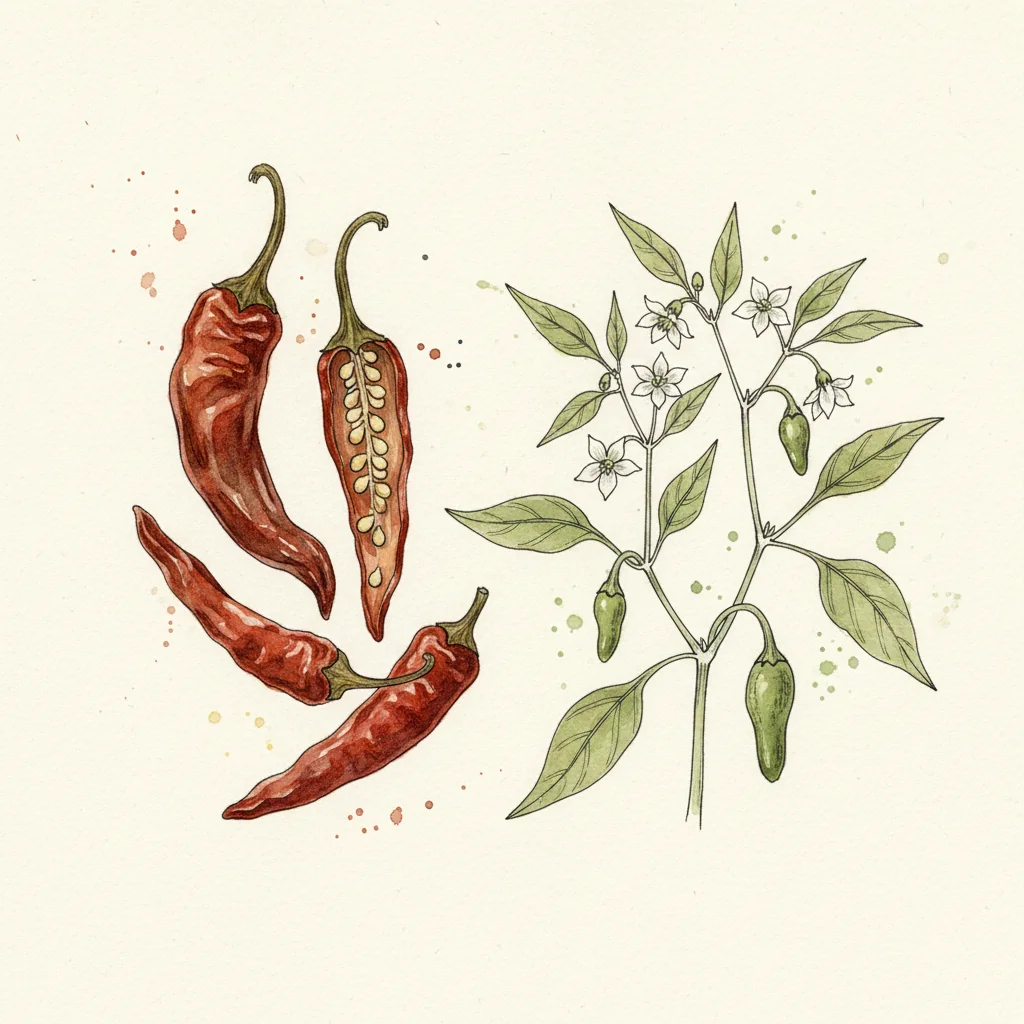
Spice · Chile
Chimayó Chile
Chimayó, Española Valley, Río Arriba County, New Mexico, USA
sun-dried cherry · earthy red soil · toasted raisin
Our verdict
At a glance
| Criterion | Guajillo Chile | Chimayó Chile |
|---|---|---|
| Mexico, highlands of Zacatecas and Durango (mirasol cultivar) | Chimayó valley, northern New Mexico (single-origin landrace) | |
| Berry-tart, dried cranberry, green-tea tannin | Sun-dried cherry, red earth, toasted raisin | |
| 3/10 — tangy warmth, tart before it's hot | 4/10 — low warmth that builds slowly | |
| Birria, barbacoa, salsa roja, pozole rojo, adobo | Red chile sauce, carne adovada, posole, tamale masa | |
| ~$10 for an 8 oz bag of whole pods | ~$19 for a real 8 oz bag of ground powder | |
| Cheap, versatile backbone — buy by the bag | Premium single-origin, worth it only for the real landrace |
When to choose Guajillo Chile
Guajillo is the chile you reach for when a Mexican sauce needs color, body and a tart-bright lift rather than heat. It's the burgundy backbone of birria and barbacoa, salsa roja for tacos, pozole rojo, red enchilada sauce, adobo for grilled skirt steak. Heat sits low, around 3 out of 10, and lands tart on the front of the tongue before it ever turns hot — dried cranberry, a green-tea tannin, a faint pine. Rehydrate three or four pods, stemmed and seeded, and blend them into the base of the sauce, or toast and grind them; never finish a dish raw with guajillo, since the leathery skin stays bitter. Pliability is your freshness gauge: a pod that still bends is alive, one that snaps dry has oxidized. Buy whole pods, not powder, and grind as needed. At about $10 an 8 oz bag, it's the cheap, versatile workhorse you keep stocked — the chile that gives a dish its red without taking it over.
When to choose Chimayó Chile
Chimayó earns its place when you want depth and sweetness, not tang — a true New Mexico red chile sauce, carne adovada, posole. It's a single-origin landrace from one northern valley, and the flavor reads cherry-and-earth with a soft 4-out-of-10 warmth that builds rather than bites, where guajillo stays tart and front-loaded. The catch is sourcing: under 500 acres grow the real native chile, so most powder labeled "Chimayó" is a generic New-Mexico blend. Buy from a valley source and expect about $19 for a real 8 oz bag — roughly double guajillo at the gram. It's sold ground and used as a base spice: bloom it in fat or simmer it from the start, 3 to 4 tablespoons per quart of sauce. Don't pay the premium to throw it into a generic salsa where guajillo's brightness would serve better and cost half as much. Reach for Chimayó only when its earthy, sweet red is the point of the dish.
Where to buy?
Guajillo Chile
Links checked on
| Merchant | Price | Action |
|---|---|---|
| Amazon US (whole dried pods) | — | Amazon US (whole dried pods) |
| Sous Chef UK (Cool Chile Co) | — | Sous Chef UK (Cool Chile Co) |
Prices may vary depending on current promotions on the merchant site.
Chimayó Chile
Links checked on
| Merchant | Price | Action |
|---|---|---|
| Amazon US | — | Amazon US |
| Made in New Mexico | — | Made in New Mexico |
| Chimayo Chile Shop | — | Chimayo Chile Shop |
Prices may vary depending on current promotions on the merchant site.
Frequently asked questions
- Can guajillo replace Chimayó?
- Partly. Both are mild red chiles, but guajillo is tart and berry-bright while Chimayó is sweet and earthy. Swap guajillo into a New Mexico red chile sauce and it'll taste sharper and more acidic. It works in a pinch, but the character shifts.
- Which is cheaper?
- Guajillo, by a clear margin — about $10 for an 8 oz bag of whole pods, versus roughly $19 for a real 8 oz bag of single-origin Chimayó powder. Guajillo is the everyday workhorse; Chimayó is the splurge.
- Are they both mild?
- Yes. Guajillo runs about 3 out of 10 and tart, Chimayó about 4 and sweet. Neither delivers real heat — you cook them for color and flavor. If you want fire, add a hotter chile alongside either one.
- Whole pods or powder?
- Guajillo: buy whole pods and grind to order, since they keep better and the flavor lives in the flesh. Chimayó is sold ground by design — just buy a real valley bag small and use it within a year before the cherry note dulls.
The best pairings
With Guajillo Chile
With Chimayó Chile
Comparison prepared according to our methodology. Sponsored purchase links — see our affiliations.