
Comparison
Habanero vs guajillo: which chile for heat?
If you actually want heat, it's the Yucatán habanero, no contest — 100,000 to 350,000 Scoville against the guajillo's near-mild 3 out of 10. But guajillo isn't trying to burn you: it builds berry-tart color and backbone into birria and red sauces. Habanero for fire, guajillo for flavor.
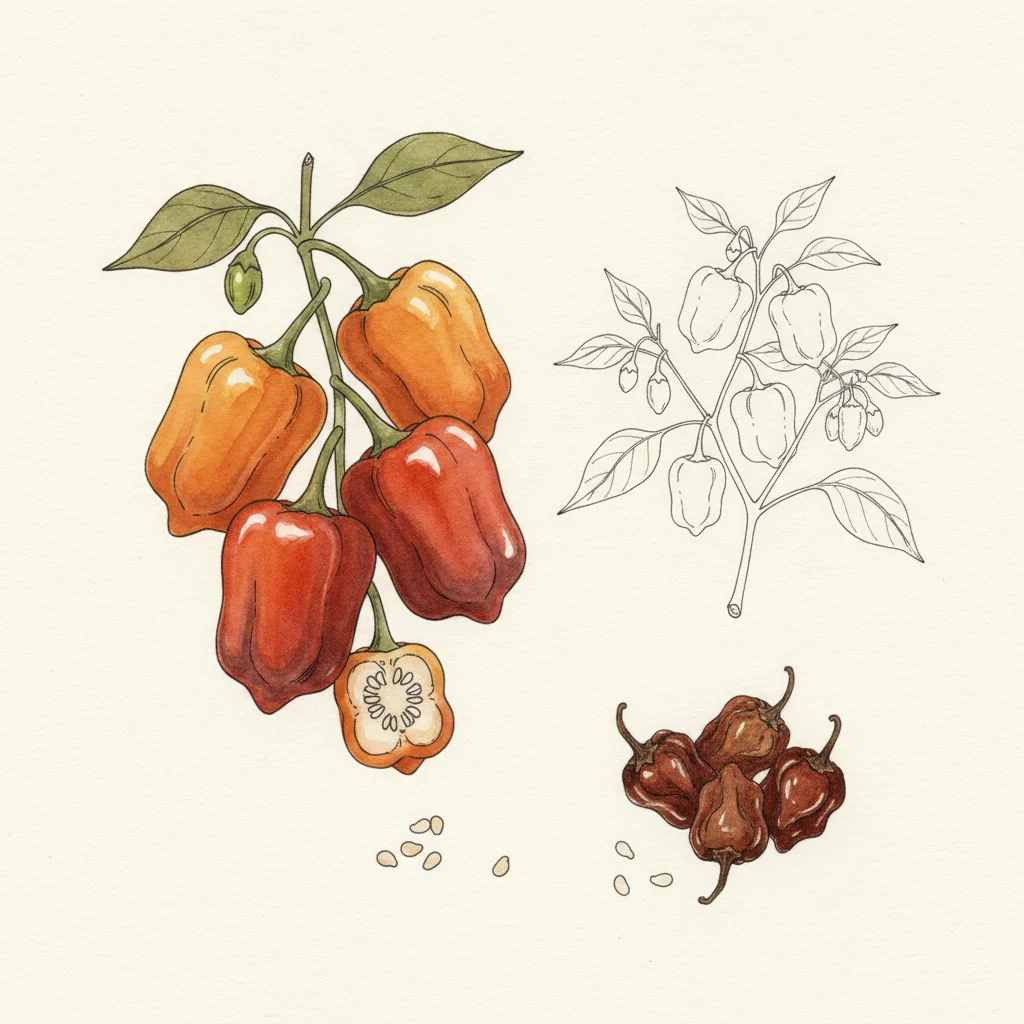
Spice · Chile
Yucatán Habanero
Yucatán Peninsula (Yucatán, Campeche, Quintana Roo), Mexico (PDO (Habanero de la Península de Yucatán, 2010))
intense fruity-floral · ripe apricot · green mango
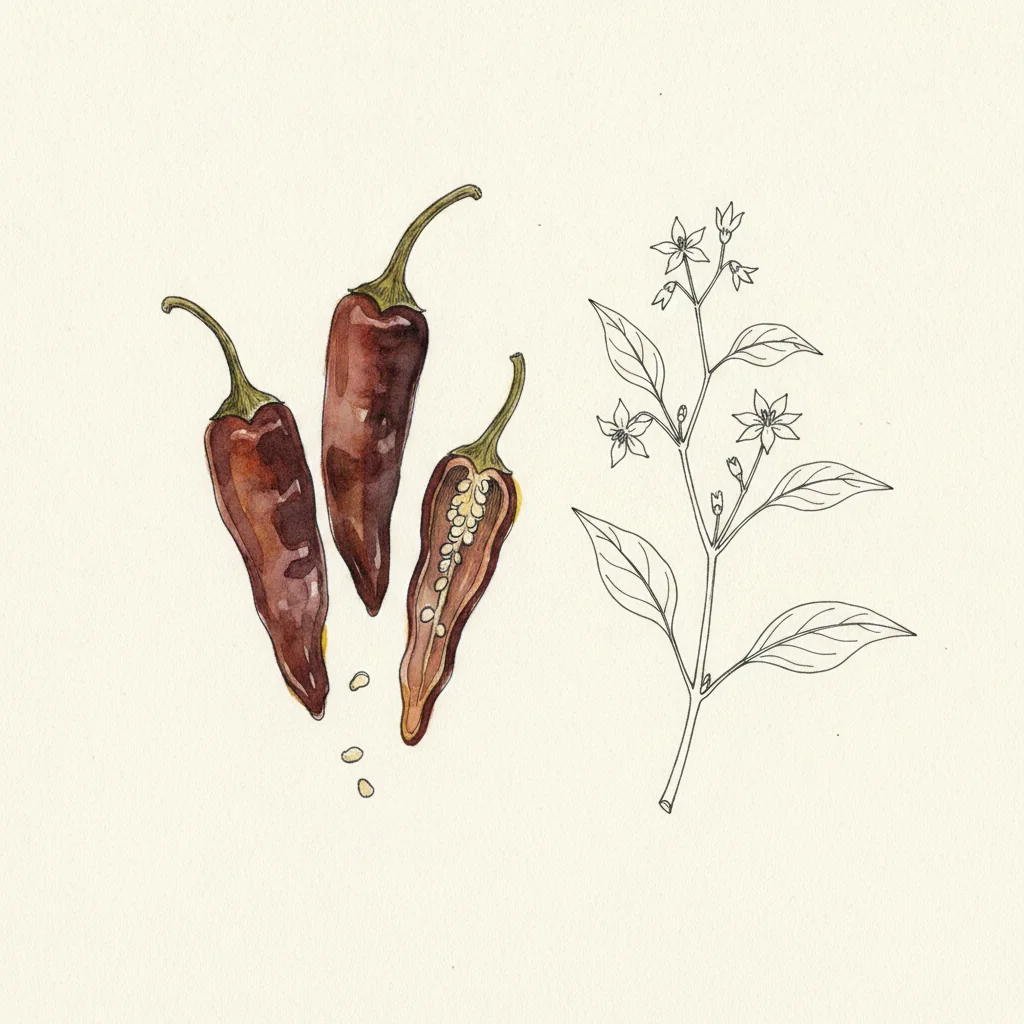
Spice · Chile
Guajillo Chile
Zacatecas and Durango (the dry highland Bajío-to-north belt where mirasol is grown), Mexico
bright berry-tart · dried cranberry · green tea
Our verdict
For raw heat it's the habanero by a mile; guajillo is a flavor chile, not a hot one.
At a glance
| Criterion | Yucatán Habanero | Guajillo Chile |
|---|---|---|
| Origin | Mexico — Yucatán Peninsula (PDO since 2010) | Mexico — Zacatecas and Durango highlands |
| Species | Capsicum chinense | Capsicum annuum (mirasol cultivar) |
| Heat | 9/10 — 100,000 to 350,000 Scoville | 3/10 — mild, tart before it's hot |
| Main notes | Ripe apricot, green mango, orange blossom | Bright berry-tart, dried cranberry, green tea |
| Best use | Salsa habanera, cochinita pibil, ceviche, hot sauce (raw or roasted) | Birria, red enchilada sauce, pozole rojo (rehydrated, blended) |
| Price | ~$9 for 2 oz dried whole pods | ~$10 for an 8 oz bag of whole dried pods |
| Value | A quarter of one chile seasons four — gloves non-negotiable | Cheap by volume; the everyday base chile of Mexican red sauce |
When to choose Yucatán Habanero
Choose the Yucatán habanero when you actually want heat — and, just as much, when you want the tropical perfume that lands a beat before the burn. It's a Capsicum chinense, a different species from the annuum most supermarket chiles belong to, and the chemistry shows: capsaicin runs 20 to 50 times higher than a jalapeño, 100,000 to 350,000 on the Scoville scale, with far more volatile aromatic compounds. That's the nose you get the second you cut one open — ripe apricot, green mango, orange blossom, passion fruit. The aroma, not the raw heat, is what earns this chile its place; the heat just announces it. Four scenarios where habanero is the right pick. First: salsa habanera — habanero, red onion, sour-orange juice, salt — the table sauce of the Yucatán, finely minced and raw. Second: cochinita pibil, where it rides the achiote-marinated pork out of the banana leaf. Third: a fish ceviche, where a fraction of a chile lifts the citrus without flattening the fish. Fourth: a homemade hot sauce, where roasting then blending rounds the burn into something you can pour. The dosage is the discipline: a quarter of one fresh chile for four people, and gloves are non-negotiable — the capsaicin is fierce, so wash the board immediately and keep it nowhere near your eyes. One trick: pulling the seeds and the white inner ribs cuts the heat by roughly 60 percent while keeping the aroma, which is how you get the fruit without the full fire. The Yucatán PDO, granted in 2010, was the first ever awarded to a chile in Mexico, and it protects origin across Yucatán, Campeche and Quintana Roo. Buy dried whole pods (about $9 for 2 oz) or fresh; the dried-smoked version sheds some of the floral lift, so for the apricot nose go fresh or plain-dried. Store dried pods in an airtight opaque jar up to 18 months, or freeze whole for six and keep the heat. What you don't do is treat it like guajillo — habanero is a finishing or fresh-sauce chile measured in fractions, not a mild base you blend by the handful.
When to choose Guajillo Chile
Choose guajillo when the job is flavor and color, not fire. It's the workhorse red chile of Mexican cooking — long, smooth, deep-burgundy mirasol pods sun-dried across the highlands of Zacatecas and Durango — and its heat sits low, around 3 out of 10. The point is the taste: bright berry-tart, dried cranberry, a green-tea tannin, with tomato-leaf and faint pine behind. This is the chile that gives birria, red enchilada sauce and pozole their color and their backbone, never their burn. Four scenarios where guajillo is the right grain. First: birria or barbacoa, where it's the base of the consommé, rehydrated and blended smooth. Second: a red enchilada sauce or adobo, where its tartness keeps a rich sauce from going flat. Third: pozole rojo, where it tints the broth a clean brick-red. Fourth: a mole base, working alongside ancho and pasilla rather than carrying the heat. The technique is the opposite of habanero's: never a raw finish. Rehydrate and blend into the base of a sauce, or toast the pods dry then grind — but watch the toast, because long scorching turns the skin acrid and bitter and you lose the berry note. Reach for 3 to 4 pods, stemmed and seeded, about 15 g, for a sauce serving four. Because it's mild, you can use guajillo by the handful where a single habanero would blow the dish apart, which is exactly why it's the everyday base and the habanero is the accent. An 8 oz bag of whole dried pods runs about $10 — cheap by volume. Buy pods, not powder, and let pliability be your freshness gauge: one that still bends and feels leathery is alive; one that snaps dry and looks dull has oxidized and lost its aroma. Store airtight, away from light, and whole pods keep about 12 months. If you came looking for heat, guajillo will disappoint you on purpose — pair it with a hotter chile when you want both. On its own, it's the flavor and the color, and it's the chile most Mexican red sauces are actually built on.
Where to buy?
Yucatán Habanero
Links checked on
| Merchant | Price | Action |
|---|---|---|
| Amazon US | — | Amazon US |
| Sonoran Spice | — | Sonoran Spice |
Prices may vary depending on current promotions on the merchant site.
Guajillo Chile
Links checked on
| Merchant | Price | Action |
|---|---|---|
| Amazon US (whole dried pods) | — | Amazon US (whole dried pods) |
| Sous Chef UK (Cool Chile Co) | — | Sous Chef UK (Cool Chile Co) |
Prices may vary depending on current promotions on the merchant site.
Frequently asked questions
- Which chile is hotter, habanero or guajillo?
- The habanero, by a wide margin — 100,000 to 350,000 Scoville against the guajillo's mild 3 out of 10. They're not really rivals on heat: habanero is among the hottest chiles you'll cook with, while guajillo is a low-heat flavor chile.
- Can guajillo replace habanero in a recipe?
- Not for heat — you'd lose nearly all of it. Guajillo brings berry-tart flavor and brick-red color but barely any burn, so swapping it in turns a fiery sauce mild. If you want the guajillo flavor with real heat, blend in a fraction of habanero or another hot chile.
- How do I tame habanero heat without losing flavor?
- Pull the seeds and the white inner ribs — that cuts the heat by roughly 60 percent while keeping the tropical apricot-and-mango aroma. Roasting then blending also rounds the burn. And always wear food-safe gloves: the capsaicin is fierce and clings to skin.
- Why is guajillo in almost every Mexican red sauce?
- Because it's the cheap, mild base that delivers color and a berry-tart backbone you can use by the handful. Birria, red enchilada sauce and pozole rojo all lean on it for body and brick-red color, then add a hotter chile if more burn is wanted.
The best pairings
With Yucatán Habanero
With Guajillo Chile
Comparison prepared according to our methodology. Sponsored purchase links — see our affiliations.