
Comparison
Himalayan pink salt vs fleur de sel: which to use?
Not interchangeable. Pink Himalayan is a commodity rock salt, about $5 to $6 a pound, good for a salt block or a warm crunch but flavorless beyond a metallic edge. Fleur de sel de Guérande is the original finishing salt, hand-skimmed and PGI-protected, about $11 for 125 g, with a soft melting crunch and a violet note. For finishing, fleur de sel, every time.
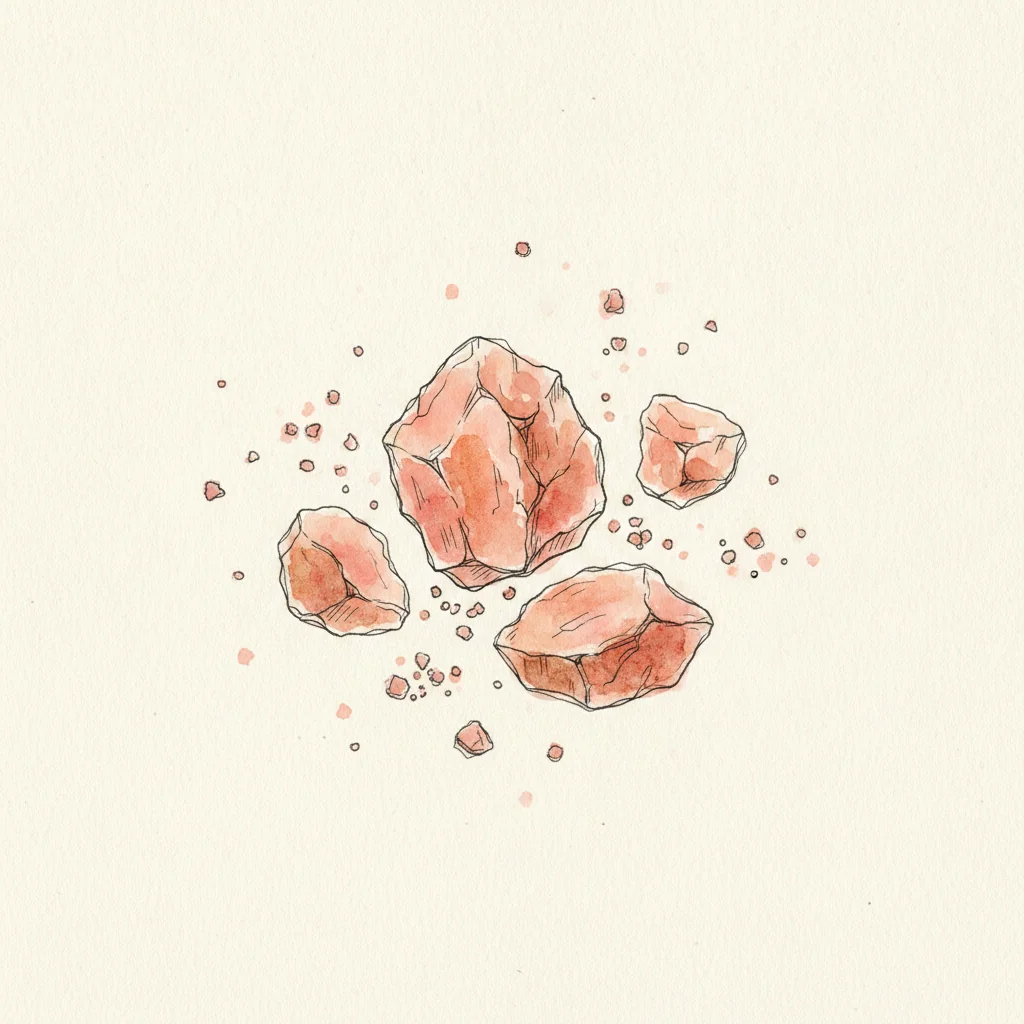
Salt · Rock salt
Himalayan Pink Salt
Khewra Salt Mine, Salt Range, Punjab province, Pakistan
round salinity · warm mineral · faint trace-element edge
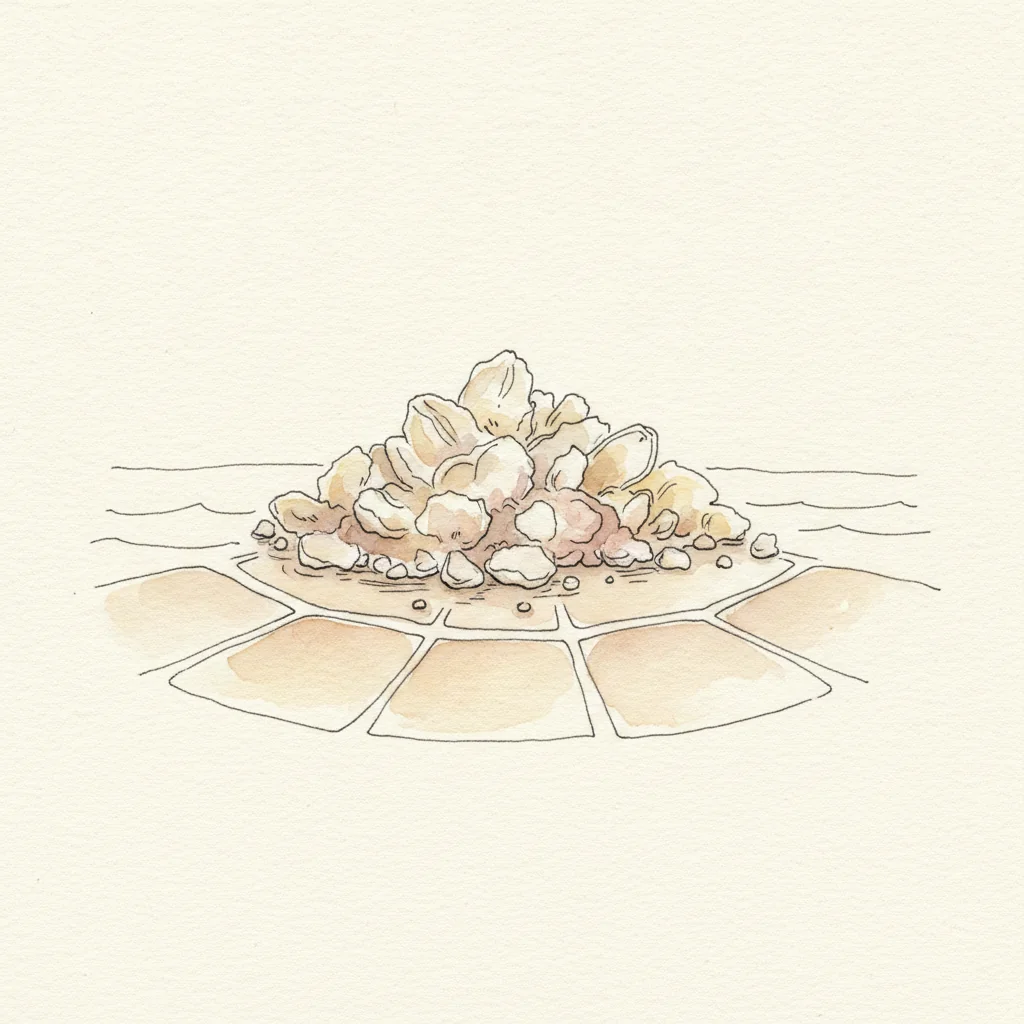
Salt · Fleur de sel
Fleur de Sel de Guérande
Guérande peninsula, Loire-Atlantique, France (PGI)
round salinity · light iodine · fresh violet
Our verdict
Fleur de sel for finishing; pink only for the salt block or cheap color.
At a glance
| Criterion | Himalayan Pink Salt | Fleur de Sel de Guérande |
|---|---|---|
| Origin | Khewra Salt Mine, Punjab, Pakistan | Guérande peninsula, Loire-Atlantique, France |
| What it actually is | Fossil rock salt, iron-oxide color, a commodity | Hand-skimmed sea-surface crystals, PGI-protected, the original fleur de sel |
| Profile | Round salinity, warm mineral, faint metallic edge | Round salinity, light iodine, a fresh violet note, wet mineral |
| Intensity | 6/10 | 6/10 |
| Texture | Hard, slow-dissolving crystals, no real crunch | Fine moist crystals that crunch softly and melt slowly, never sharp |
| Best use | Salt-block searing, carpaccio, a margarita rim, cheap color | Ripe tomatoes, seared steak, soft-boiled eggs, dark chocolate, caramel |
| Appellation | None | PGI (Protected Geographical Indication) |
| Price and value | ~$5 to $6 a pound, cheap, skip the mineral hype | ~$11 for 125 g, a splurge worth keeping for finishing |
When to choose Himalayan Pink Salt
Reach for pink Himalayan salt only where its strengths actually apply, which is rarely the finish of a plate. It is a fossil rock salt from the Khewra mine in Pakistan, its pink color simple iron oxide, and the salinity is round and warm with a slightly metallic close. Where it genuinely earns a place is the salt block: a heated slab lets you sear a steak or cook carpaccio directly on the stone, seasoning the food as it cooks, which fleur de sel cannot do. Crushed coarse it suits a tomato salad, hard-boiled eggs, fresh cheeses or a margarita rim where the pink color is part of the presentation. What it is not is a flaky finishing salt; it gives no clean shattering crunch and no aromatic lift, so using it where you would use fleur de sel just leaves you with a flat, faintly metallic seasoning. Dropping it into a braise or stock is pure waste, since any salt does that job. The wellness story about its 84 trace minerals is marketing; the amounts mean nothing nutritionally. At about $5 to $6 a pound, a 2 lb bag around $8 to $14, it is cheap and keeps forever as a fossil salt. Buy it for the salt block and the color, not to finish food. The moment a dish wants a real finishing salt, the fleur de sel is the right tool and the pink is the wrong one.
When to choose Fleur de Sel de Guérande
Reach for fleur de sel de Guérande when you want the finish to register, which is most of the time you are reaching for a special salt at all. It is the original finishing salt: fine moist crystals hand-skimmed by paludiers from the surface of the Atlantic salt pans, PGI-protected, with a round salinity, a light iodine note and a distinct fresh violet character that no rock salt carries. The crystals crunch softly and melt slowly, never sharp on the tongue, which is exactly what you want scattered over ripe tomatoes, a seared steak, soft-boiled eggs, beef tartare, dark chocolate or salted-butter caramel. Crush a pinch between your fingers raw, just before serving; that softness is the point and it is lost the moment the salt hits long heat, so keep it off the braise and out of boiling water where it dissolves for nothing. Against the pink Himalayan, the difference is night and day on the plate: where the pink gives a flat, slightly metallic salinity and a hard crystal, the fleur de sel gives a soft melting crunch and an aromatic lift that makes a tomato taste more like itself. At about $11 for a 125 g box it is a splurge, but it is the kind that lasts for years without changing in a stoneware crock, and a box covers a long run of Sunday plates and desserts. If your dish wants character at the finish, this is the one. Keep the pink for the salt block, and keep the fleur de sel for everything that reaches the table.
Where to buy?
Himalayan Pink Salt
Links checked on
| Merchant | Price | Action |
|---|---|---|
| Amazon US | — | Amazon US |
| Spicewalla | — | Spicewalla |
| Sous Chef UK | — | Sous Chef UK |
Prices may vary depending on current promotions on the merchant site.
Fleur de Sel de Guérande
Links checked on
| Merchant | Price | Action |
|---|---|---|
| Amazon US | — | Amazon US |
Prices may vary depending on current promotions on the merchant site.
Frequently asked questions
- Can I finish a steak with pink Himalayan salt instead of fleur de sel?
- You can, but it underperforms. Pink salt gives a hard crystal and a flat, faintly metallic salinity with no aromatic lift. Fleur de sel adds a soft melting crunch and a violet note that fleur de sel was made for. For finishing, fleur de sel is the right tool.
- Is fleur de sel worth the higher price?
- For finishing, yes. At about $11 for 125 g it is a splurge, but it is PGI-protected, keeps for years, and a box covers a long run of plates and desserts. The soft crunch and violet note are things pink Himalayan simply cannot reproduce.
- What is pink Himalayan salt actually good for?
- The salt block, mainly. A heated slab lets you sear or cook carpaccio directly on the stone. It also works crushed coarse on salads or a cocktail rim where the color helps. It is not a finishing salt and offers no aromatic payoff.
- Is pink Himalayan salt healthier?
- No. The 84-trace-minerals claim is marketing; the amounts are nutritionally negligible, and the color is just iron oxide. Choose between these two on use and flavor, not on health claims, where there is no meaningful difference.
The best pairings
With Himalayan Pink Salt
With Fleur de Sel de Guérande
Comparison prepared according to our methodology. Sponsored purchase links — see our affiliations.