
Fleur de Sel de Guérande PGI (Loire-Atlantique, France)
In brief — Fleur de sel de Guérande is the original finishing salt: fine moist crystals hand-skimmed by paludiers from the Atlantic salt pans, PGI-protected, with a round salinity and a faint violet note. It melts slower and softer than a Maldon flake. About $11 for 125 g, a splurge worth keeping for tomatoes, caramel and dark chocolate. Its aromatic profile develops notes of round salinity, light iodine, fresh violet, extended by wet mineral and green seaweed, for an intensity of 6/10. On the palate, it offers fine moist crystals that crunch softly and melt slowly, never sharp on the tongue, with a long finish, a delicate iodine finish. In the kitchen, it's best added as a finishing touch and it pairs with ripe tomatoes, seared meats and steak, soft-boiled eggs. Recommended dosage: a pinch crushed between the fingers, raw, just before serving. Expect from $9.00 to $14.00 per 125g box (median $11.00).
Origin : Guérande peninsula, Loire-Atlantique, France (PGI)
Fleur de sel de Guérande is the original finishing salt: fine moist crystals hand-skimmed by paludiers from the Atlantic salt pans, PGI-protected, with a round salinity and a faint violet note. It melts slower and softer than a Maldon flake. About $11 for 125 g, a splurge worth keeping for tomatoes, caramel and dark chocolate.
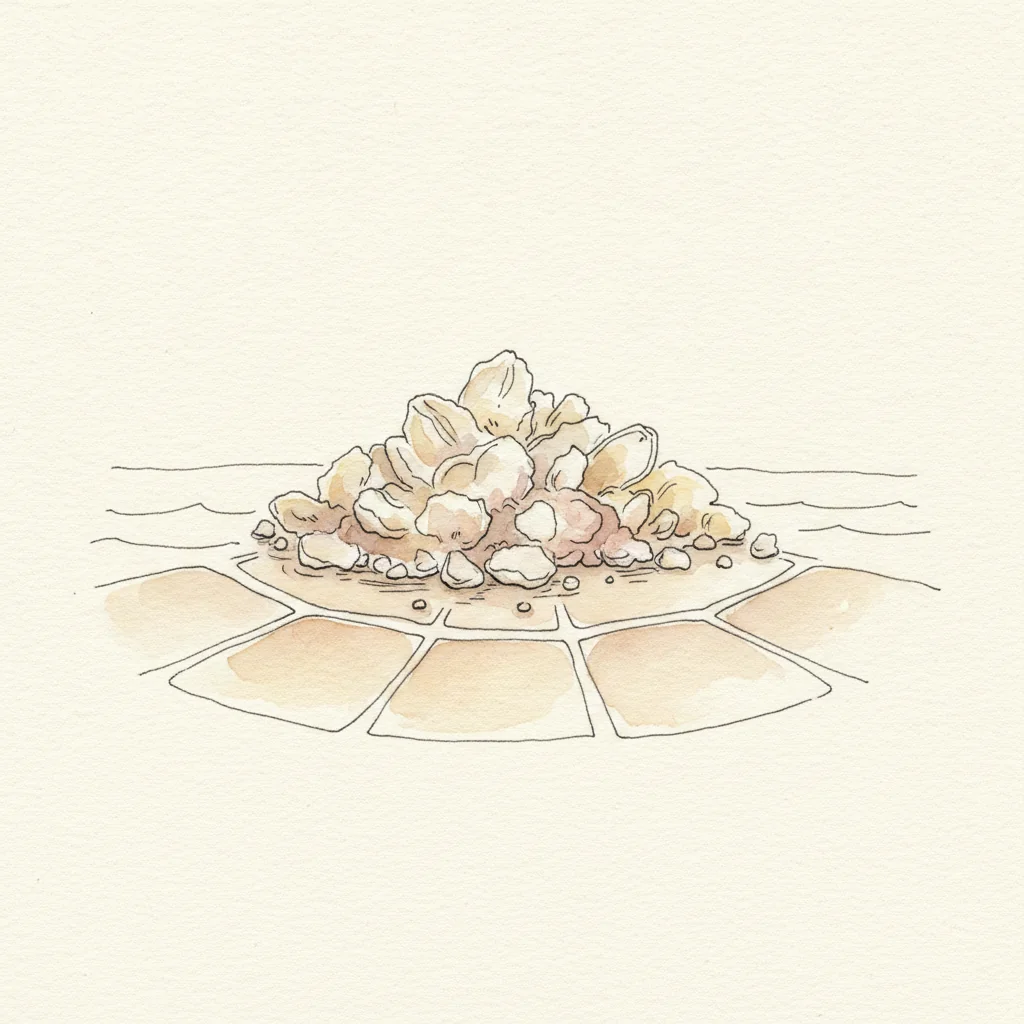
Salt · Fleur de sel
Fleur de Sel de Guérande
Guérande peninsula, Loire-Atlantique, France (PGI)
round salinity · light iodine · fresh violet
Aromatic profile
| Family | Halite (sodium chloride) |
|---|---|
| Intensity | ●●●○○ (6/10) |
| Main notes | round salinity · light iodine · fresh violet |
| Secondary notes | wet mineral · green seaweed |
| Mouthfeel | fine moist crystals that crunch softly and melt slowly, never sharp on the tongue |
| Finish length | long, a delicate iodine finish |
Culinary use
- When to add : finishing
- Dosage : a pinch crushed between the fingers, raw, just before serving
- Ideal pairings : ripe tomatoes, seared meats and steak, soft-boiled eggs, dark chocolate, salted-butter caramel, beef tartare
- Avoid with : long cooking (the crystals lose their crunch), stocks and boiling water (they dissolve for nothing), dishes that are already very salty
The grain in detail
Fleur de sel de Guérande is hand-harvested by the paludiers (salt workers) of the Guérande peninsula, on salt marshes worked since the 9th century. The salt forms as a thin crystalline veil on the surface of the final crystallization ponds when three conditions line up: heat, an east wind and low humidity. The paludier skims only that veil with a long wooden tool, never touching the grey salt below, which makes it a weather-dependent and limited harvest. The crystals keep a little residual moisture, so they crunch softly and melt slowly rather than turning sharp like a dry salt. The salinity is round, carried by a light iodine note and a faint scent of fresh violet that the paludiers read as a mark of quality. A pale pink cast comes from the Dunaliella salina micro-algae in the ponds. No additives, no washing: it is raw salt, and it carries the EU PGI (Protected Geographical Indication). Use it only at the finish, raw, on the plate: ripe tomatoes with olive oil, rare seared steak, soft-boiled eggs, dark chocolate, salted-butter caramel, beef tartare. In cooking it loses its crunch and its point, where a cheaper grey salt would do. It is finer and moister than a Maldon or Jacobsen flake, so it reads as melt over crunch.
History & origin
The Guérande marshes appear in Carolingian charters as early as the 9th century, and salt-working has been continuous there for over a thousand years. Nearly lost to real-estate pressure in the 1970s, the trade was saved by the paludiers and a run of protections: Label Rouge in 1991 and the Sel de Guérande PGI later. Roughly 250 paludiers work more than 2,000 hectares today, organized in cooperatives such as Les Salines de Guérande and Le Guérandais.
Provenance & authenticity
What sets the real thing apart — appellation, species and verification cues.
- Protected appellation
- IGP/PGI
- Register : EU Reg. (EU) No 238/2012; eAmbrosia
- Year : 2012
- Authority : EU eAmbrosia GI register
- Grade / standard
- Fleur de sel (surface-harvested top crystals)
How to verify the real one
- IGP logo + Aprosela mark
- hand-harvested (paludier)
- natural off-white (never bright white)
- no anti-caking agent
Indicative price
Reference format : 125g box — from $9.00 to $14.00 (median : $11.00).
Storage
Stoneware crock or glass jar away from humidity. Keeps for years without change.
Where to buy?
Where to buy it
Links checked on
| Merchant | Price | Action |
|---|---|---|
| Amazon US | — | Amazon US |
Prices may vary depending on current promotions on the merchant site.
Alternatives if unavailable
Tags
- France
- Guérande
- PGI
- fleur de sel
- paludier
- finishing salt
Frequently asked questions
- How do you store Fleur de Sel de Guérande?
- Stoneware crock or glass jar away from humidity. Keeps for years without change.
- What dosage for Fleur de Sel de Guérande?
- a pinch crushed between the fingers, raw, just before serving
- When should you add Fleur de Sel de Guérande in cooking?
- It's best used finishing.
- What should you avoid pairing Fleur de Sel de Guérande with?
- Avoid with: long cooking (the crystals lose their crunch), stocks and boiling water (they dissolve for nothing), dishes that are already very salty.
Go further
Terroir
Marais salants de Guérande, Loire-Atlantique
See this product on the world map of origins — France.
The dishes where this fleur de sel de guérande shines
Also a recommended alternative for
As a complementary pairing with
See every dish where this product is mentioned →
Other salts to discover
Featured in these gift sets
Page prepared according to our methodology. Purchase links marked sponsored and liable to earn a commission — details on our Affiliations page.