
Comparison
Himalayan pink salt vs Persian blue salt: which rock salt?
Not the same league. Pink Himalayan is a commodity rock salt, about $5 to $6 a pound, fine for a salt block or a warm crunch but no mineral magic. Persian blue is genuinely rare, around $13 to $15 for 100 g, its blue tint a real sylvinite mineral. Everyday cooking, pink. The precious end of the plate, blue.
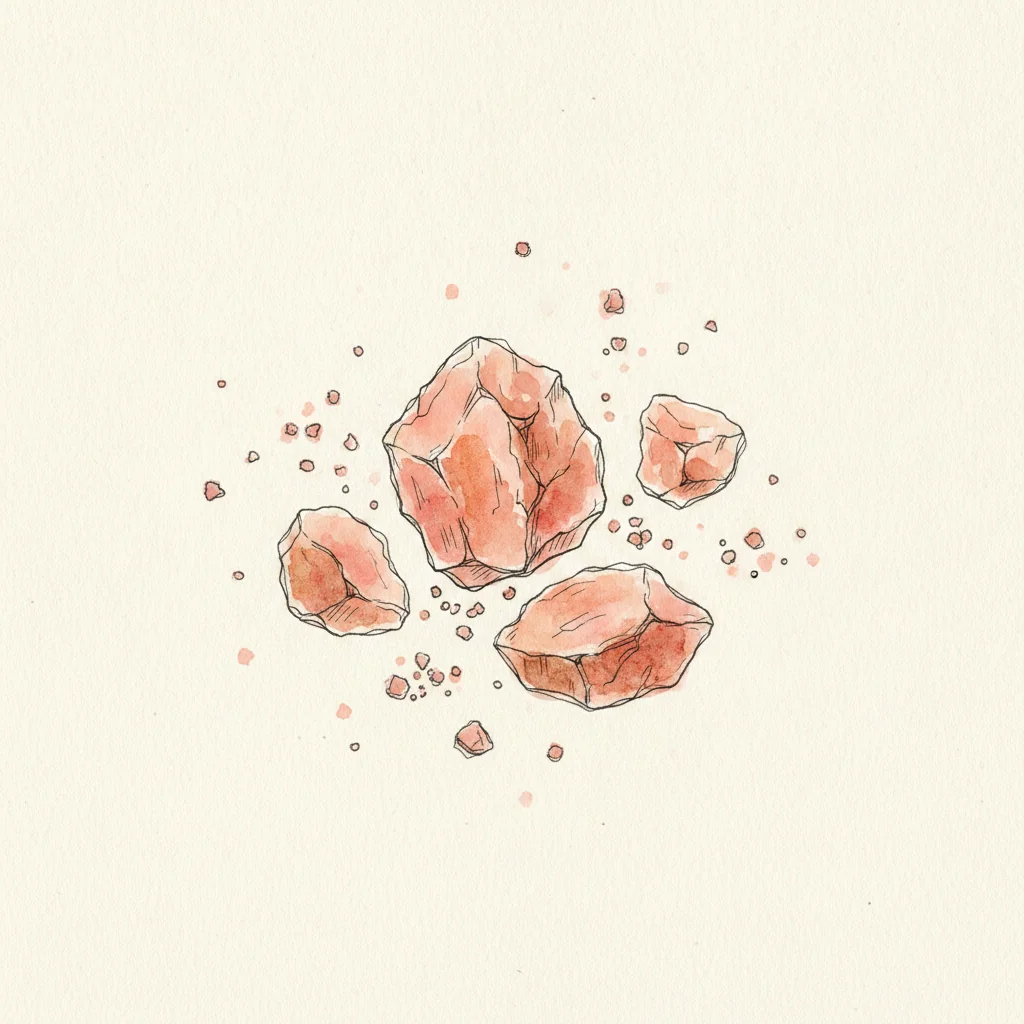
Salt · Rock salt
Himalayan Pink Salt
Khewra Salt Mine, Salt Range, Punjab province, Pakistan
round salinity · warm mineral · faint trace-element edge
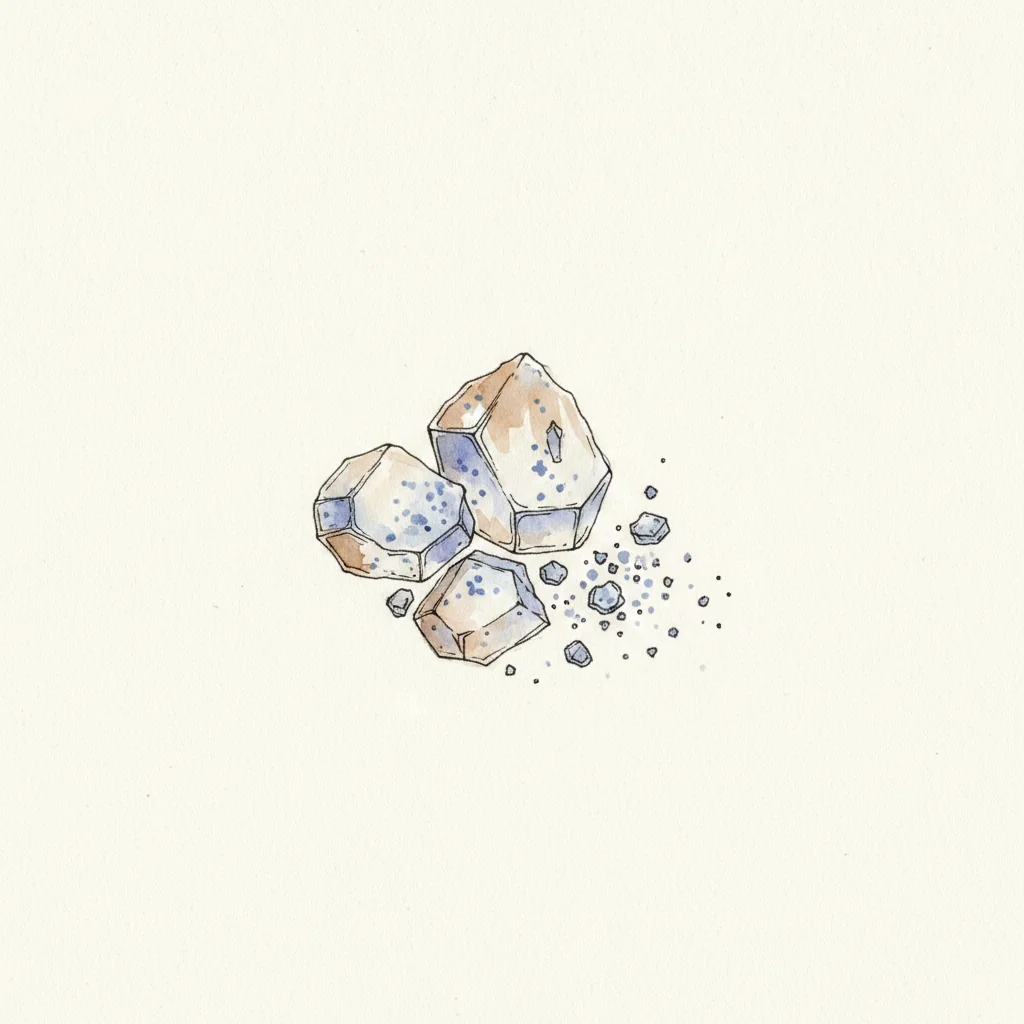
Salt · Rock salt
Persian Blue Salt
Semnan province, central desert mines, Iran
round salinity · clean mineral · cold stone
Our verdict
Pink for everyday and the salt block; Persian blue for fine-dining finishing.
At a glance
| Criterion | Himalayan Pink Salt | Persian Blue Salt |
|---|---|---|
| Origin | Khewra Salt Mine, Punjab, Pakistan (not India, not the Himalayas proper) | Semnan province, central Iranian desert mines |
| What it actually is | Fossil halite, color is just iron oxide. A commodity rock salt | Fossil halite with natural sylvinite, the blue is a real potassium mineral |
| Profile | Round salinity, warm mineral, faint metallic trace-element edge | Round salinity, clean cold-stone mineral, faint metallic edge, quiet umami |
| Intensity | 6/10 | 7/10 |
| Texture | Hard, slow-dissolving crystals, no flaky crunch | Hard translucent crystals that melt slowly, a salinity that stretches out |
| Best use | Salt-block searing, carpaccio, tomato salad, a margarita rim | Foie gras, raw scallops, white truffle, carpaccio, a Champagne flute rim |
| Rarity and price | Commodity, ~$5 to $6 a pound (2 lb bag ~$8 to $14) | One of the rarest salts on earth, ~$13 to $15 for 100 g |
| Value verdict | Cheap, buy it for the salt block, skip the wellness halo | A splurge that earns it on the precious end of the plate |
When to choose Himalayan Pink Salt
Reach for pink Himalayan salt for what it actually is: a cheap, attractive rock salt, not a health supplement. It comes from the Khewra mine in Pakistan, despite the name it is neither Indian nor from the Himalayas proper, and its pink color is just fossilized iron oxide. The salinity is rounder and warmer than a sea salt, with a faint trace-element edge and a slightly metallic finish from the iron. Its real strengths are physical. A solid Himalayan salt block heated on the stove or grill gives you a striking surface to sear a steak or cook carpaccio directly on the stone, seasoning the food as it cooks. Crushed coarse, it works on a tomato salad, hard-boiled eggs, fresh cheeses, or a margarita rim where the pink color is part of the show. What it is not is a flaky finishing salt, so do not expect a clean shattering crunch, and there is no payoff scattering it into a braise or a stock where any salt would do. The wellness halo, the talk of 84 trace minerals, is marketing: the amounts are nutritionally meaningless. At roughly $5 to $6 a pound, a 2 lb bag runs about $8 to $14, and it keeps indefinitely since it is a fossil salt. Buy it for the warm crunch and the salt block, not the mineral myth, and you will get exactly your money's worth.
When to choose Persian Blue Salt
Reach for Persian blue salt when the plate is precious enough to justify one of the rarest salts on earth. It is mined in the Iranian desert province of Semnan, and its pale-blue-to-indigo color is not dye but natural sylvinite, a potassium mineral that bends light inside the crystal, so the blue is real and structural. The salinity is round with a clean cold-stone minerality, a faint metallic edge and a quiet umami close that stretches out rather than spiking. That makes it a finishing salt for the high end: seared foie gras, raw scallops and crudo, beef carpaccio, shaved white truffle, soft-boiled eggs on toast, even a few crystals on the rim of a Champagne flute. Use it like jewelry, a few whole crystals or a light pass on a microplane scattered at the last second, where the blue glints against the food. The rules are about protecting both the color and the spend: do not cook with it, because long heat washes the blue out, and do not scatter it on dishes already dark or blue, where the effect and the money are both lost. Expect around $13 to $15 for a small 100 g jar, several times the price of the pink per gram, so this is not your seasoning salt. Keep it in an airtight, opaque jar away from humidity, where it lasts indefinitely and holds its color in the dark. Between the two, pink is the workhorse and blue is the occasion.
Where to buy?
Himalayan Pink Salt
Links checked on
| Merchant | Price | Action |
|---|---|---|
| Amazon US | — | Amazon US |
| Spicewalla | — | Spicewalla |
| Sous Chef UK | — | Sous Chef UK |
Prices may vary depending on current promotions on the merchant site.
Persian Blue Salt
Links checked on
| Merchant | Price | Action |
|---|---|---|
| Amazon US | — | Amazon US |
| Persian Basket | — | Persian Basket |
| Sous Chef UK | — | Sous Chef UK |
Prices may vary depending on current promotions on the merchant site.
Frequently asked questions
- Is Persian blue salt dyed?
- No. The blue is natural sylvinite, a potassium mineral that forms inside the crystal and bends light, giving the pale-blue-to-indigo color. It comes from the Semnan desert mines in Iran and is one of the rarest salts on earth, which is why it costs around $13 to $15 for 100 g.
- Does pink Himalayan salt have health benefits?
- Not meaningfully. The talk of 84 trace minerals is marketing; the amounts are nutritionally negligible. Its pink color is just iron oxide. Buy it as a cheap, attractive rock salt for the salt block and a warm crunch, not as a supplement.
- Which one can I cook with?
- Neither shines in cooking. Pink can be used as a heated salt block to sear on, but in a braise any salt does the same job. Persian blue must stay raw, because heat washes the blue out and wastes the price. Both are best raw or finishing.
- Which is the better value?
- For everyday use, pink Himalayan at about $5 to $6 a pound is far cheaper and does the job. Persian blue is a genuine splurge that earns its place only on precious dishes like foie gras, scallops or white truffle.
The best pairings
With Himalayan Pink Salt
With Persian Blue Salt
Comparison prepared according to our methodology. Sponsored purchase links — see our affiliations.