
Comparison
Saffron vs Tahitian vanilla: which precious spice earns the splurge?
They don't compete — they cover opposite ends of the plate. Iranian Sargol saffron ($11 a gram) is your savory luxury: paella, risotto, tagine, where a pinch carries a whole pan. Tahitian vanilla (~$6.50 a bean) is the sweet, floral one for cold fruit and cured fish. Buy saffron first if you cook savory.
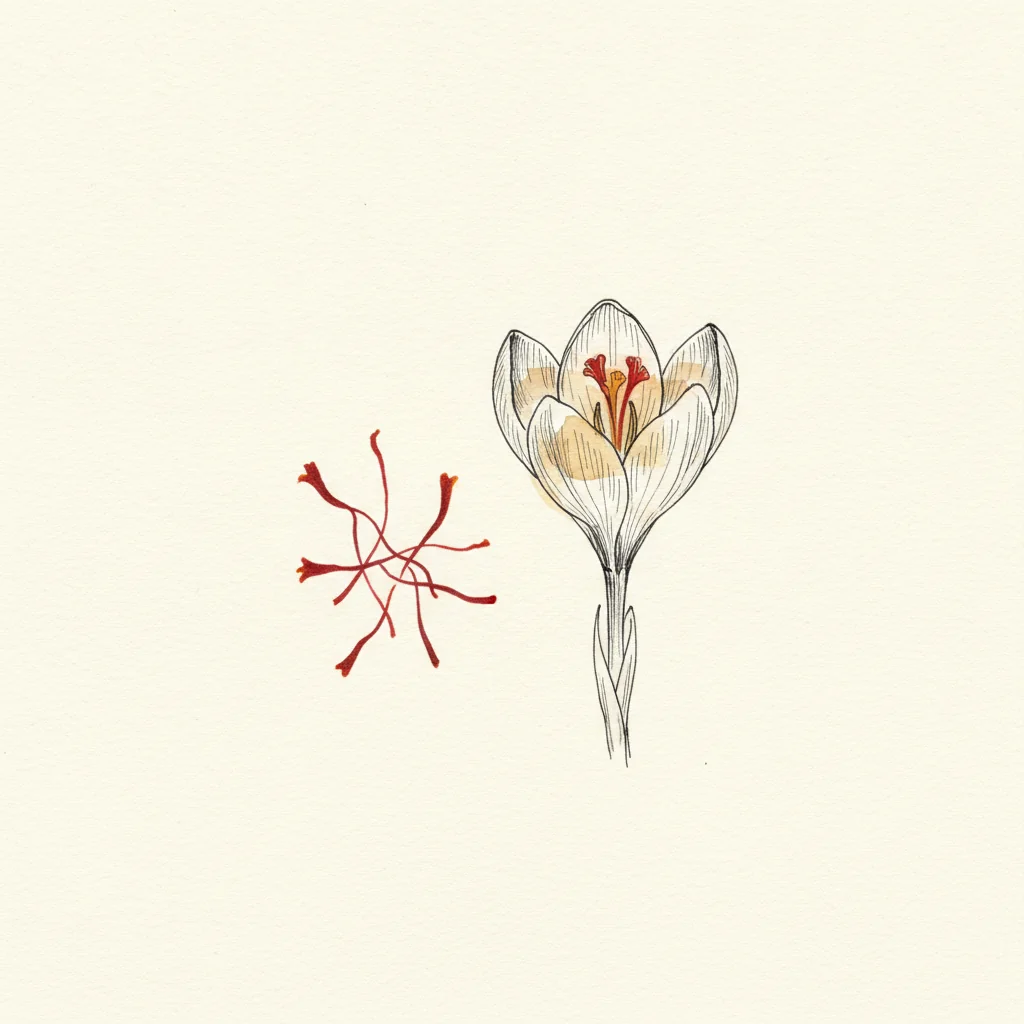
Spice · Saffron
Iranian Saffron (Sargol)
Khorasan, around Torbat-e Heydarieh, Ghaen and Birjand, Iran
dry honey · warm hay · sea iodine
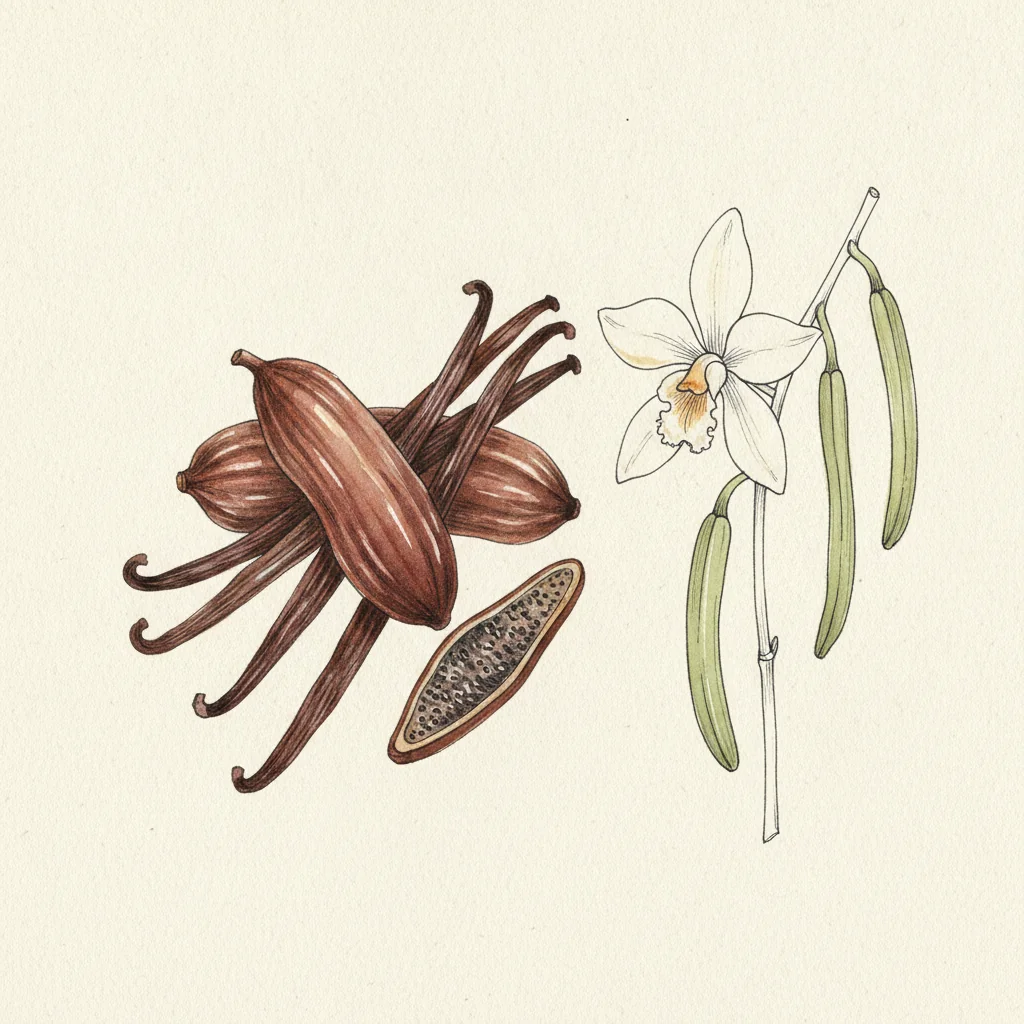
Spice · Vanilla
Tahitian Vanilla
Taha'a and Raiatea, Society Islands, French Polynesia
almond blossom · anise · fresh prune
Our verdict
Saffron for savory color and warmth; Tahitian vanilla for cold, floral, delicate work.
At a glance
| Criterion | Iranian Saffron (Sargol) | Tahitian Vanilla |
|---|---|---|
| Origin | Iran — Khorasan, around Torbat-e Heydarieh and Ghaen | French Polynesia — Taha'a and Raiatea |
| What it is | Crocus sativus stigma tips (Sargol cut), ISO 3632 graded | Vanilla tahitensis pod, anisaldehyde-led |
| Intensity | 9/10 — dry, elegantly bitter, slow warmth | 6/10 — perfumed more than sweet |
| Main notes | Dry honey, warm hay, sea iodine | Almond blossom, anise, fresh prune |
| Best use | Paella, risotto alla milanese, tagine, biryani, bouillabaisse | Cold fruit desserts, panna cotta, cured salmon, beurre blanc |
| Price | ~$11 a gram ($8–$15) | ~$6.50 a bean ($4–$9 each) |
| Value | A pinch (15–25 threads) seasons four — cost per dish is tiny | Worth it for cold, delicate work; a splurge to cook hard |
When to choose Iranian Saffron (Sargol)
Choose Iranian saffron when the dish is savory and you want color, warmth and a noble bitterness no other spice gives. Sargol means the red stigma tips only, with none of the yellow style padding the weight, so you're paying for pure flavor — exactly where the three ISO 3632 markers concentrate: crocin for color, picrocrocin for bitterness, safranal for aroma. A good Sargol runs past 250 on the coloring scale against roughly 120 for a Negin cut. The Iranian profile is drier and more iodine-driven than Spanish saffron, with a finish close to hay and blond tobacco, which is what makes it so effective in tiny doses in long-simmered dishes. Four scenarios where saffron is the clear pick. First: paella, where it does double duty as color and as the spice that ties seafood, chicken and rice together. Second: risotto alla milanese, a dish that exists to show off saffron and almost nothing else. Third: a Moroccan tagine or a biryani, where its warmth threads through the other spices instead of fighting them. Fourth: bouillabaisse, where the iodine note meets the shellfish head-on. The one rule that separates a great saffron dish from a wasted gram: steep first. Bloom 0.1 to 0.2 g — about 15 to 25 threads — in a little warm liquid for 20 to 30 minutes before you cook, so the color and aroma fully release; throw dry threads into hot fat and you scorch them and pay for nothing. Iran grows close to 90 percent of the world's saffron, and the harvest is brutal: each flower gives three stigmas, so it takes about 150,000 flowers for one kilo, which is why it's the most expensive spice on earth by weight. But cost per dish is small, because a pinch carries the whole pan. The catch worth its own line is fraud: powder cut with turmeric, dyed safflower sold as threads, Sargol bulked with other flower parts. Buy whole threads, a deep even red with only the faintest orange at the base, store them in an opaque jar kept dark and dry, and they hold two to three years with no real loss.
When to choose Tahitian Vanilla
Choose Tahitian vanilla when the work is sweet — or quietly savory — and never goes near sustained heat. It's a separate expression of Vanilla tahitensis led by anisaldehyde, which is why it reads floral and anise: almond blossom, fresh prune, candied cherry, soft licorice and a faint coconut behind. Vanillin runs low, around 1.5 to 2 percent, so it's less sweet on the tongue and far more perfumed in the air than a Bourbon bean. That perfume is the whole reason to buy it, and it's volatile — hold it above 175°F / 176°F (80°C) and the floral compounds drive off, so this is a finishing vanilla, not a baking workhorse. Four scenarios where it's the right grain. First: poached fruit and exotic fruit salads, where the floral side talks straight to mango, strawberry, pineapple and citrus. Second: a panna cotta or any cold cream set off the heat, scraped in at the finish. Third: cocktails and rum infusions you want bright rather than woody. Fourth — the quiet trick most cooks miss — cured salmon, raw scallops and a beurre blanc on white fish, where a whisper of anise lifts the plate without sweetening it. The move is always: split, scrape, add at the finish, or steep briefly off the heat. Unlike saffron, vanilla never does color and it never does savory warmth in a stew — drop it into a tagine and you've wasted both. The pod is shorter, broader and plumper than a Madagascar bean, with moisture often above 30 percent, so it stays supple and stores well: an airtight glass tube at room temperature, never the fridge, holds it 18 months. Buy plump glossy Grade A beans 6 to 8 inches long with no dry vanillin crust, and check the label says Tahitensis, not 'Tahitian-style.' At about $6.50 a bean it's a true splurge per pod, but for cold fruit desserts and cured fish it does something saffron simply can't.
Where to buy?
Iranian Saffron (Sargol)
Links checked on
| Merchant | Price | Action |
|---|---|---|
| Amazon US | — | Amazon US |
| Slofoodgroup | — | Slofoodgroup |
| Sous Chef UK | — | Sous Chef UK |
Prices may vary depending on current promotions on the merchant site.
Tahitian Vanilla
Links checked on
| Merchant | Price | Action |
|---|---|---|
| Amazon US | — | Amazon US |
| Native Vanilla | — | Native Vanilla |
| Sous Chef UK | — | Sous Chef UK |
Prices may vary depending on current promotions on the merchant site.
Frequently asked questions
- Which is more expensive, saffron or Tahitian vanilla?
- Saffron is dearer by weight — about $11 a gram for real Iranian Sargol against roughly $6.50 for a whole Tahitian bean. But cost per dish flips: a pinch of saffron seasons four servings, while a recipe may want a whole vanilla pod, so the per-plate gap is smaller than the headline price suggests.
- Can one ever stand in for the other?
- No. They sit at opposite ends of the plate. Saffron drives savory color, bitterness and iodine warmth into paella, risotto and tagine; Tahitian vanilla perfumes cold fruit, cream and cured fish. Swap one for the other and you ruin the dish in both directions.
- Is Iranian saffron worth it over Spanish?
- Often, yes — and a label saying 'Spanish' may still hold Iranian threads, since much of Iran's crop is re-exported through Spain or the UAE. The Iranian profile is drier and more iodine-driven; buy whole Sargol threads, a deep even red, and steep before cooking.
- How do I avoid fake saffron?
- Buy whole threads, never powder. Want a deep, even red with only the faintest orange at the base; reject anything yellow-heavy, which is filler. Steeped real threads release a slow golden color and a hay-honey aroma — instant bright orange water is dye.
The best pairings
With Iranian Saffron (Sargol)
With Tahitian Vanilla
Comparison prepared according to our methodology. Sponsored purchase links — see our affiliations.