
Comparison
Kala namak vs Persian blue salt: which specialty salt?
Opposite jobs. Kala namak is a flavor tool, about $7 to $9 a jar, with a hard-boiled-egg sulfur note for chaat and vegan scrambles. Persian blue is a rare finishing salt, around $13 to $15 for 100 g, all about clean mineral salinity and a blue glint on foie gras or scallops. Cooking flavor, kala namak. Fine-dining finish, blue.
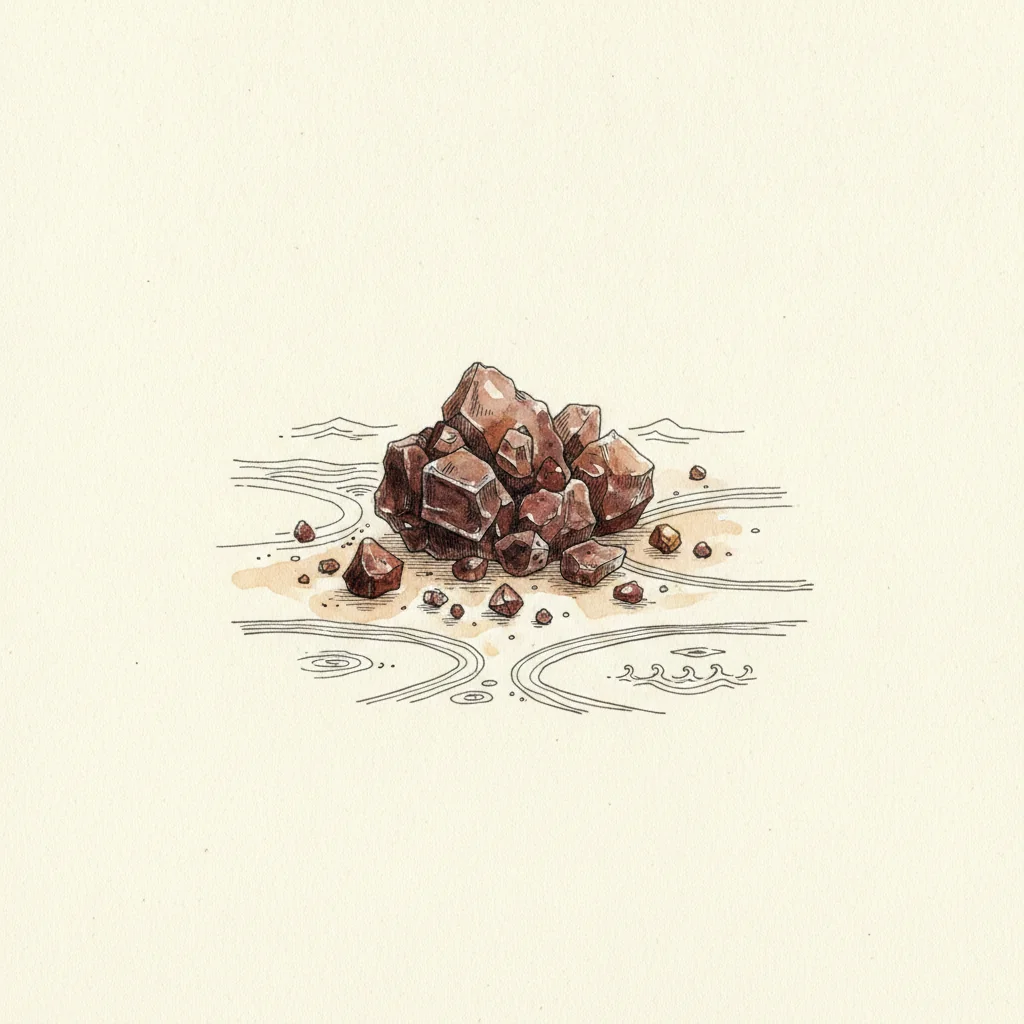
Salt · Rock salt
Kala Namak (Black Salt)
Sindh region and North India, India
hard-boiled egg · volcanic sulfur · savory umami
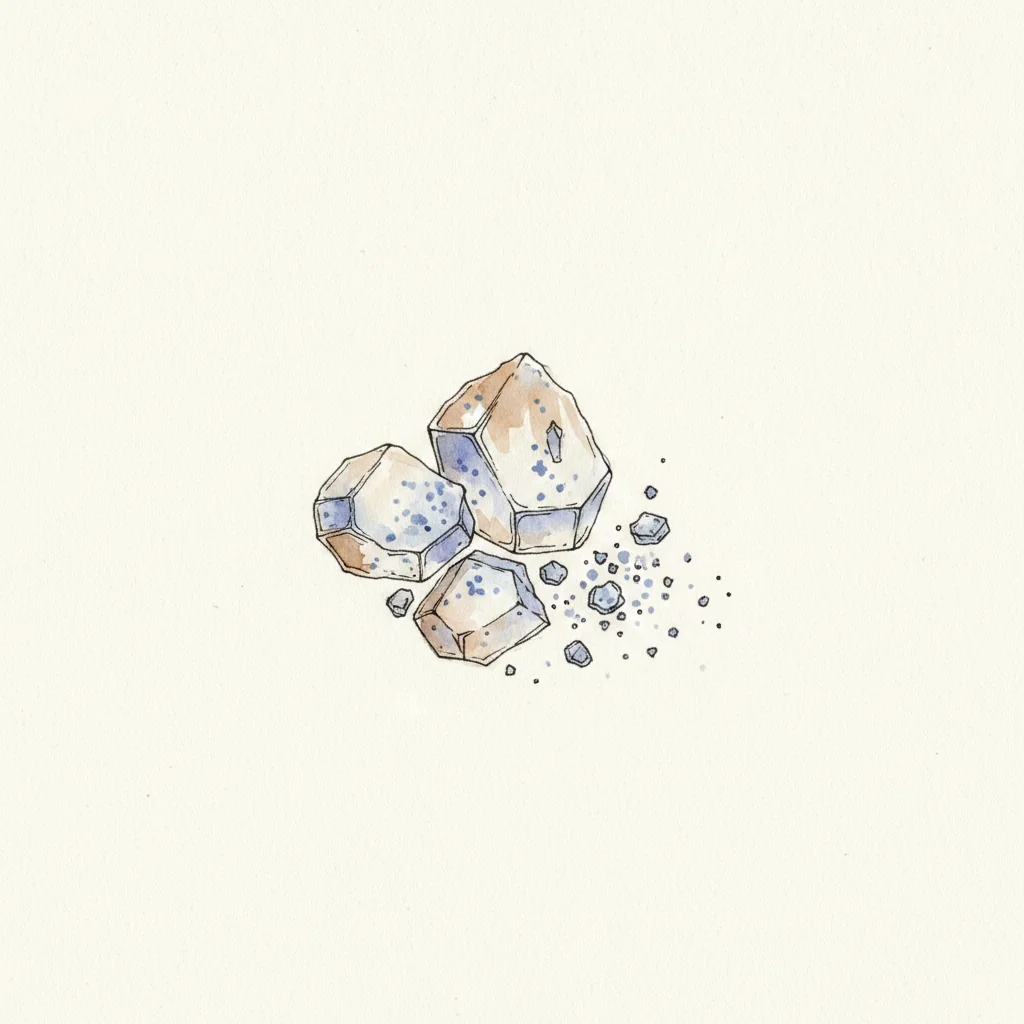
Salt · Rock salt
Persian Blue Salt
Semnan province, central desert mines, Iran
round salinity · clean mineral · cold stone
Our verdict
Kala namak for egg-sulfur flavor; Persian blue for a rare, beautiful finish.
At a glance
| Criterion | Kala Namak (Black Salt) | Persian Blue Salt |
|---|---|---|
| Origin | Sindh region and North India, kiln-fired | Semnan province, central Iranian desert mines |
| What it actually is | Rock salt fired with sulfur compounds, a flavor ingredient | Fossil halite with natural sylvinite, a rare finishing salt |
| Profile | Hard-boiled egg, volcanic sulfur, savory umami, smoky mineral | Round salinity, clean cold-stone mineral, faint metallic edge, quiet umami |
| Intensity | 8/10 — the sulfur dominates | 7/10 — subtle, the look does half the work |
| Color and look | Dark red-brown crystals, pinkish-grey ground | Pale blue to indigo, natural sylvinite bending the light |
| Best use | Chaat, tofu scramble, vegan mayo, raita, hummus | Foie gras, raw scallops, white truffle, carpaccio, a Champagne rim |
| Price | ~$7 to $9 for a 4 oz jar | ~$13 to $15 for a 100 g jar |
| Value verdict | Cheap, near-indispensable for vegan and Indian cooking | A splurge that earns it on the precious end of the plate |
When to choose Kala Namak (Black Salt)
Reach for kala namak when flavor is the point and you specifically want its egg-sulfur signature. Despite the name 'black salt,' the crystals run dark red-brown, and the defining trait is the smell: a vivid hard-boiled-egg note from kiln-firing the rock salt with charcoal and botanicals in the Sindh tradition, carried by a surprising umami roundness. That makes it the backbone of Indian chaat and fruit chaat, and the single thing that makes a tofu scramble, vegan mayo, chickpea omelet or vegan 'egg' dish actually taste of egg. It also lifts yogurt raita, green mango, cucumber and hummus. Use a small pinch per portion, raw or off the heat at the very end, since the sulfur compounds cook off over long heat and a heavy hand tips savory into rotten. Skip it where there is already egg, and on sweet dishes. Against Persian blue, the contrast is total: kala namak is loud, savory and functional, a cooking ingredient you taste, while the blue is quiet, mineral and visual, a salt you look at as much as taste. They are not competing for the same plate. A 4 oz jar runs about $7 to $9 and lasts roughly 18 months, longer if you keep whole crystals rather than powder to protect the aroma. If your cooking leans vegan, Indian or chaat-forward, this is the jar that earns its shelf space, and its loud sulfur note is exactly what the restrained Persian blue is not built to give.
When to choose Persian Blue Salt
Reach for Persian blue salt when the dish is precious and you want a finish that is as much about the eye as the tongue. Mined in the Iranian desert province of Semnan, it is one of the rarest salts on earth, and its pale-blue-to-indigo color is not dye but natural sylvinite, a potassium mineral that bends light inside the crystal. The salinity is round with a clean cold-stone minerality, a faint metallic edge and a quiet umami close that stretches out rather than spiking. That restraint is the whole design: it finishes the high end without shouting, where kala namak's loud sulfur would wreck it. Use it on seared foie gras, raw scallops and crudo, beef carpaccio, shaved white truffle, soft-boiled eggs on toast, or a few crystals on the rim of a Champagne flute. Treat it like jewelry, a few whole crystals or a light pass on a microplane scattered at the last second so the blue glints against the food. The rules protect color and spend alike: never cook with it, since long heat washes the blue out, and never scatter it on dishes already dark or blue, where the effect and the money both vanish. Expect around $13 to $15 for a small 100 g jar, several times kala namak's price per gram, so this is an occasion salt, not a daily one. Kept in an airtight, opaque jar away from humidity it lasts indefinitely and holds its color in the dark. Where kala namak is a workhorse flavor, the blue is pure finishing theater.
Where to buy?
Kala Namak (Black Salt)
Links checked on
| Merchant | Price | Action |
|---|---|---|
| Amazon US | — | Amazon US |
| Burlap & Barrel | — | Burlap & Barrel |
| Sous Chef UK | — | Sous Chef UK |
Prices may vary depending on current promotions on the merchant site.
Persian Blue Salt
Links checked on
| Merchant | Price | Action |
|---|---|---|
| Amazon US | — | Amazon US |
| Persian Basket | — | Persian Basket |
| Sous Chef UK | — | Sous Chef UK |
Prices may vary depending on current promotions on the merchant site.
Frequently asked questions
- Do kala namak and Persian blue taste similar?
- Not at all. Kala namak is loud and sulfurous, with a hard-boiled-egg note and savory umami. Persian blue is quiet and mineral, a clean round salinity with a faint metallic edge. One is a flavor ingredient, the other a subtle finishing salt.
- Can I use Persian blue salt in cooking?
- No. Long heat washes the blue color out and wastes the price. Persian blue is a finishing salt for raw or just-plated dishes like foie gras, scallops and carpaccio, where the color glints. Kala namak is also best off the heat, since its sulfur cooks off.
- Which is better value?
- Kala namak, for most cooks, at $7 to $9 a jar; it is near-indispensable for vegan and Indian cooking. Persian blue at $13 to $15 for 100 g is a genuine splurge that pays off only on precious finishing dishes.
- Is Persian blue salt's color natural?
- Yes. The blue comes from natural sylvinite, a potassium mineral that bends light inside the crystal, not from any dye. It is mined in Iran's Semnan desert and is one of the rarest salts on earth, which is reflected in its price.
The best pairings
With Kala Namak (Black Salt)
With Persian Blue Salt
Comparison prepared according to our methodology. Sponsored purchase links — see our affiliations.