
Kala Namak, Indian Black Salt (Sindh region, North India)
In brief — Kala namak isn't black, despite the name: the crystals are a dark red-brown. What makes it singular is the smell, a vivid hard-boiled-egg note from kiln-firing the rock salt with charcoal and botanicals. It's the backbone of Indian chaat and the secret behind every convincing tofu scramble. Use a pinch, off the heat. A jar runs about $7 to $9 and lasts forever. Its aromatic profile develops notes of hard-boiled egg, volcanic sulfur, savory umami, extended by smoky mineral and hot iron, for an intensity of 8/10. In the kitchen, it's best added raw or off the heat at the very end and it pairs with Indian chaat and fruit chaat, tofu scramble (vegan eggs), vegan mayo and chickpea omelet. Recommended dosage: a small pinch per portion; the sulfur is concentrated and a heavy hand turns savory into rotten. Expect from $5.00 to $12.00 per 4 oz jar / 100 g (median $8.00).
Origin : Sindh region and North India, India
« Nothing else replicates that hard-boiled-egg hit, which makes it indispensable for chaat and vegan scrambles. Buy whole crystals, not powder. The panel docks it half a point for one-trick range and overuse turning savory into sulfurous. »
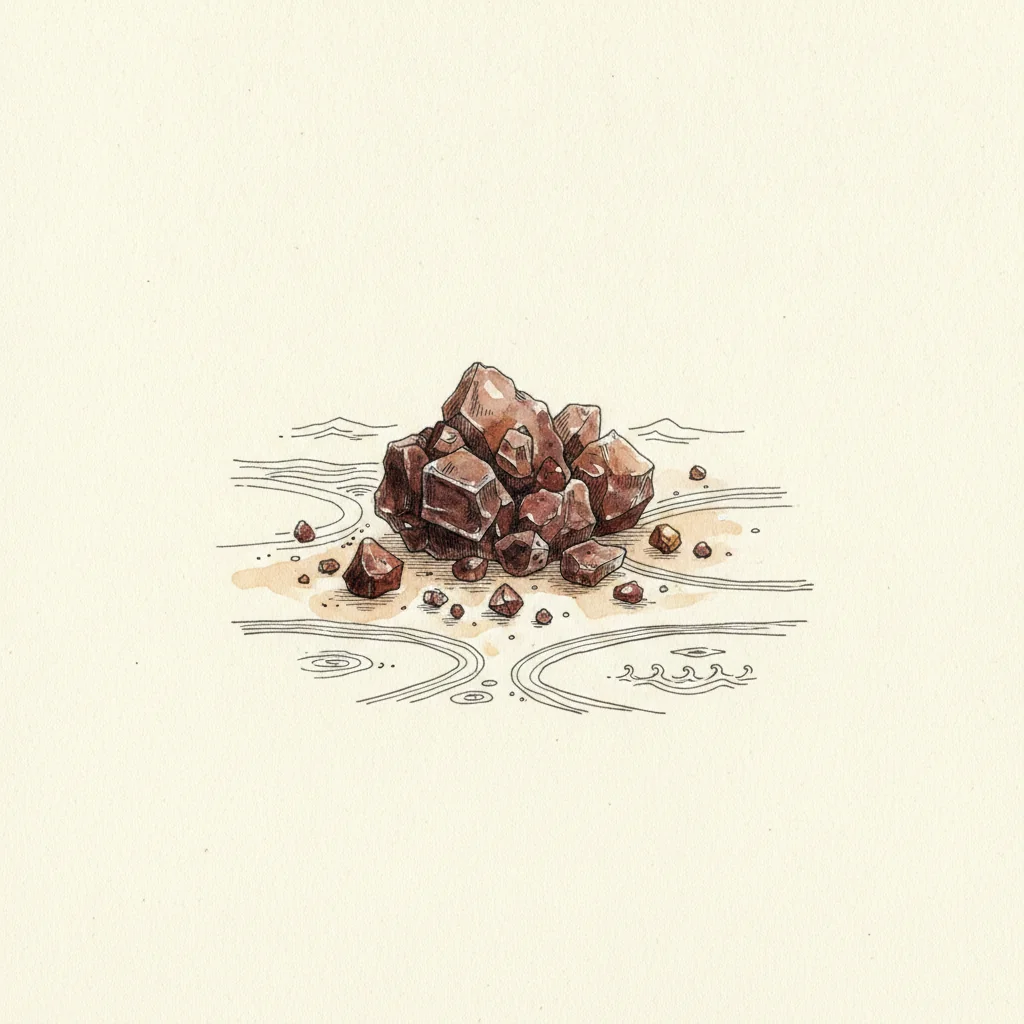
Kala namak isn't black, despite the name: the crystals are a dark red-brown. What makes it singular is the smell, a vivid hard-boiled-egg note from kiln-firing the rock salt with charcoal and botanicals. It's the backbone of Indian chaat and the secret behind every convincing tofu scramble. Use a pinch, off the heat. A jar runs about $7 to $9 and lasts forever.
Salt · Rock salt
Kala Namak (Black Salt)
Sindh region and North India, India
hard-boiled egg · volcanic sulfur · savory umami
Aromatic profile
| Family | Kiln-fired rock salt with sulfur compounds |
|---|---|
| Intensity | ●●●●○ (8/10) |
| Main notes | hard-boiled egg · volcanic sulfur · savory umami |
| Secondary notes | smoky mineral · hot iron |
| Mouthfeel | moderate salinity, an immediate sulfurous hit, then a surprising umami roundness |
| Finish length | long, with a tenacious eggy-sulfur signature that lingers |
Culinary use
- When to add : raw or off the heat at the very end
- Dosage : a small pinch per portion; the sulfur is concentrated and a heavy hand turns savory into rotten
- Ideal pairings : Indian chaat and fruit chaat, tofu scramble (vegan eggs), vegan mayo and chickpea omelet, yogurt raita, green mango and cucumber, hummus
- Avoid with : dishes that already contain egg, very sweet preparations, long cooks (the sulfur compounds cook off)
The grain in detail
Kala namak (काला नमक, literally black salt) is one of the most distinctive salts on the planet, and almost none of its character is what you'd guess. It starts as fossil rock salt from the Sindh region, a close cousin of Himalayan pink, which is then kiln-fired at high heat in sealed crucibles with charcoal, harad seeds, bark and herbs. That firing, inherited from Ayurvedic medicine, generates sulfur compounds, chiefly iron sulfide and sodium polysulfide, that give the salt its unmistakable smell: a strong hard-boiled-egg aroma you clock the second you open the jar. The whole crystals are dark red-brown to violet-black; ground fine, the powder turns a pinkish purple. The salinity itself is only moderate. What dominates is the savory, sulfurous lift. In Indian cooking it's essential to chaat (the spiced mixes scattered over green fruit and snacks), chutneys, yogurt raita, jaljeera and chaat masala. In modern plant-based cooking it has become the standard trick for faking egg: a pinch in a tofu scramble, vegan mayo or a chickpea omelet rewires how your nose reads the dish, no egg required. It's also good on green mango, fresh cucumber and hummus. The catch is heat. Cook it long and the volatile sulfur compounds burn off, so this is a raw or end-of-cook seasoning, full stop. When you buy, check that the crystals are dark red-brown rather than charcoal black, and that the sulfur smell is immediate on opening. Whole crystals hold their aroma far longer than the pre-ground powder.
History & origin
Kala namak has been used in Ayurvedic medicine for over 2,000 years, prized as a digestive aid. Its traditional production, in the earthen kilns of the Sindh region, stays small and is concentrated in a handful of families. The charcoal-firing with botanical additions is the distinctive step that separates it from ordinary rock salt. Its mass adoption by Western vegan cooking in the 2010s, largely through American plant-based food blogs, multiplied demand and pulled in more industrial production worth watching.
Indicative price
Reference format : 4 oz jar / 100 g — from $5.00 to $12.00 (median : $8.00).
Storage
Airtight, opaque jar away from humidity. Keeps about 18 months. Store whole crystals rather than powder to preserve the sulfur aroma.
Where to buy?
Where to buy it
Links checked on
| Merchant | Price | Action |
|---|---|---|
| Amazon US | — | Amazon US |
| Burlap & Barrel | — | Burlap & Barrel |
| Sous Chef UK | — | Sous Chef UK |
Prices may vary depending on current promotions on the merchant site.
Alternatives if unavailable
Tags
- India
- Sindh
- Ayurvedic salt
- sulfur
- vegan
- egg flavor
Frequently asked questions
- How do you store Kala Namak (Black Salt)?
- Airtight, opaque jar away from humidity. Keeps about 18 months. Store whole crystals rather than powder to preserve the sulfur aroma.
- What dosage for Kala Namak (Black Salt)?
- a small pinch per portion; the sulfur is concentrated and a heavy hand turns savory into rotten
- When should you add Kala Namak (Black Salt) in cooking?
- It's best used raw or off the heat at the very end.
- What should you avoid pairing Kala Namak (Black Salt) with?
- Avoid with: dishes that already contain egg, very sweet preparations, long cooks (the sulfur compounds cook off).
Go further
Terroir
Région du Terai, India / Népal
See this product on the world map of origins — India / Népal.
The dishes where this kala namak (black salt) shines
Also a recommended alternative for
See every dish where this product is mentioned →
Other salts to discover
Featured in these gift sets
Page prepared according to our methodology. Purchase links marked sponsored and liable to earn a commission — details on our Affiliations page.