
Comparison
Kampot black vs red pepper: which to buy?
Same Kampot PGI vines, different ripeness. Black is picked green and gives clean, eucalyptus-bright heat for steak, fish and eggs — your everyday Kampot. Red is picked deep-ripe and tastes of strawberry, honey and mint, gentle enough to crack whole on raw scallops and fruit. Buy black to cook, red to finish.
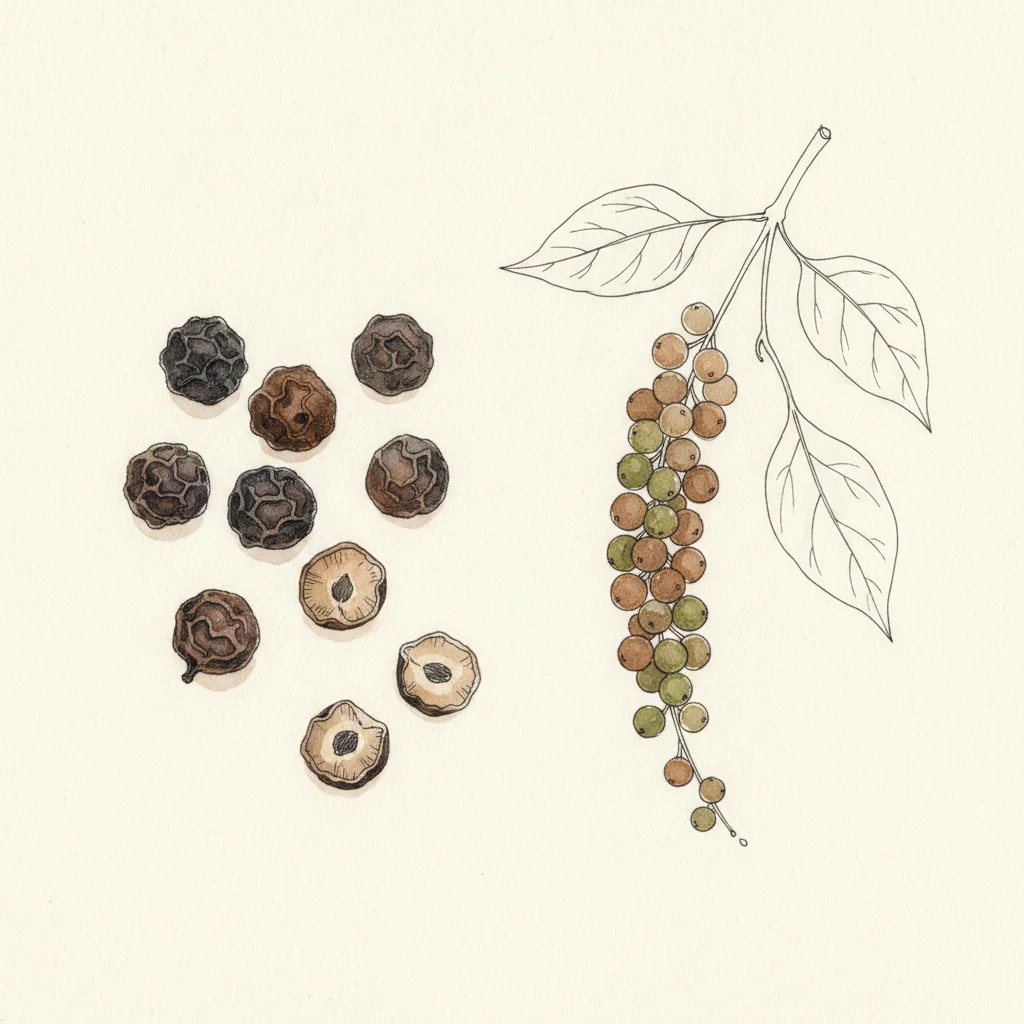
Pepper · Black pepper
Kampot Black Pepper
Kampot and Kep provinces, Cambodia (PGI)
eucalyptus · dried white flowers · green citrus
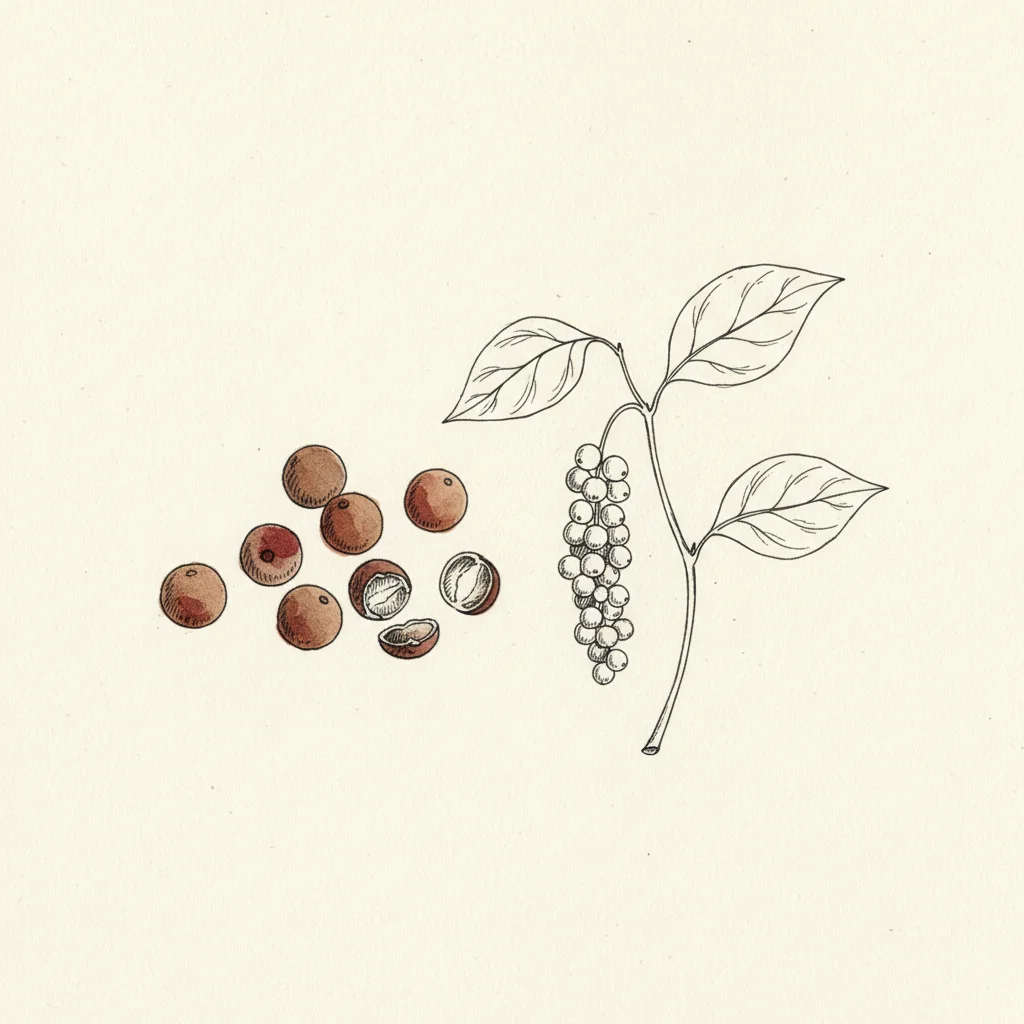
Pepper · Red pepper
Kampot Red Pepper
Kampot and Kep provinces, Cambodia (PGI)
fresh red berries · acacia honey · soft mint
Our verdict
Black Kampot for everyday cooking; red Kampot as a fruity finishing pepper, raw.
At a glance
| Criterion | Kampot Black Pepper | Kampot Red Pepper |
|---|---|---|
| Botanical name | Piper nigrum | Piper nigrum |
| Origin | Kampot & Kep, Cambodia | Kampot & Kep, Cambodia |
| Appellation | PGI | PGI |
| Ripeness at harvest | Green, before it turns red | Deep red on the vine, hand-harvested |
| Intensity | 8/10 — clean, fresh, waking heat | 7/10 — rounded sweetness, gentle fading bite |
| Main notes | Eucalyptus, dried white flowers, green citrus | Fresh red berries, acacia honey, soft mint |
| Best use | Seared steak, roasted fish, eggs, cheese | Strawberries, raw scallops, carpaccio, foie gras |
| Median price | ~$12 / 50 g | ~$15 / 50 g |
When to choose Kampot Black Pepper
Reach for Kampot black as your everyday Cambodian pepper. Picked just before it turns red and sun-dried for a few days, it smells of eucalyptus and green citrus instead of dusty heat, and gives a clean, bright bite that wakes meat up without flattening it — the PGI reference for Asian pepper. Grind it two or three turns at the end of cooking or raw over the plate: seared steak, sautéed crab, roasted fish, scrambled eggs, green mango salad, aged cheese. It's the one of the two you actually cook with, because its fresh top notes can take a little heat where red's fruit can't. That said, even black is best added late — very long simmers cook off the eucalyptus lift, and you'd lose what makes Kampot worth the price. Skip it on dishes already heavy with menthol or eucalyptus, where it doubles up, and on acidic marinades that flatten it. Where black loses to red is the raw, sweet register: it has heat and freshness but none of red's strawberry-and-honey roundness, so on fruit, raw scallops or a beef carpaccio it's the wrong tool. At about $12 for a 50 g tube it's the cheaper and more versatile of the two — the Kampot to own first. Grind it fresh, at the end, and treat it as the bright everyday upgrade over supermarket black pepper.
When to choose Kampot Red Pepper
Reach for Kampot red when you want fruit and sweetness, raw. It's the prize cut of Cambodia's peppers: berries left to ripen deep red on the vine and sun-dried whole, PGI-protected, hand-harvested and genuinely rare. The flavor runs to fresh strawberry, acacia honey and soft mint, with a rounded sweetness up front and a bite gentle enough to fade fast rather than build — gentle enough, in fact, to crack a whole grain between your teeth at the table. That softness is the real appeal, and it makes red a finishing pepper for raw and sweet plates where black's clean heat would be too sharp: strawberries and raspberries, raw scallops, beef carpaccio, seared foie gras, salmon tartare, fresh goat cheese. Dose it as one or two whole berries to crack, or a coarse crush over the plate just before serving. The catch is fragility: long braises cook the fruity top notes straight off, heavily spiced sauces bury it, and sharp acidic dishes flatten the honey — so don't cook with it and don't waste it where something loud is already going on. It's also the pricier of the two, about $15 for a 50 g jar versus black's $12. Buy red second, after you own black, and reach for it specifically when the job is to finish something delicate, raw or sweet — the moments where black would overpower and a fruity, honeyed crunch is exactly right.
Where to buy?
Kampot Black Pepper
Links checked on
| Merchant | Price | Action |
|---|---|---|
| Amazon US | — | Amazon US |
| Sous Chef UK | — | Sous Chef UK |
| Kampot Pepper USA | — | Kampot Pepper USA |
Prices may vary depending on current promotions on the merchant site.
Kampot Red Pepper
Links checked on
| Merchant | Price | Action |
|---|---|---|
| Amazon US | — | Amazon US |
| La Plantation | — | La Plantation |
| ChefShop | — | ChefShop |
Prices may vary depending on current promotions on the merchant site.
Frequently asked questions
- What's the difference between Kampot black and red pepper?
- Same PGI vines, different ripeness. Black is picked green for a clean, eucalyptus-bright heat; red is picked deep-ripe for strawberry, honey and mint with a gentle, sweet bite. Black is for cooking, red for finishing raw.
- Which Kampot pepper should I buy first?
- Black. It's cheaper (~$12 vs ~$15 for 50 g), more versatile, and works through cooking. Add red later as a fruity finishing pepper for raw scallops, carpaccio and fruit.
- Can you cook with Kampot red pepper?
- Better not. Long braises and heat cook off the strawberry-and-honey top notes that justify the price. Use it raw — cracked whole at the table or coarsely crushed over a finished plate.
- Is Kampot red pepper hot?
- Mildly. It has a rounded sweetness up front and a gentle bite that fades fast, far softer than Kampot black. That's why you can crack a whole berry between your teeth without it being harsh.
The best pairings
With Kampot Black Pepper
With Kampot Red Pepper
Comparison prepared according to our methodology. Sponsored purchase links — see our affiliations.