
Kampot Red Pepper PGI (Kampot & Kep, Cambodia)
In brief — Kampot red is the prize cut of Cambodia's peppers: berries picked deep red on the vine and sun-dried whole. The flavor runs to fresh strawberry, acacia honey and soft mint, with a bite gentle enough to crack a whole grain at the table. PGI-protected, hand-harvested, and rare. A 50g jar runs about $15. Its aromatic profile develops notes of fresh red berries, acacia honey, soft mint, extended by candied citrus and rose petal, for an intensity of 7/10. On the palate, it offers rounded sweetness up front, a gentle bite that fades fast instead of building, with a medium finish, fresh and fruity rather than burning. In the kitchen, it's best added raw and it pairs with strawberries and raspberries, raw scallops, beef carpaccio. Recommended dosage: one or two whole berries to crack between the teeth, or a coarse crush over the plate just before serving. Expect from $13.00 to $18.00 per 50g jar (median $15.50).
Origin : Kampot and Kep provinces, Cambodia (PGI)
Piper nigrum
« Vine-ripened to full red, this gives a fruity roundness the black grain never reaches. The Cambodian PGI keeps origin honest, but the price climbs fast. Watch for fakes sold loose as Kampot around Phnom Penh. »
Kampot red is the prize cut of Cambodia's peppers: berries picked deep red on the vine and sun-dried whole. The flavor runs to fresh strawberry, acacia honey and soft mint, with a bite gentle enough to crack a whole grain at the table. PGI-protected, hand-harvested, and rare. A 50g jar runs about $15.
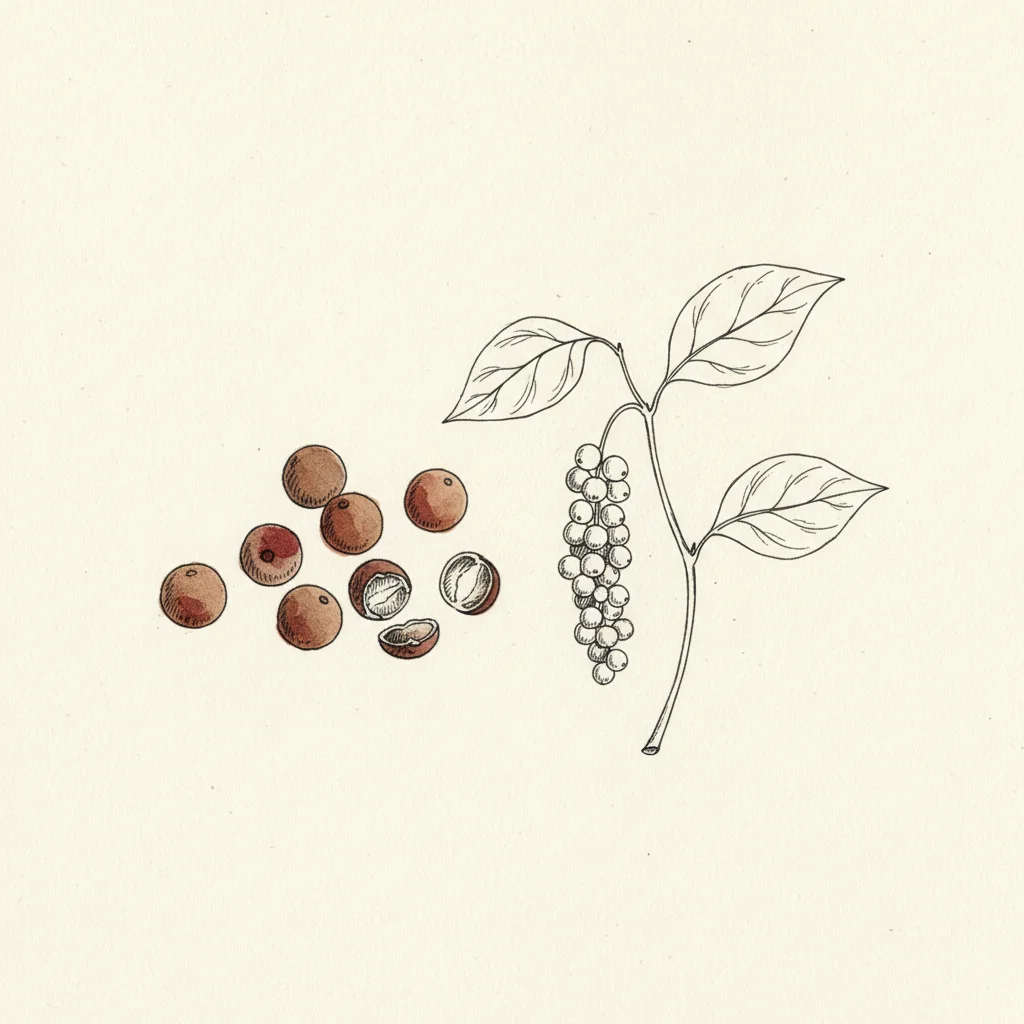
Pepper · Red pepper
Kampot Red Pepper
Kampot and Kep provinces, Cambodia (PGI)
fresh red berries · acacia honey · soft mint
Aromatic profile
| Family | Piper nigrum |
|---|---|
| Intensity | ●●●●○ (7/10) |
| Main notes | fresh red berries · acacia honey · soft mint |
| Secondary notes | candied citrus · rose petal |
| Mouthfeel | rounded sweetness up front, a gentle bite that fades fast instead of building |
| Finish length | medium, fresh and fruity rather than burning |
Culinary use
- When to add : raw
- Dosage : one or two whole berries to crack between the teeth, or a coarse crush over the plate just before serving
- Ideal pairings : strawberries and raspberries, raw scallops, beef carpaccio, seared foie gras, salmon tartare, fresh goat cheese
- Avoid with : long braises (the fruity top notes cook off), heavily spiced sauces that bury it, sharp acidic dishes
The grain in detail
Kampot pepper grows on the quartz-rich hill slopes of Kampot and Kep provinces in southern Cambodia, where fast-draining soil and the monsoon climate give the berries their signature fruit. The red is the rarest cut, roughly five percent of the harvest: berries left on the vine until they turn from orange-red to deep red, picked in a narrow window and sun-dried whole on tarps. Drying them with the ripe skin on is the whole point. The skin caramelizes faintly and releases notes you do not expect from a peppercorn at all: strawberry, raspberry, acacia honey, soft mint. The piperine is there but restrained, so you can crack a whole grain between your teeth without it fighting back, which is exactly how to use it. This is a raw, finishing pepper. Cook it into a long braise and the fresh fruit cooks off, leaving you paying rare-pepper money for plain heat. Crush it coarse over strawberries, raw scallops, beef carpaccio, salmon tartare or seared foie gras, off the heat, right before serving. The PGI growers, organized under the Kampot Pepper Promotion Association, follow a strict standard: hand-harvest berry by berry, no synthetic pesticides, sun-drying only. Named farms like La Plantation, Starling Farm and Sothy's work organically with deliberately low yields, harvesting February through May. The catch when you buy: a Kampot red that looks dull brown or smells flat is old or badly stored. You want a real deep-red color and an immediate fruity nose. And mind the fakes sold loose around Phnom Penh as Kampot when they are not PGI-certified.
History & origin
In the nineteenth century Kampot pepper was one of the priciest spices on the Paris market, stocked by Fauchon and Hediard. The Khmer Rouge banned its cultivation and the trade nearly vanished. It was rebuilt from the 1990s by a handful of surviving planters and incoming French growers; the PGI was secured in 2010, structuring the supply around some 400 producers. La Plantation, founded by Nathalie Chaboche and Guy Porre in 2013, became one of the emblems of the revival and the easiest label to find in the US.
Provenance & authenticity
What sets the real thing apart — appellation, species and verification cues.
- Protected appellation
- PGI/IGP
- Register : EU eAmbrosia EUGI00000016985 (national GI 2010)
- Year : 2016
- Authority : EU eAmbrosia GI register
- Species
- Piper nigrum
How to verify the real one
- KPPA Kampot Pepper Promotion Association certification mark
- EU PGI logo on label
- origin: Kampot/Kep provinces, Cambodia
- traceability lot number
Indicative price
Reference format : 50g jar — from $13.00 to $18.00 (median : $15.50).
Storage
Airtight jar away from light. Use within 18 months to keep the fruity top notes intact.
Where to buy?
Where to buy it
Links checked on
| Merchant | Price | Action |
|---|---|---|
| Amazon US | — | Amazon US |
| La Plantation | — | La Plantation |
| ChefShop | — | ChefShop |
Prices may vary depending on current promotions on the merchant site.
Alternatives if unavailable
Tags
- PGI
- Cambodia
- red pepper
- Piper nigrum
- rare
- organic
Frequently asked questions
- How do you store Kampot Red Pepper?
- Airtight jar away from light. Use within 18 months to keep the fruity top notes intact.
- What dosage for Kampot Red Pepper?
- one or two whole berries to crack between the teeth, or a coarse crush over the plate just before serving
- When should you add Kampot Red Pepper in cooking?
- It's best used raw.
- What should you avoid pairing Kampot Red Pepper with?
- Avoid with: long braises (the fruity top notes cook off), heavily spiced sauces that bury it, sharp acidic dishes.
Go further
The dishes where this kampot red pepper shines
Also a recommended alternative for
See every dish where this product is mentioned →
Other peppers to discover
Featured in these gift sets
Page prepared according to our methodology. Purchase links marked sponsored and liable to earn a commission — details on our Affiliations page.