
Comparison
Kampot red vs white pepper: which to choose?
Both start as ripe Kampot berries, both are gentle. Red is dried whole — strawberry, honey, mint — for raw scallops, fruit and carpaccio. White has the skin removed — lemongrass, jasmine — for white fish, cream and clear soups. Red finishes bold raw plates; white seasons pale ones invisibly.
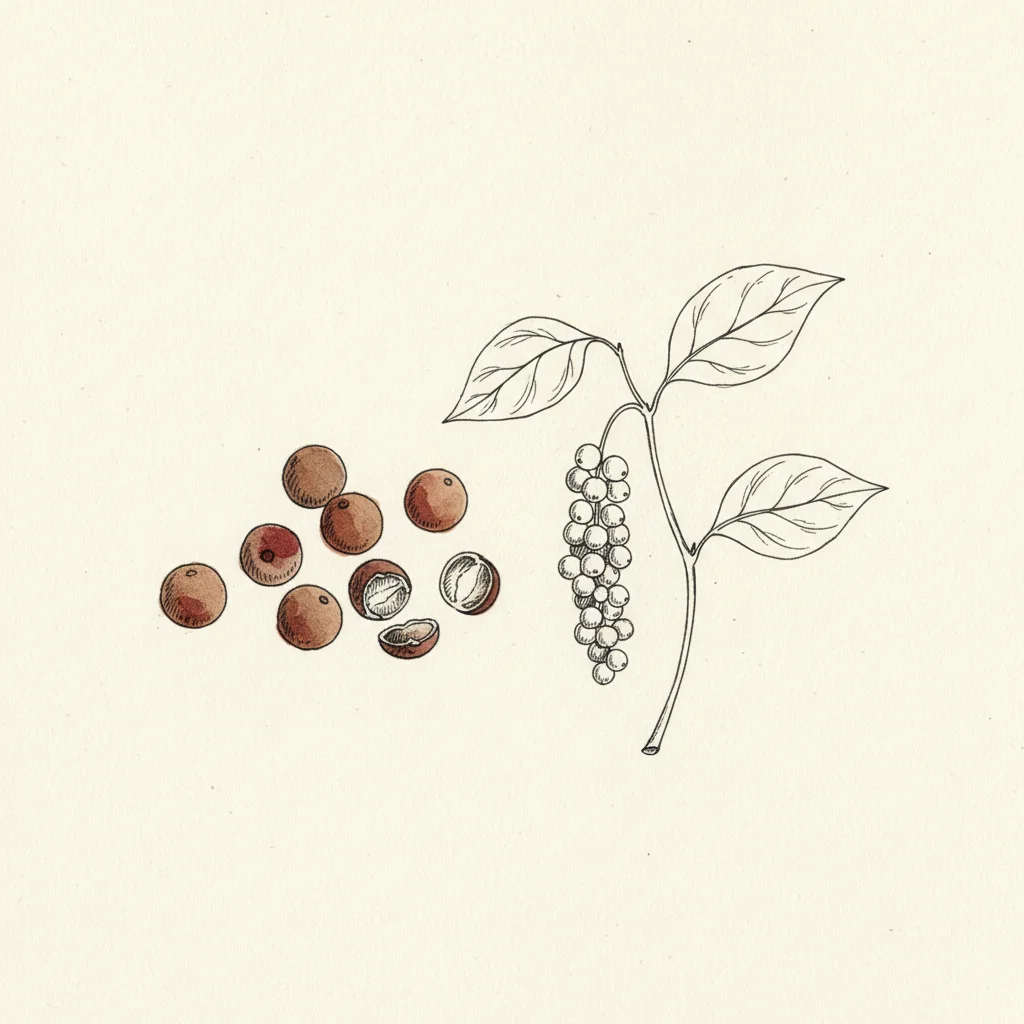
Pepper · Red pepper
Kampot Red Pepper
Kampot and Kep provinces, Cambodia (PGI)
fresh red berries · acacia honey · soft mint
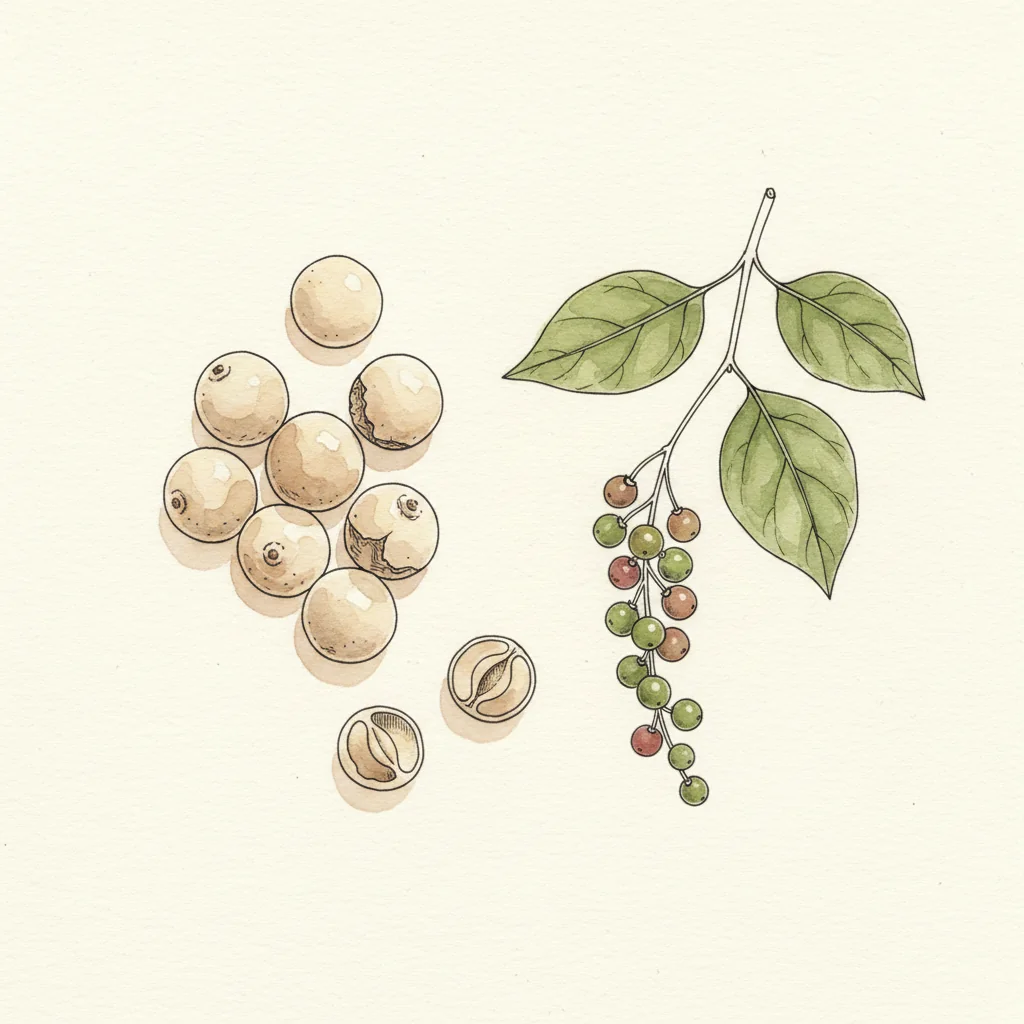
Pepper · White pepper
Kampot White Pepper
Kampot and Kep provinces, Cambodia (IGP/PGI)
lemongrass · jasmine flower · fresh hazelnut
Our verdict
Red Kampot for fruity raw finishing; white Kampot for floral, speck-free seasoning of pale dishes.
At a glance
| Criterion | Kampot Red Pepper | Kampot White Pepper |
|---|---|---|
| Botanical name | Piper nigrum | Piper nigrum |
| Origin | Kampot & Kep, Cambodia | Kampot & Kep, Cambodia |
| Appellation | PGI | PGI |
| Processing | Ripe red berry, dried whole with skin | Ripe berry soaked, skin removed, core dried |
| Intensity | 7/10 — sweet, gentle, fading bite | 6/10 — delicate, floral, no rough edge |
| Main notes | Fresh red berries, acacia honey, soft mint | Lemongrass, jasmine flower, fresh hazelnut |
| Best use | Strawberries, raw scallops, carpaccio | White fish, beurre blanc, oysters, clear soups |
| Median price | ~$15 / 50 g | ~$15 / 50 g |
When to choose Kampot Red Pepper
Reach for Kampot red when the plate is raw, sweet or fruity. Berries picked deep red on the vine and sun-dried whole give fresh strawberry, acacia honey and soft mint, with a rounded sweetness up front and a bite gentle enough to fade fast — soft enough to crack a whole grain between your teeth at the table. That fruit-and-honey character, and the red color, are exactly what white lacks. So red is the one for strawberries and raspberries, raw scallops, beef carpaccio, seared foie gras, salmon tartare and fresh goat cheese — plates where you want a sweet, aromatic crunch rather than invisible seasoning. Dose one or two whole berries to crack, or a coarse crush over the finished plate. Both Kampots are delicate, but red leans sweet and fruity where white leans floral and discreet, and red's whole-berry crunch is a deliberate textural move you'd never get from white. The catch is the usual fragility: long braises cook off the fruity top notes, heavily spiced sauces bury it, and sharp acid flattens the honey — so keep it raw and keep it for delicate, sweet-leaning food. At about $15 for 50 g it's the same price tier as white, so the choice is purely about the job: if you want the pepper to be seen and tasted as fruit on a raw plate, it's red; if you want it to vanish into a pale sauce, it's white.
When to choose Kampot White Pepper
Reach for Kampot white when the dish is pale and you want the pepper to disappear. It's the rarest and most refined of the three, made by soaking the ripe berries, rubbing off the red skin and sun-drying the ivory cores. The nose is lemongrass and jasmine with a fresh-hazelnut note; the heat is a gentle, floral 6/10 with no rough edge. Where red brings visible color and fruity sweetness, white brings the opposite: speck-free, discreet seasoning that lifts a delicate plate without being seen. That makes it the pepper for pan-seared white fish, poached chicken breast, beurre blanc and cream sauces, warm oysters, celery root or parsnip purée, and clear soups and chowders — all dishes where red's red flecks and strawberry note would be out of place. Use two or three grinds at the end of cooking, never the start, since the heat is volatile and cooks off. Both are delicate Kampots and both should be used late, but they're not interchangeable: red is a raw, fruity finishing crunch; white is invisible, floral seasoning for cooked-but-pale dishes. The catch for white is that loud flavors bury it — heavily smoked dishes, rare red meat and competing spices all flatten its floral top notes. At about $15 for a 50 g jar it sits at the same price as red, so pick on use, not cost: pale and cream-based, reach for white; raw, sweet and fruity, reach for red.
Where to buy?
Kampot Red Pepper
Links checked on
| Merchant | Price | Action |
|---|---|---|
| Amazon US | — | Amazon US |
| La Plantation | — | La Plantation |
| ChefShop | — | ChefShop |
Prices may vary depending on current promotions on the merchant site.
Kampot White Pepper
Links checked on
| Merchant | Price | Action |
|---|---|---|
| Amazon US | — | Amazon US |
| ChefShop | — | ChefShop |
| Kampot.co.uk | — | Kampot.co.uk |
Prices may vary depending on current promotions on the merchant site.
Frequently asked questions
- What's the difference between Kampot red and white pepper?
- Both come from ripe Kampot berries. Red is dried whole with its skin (strawberry, honey, mint) for raw plates; white has the skin removed (lemongrass, jasmine) for pale fish and cream sauces. Red shows; white disappears.
- Which is milder, red or white Kampot?
- White, just — a delicate floral 6/10 versus red's sweet, gentle 7/10. Both are far softer than Kampot black. The real difference is character: red is fruity, white is floral and discreet.
- Can I use red and white Kampot interchangeably?
- No. Red brings color and a fruity crunch for raw scallops, carpaccio and fruit; white seasons pale cooked dishes invisibly. Swapping them puts red flecks in a beurre blanc or robs a fruit plate of its sweetness.
- Which should I buy?
- It depends on the job, since both cost about $15 for 50 g. For raw, sweet finishing, buy red; for pale fish, cream and clear soups, buy white. Many cooks who love Kampot eventually own both.
The best pairings
With Kampot Red Pepper
With Kampot White Pepper
Comparison prepared according to our methodology. Sponsored purchase links — see our affiliations.