
Comparison
Kampot white vs Penja white pepper: which is finer?
Both are PGI white peppers for pale dishes, but they pull opposite ways. Kampot white is floral and bright — lemongrass, jasmine, gentle 6/10. Penja white is musky and warm — animal funk, menthol, round 7/10 heat. Kampot for light, fragrant plates; Penja for richer cream and seared scallops.
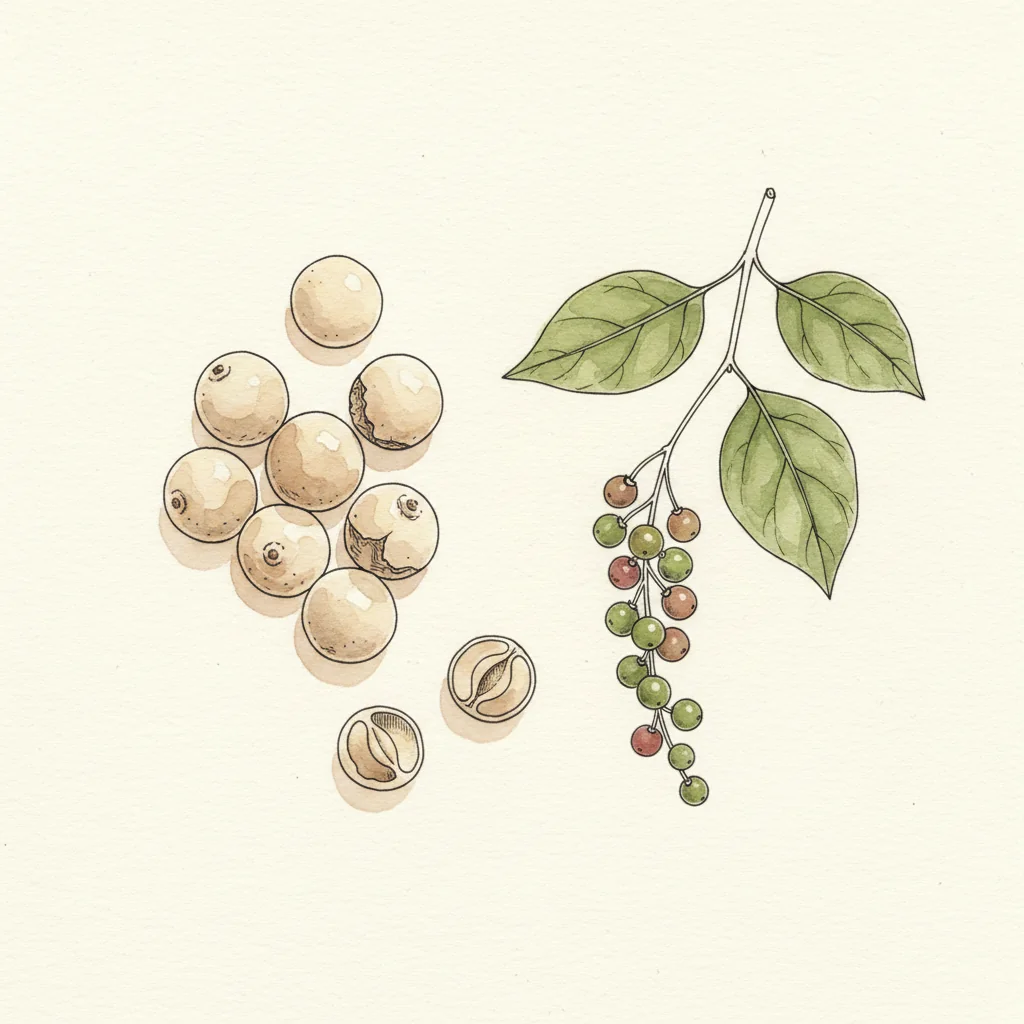
Pepper · White pepper
Kampot White Pepper
Kampot and Kep provinces, Cambodia (IGP/PGI)
lemongrass · jasmine flower · fresh hazelnut
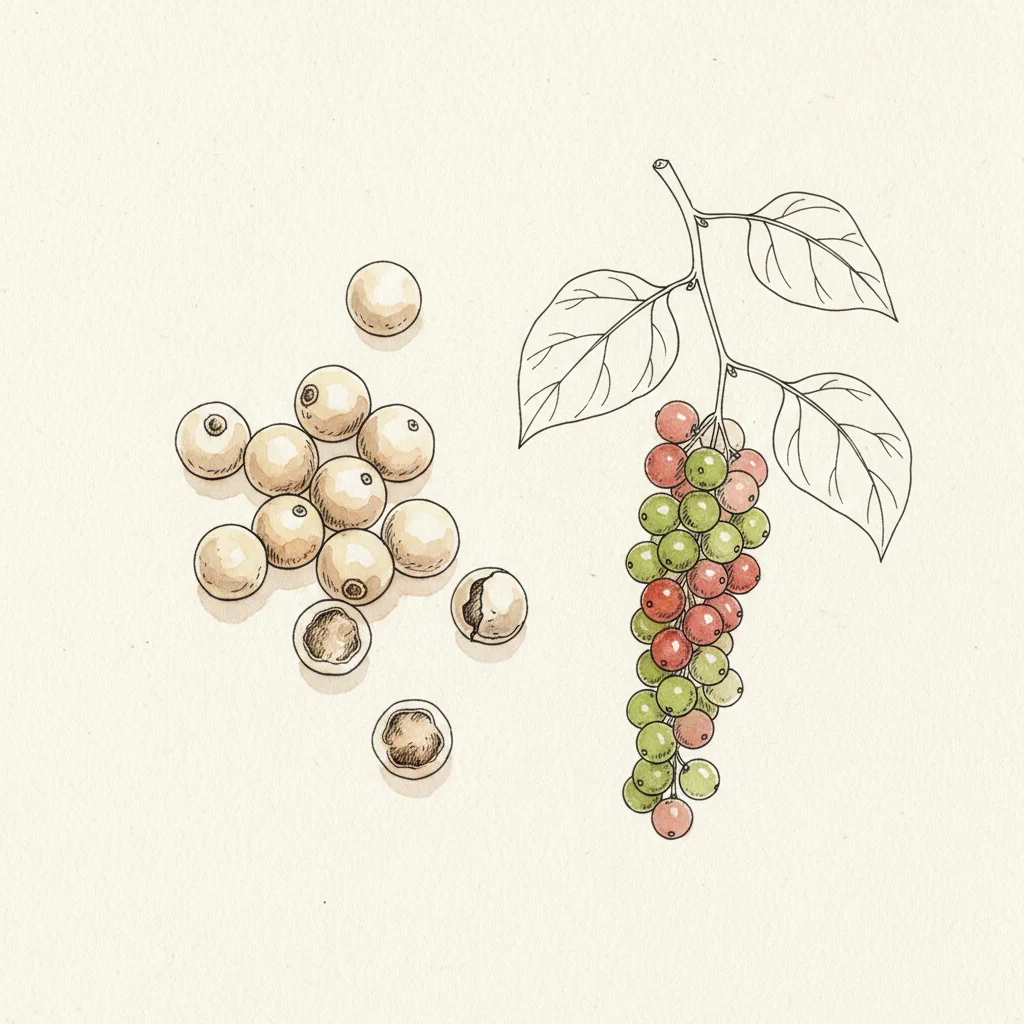
Pepper · White pepper
Penja White Pepper
Penja Valley, Littoral region, Cameroon (PGI)
musky animal warmth · fresh menthol · damp forest floor
Our verdict
Kampot white for bright, floral lightness; Penja white for musky warmth on richer cream dishes.
At a glance
| Criterion | Kampot White Pepper | Penja White Pepper |
|---|---|---|
| Botanical name | Piper nigrum (white) | Piper nigrum (white) |
| Origin | Kampot & Kep, Cambodia | Penja Valley, Cameroon |
| Appellation | PGI | PGI since 2013 |
| Intensity | 6/10 — delicate, floral, no edge | 7/10 — round, spreading warmth |
| Main notes | Lemongrass, jasmine flower, fresh hazelnut | Musky animal warmth, menthol, forest floor |
| Aroma character | Bright, fragrant, fresh | Musky, animal, savory |
| Best use | White fish, clear soups, poached chicken | Cream sauces, beurre blanc, seared scallops |
| Median price | ~$15 / 50 g | ~$16 / 2.5 oz |
When to choose Kampot White Pepper
Reach for Kampot white when you want a white pepper that's bright and fragrant rather than funky. The ripe berries are soaked, the skin rubbed off, the ivory cores sun-dried, and the result is pure lemongrass and jasmine with a fresh-hazelnut note — the most floral, delicate white pepper around, a gentle 6/10 with no rough edge. That fragrance is the whole reason to choose it over Penja: on the lightest plates — pan-seared white fish, poached chicken breast, warm oysters, celery root or parsnip purée, clear soups and chowders — Kampot lifts without weight, where Penja's musky animal warmth would read as too rich and savory. Use two or three grinds at the end of cooking, never the start; the floral top notes are volatile and cook off. The contrast with Penja is mostly mood: both are PGI whites for pale dishes, but Kampot is fresh and aromatic, Penja is musky and earthy. The catch is the same fragility — loud or smoked dishes bury Kampot's florals, so keep it for subtle, light food. At about $15 for a 50 g jar it's a splurge, but it's the finer-smelling of the two and the one to reach for when the plate is delicate and you want jasmine-and-lemongrass freshness, not the deeper, animal funk Penja brings. For lightness and fragrance, Kampot wins; for richer cream and warmth, hand off to Penja.
When to choose Penja White Pepper
Reach for Penja white when the pale dish is rich and wants warmth, not fragrance. Ripe berries soaked in the spring water of Cameroon's volcanic Penja Valley, sun-dried to an ivory bead, PGI-protected since 2013 — the nose is musky, almost animal, with a clean menthol lift, and the heat is round and spreading, a 7/10 that grows into warmth rather than biting. That musky depth is what sets it apart from Kampot: where the Cambodian white is bright and floral, Penja is earthy and savory, and on richer plates it carries better. Use it on cream sauces and beurre blanc, seared scallops, poached chicken, fresh cheeses and carpaccio — anywhere you want white pepper to add round warmth and a little funk under a sauce. One or two turns per plate, ground fresh just before serving, since the menthol fades fast. The contrast with Kampot is real: Penja is a touch hotter and far muskier, so it stands up to butter and cream where Kampot's florals might get lost, but it would overpower the lightest, most fragrant fish dishes Kampot is built for. The catch: heavily spiced dishes drown the menthol, and long marinades cook off the aromatics. At about $16 for a 2.5 oz jar it sits in the same splurge tier as Kampot. Choose Penja when the pale dish has body and you want musky warmth; choose Kampot when it's light and you want floral brightness.
Where to buy?
Kampot White Pepper
Links checked on
| Merchant | Price | Action |
|---|---|---|
| Amazon US | — | Amazon US |
| ChefShop | — | ChefShop |
| Kampot.co.uk | — | Kampot.co.uk |
Prices may vary depending on current promotions on the merchant site.
Penja White Pepper
Links checked on
| Merchant | Price | Action |
|---|---|---|
| Amazon US | — | Amazon US |
| La Boite | — | La Boite |
| Sous Chef UK | — | Sous Chef UK |
Prices may vary depending on current promotions on the merchant site.
Frequently asked questions
- Is Kampot white or Penja white finer?
- By aroma, Kampot — its lemongrass-and-jasmine nose is more delicate and floral. Penja is muskier and warmer. 'Finer' depends on the dish: Kampot for light fragrant plates, Penja for richer cream where its warmth carries better.
- What's the main difference in flavor?
- Kampot white is bright, floral and fresh; Penja white is musky, animal and earthy with a menthol lift. Kampot is also slightly milder (6/10 vs 7/10). They suit opposite ends of the pale-dish spectrum.
- Which white pepper for cream sauces?
- Penja. Its round 7/10 warmth and musky depth stand up to butter and cream, where Kampot's delicate florals can get lost. Save Kampot for lighter fish, oysters and clear soups.
- Are both worth the splurge?
- For pale, refined cooking, yes — both are PGI-protected and run around $15–16. Owning both lets you match the white pepper to the dish: Kampot for fragrant lightness, Penja for musky richness.
The best pairings
With Kampot White Pepper
With Penja White Pepper
Comparison prepared according to our methodology. Sponsored purchase links — see our affiliations.