
Comparison
Long pepper vs grains of paradise — which historic spice?
Long pepper (Piper retrofractum, about $9 for 50 g) is a true pepper with cocoa, cinnamon and slow-climbing heat — built for braises, chocolate and mulled wine. Grains of paradise (Aframomum melegueta, around $10 a jar) is a ginger relative with cardamom and citrus, gentler heat — built for marinades, beer and spice blends. Warm versus bright.
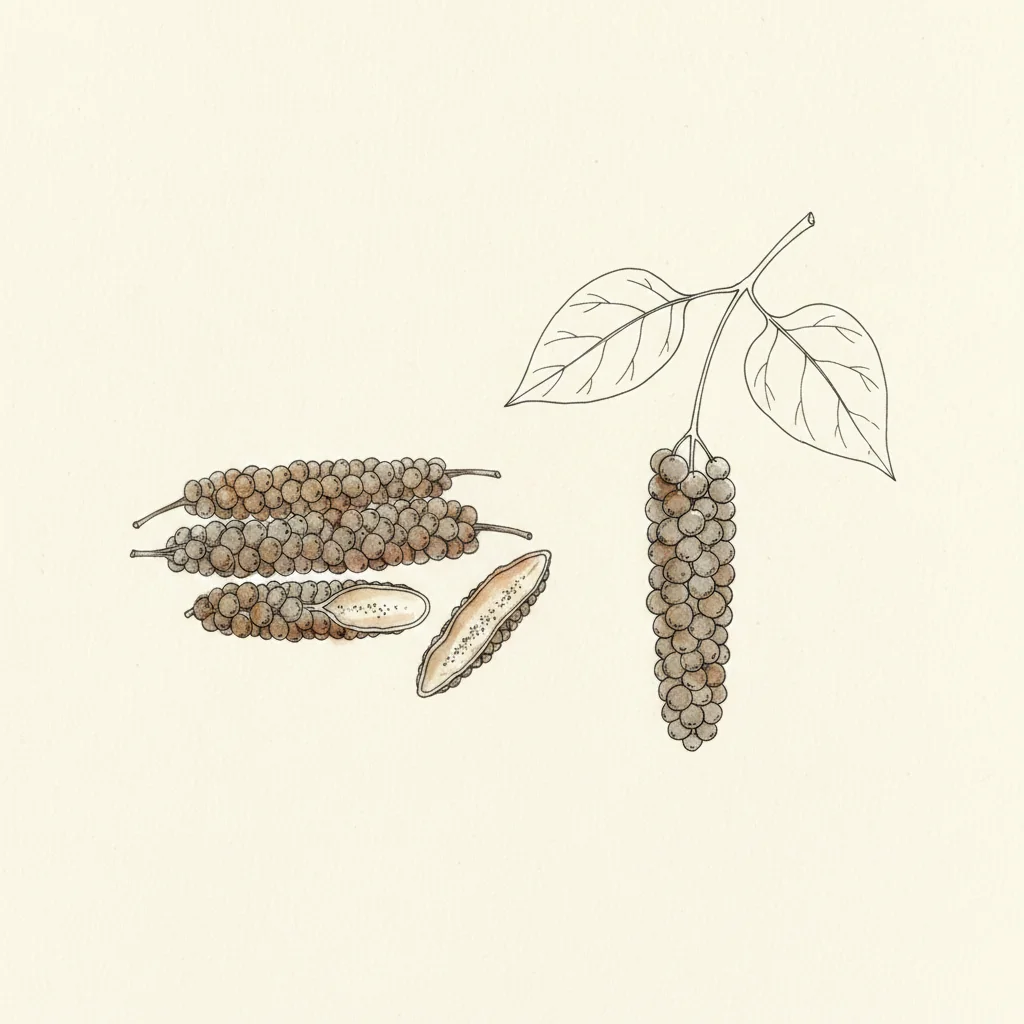
Pepper · Long pepper
Long Pepper
Java and Sumatra, Indonesia
cocoa · warm cinnamon · slow building heat
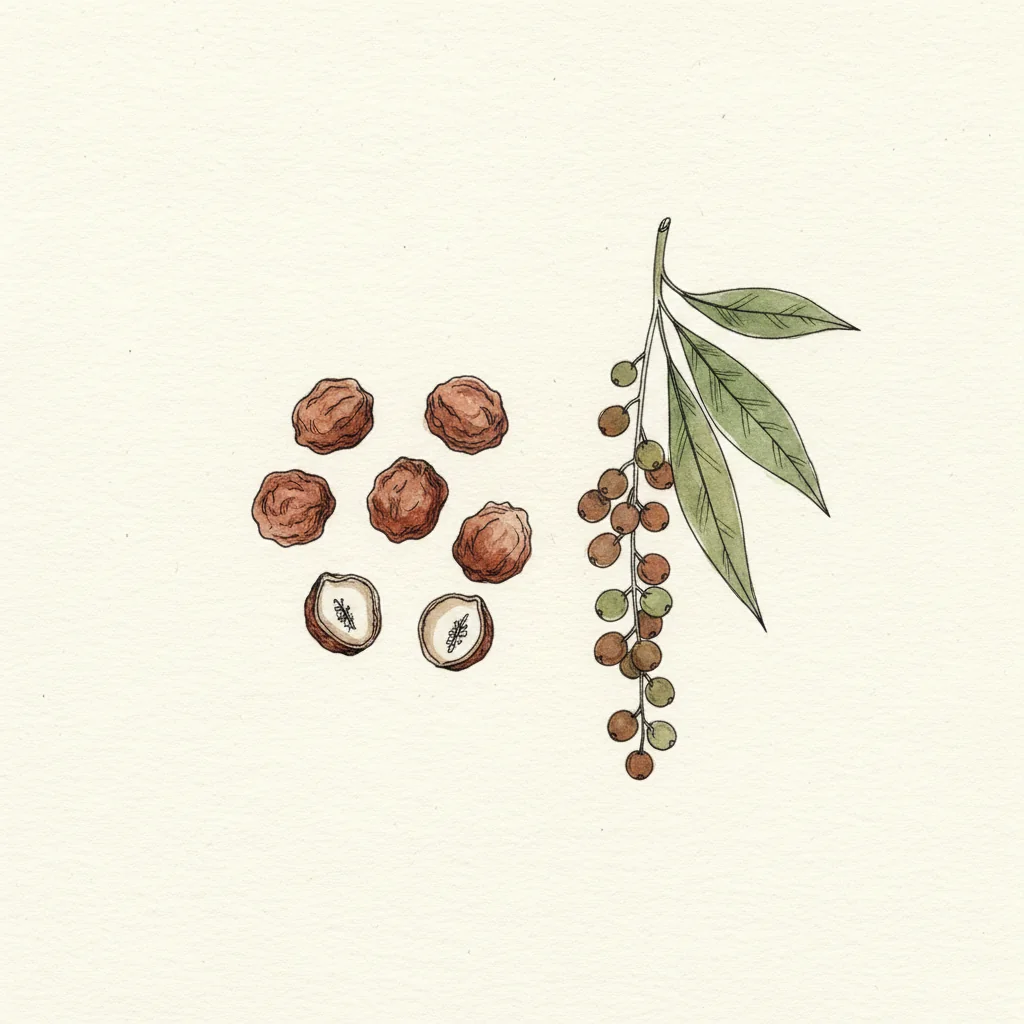
Pepper · Pepper cousin
Grains of Paradise
Gulf of Guinea coast (Ghana, Togo, Liberia, Côte d'Ivoire), Ghana
fresh ginger · green cardamom · citrus peel
Our verdict
Long pepper for cocoa warmth in braises and desserts; grains of paradise for bright cardamom in marinades and blends.
At a glance
| Criterion | Long Pepper | Grains of Paradise |
|---|---|---|
| Botany | Piper retrofractum, a true pepper | Aframomum melegueta, ginger family |
| Origin | Indonesia, Java and Sumatra | Ghana, Gulf of Guinea coast |
| Intensity | 8/10 — late, climbing, broad heat | 7/10 — warm-and-cool, no true pepper bite |
| Main notes | Cocoa, warm cinnamon, slow-building heat | Fresh ginger, green cardamom, citrus peel |
| Best on | Braised short ribs, chocolate, mulled wine | Beer, fish marinades, ras el hanout, cakes |
| Price | ~$9 / 50 g jar | ~$10 / jar |
| Value | Worth it — one catkin doses several plates | Worth it — half a teaspoon per dish for four |
When to choose Long Pepper
Pick long pepper when you want warmth and depth in something braised or sweet. The heat arrives late and climbs, broader and rounder than black pepper, with a numbing edge, and the flavor is cocoa, warm cinnamon and dried fig — gingerbread spice in pepper form. That density is what grains of paradise lacks. Four scenarios where long pepper wins. First, braised short ribs and beef stews, where one whole catkin simmered and removed threads warm spice through the sauce. Second, dark chocolate desserts and caramel, where grated fresh it deepens the cocoa in a way the brighter grains can't. Third, mulled wine and spiced syrups, where its cinnamon-fig profile is built for the job. Fourth, rich game and duck, where the slow heat suits the fat. The move: grate a third of a catkin on a microplane per serving just before plating, or drop one whole into a braise and fish it out before service. Avoid it on delicate white fish, on anything wanting a clean peppery bite, and on raw applications where the heat can't bloom. At about $9 for 50 g it's good value, one catkin dosing several plates. Where grains of paradise is the better call: bright, citrusy contexts — a fish marinade, a craft beer, a glazed carrot — want cardamom and ginger, not cocoa. But for a deep braise, a chocolate dessert or mulled wine, long pepper carries more weight and is the grain to reach for.
When to choose Grains of Paradise
Pick grains of paradise when you want a bright, aromatic pepperiness with no rough bite — it isn't pepper at all but a member of the ginger family, Aframomum melegueta from the Gulf of Guinea. The mouthfeel is warm-and-cool at once, faintly camphor-like, with none of the bite of true black pepper, and the flavor is fresh ginger, green cardamom and citrus peel over orange blossom and menthol. Four scenarios where it wins. First, craft beer and saison brewing, where it's a classic botanical — its historic use. Second, fish marinades, where the citrus-ginger lift suits delicate flesh that long pepper would bulldoze. Third, ras el hanout and spice blends, where the cardamom note belongs. Fourth, spiced cakes, gingerbread and glazed carrots, where the warm-cool spice reads beautifully. The move: about half a teaspoon, cracked, per dish for four — it's gentle enough to use with a freer hand than long pepper. Avoid it on dishes already heavily spiced, on very rich reduction sauces that bury it, and on delicate cream desserts where the camphor edge clashes. At around $10 a jar it's good value for how versatile it is. Where long pepper is the better call: deep braises, chocolate and mulled wine want cocoa warmth and climbing heat, which grains of paradise simply doesn't have. But for marinades, beer, blends and bright cakes, grains of paradise is the right grain — and the two trade places cleanly along the warm-versus-bright line.
Where to buy?
Long Pepper
Links checked on
| Merchant | Price | Action |
|---|---|---|
| Amazon US | — | Amazon US |
| Sous Chef UK | — | Sous Chef UK |
Prices may vary depending on current promotions on the merchant site.
Grains of Paradise
Links checked on
| Merchant | Price | Action |
|---|---|---|
| Amazon US | — | Amazon US |
| Burlap & Barrel | — | Burlap & Barrel |
| Steenbergs UK | — | Steenbergs UK |
Prices may vary depending on current promotions on the merchant site.
Frequently asked questions
- Are these the same kind of spice?
- No. Long pepper is a true pepper, Piper retrofractum. Grains of paradise is Aframomum melegueta, a member of the ginger family. They were both medieval spice-trade staples, which is why they're often mentioned together, but botanically they're unrelated.
- Which has more heat?
- Long pepper, at 8/10, with a late, climbing, broad heat. Grains of paradise sits at 7/10 but reads gentler — a warm-and-cool pepperiness without true black pepper's bite. If you want punch in a braise, long pepper; if you want aroma without burn, grains of paradise.
- Can I substitute one for the other?
- Only loosely, and the flavor shifts a lot. Long pepper brings cocoa and cinnamon for braises and chocolate; grains of paradise brings cardamom and ginger for marinades and beer. Swap them and you change the whole register of the dish, so choose by context.
- What's grains of paradise used for in brewing?
- It's a traditional botanical in saison and other craft beers, prized for its citrus-cardamom lift and gentle warmth. That brewing use is part of why it earned its medieval reputation. About half a teaspoon cracked per batch is a common starting point.
The best pairings
With Long Pepper
With Grains of Paradise
Comparison prepared according to our methodology. Sponsored purchase links — see our affiliations.