
Java Long Pepper (Pippali), Indonesia
In brief — Long pepper looks like a small grey-brown catkin, not a peppercorn, and it tastes like one too: cocoa, cinnamon and gingerbread before a heat that builds slow and climbs higher than black pepper. Grown on Java and Sumatra, it was Rome's pepper of choice before round black pepper won out. Grate it fresh over a braise or a dark-chocolate dessert. A 50g jar runs about $9. Its aromatic profile develops notes of cocoa, warm cinnamon, slow building heat, extended by gingerbread spice and dried fig, for an intensity of 8/10. In the kitchen, it's best added grated fresh at the end, or simmered whole then removed and it pairs with braised short ribs and beef stews, dark chocolate desserts and caramel, mulled wine and spiced syrups. Recommended dosage: grate a third of one catkin per serving on a microplane just before plating, or drop one whole into a braise and fish it out before service. Expect from $7.00 to $12.00 per 50g (median $9.00).
Origin : Java and Sumatra, Indonesia
Piper retrofractum
« A genuine original: cocoa, cinnamon and a heat that climbs late and lingers. Brilliant on braises and dark chocolate, useless on white fish. Worth owning, but a specialist, not your everyday grind. »
Long pepper looks like a small grey-brown catkin, not a peppercorn, and it tastes like one too: cocoa, cinnamon and gingerbread before a heat that builds slow and climbs higher than black pepper. Grown on Java and Sumatra, it was Rome's pepper of choice before round black pepper won out. Grate it fresh over a braise or a dark-chocolate dessert. A 50g jar runs about $9.
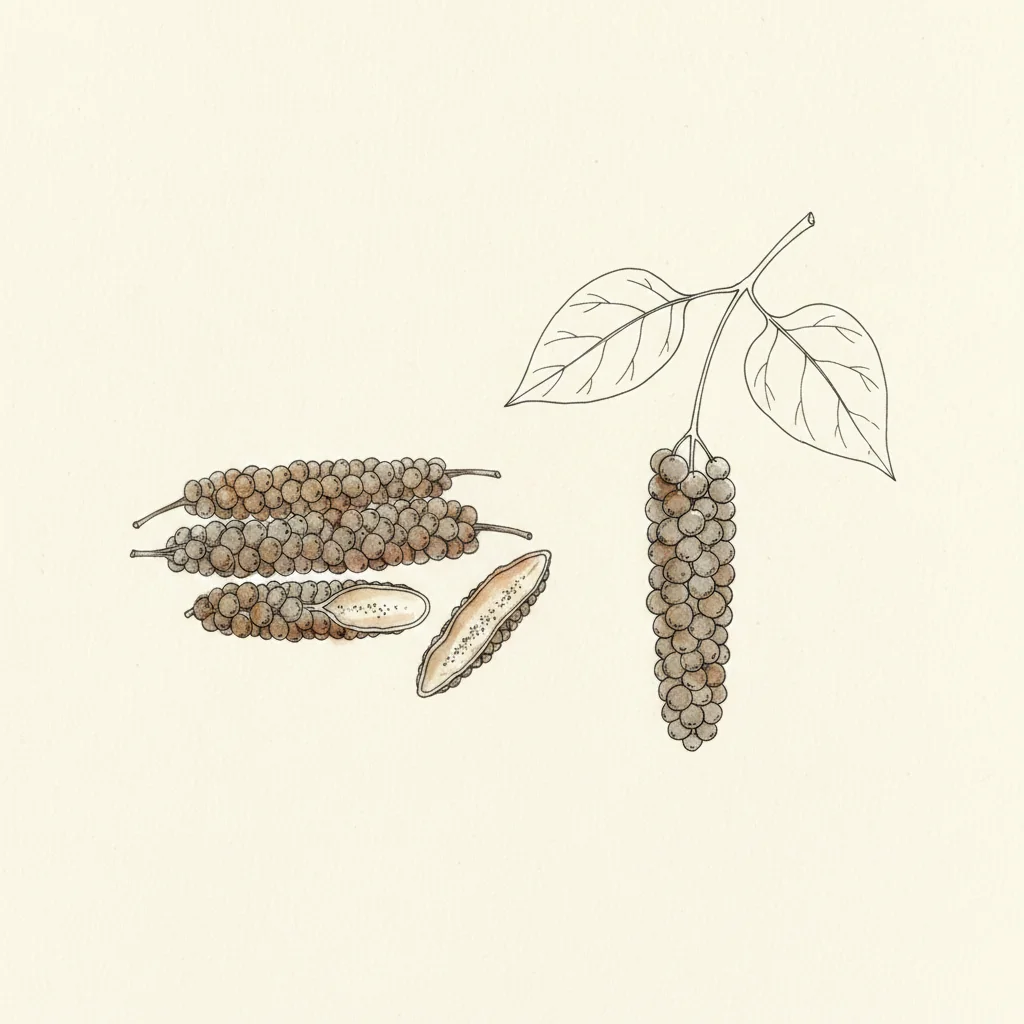
Pepper · Long pepper
Long Pepper
Java and Sumatra, Indonesia
cocoa · warm cinnamon · slow building heat
Aromatic profile
| Family | Piper (long-pepper catkin) |
|---|---|
| Intensity | ●●●●○ (8/10) |
| Main notes | cocoa · warm cinnamon · slow building heat |
| Secondary notes | gingerbread spice · dried fig |
| Mouthfeel | the heat arrives late and climbs, broader and rounder than black pepper, with a numbing edge close to long-pepper's cousin cubeb |
| Finish length | long, a sweet-spiced warmth that lingers well after black pepper would have faded |
Culinary use
- When to add : grated fresh at the end, or simmered whole then removed
- Dosage : grate a third of one catkin per serving on a microplane just before plating, or drop one whole into a braise and fish it out before service
- Ideal pairings : braised short ribs and beef stews, dark chocolate desserts and caramel, mulled wine and spiced syrups, poached pears and stone fruit, rich game and duck, creamy cheeses
- Avoid with : delicate white fish (it bulldozes them), anything you want a clean peppery bite on (use black pepper instead), raw applications where the heat has no time to bloom
The grain in detail
Long pepper is one of the oldest spices in the Western pantry, and for centuries it outranked the round black peppercorn we now take for granted. The Romans paid more for it; medieval cooks reached for it before Piper nigrum became cheap enough to dethrone it. What you buy is not a peppercorn but a dried catkin, a slender grey-brown spike a couple of centimeters long, made of dozens of tiny fused fruits. The variety grown across Java and Sumatra is Piper retrofractum, bolder and more aromatic than the slimmer Indian pippali (Piper longum). Crush or grate one and the nose is unmistakable: cocoa, warm cinnamon, gingerbread, a whisper of dried fig. The heat is the surprise. It does not hit up front like black pepper. It arrives late, broadens across the whole palate, and keeps climbing, with a faint numbing edge that recalls cubeb, its close relative. That slow build is exactly why long pepper belongs in dishes with time and richness: braised short ribs, beef stews, game, duck, but also dark chocolate, caramel, poached pears and mulled wine, where its sweet-spiced warmth reads almost like a baking spice. Treat it as a finishing aromatic, not a workhorse seasoner. Grate it fresh on a microplane over the plate, or drop a whole catkin into a braise and pull it out before serving, the way you would a bay leaf. It is too assertive and too distinctive to scatter on everything, and wasted on delicate white fish, which it simply flattens. The catkins are hard, so a standard peppermill will struggle; a microplane or a dedicated long-pepper grater is the honest tool. Buy it whole and grate to order, because once ground those volatile cocoa-cinnamon top notes fade within weeks.
History & origin
Long pepper reached the Mediterranean overland long before round black pepper, and classical writers from Pliny onward priced it above its rival. As maritime trade made Piper nigrum abundant and cheap, long pepper slipped out of European kitchens and survived mainly in Indian and Indonesian cooking and in Ayurvedic medicine, where pippali remains a staple. The Indonesian crop, Piper retrofractum, is grown as a climbing vine across Java and Sumatra and harvested by hand as the catkins ripen. French houses such as Terre Exotique helped reintroduce the Java type to Western chefs in the 2000s, marketing it on its cocoa-and-cinnamon profile for desserts and braises.
Provenance & authenticity
What sets the real thing apart — appellation, species and verification cues.
- Species
- Piper longum
How to verify the real one
- Piper longum - catkin/cone shape (not round peppercorn)
- Java/Sumatra origin
Indicative price
Reference format : 50g — from $7.00 to $12.00 (median : $9.00).
Storage
Buy whole catkins and grate to order. Store in an airtight, opaque jar away from light and humidity. Whole, it holds its cocoa-cinnamon aromatics for about 18 months; ground, those top notes fade within weeks.
Where to buy?
Where to buy it
Links checked on
| Merchant | Price | Action |
|---|---|---|
| Amazon US | — | Amazon US |
| Sous Chef UK | — | Sous Chef UK |
Prices may vary depending on current promotions on the merchant site.
Alternatives if unavailable
Tags
- Indonesia
- Java
- Sumatra
- long pepper
- pippali
- Piper retrofractum
Frequently asked questions
- How do you store Long Pepper?
- Buy whole catkins and grate to order. Store in an airtight, opaque jar away from light and humidity. Whole, it holds its cocoa-cinnamon aromatics for about 18 months; ground, those top notes fade within weeks.
- What dosage for Long Pepper?
- grate a third of one catkin per serving on a microplane just before plating, or drop one whole into a braise and fish it out before service
- When should you add Long Pepper in cooking?
- It's best used grated fresh at the end, or simmered whole then removed.
- What should you avoid pairing Long Pepper with?
- Avoid with: delicate white fish (it bulldozes them), anything you want a clean peppery bite on (use black pepper instead), raw applications where the heat has no time to bloom.
Go further
The dishes where this long pepper shines
Also a recommended alternative for
As a complementary pairing with
See every dish where this product is mentioned →
Other peppers to discover
Featured in these gift sets
Page prepared according to our methodology. Purchase links marked sponsored and liable to earn a commission — details on our Affiliations page.