
Comparison
Maldon vs fleur de sel: which finishing salt?
Buy Maldon for crunch, fleur de sel for melt. Maldon's hollow pyramids shatter loud on a steak or a cookie, about $7 a box and built to last a year. Fleur de sel de Guérande, PGI and moister, dissolves slow and round on tomatoes and caramel, about $11 for 125 g. Different jobs.
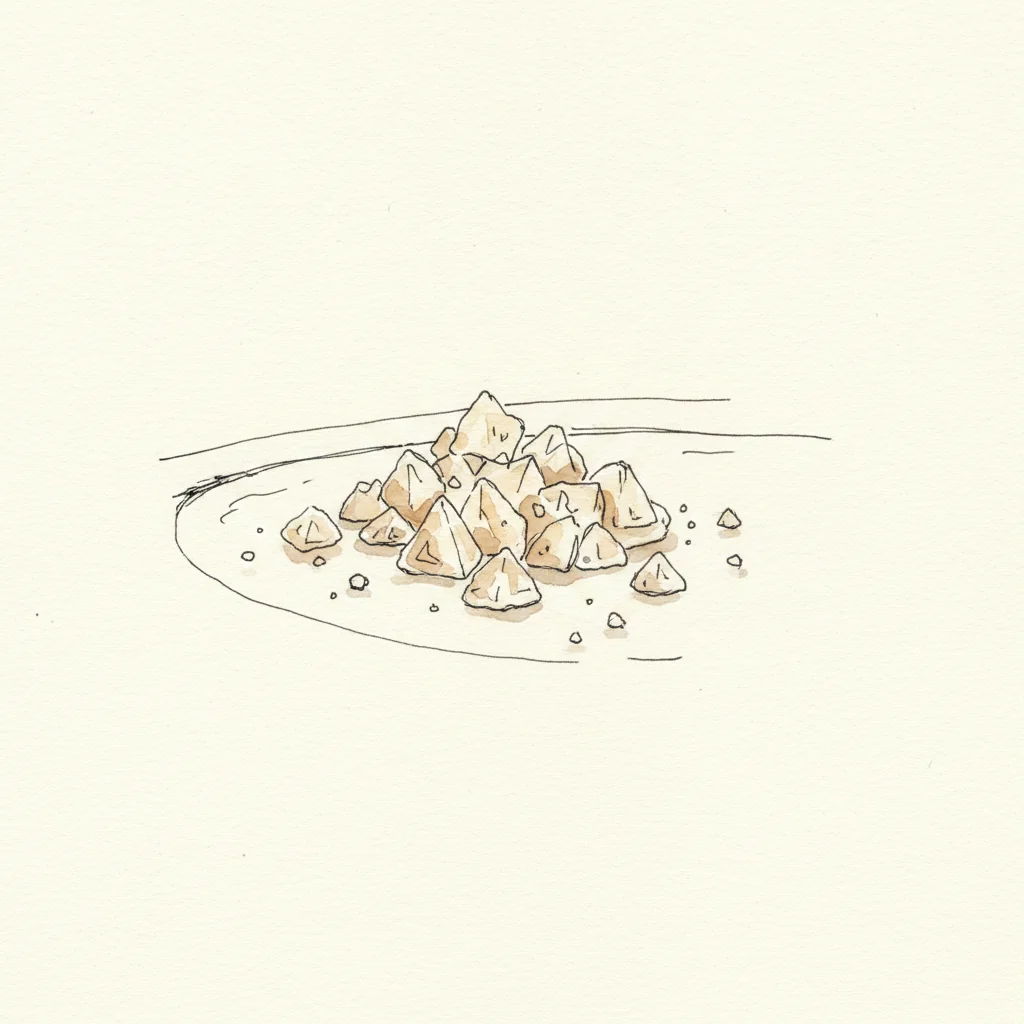
Salt · Flaky sea salt
Maldon Sea Salt
Maldon, Essex, Blackwater estuary, England
clean salinity · light brine · fresh sea air
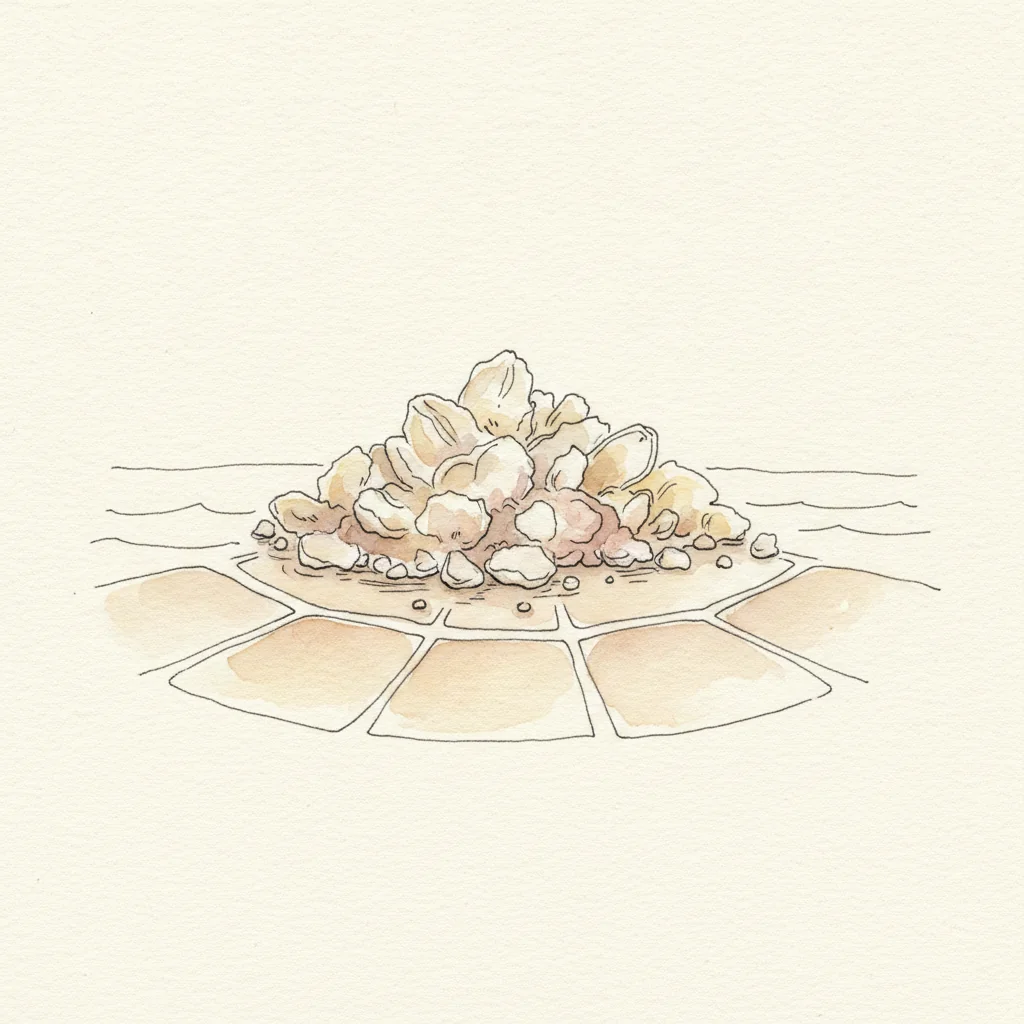
Salt · Fleur de sel
Fleur de Sel de Guérande
Guérande peninsula, Loire-Atlantique, France (PGI)
round salinity · light iodine · fresh violet
Our verdict
Maldon for the shatter, fleur de sel for the slow melt and the iodine finish.
At a glance
| Criterion | Maldon Sea Salt | Fleur de Sel de Guérande |
|---|---|---|
| Origin | England, Maldon, Essex (Blackwater estuary) | France, Guerande peninsula, Loire-Atlantique |
| Status | Made since 1882, no PDO/PGI | PGI-protected, hand-skimmed by paludiers |
| Intensity | 7/10 - clean, bright salinity | 6/10 - round salinity, faint violet |
| Texture | Hollow pyramid flakes that shatter, then dissolve fast | Fine moist crystals that crunch softly and melt slow |
| Best use | Seared steak, Sunday roast, salads, caramel and cookies | Ripe tomatoes, dark chocolate, salted caramel, soft eggs |
| Median price | ~$7.50 / 8.5 oz box | ~$11 / 125 g box |
| Value | Cheapest upgrade in the kitchen, lasts a year. Worth it. | A splurge, but the melt and finish earn it on raw plates. |
When to choose Maldon Sea Salt
Reach for Maldon when crunch is the entire appeal. Hollow pyramid flakes are the reason this Essex salt sits within arm's reach in nearly every pro kitchen since 1882: pinch one between your fingers and it shatters, scattering uneven crystals that pop against the tongue before they dissolve. That texture is the upgrade you're paying for, and it shows brightest where the surface is dry and the salt stays whole. On a rested, sliced ribeye, crush three or four flakes over the cut face from a few inches up so some bites carry a crystal and some don't. On a green salad dressed with good oil, a few flakes give the snap a soft leaf can't. On warm chocolate-chip cookies or a tray of salted caramel, the shatter cuts the sweetness and makes the bite read as deliberate, not just sugary. Maldon is also the better default for anyone who wants one finishing salt and no fuss. The salinity is clean and bright with no bitterness, it never goes damp or clumpy, and a box keeps for years in an airtight jar. At about $7 for 8.5 oz it's the cheapest real upgrade in the kitchen, which is why it wins the everyday spot over the pricier French crystal. The rule: if the plate is dry and you want the reader at the table to hear the crunch, it's Maldon. Where it loses is moisture and slowness. On a juicy raw tomato, Maldon's flakes drink the surface water and slump before they reach the fork, so the crunch you bought never lands. There the moist, slow-melting Guerande crystal holds its shape longer and finishes with an iodine note Maldon simply doesn't have. And like any flaky salt, Maldon is wasted in a braise, a stock or pasta water: the texture dissolves and you've spent finishing-salt money for nothing a coarse cooking salt couldn't do. Season the pot with kosher or sel gris, sear the steak with coarse salt, then crush the Maldon over the sliced meat at the very end. Salt the slice, not the pan. Thrown into a screaming-hot skillet, a flake just melts and the box might as well be table salt.
When to choose Fleur de Sel de Guérande
Choose fleur de sel de Guerande when you want a melt, not a shatter, and a finish that lingers. These fine, faintly damp crystals are hand-skimmed by paludiers from the top of the Atlantic salt pans on the Guerande peninsula, PGI-protected since 2012, and they behave differently from a dry English flake. Instead of cracking and vanishing, they crunch softly and dissolve slowly, releasing a round salinity and a delicate iodine-and-violet finish that Maldon's bright, clean salinity never carries. That slow melt is exactly what you want on wet, raw plates. On a ripe summer tomato sliced thick and slicked with olive oil, fleur de sel keeps its grain through the moisture where a Maldon flake would slump and disappear. On a soft-boiled egg, on beef tartare, on a square of 70% dark chocolate or a spoon of salted-butter caramel, the crystals dot the surface with little points of salinity that read one at a time rather than all at once. The long, mineral, slightly iodized finish is the signature: it's the salt that makes a plain tomato taste of the sea. Use it raw and late, a pinch crushed between the fingers just before serving, never stirred into anything hot. The catch is price and discipline. At about $11 for 125 g it's two to three times the cost per gram of Maldon, so it's a splurge you reserve for plates where its melt and finish actually show, not a salt you tip into pasta water or scatter by the handful. Cook with it and you've thrown money into the pot: the crystals dissolve like any salt and the iodine note cooks off, so a long braise or a stock gets nothing a coarse grey salt couldn't give for a fraction of the price. Keep it dry in a stoneware crock or glass jar and it lasts for years without changing. The practical split with Maldon is texture: dry, crunchy plate that wants a loud shatter, reach for Maldon; wet or raw plate that wants a slow melt and a lingering finish, reach for fleur de sel. Most kitchens that care end up keeping both within reach, one box for the crunch and one crock for the melt.
Where to buy?
Maldon Sea Salt
Links checked on
| Merchant | Price | Action |
|---|---|---|
| Amazon US | — | Amazon US |
| Sous Chef UK | — | Sous Chef UK |
Prices may vary depending on current promotions on the merchant site.
Fleur de Sel de Guérande
Links checked on
| Merchant | Price | Action |
|---|---|---|
| Amazon US | — | Amazon US |
Prices may vary depending on current promotions on the merchant site.
Frequently asked questions
- Is fleur de sel just a fancier Maldon?
- No. They're different textures for different plates. Maldon is a dry hollow-pyramid flake that shatters and dissolves fast, made for crunch on dry surfaces. Fleur de sel is a moist crystal that melts slowly with a long iodine finish, made for wet, raw plates like tomatoes and tartare. Neither replaces the other.
- Which is better value?
- Maldon, for most kitchens. It's about $7 for 8.5 oz against roughly $11 for 125 g of fleur de sel, so two to three times cheaper per gram, and it covers the everyday crunch. Keep fleur de sel as the splurge for raw tomatoes, caramel and chocolate, where its slow melt actually earns the premium.
- Can I cook with either of them?
- Don't. Both are finishing salts. Heat dissolves the crunch and cooks off fleur de sel's iodine note, so a braise or pasta water gets nothing a cheap coarse salt couldn't give. Season the pot with kosher or sel gris and save these two for the plate, added raw at the very end.
- Do I really need both?
- If you only buy one, buy Maldon: it's cheaper, more versatile and never goes damp. Add fleur de sel when you cook a lot of raw, wet plates and want that slow melt and lingering finish. Plenty of serious cooks keep both within reach, one for the shatter and one for the melt.
The best pairings
With Maldon Sea Salt
With Fleur de Sel de Guérande
Comparison prepared according to our methodology. Sponsored purchase links — see our affiliations.