
Comparison
Manuka vs buckwheat honey — which is healthier?
If you mean antibacterial strength, Manuka, because it's the only honey with a lab number (MGO) to prove it. But buckwheat — dark, malty, about $15 — carries far more antioxidants than pale honeys and costs a third of Manuka. For a wound or throat, Manuka. For daily eating, buckwheat.
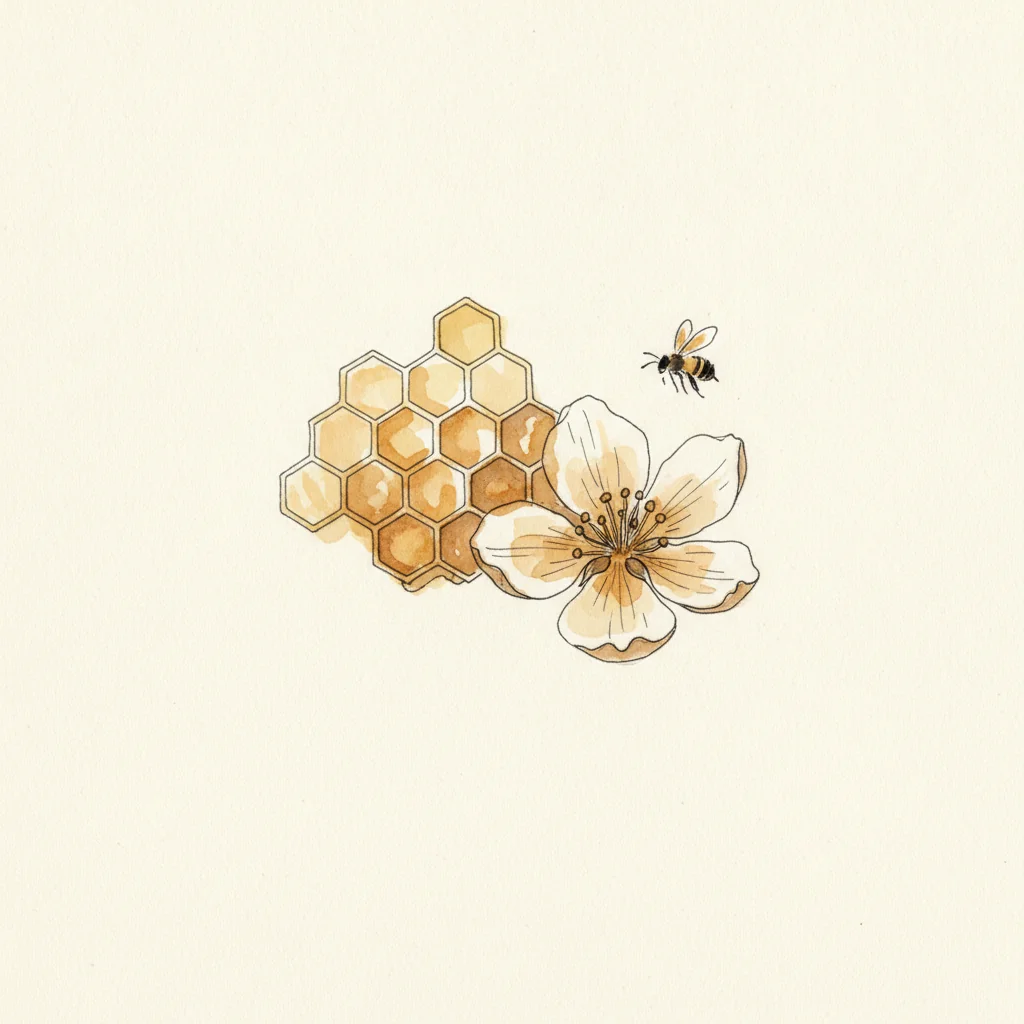
Honey · Medicinal honey
Manuka Honey (UMF)
North and South Island, coastal and forest scrubland, New Zealand (UMF)
cooked honey · eucalyptus · licorice
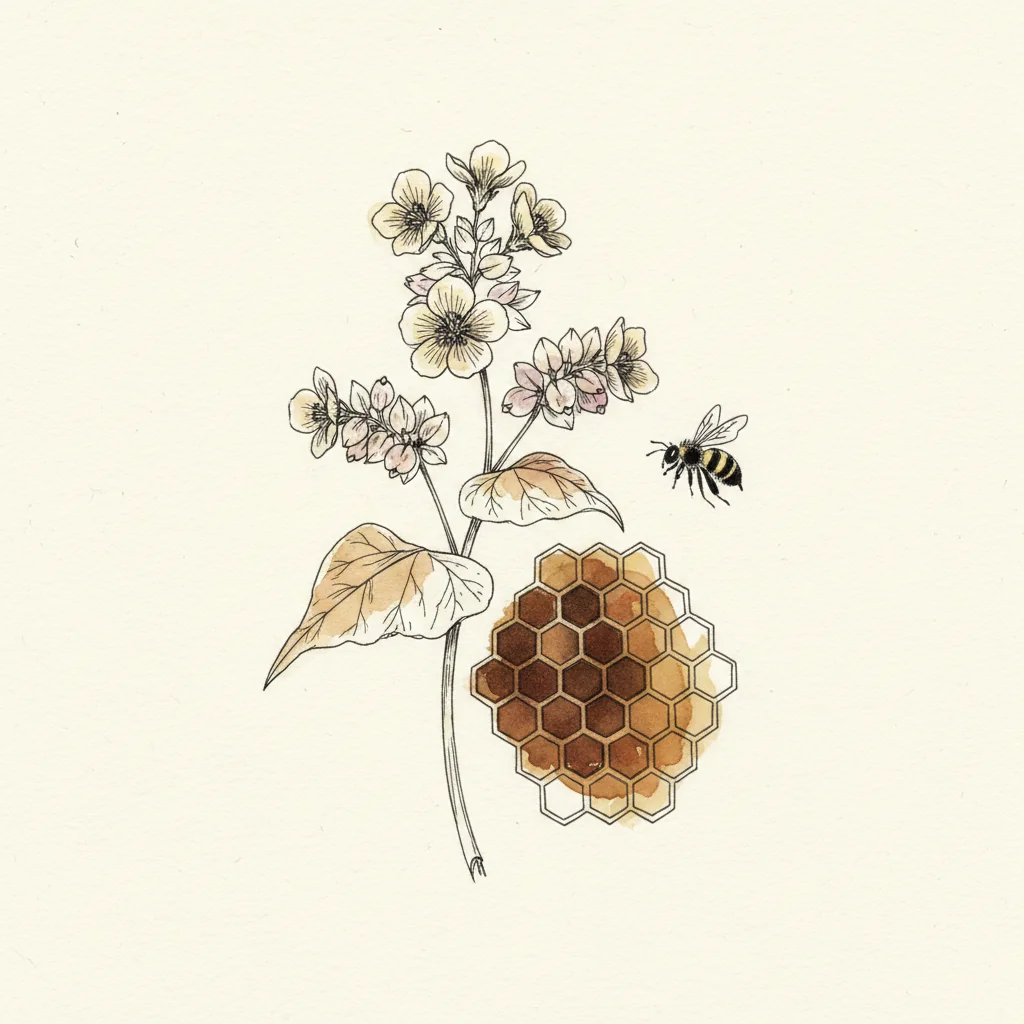
Honey · Monofloral honey
Buckwheat Honey
Upstate New York & Minnesota (also the Dakotas), United States
dark molasses · malt · barnyard funk
Our verdict
Manuka for the certified medicinal claim; buckwheat for antioxidant-rich everyday eating at a fraction of the price.
At a glance
| Criterion | Manuka Honey (UMF) | Buckwheat Honey |
|---|---|---|
| Origin | New Zealand scrubland | Upstate New York & Minnesota |
| Botanical | Leptospermum scoparium | Fagopyrum esculentum (buckwheat blossom) |
| Health angle | Lab-certified MGO antibacterial strength | High antioxidant load (dark honey) |
| Intensity | 8/10 — bitter, medicinal | 9/10 — molasses, malt, barnyard funk |
| Main notes | Cooked honey, eucalyptus, licorice | Dark molasses, malt, savory funk |
| Best use | Raw by the spoon, throat & immune support | Raw on cheddar, biscuits, barbecue glaze |
| Median price | ~$38 / 250g jar | ~$15 / 12 oz jar |
| Value verdict | Worth it only for the MGO | Bold flavor and antioxidants, cheap |
When to choose Manuka Honey (UMF)
Manuka is the one to buy when 'healthier' means a measurable antibacterial claim you can read off the label. The UMF or MGO number is a real, lab-tested figure — no other honey carries one — and it's why people keep a jar for a sore throat, a minor wound dressing or an immune boost when they're run down. Take it the only way that protects what you paid for: raw, a teaspoon to a tablespoon, cold or stirred into warm (not boiling) tea. The methylglyoxal that does the work breaks down above 104°F / 104°F (40°C), so cooking with Manuka quietly destroys the very thing that justifies its $38 price. Buy by grade — UMF 10+ / MGO 263+ is the honest floor — and remember the MGO keeps climbing for the first 12 to 24 months, so a slightly older jar can be the stronger one. Where Manuka is weak is the broader 'healthy honey' argument. All raw honey carries antioxidants, and the darker the honey the more of them — which is precisely where pale Manuka loses to buckwheat. Manuka's edge is narrow and specific: certified antibacterial activity, nothing more. If you're not buying it for the MGO, you're overpaying for a bitter, eucalyptus-tinged honey that a $15 jar of buckwheat beats on both flavor and antioxidant load. So keep Manuka in the medicine cabinet, not the pantry, and don't let the wellness marketing talk you into using it as a daily sweetener.
When to choose Buckwheat Honey
Buckwheat is the smart pick when 'healthier' means what you actually eat every day. It's the darkest honey on the American shelf, and darkness tracks antioxidant content — buckwheat carries far more of them than any pale honey, Manuka included, at roughly a third of the price. A 12 oz jar of the real raw stuff runs about $15, and Upstate New York and Minnesota are the heartland. The flavor is a different planet from Manuka: it pours like motor oil and tastes of molasses, malt and a savory, almost meaty barnyard funk. That makes it useless for delicate desserts and brilliant everywhere bold flavor helps. Four jobs it owns. First, sharp cheese — aged cheddar and blue cheese meet their match in its malt-and-molasses depth. First-rate on a board. Second, biscuits and cornbread, where the savory edge reads almost like a dark beer reduction. Third, barbecue — a quick glaze off the heat on ribs or pulled pork. Fourth, a spoon stirred into black coffee or a stout. The rule: start small, because it dominates fast, and keep it raw or off the heat — high-heat baking turns the funk flat and bitter. What buckwheat can't claim is Manuka's certified antibacterial number; its health case rests on antioxidants and the general benefits of raw dark honey, not a lab figure. But for the honey you reach for daily — bold, antioxidant-rich, genuinely useful in cooking, and cheap — buckwheat wins the everyday argument outright.
Where to buy?
Manuka Honey (UMF)
Links checked on
| Merchant | Price | Action |
|---|---|---|
| Amazon US | — | Amazon US |
| Sous Chef UK | — | Sous Chef UK |
Prices may vary depending on current promotions on the merchant site.
Buckwheat Honey
Links checked on
Prices may vary depending on current promotions on the merchant site.
Frequently asked questions
- Which honey is genuinely healthier, Manuka or buckwheat?
- It depends on the claim. Manuka has lab-certified antibacterial strength (MGO) no other honey can match. Buckwheat carries far more antioxidants and costs a third as much. For wounds or throat, Manuka; for daily antioxidant intake, buckwheat.
- Does buckwheat honey have more antioxidants than Manuka?
- Yes. Antioxidant content tracks color, and buckwheat is the darkest common honey while Manuka is comparatively pale. Buckwheat wins clearly on antioxidant load.
- Can I use buckwheat honey medicinally like Manuka?
- Not in the same certified way. All raw honey has mild antibacterial properties, but only Manuka carries a tested MGO rating. Don't substitute buckwheat where the MGO number matters.
- Why is Manuka so much more expensive?
- You're paying for the lab-tested MGO certification and limited New Zealand supply, not for flavor. Entry-grade Manuka runs about $38 a jar versus roughly $15 for buckwheat.
The best pairings
With Manuka Honey (UMF)
With Buckwheat Honey
Comparison prepared according to our methodology. Sponsored purchase links — see our affiliations.