
Comparison
Penja white pepper vs Sichuan: which to choose?
These aren't rivals; they're different tools. Penja white (Piper nigrum, PGI Cameroon) is a true pepper — musky, menthol, refined — for cream sauces and white fish. Sichuan (Zanthoxylum) isn't pepper at all: it numbs and tingles, with grapefruit-lime aromatics, for mapo tofu and chili oil. Penja runs ~$16, Sichuan ~$11. Cuisine decides, not preference.
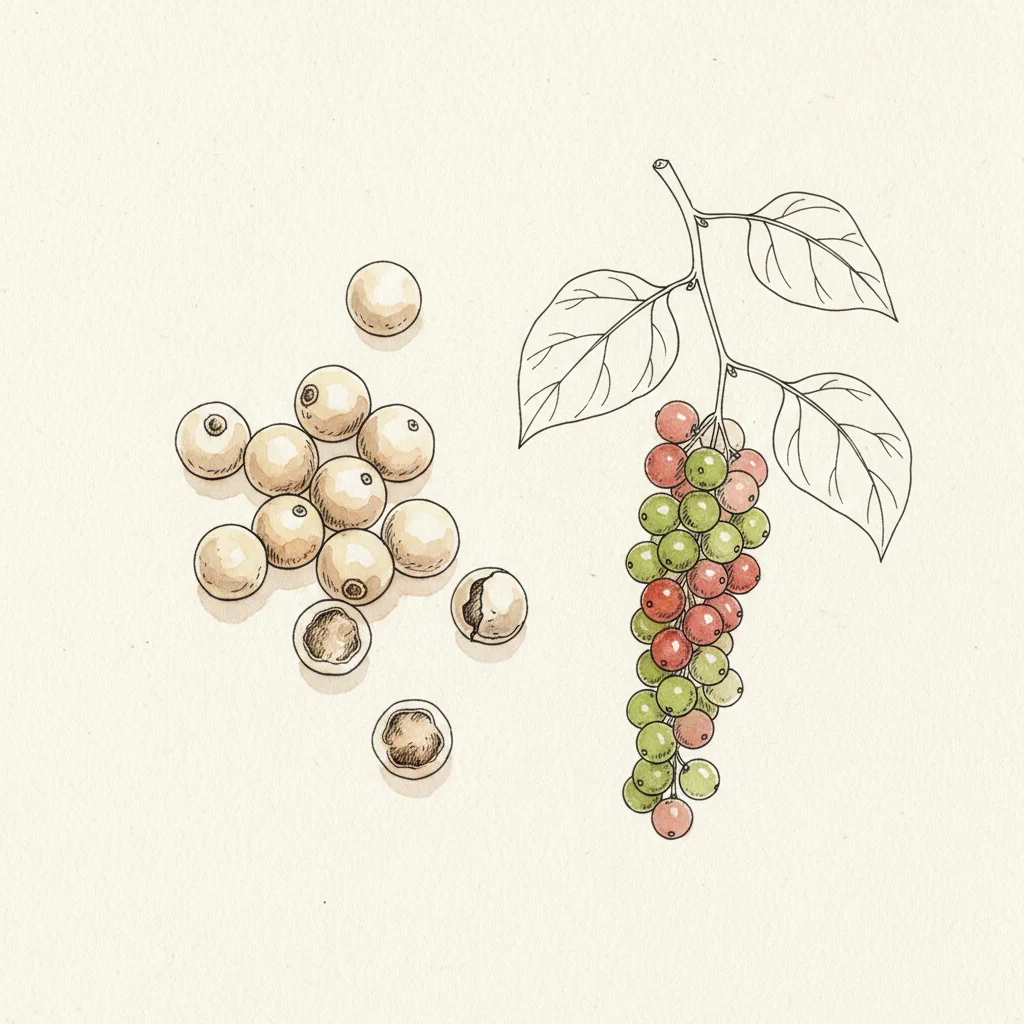
Pepper · White pepper
Penja White Pepper
Penja Valley, Littoral region, Cameroon (PGI)
musky animal warmth · fresh menthol · damp forest floor
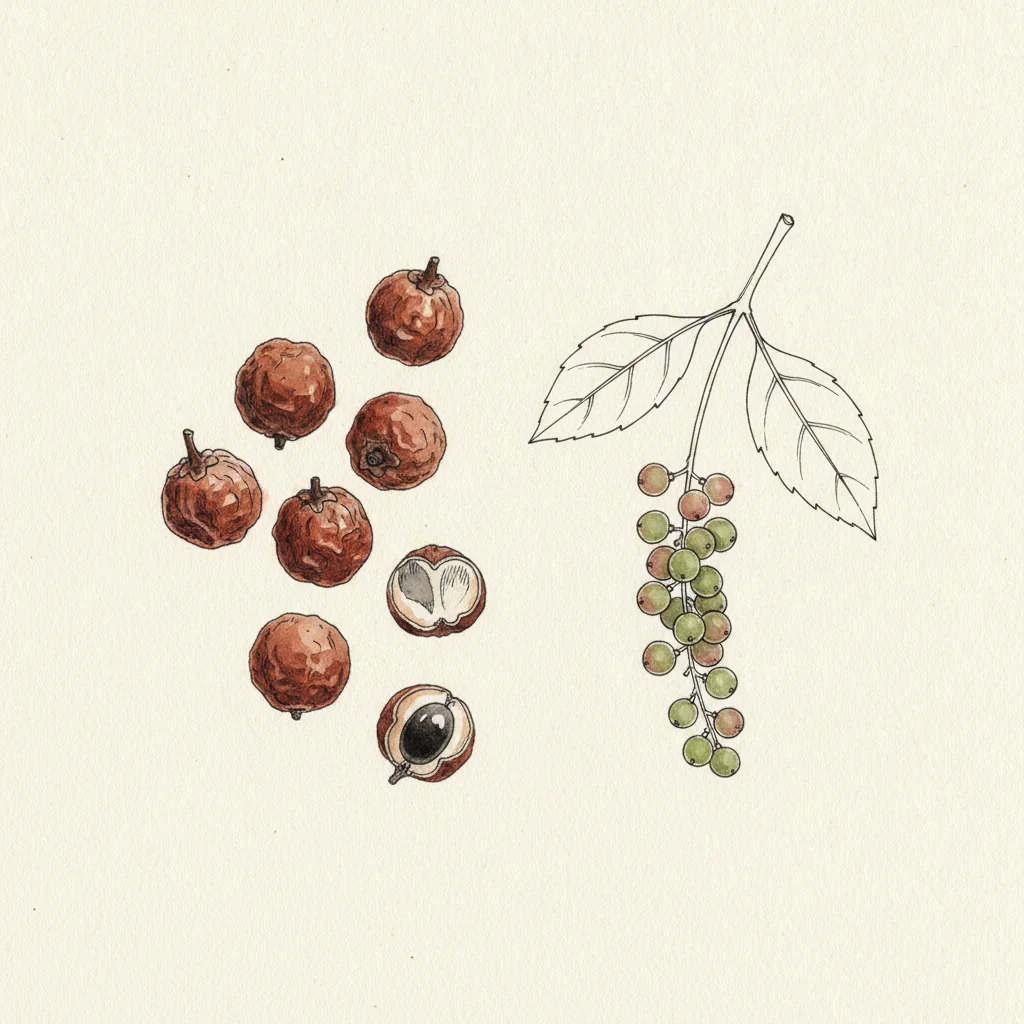
Pepper · Pepper cousin
Sichuan Peppercorns
Sichuan Province, Hanyuan and Maowen counties, China
pink grapefruit · lime zest · fresh coriander
Our verdict
Penja for delicate French dishes; Sichuan for its citrus-and-numbing tingle in Chinese cooking.
At a glance
| Criterion | Penja White Pepper | Sichuan Peppercorns |
|---|---|---|
| Botanical name | Piper nigrum (true pepper) | Zanthoxylum simulans (not a true pepper) |
| Origin | Cameroon — Penja Valley | China — Sichuan Province |
| Certification | PGI | None |
| Intensity | 7/10 — refined, aromatic heat | 8/10 — tingling and numbing (málà) |
| Main notes | Musky animal warmth, fresh menthol, forest floor | Pink grapefruit, lime zest, fresh coriander |
| Signature sensation | Clean peppery warmth | Mouth-numbing tingle, not heat |
| Best for | White fish, scallops, cream sauces, poached chicken | Mapo tofu, kung pao, chili oil, dan dan noodles |
| Median price | ~$16 / 2.5 oz jar | ~$11 / 4 oz bag |
| Value | Splurge white pepper, deeply worth it on cream | Cheap thrill, essential for Sichuan cooking — worth it |
When to choose Penja White Pepper
Reach for Penja white pepper when you're cooking delicate, pale dishes and want refinement, not fireworks. Grown in Cameroon's volcanic Penja Valley and PGI-protected, it's a true peppercorn (Piper nigrum) processed white — the dark skin removed to leave a cleaner, more aromatic core. Its register is unusual: a musky, almost animal warmth, a streak of fresh menthol, and a damp-forest-floor depth. That makes it the white pepper for fine French and refined cooking, where black pepper's color and bite would intrude. It's built for delicate white fish, seared scallops, cream sauces and beurre blanc, poached chicken, fresh cheeses, and carpaccio — anything where you want warmth and aroma without specks or aggression. Use it as a finishing pepper, ground to order from whole grains kept in an opaque jar; it holds its intensity about 18 months. The menthol top note is fragile, so don't drown it in a heavily spiced dish and don't simmer it through a long marinade, where the volatile aromatics cook off. Skip it on rustic tomato sauces too — the refinement is lost on something robust and acidic. Against Sichuan, the distinction is total: Penja is a true pepper that delivers clean peppery warmth, while Sichuan delivers a numbing tingle and no real heat at all. They share a shelf and almost nothing else. On value, Penja is the splurge of the two — about $16 for a small jar — but on a beurre blanc or a plate of scallops it earns the premium, because nothing cheaper gives that musky-menthol lift. If your cooking is French, creamy, or pale, Penja is the answer and Sichuan simply doesn't apply.
When to choose Sichuan Peppercorns
Reach for Sichuan peppercorns when you're cooking Chinese food and want the málà tingle — and understand going in that this isn't pepper. Sichuan 'pepper' is the husk of a Zanthoxylum berry, botanically unrelated to Piper nigrum, and it doesn't bring heat the way chili or black pepper does. What it brings is a buzzing, numbing tingle on the lips and tongue, wrapped in bright aromatics of pink grapefruit, lime zest, and fresh coriander. That sensation is the foundation of Sichuan cuisine: it's the 'má' in málà (numbing-spicy), and you cannot fake it with any true pepper. Use it in mapo tofu, kung pao chicken, dan dan noodles, and a homemade chili oil, where it's toasted and ground or steeped into the fat. It also does surprising work on seared scallops and stir-fried greens, the citrus lifting the dish while the tingle adds texture. Toast the husks briefly to wake the aromatics, then grind — and finish the dish with it, off the heat, because the citrus top notes cook off in a long braise. The catch: don't double up on already-numbing dishes (you freeze the mouth and lose the flavor), and keep it away from delicate cream sauces and soft cheeses, where the tingle is jarring rather than thrilling. Buy small and often — it holds its tingle and citrus lift about 12 months, then fades fast. On value it's a cheap thrill at roughly $11 for a 4 oz bag, and it's non-negotiable if you cook Sichuan food, because nothing substitutes for the numbing buzz. Against Penja, the choice isn't about quality — it's about which cuisine is on the stove. French cream sauce wants Penja; mapo tofu wants Sichuan.
Where to buy?
Penja White Pepper
Links checked on
| Merchant | Price | Action |
|---|---|---|
| Amazon US | — | Amazon US |
| La Boite | — | La Boite |
| Sous Chef UK | — | Sous Chef UK |
Prices may vary depending on current promotions on the merchant site.
Sichuan Peppercorns
Links checked on
| Merchant | Price | Action |
|---|---|---|
| Amazon US | — | Amazon US |
| Sous Chef UK | — | Sous Chef UK |
Prices may vary depending on current promotions on the merchant site.
Frequently asked questions
- Is Sichuan pepper actually a pepper?
- No. It's the dried husk of a Zanthoxylum berry, botanically unrelated to true pepper (Piper nigrum). It doesn't deliver heat — it delivers a numbing, tingling sensation called má, the 'numbing' half of málà. Penja, by contrast, is a genuine Piper nigrum peppercorn.
- Can I swap one for the other?
- No — they do entirely different jobs. Penja gives clean, aromatic peppery warmth for delicate Western dishes; Sichuan gives a citrusy mouth-numbing tingle for Chinese cooking. Using Sichuan in a beurre blanc or Penja in mapo tofu gives you the wrong sensation in the wrong cuisine.
- Why is Penja so expensive?
- It's PGI-protected, grown in Cameroon's volcanic Penja Valley, and processed white, which removes the skin and reduces yield. At about $16 a jar it's a splurge, but on cream sauces and white fish its musky-menthol aroma earns it — nothing cheaper gives quite that lift.
- How do I get the most tingle out of Sichuan pepper?
- Toast the husks briefly in a dry pan to wake the aromatics, grind them fresh, and add them off the heat or near the end — the citrus top notes cook off in long braises. Buy small and often, since it loses its tingle within about 12 months.
The best pairings
With Penja White Pepper
With Sichuan Peppercorns
Comparison prepared according to our methodology. Sponsored purchase links — see our affiliations.