
Comparison
Saigon cinnamon vs star anise: which warming spice?
Both are intense Vietnamese spices, but they pull opposite directions. Saigon cinnamon is hot, sweet, candy-bright bark for baking and warm drinks, about $12. Star anise is cool, licorice-anise depth for pho, braises and five-spice, about $10. Sweet warmth in a pie or roll, Saigon cinnamon; savory licorice in a broth or braise, star anise.
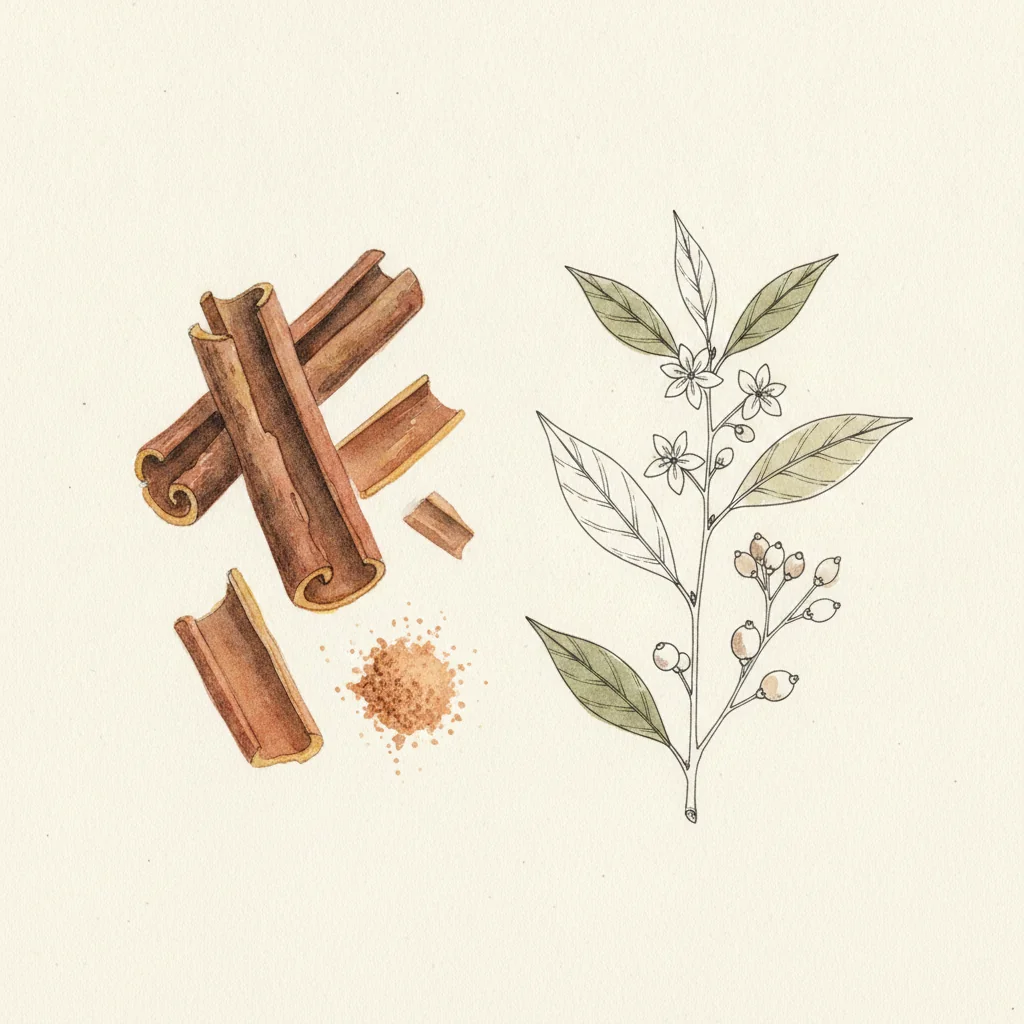
Spice · Whole spice
Saigon Cinnamon
Highland forests around Huế and Quảng Nam, central Vietnam, Vietnam
hot cinnamon candy · sweet bark · clove-like warmth
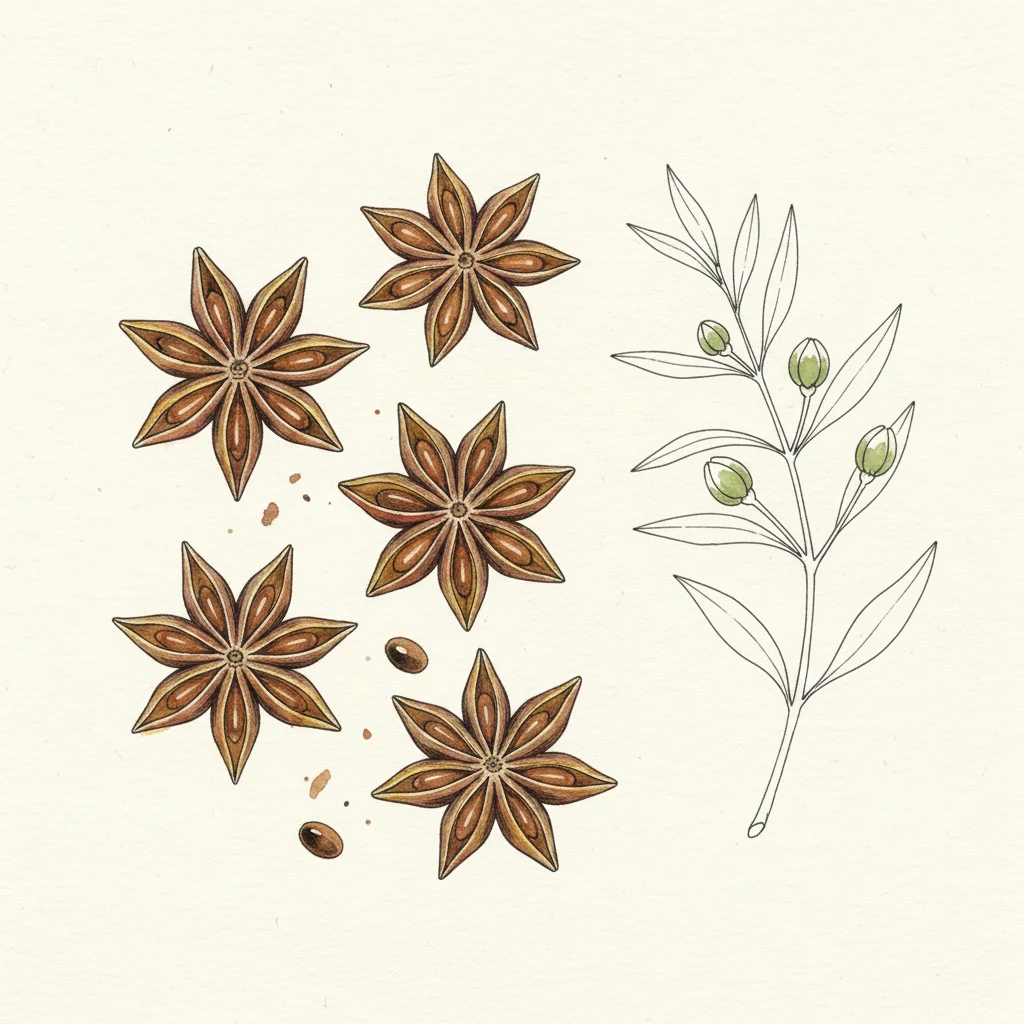
Spice · Whole spice
Star Anise
Lang Son province, on the Chinese border, Vietnam
anise · licorice · fennel
Our verdict
Saigon cinnamon for sweet warmth, star anise for savory licorice depth.
At a glance
| Criterion | Saigon Cinnamon | Star Anise |
|---|---|---|
| Origin | Vietnam — central highlands near Hue and Quang Nam (Cinnamomum loureiroi) | Vietnam — Lang Son province (Illicium verum) |
| Form | Bark, ground or whole quills | Whole eight-pointed dried stars |
| Intensity | 9/10 — hits like hot cinnamon candy | 8/10 — assertive, licorice that can turn soapy if overdosed |
| Main notes | Hot cinnamon candy, sweet bark, clove warmth | Anise, licorice, fennel |
| Best use | Cinnamon rolls, pies, oatmeal, mulled cider, chai | Pho, five-spice, red-braised pork, mulled wine, duck stock |
| Median price | ~$12 / 100 g equivalent | ~$10 / 100 g whole stars |
| Value | Use a third less than supermarket cinnamon — it lasts | One or two stars per pot; a bag lasts months |
When to choose Saigon Cinnamon
Reach for Saigon cinnamon when you want sweet, hot, unmistakable cinnamon warmth. This is the loudest cinnamon there is — Cinnamomum loureiroi from the central Vietnamese highlands, all hot-cinnamon-candy punch, sweet bark and a clove-like edge. It owns the baking lane: cinnamon rolls, snickerdoodles, coffee cake, apple and pumpkin pie, oatmeal, French toast, a dusting on a cappuccino. Its high essential-oil content means it survives the oven where milder Ceylon fades to nothing, so it's the one to use when the cinnamon has to still be there after an hour of baking. Whole quills also do real work simmered in mulled cider, chai or a syrup. The catch is potency: scale back about a third versus a generic supermarket cinnamon, because a teaspoon of this lands like a tablespoon of the cheap stuff and can turn medicinal if you pour with a heavy hand. It also leans sweet, so it's not your first pick for savory cooking beyond a careful pinch in mole or chili. At about $12 for the 100 g equivalent it isn't the cheapest cinnamon, but you use less and it actually tastes of something, which makes it the better buy. When the dish wants cool licorice rather than sweet warmth, that's star anise, not this.
When to choose Star Anise
Reach for star anise when a dish needs cool, savory licorice depth that builds over a long simmer. Illicium verum from Lang Son gives you anise, licorice and fennel in one hard eight-pointed star, and it's the backbone of Vietnamese pho broth, Chinese five-spice, red-braised pork belly and duck stock. This is a low-and-slow spice: infuse it early in the simmer so the flavor unfurls over an hour or more, never toss it in at the finish, where it just tastes raw and sharp. It crosses into sweet work too — poached pears, apple compote, mulled wine and cider — but its register is fundamentally savory-aromatic, not the dessert sweetness of cinnamon. Dosing is where people fail it: one to two whole stars per two liters of broth is plenty, and overshooting tips the licorice cold, soapy and unpleasant, the single most common star-anise mistake. Buy whole stars, not ground, which fades fast and is often cut with cheaper material; whole, a bag lasts months sealed away from light. At about $10 per 100 g of whole stars it's cheap per pot since you use so few. What it can't do is bring the warm, sweet baking-spice character of cinnamon — ask it to carry a cinnamon roll and you get cold licorice instead.
Where to buy?
Saigon Cinnamon
Links checked on
| Merchant | Price | Action |
|---|---|---|
| Burlap & Barrel | — | Burlap & Barrel |
| Amazon US | — | Amazon US |
| The Spice House | — | The Spice House |
Prices may vary depending on current promotions on the merchant site.
Star Anise
Links checked on
| Merchant | Price | Action |
|---|---|---|
| Amazon US | — | Amazon US |
| Burlap & Barrel | — | Burlap & Barrel |
| Steenbergs | — | Steenbergs |
Prices may vary depending on current promotions on the merchant site.
Frequently asked questions
- Can I substitute star anise for cinnamon?
- No. They pull opposite ways — Saigon cinnamon is hot and sweet, star anise is cool licorice. Swapping one for the other changes the whole character of a dish. Use cinnamon for sweet warmth, star anise for savory aromatic depth.
- Which is stronger?
- Saigon cinnamon is the more aggressive of the two at 9/10, landing like hot cinnamon candy. Star anise sits at 8/10 but is the easier to overdose — too many stars turn the licorice cold and soapy, so dose it with restraint.
- Do they ever go in the same dish?
- Yes — Chinese five-spice and mulled wine both use cinnamon and star anise together, where the sweet bark and cool licorice balance each other. The trick is restraint on the anise so it supports rather than dominates.
- Whole or ground?
- Buy Saigon cinnamon ground for baking, whole quills for simmering. Always buy star anise whole — ground star anise fades fast and is often adulterated. Whole stars infuse cleanly and a bag lasts for months.
The best pairings
With Saigon Cinnamon
With Star Anise
Comparison prepared according to our methodology. Sponsored purchase links — see our affiliations.