
Comparison
Sansho vs Tasmanian pepperberry — which to use?
Neither is true pepper, and they couldn't be further apart. Sansho (Zanthoxylum piperitum, around $8) is a cool, bright yuzu-and-shiso tingle for grilled eel, tempura and noodles. Tasmanian pepperberry (Tasmannia lanceolata, about $14) is dark blueberry-licorice heat, several times black pepper's strength, for game and chocolate. Cool-bright versus dark-hot.
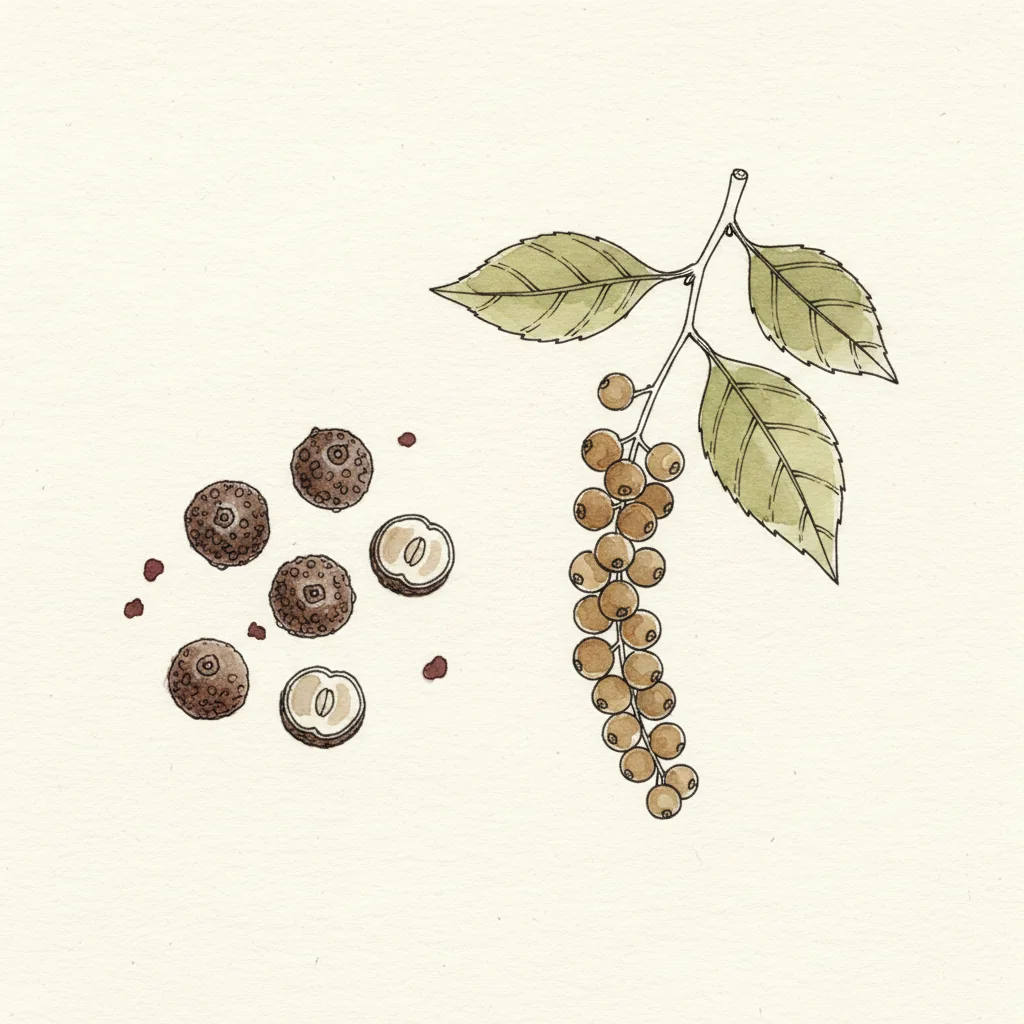
Pepper · Pepper cousin
Sansho
Arima, Wakayama Prefecture, island of Honshu, Japan
yuzu zest · green shiso leaf · spearmint
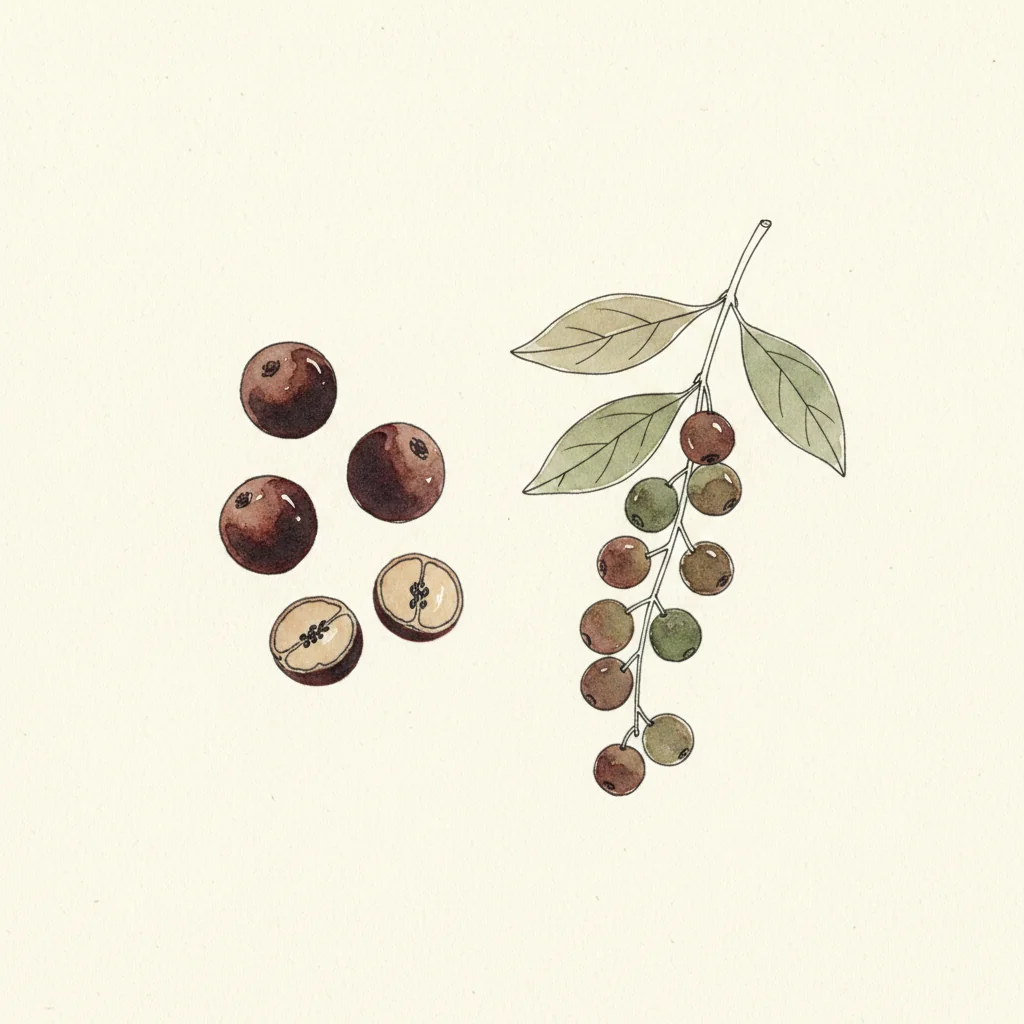
Pepper · Berry
Tasmanian Pepperberry
Tasmania, temperate rainforest understory, Australia
wild blueberry · black licorice · violet ink
Our verdict
Sansho for cool yuzu lift on Japanese plates; pepperberry for dark berry heat on game and chocolate.
At a glance
| Criterion | Sansho | Tasmanian Pepperberry |
|---|---|---|
| Botany | Zanthoxylum piperitum (citrus family) | Tasmannia lanceolata (rainforest shrub) |
| Origin | Japan, Arima, Wakayama | Australia, Tasmanian rainforest understory |
| Intensity | 7/10 — cool tingle, fades fast | 9/10 — delayed heat that floods and lingers |
| Main notes | Yuzu zest, green shiso, spearmint | Wild blueberry, black licorice, violet ink |
| Best on | Grilled eel, udon, tempura, sashimi | Venison, seared duck, blue cheese, dark chocolate |
| Price | ~$8 / 12 g bottle | ~$14 / small jar |
| Value | Worth it — a fine pinch per plate | Worth it — one or two berries per dish |
When to choose Sansho
Pick sansho when the plate is Japanese and you want a cool citrus tingle, not heat. It's a Zanthoxylum, not a pepper, and the sensation is a bright, cool tingle that lands fast and fades faster than Sichuan, almost menthol-like rather than electric — yuzu zest, green shiso leaf and spearmint over green apple and pine. That coolness is the opposite of pepperberry's dark flood. Four scenarios where sansho wins. First, grilled eel — unagi with sansho is the textbook pairing, the cool citrus cutting the rich glaze. Second, udon and soba, where a fine pinch lifts the broth. Third, tempura, where it sharpens the fried batter. Fourth, white-fish sashimi, where it works as a dry, aromatic citrus. The move: grind a fine pinch over the plate right before it goes out — sansho fades quickly, so dose at the pass. Avoid it on dishes already loaded with yuzu, on long braises, where the volatile aroma cooks off, and on tomato sauces that bury it. At around $8 for a 12 g bottle it's the cheaper of the two by far. Where pepperberry is the better call: anything dark, gamey or built on heat — venison, duck, blue cheese, dark chocolate — wants the berry's flood, not sansho's delicate cool lift. These two never substitute. Sansho is the bright, fleeting citrus finisher for Japanese plates; pepperberry is the dark, lingering heat for game and dessert. Choosing between them is choosing between two completely different sensations.
When to choose Tasmanian Pepperberry
Pick Tasmanian pepperberry when you want dark fruit and serious heat on game or chocolate. The intensity is several times black pepper's, and it arrives as a delayed heat that builds for a few seconds, then floods in and lingers far longer than pepper — wild blueberry, black licorice and violet. Where sansho is a quick cool tingle, pepperberry is a slow dark flood. Four scenarios where it wins. First, venison and game, where the dark fruit meets the iron of the meat. Second, seared duck breast, where the licorice edge cuts the fat. Third, blue cheese or fresh goat cheese on toast, where the berry plays the tang. Fourth, dark chocolate ganache, where one crushed berry reads like cassis. The move: crush just one or two berries, never a pinch — the intensity is several times black pepper's, so a heavy hand turns a sauce bitter and floods the back of the throat. It bleeds purple too, so keep it off pale or clear sauces, and off delicate white fish, which it bulldozes. At around $14 a jar it looks pricey, but two berries dose a whole dish, so it lasts. Where sansho is the better call: any Japanese plate or anything light and bright — eel, tempura, sashimi — where you want a cool citrus lift, not a heavy berry hammer. Pepperberry would flatten those dishes. Pepperberry is for the dark, the gamey and the sweet; sansho for the cool, the bright and the Japanese. They share the not-really-pepper label and nothing else.
Where to buy?
Sansho
Links checked on
| Merchant | Price | Action |
|---|---|---|
| Amazon US | — | Amazon US |
| Sous Chef UK | — | Sous Chef UK |
Prices may vary depending on current promotions on the merchant site.
Tasmanian Pepperberry
Links checked on
| Merchant | Price | Action |
|---|---|---|
| Amazon US | — | Amazon US |
| Steenbergs UK | — | Steenbergs UK |
Prices may vary depending on current promotions on the merchant site.
Frequently asked questions
- Is either one true pepper?
- No. Sansho is Zanthoxylum piperitum, a citrus-family relative from Japan. Tasmanian pepperberry is Tasmannia lanceolata, a rainforest shrub from Australia. Neither is Piper nigrum. They're called pepper for their bite, but they belong to entirely different plant families and taste nothing alike.
- Which is hotter?
- Pepperberry, by a wide margin. Its heat is several times black pepper's and floods the palate, lingering. Sansho barely registers as heat — its signature is a cool, bright tingle that fades fast. If you want a big dark hit, pepperberry; if you want a delicate lift, sansho.
- Can I swap one for the other?
- No. Sansho is cool, citrus-led and built for Japanese plates like eel and tempura. Pepperberry is dark, fruity and built for game and chocolate. Their flavors and intensities are opposites, so swapping them wrecks the dish. Use each only in its own lane.
- Why does pepperberry stain my food?
- The berry carries a strong violet pigment, so it bleeds purple into pale or clear sauces. Use it on dark game gravies and chocolate where the color hides, or accept a bruised tint. Sansho, a green-toned spice, doesn't stain — another reason to keep them on separate plates.
The best pairings
With Sansho
With Tasmanian Pepperberry
Comparison prepared according to our methodology. Sponsored purchase links — see our affiliations.