
Japanese Sansho Pepper (Arima, Wakayama)
In brief — Sansho is the Japanese soul of the Zanthoxylum family: a cool, almost minty tingle that hits softer than Sichuan but smells far finer, somewhere between yuzu zest, green shiso and green apple. Dusted over grilled eel, udon or white-fish sashimi, it does what almost no other spice manages, lifting a dish without weighing it down. The catch is freshness, not heat. Its aromatic profile develops notes of yuzu zest, green shiso leaf, spearmint, extended by green apple and soft pine resin, for an intensity of 7/10. On the palate, it offers a bright, cool tingle that lands fast and fades faster than Sichuan, almost menthol-like rather than electric, with a medium finish, finishing on a clean herbal note. In the kitchen, it's best added as a finishing touch and it pairs with grilled eel (unagi), udon and soba, tempura. Recommended dosage: a fine pinch ground over the plate, right before it goes out. Expect from $6.00 to $15.00 per 0.42 oz (12 g) bottle (median $8.00).
Origin : Arima, Wakayama Prefecture, island of Honshu, Japan
Zanthoxylum piperitum
« A genuinely distinctive grain: the yuzu-and-shiso lift is unmatched and the cool tingle is a clean party trick. It loses half a point only because shelf-aged powder is everywhere, so freshness is the gamble you take. »
Sansho is the Japanese soul of the Zanthoxylum family: a cool, almost minty tingle that hits softer than Sichuan but smells far finer, somewhere between yuzu zest, green shiso and green apple. Dusted over grilled eel, udon or white-fish sashimi, it does what almost no other spice manages, lifting a dish without weighing it down. The catch is freshness, not heat.
Pepper · Pepper cousin
Sansho
Arima, Wakayama Prefecture, island of Honshu, Japan
yuzu zest · green shiso leaf · spearmint
Aromatic profile
| Family | Zanthoxylum |
|---|---|
| Intensity | ●●●●○ (7/10) |
| Main notes | yuzu zest · green shiso leaf · spearmint |
| Secondary notes | green apple · soft pine resin |
| Mouthfeel | a bright, cool tingle that lands fast and fades faster than Sichuan, almost menthol-like rather than electric |
| Finish length | medium, finishing on a clean herbal note |
Culinary use
- When to add : finishing
- Dosage : a fine pinch ground over the plate, right before it goes out
- Ideal pairings : grilled eel (unagi), udon and soba, tempura, white-fish sashimi, poached citrus and stone fruit, plain yogurt
- Avoid with : dishes already loaded with yuzu, long braises (the volatile aroma cooks straight off), tomato sauces that bury it
The grain in detail
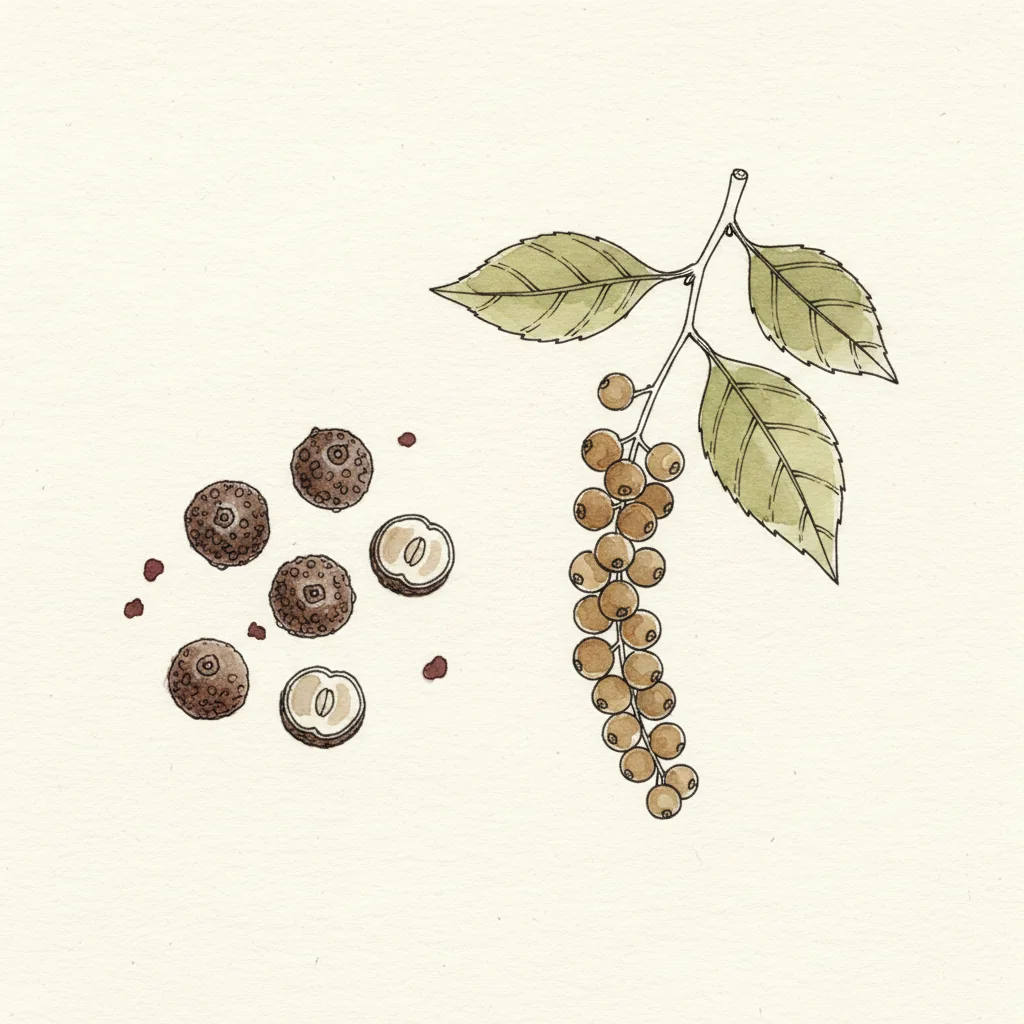
Sansho (山椒, literally mountain pepper) is the Japanese cousin of Sichuan pepper, and the two are easy to confuse on paper and impossible to confuse on the tongue. The plant, Zanthoxylum piperitum, grows wild across Japan's mountains, but Arima in Wakayama Prefecture has been the reference terroir since the Middle Ages, helped by a cool, damp microclimate that builds aroma. Only the husk is used, not the hard black seed inside it, which is gritty and bitter and gets sieved out. The husks are picked young and dried with real care, because the aromatics are volatile and a careless dry leaves you with dust. What you smell is striking: yuzu zest, green shiso, spearmint, a flash of green apple. What you feel is the tingle the Japanese call shibire, present but shorter and cooler than Sichuan's long electric buzz. This is the spice served in a little round shaker over grilled eel (unagi), and it earns that role, but it also belongs on udon and soba, tempura, white-fish sashimi, and, less expectedly, on poached citrus, stone fruit and plain yogurt. Treat it as a finishing pepper: the aroma is fragile and cooking burns it off, so grind it fresh, just before serving, ideally crushed in a mortar rather than bought pre-ground. The traditional Arima growers are family operations working shrubs that are sometimes a century old, hand-picking young leaves (kinome) in spring and berries in autumn. One warning that matters more here than with almost any pepper: powder that has sat on a shelf for a year has lost half its point. Buy small, buy whole husks when you can, and use it fast.
History & origin
Mentioned in the Kojiki of 712, sansho is one of the oldest documented spices in Japan, first used as medicine and later woven into kaiseki cooking and into shichimi togarashi, the seven-spice blend. The Arima district west of Kobe gives the most fragrant berries thanks to its cool, humid climate, and local growers organized around groups such as Arima Sansho no Kai keep the seasonal hand-harvest alive: tender leaves in spring, berries in autumn.
Provenance & authenticity
What sets the real thing apart — appellation, species and verification cues.
- Species
- Zanthoxylum piperitum
How to verify the real one
- Zanthoxylum piperitum
- Wakayama (Arima) origin
- bright citrus-mint, lower numbing than Sichuan
Indicative price
Reference format : 0.42 oz (12 g) bottle — from $6.00 to $15.00 (median : $8.00).
Storage
Airtight, opaque jar; the aromatics are very volatile, so use within 9 months. Don't buy it long-aged or pre-ground if you can help it.
Where to buy?
Where to buy it
Links checked on
| Merchant | Price | Action |
|---|---|---|
| Amazon US | — | Amazon US |
| Sous Chef UK | — | Sous Chef UK |
Prices may vary depending on current promotions on the merchant site.
Alternatives if unavailable
Tags
- Japan
- Zanthoxylum
- mountain pepper
- kaiseki
- unagi
- Arima
Frequently asked questions
- How do you store Sansho?
- Airtight, opaque jar; the aromatics are very volatile, so use within 9 months. Don't buy it long-aged or pre-ground if you can help it.
- What dosage for Sansho?
- a fine pinch ground over the plate, right before it goes out
- When should you add Sansho in cooking?
- It's best used finishing.
- What should you avoid pairing Sansho with?
- Avoid with: dishes already loaded with yuzu, long braises (the volatile aroma cooks straight off), tomato sauces that bury it.
Go further
The dishes where this sansho shines
Also a recommended alternative for
See every dish where this product is mentioned →
Other peppers to discover
Featured in these gift sets
Page prepared according to our methodology. Purchase links marked sponsored and liable to earn a commission — details on our Affiliations page.