
Comparison
Sumac vs black lime: which souring spice?
Both sour a dish without fresh citrus, but at opposite ends of cooking. Sumac is a finishing dust — clean tart-lemon brightness scattered raw over fattoush, hummus or grilled lamb, about $9. Black lime is a deep, fermented, almost funky sourness for Persian and Iraqi stews, about $9.50. Finishing tartness, sumac; slow-cooked depth, black lime.
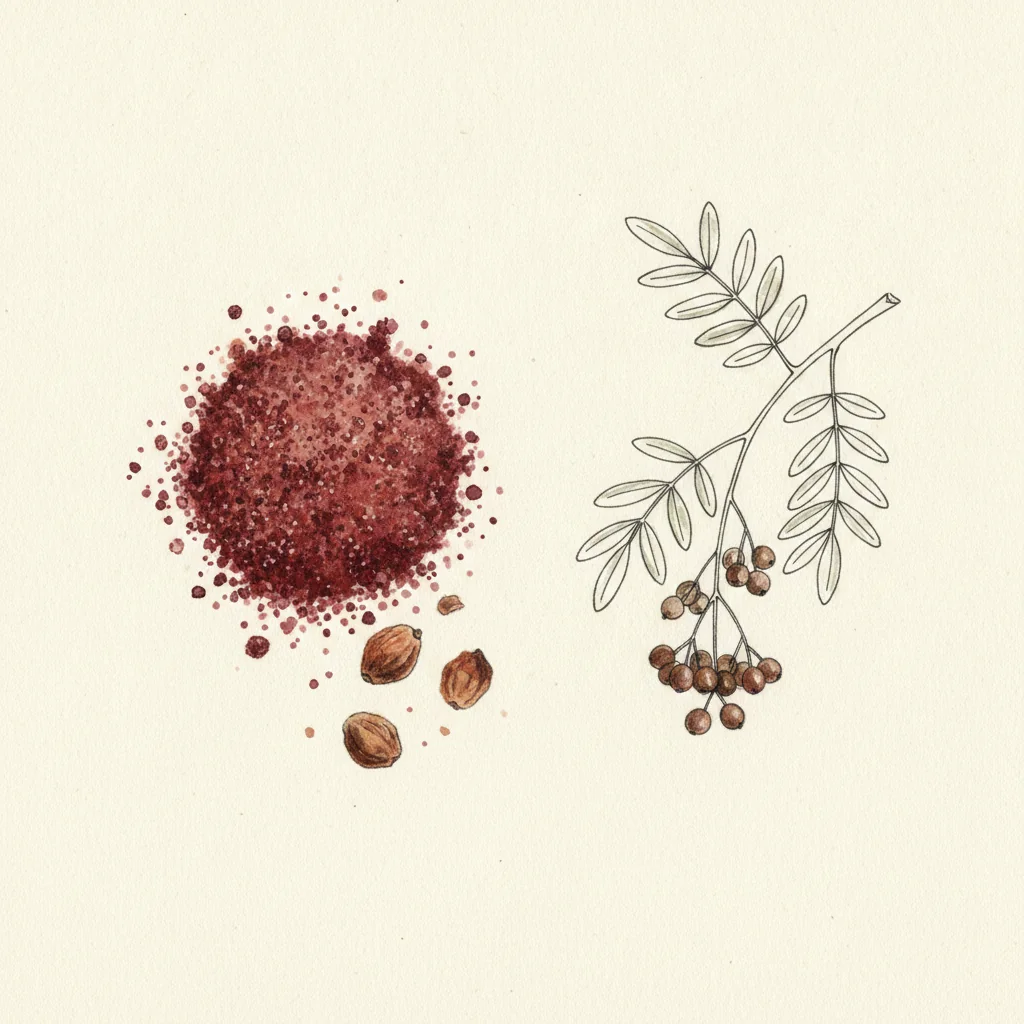
Spice · Spice berry
Sumac
Aleppo and the coastal mountains, plus neighboring Lebanon, Syria
tart lemon · dried red berry · light tannin
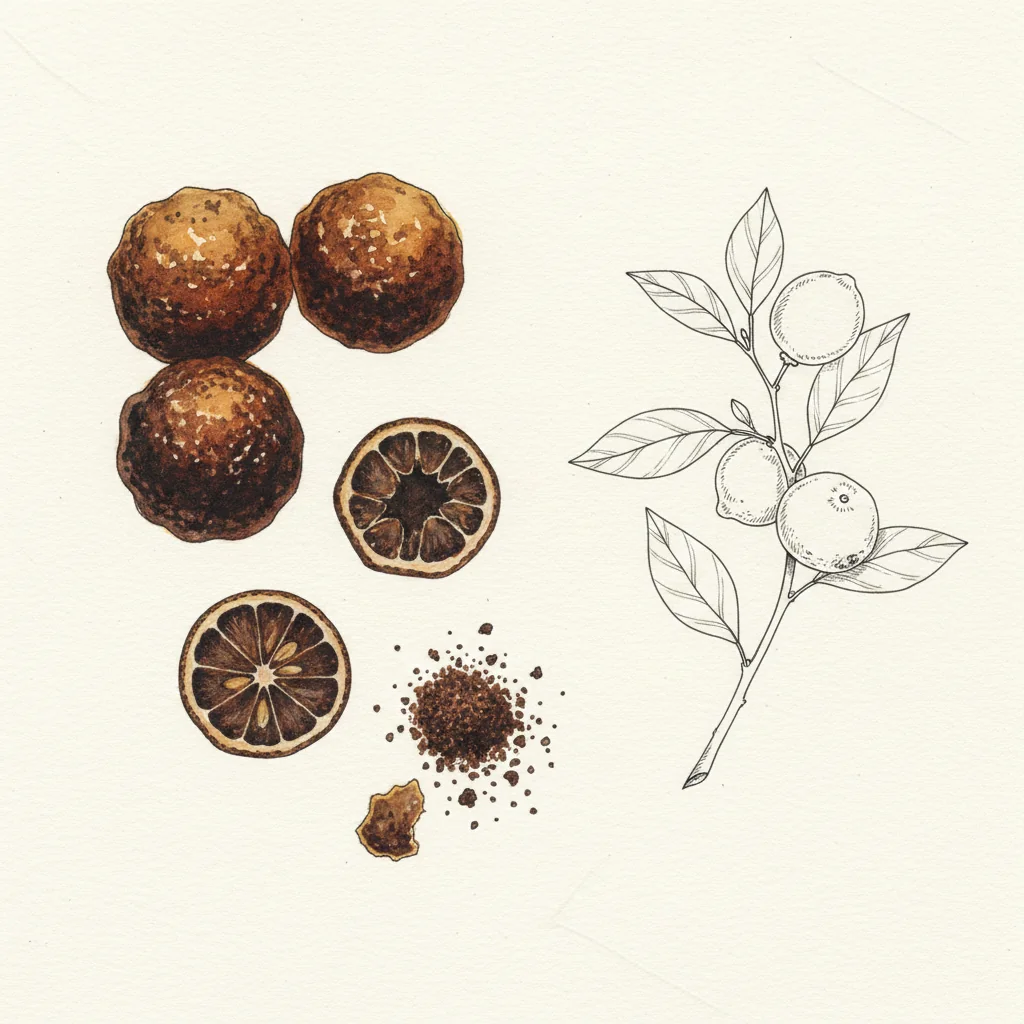
Spice · Dried lime
Black Lime (Loomi)
Traditionally Oman, Iraq and Iran (Basra, Oman); the Burlap & Barrel single-origin powder is grown and sun-dried in Alta Verapaz, Guatemala, Persian Gulf (traditional); Guatemala for the Burlap & Barrel jar
sour citrus peel · fermented tang · faint funk
Our verdict
Sumac to finish bright, black lime to sour a slow-cooked stew.
At a glance
| Criterion | Sumac | Black Lime (Loomi) |
|---|---|---|
| Origin | Syria — Aleppo and the coastal mountains (Rhus coriaria) | Persian Gulf tradition; Burlap & Barrel jar grown in Guatemala (Citrus aurantiifolia) |
| Form | Dried crushed berries, coarse red dust | Whole dried fermented limes, or ground to powder |
| Intensity | 6/10 — bright and clean, easy to control | 8/10 — deep, fermented, builds fast |
| Main notes | Tart lemon, dried red berry, light tannin | Sour citrus peel, fermented tang, faint funk |
| Best use | Finishing: fattoush, hummus, labneh, grilled meat, raw onions | Simmered: ghormeh sabzi, gheimeh, braised lamb, lentil soups |
| Median price | ~$9 / 4 oz bag | ~$9.50 / 2.8 oz jar (ground) |
| Value | Cheap, forgiving, endlessly useful at the table | Strong; a little does a lot, lasts a long time |
When to choose Sumac
Reach for sumac when you want clean, lemony tartness on the finished plate. This is a finishing spice, dusted straight onto the food off the heat — over fattoush and chopped salads, hummus and labneh, grilled lamb and chicken skewers, raw red onions for a kebab, or ripe summer tomatoes. The flavor is bright tart-lemon with a dried-berry edge and just a whisper of tannin, the kind of sourness that wakes up fat and char without the wet acidity of an actual lemon wedge. That dryness is the point: you get the lift without thinning a sauce or weeping a salad. It's also the backbone of za'atar, so a jar earns its place twice over. Scatter one to two teaspoons over a dish for four, at the table, and adjust by eye — it's forgiving and hard to overdo. At about $9 for a 4 oz bag it's one of the cheapest ways to make a plate look and taste finished, and a good Aleppo-style sumac should smell faintly fruity, not just sour and dusty. What it won't do is survive a long simmer; cook it into a stew and the brightness flattens to a dull sourness, which is exactly where black lime takes over.
When to choose Black Lime (Loomi)
Reach for black lime when a slow-cooked dish needs sourness with depth and a little funk. These are whole limes dried rock-hard and fermented internally until they turn black, and the flavor is a world away from sumac's clean lemon — sour citrus peel, a fermented tang, a faint savory funk that defines Persian and Iraqi cooking. Pierce a whole lime and drop it into a simmering ghormeh sabzi, gheimeh or a braise of lamb shanks at the start, and it leaches a complex sourness into the broth over an hour or two that no fresh citrus can imitate. The ground powder is more potent and less forgiving: stir it in near the end of a lentil or chickpea soup, or dust it lightly over rice pilaf and roasted cauliflower, but go easy — about a quarter teaspoon per portion, because it builds fast and tips bitter if you overshoot. At roughly $9.50 for a 2.8 oz jar of ground it's not expensive per use, since the intensity means a little goes a long way and the jar lasts. One sourcing note: the traditional Gulf limes (Oman, Iraq, Iran) and the single-origin Guatemalan jars taste slightly different, but both give you that fermented depth. Don't ask it to be a fresh, bright finish — that's sumac's job, and forcing black lime onto a salad just reads as muddy.
Where to buy?
Sumac
Links checked on
| Merchant | Price | Action |
|---|---|---|
| Amazon US | — | Amazon US |
| Burlap & Barrel | — | Burlap & Barrel |
| Spicewalla | — | Spicewalla |
| Sous Chef UK | — | Sous Chef UK |
Prices may vary depending on current promotions on the merchant site.
Black Lime (Loomi)
Links checked on
| Merchant | Price | Action |
|---|---|---|
| Burlap & Barrel | — | Burlap & Barrel |
| Amazon US | — | Amazon US |
Prices may vary depending on current promotions on the merchant site.
Frequently asked questions
- Are sumac and black lime interchangeable?
- No. Sumac is a bright finishing dust; black lime is a deep fermented sourness for the pot. Sumac flattens if you cook it long, and black lime tastes muddy raw on a salad. Match the spice to when it goes in.
- Which is more sour?
- Black lime hits harder and deeper, around 8/10, with a fermented funk behind the sourness. Sumac is gentler and cleaner at 6/10, an easy-to-control tart lemon. For raw finishing you want the milder one.
- Can I use black lime on a salad?
- A very light dusting of the powder can work on roasted vegetables, but on fresh salads sumac is the right call — its clean tartness lifts without the funk and bitterness black lime brings when it isn't cooked.
- Which lasts longer in the cupboard?
- Both keep well sealed away from light. Black lime is so concentrated that a jar lasts a long time on small doses; sumac you'll use faster simply because it's so handy at the table, but it doesn't spoil quickly.
The best pairings
With Black Lime (Loomi)
Comparison prepared according to our methodology. Sponsored purchase links — see our affiliations.