
Black Lime / Loomi, whole and ground dried lime (Burlap & Barrel single-origin)
In brief — Black lime, or loomi, is a fresh lime boiled in brine and sun-dried until it turns hollow, black inside, and intensely sour. It's the souring engine of Persian and Iraqi cooking — fermented citrus tang with a savory, almost leathery funk that fresh lime can't touch. The Burlap & Barrel single-origin ground jar runs about $10 for 2.8 oz. A whole-lime bag is cheaper if you want to drop them into a stew yourself. In the kitchen, it's best added whole limes pierced and dropped into a simmering stew at the start; ground powder stirred in near the end or dusted over the finished plate and it pairs with Persian and Iraqi stews like ghormeh sabzi and gheimeh, braised lamb shanks and short ribs, lentil and chickpea soups. Recommended dosage: one whole lime per pot of stew for 4–6 people, or about a quarter teaspoon of powder per portion — go light, it builds fast. Expect from $7.00 to $10.00 per 2.8 oz jar (ground) (median $9.50).
Origin : Traditionally Oman, Iraq and Iran (Basra, Oman); the Burlap & Barrel single-origin powder is grown and sun-dried in Alta Verapaz, Guatemala, Persian Gulf (traditional); Guatemala for the Burlap & Barrel jar
Citrus aurantiifolia
« A souring agent fresh lime can't fake — fermented, leathery, deeply savory in a long braise. The Burlap & Barrel jar is traceable and clean, though Guatemala-grown, not Gulf. Whole limes give more for less. »
Black lime, or loomi, is a fresh lime boiled in brine and sun-dried until it turns hollow, black inside, and intensely sour. It's the souring engine of Persian and Iraqi cooking — fermented citrus tang with a savory, almost leathery funk that fresh lime can't touch. The Burlap & Barrel single-origin ground jar runs about $10 for 2.8 oz. A whole-lime bag is cheaper if you want to drop them into a stew yourself.
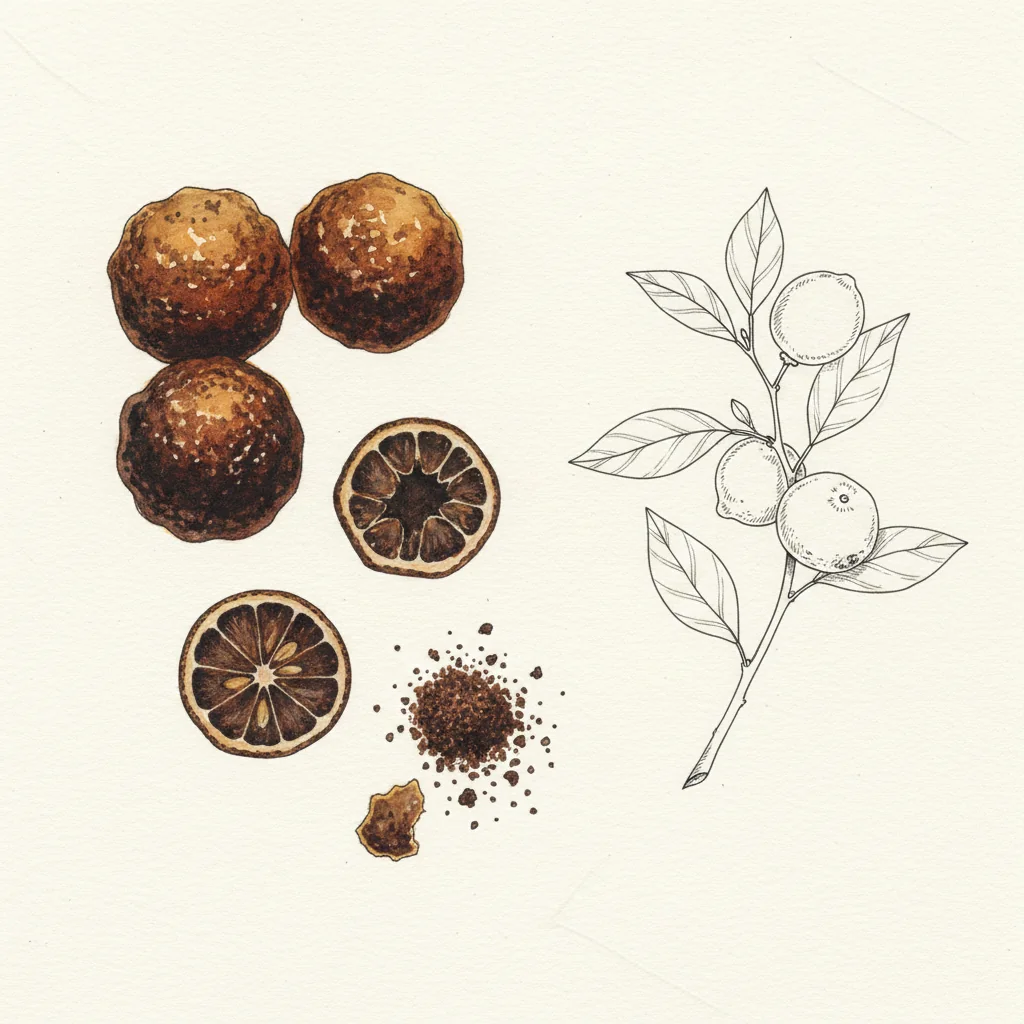
Spice · Dried lime
Black Lime (Loomi)
Traditionally Oman, Iraq and Iran (Basra, Oman); the Burlap & Barrel single-origin powder is grown and sun-dried in Alta Verapaz, Guatemala, Persian Gulf (traditional); Guatemala for the Burlap & Barrel jar
sour citrus peel · fermented tang · faint funk
Aromatic profile
| Family | Citrus aurantiifolia (whole limes dried hard, fermented internally) |
|---|---|
| Intensity | ●●●●○ (8/10) |
| Main notes | sour citrus peel · fermented tang · faint funk |
| Secondary notes | leather · Sauvignon Blanc · smoke · dried tamarind |
| Mouthfeel | puckering sourness up front, then a savory, almost umami bitterness that coats the back of the tongue |
| Finish length | long, drying and resinous, with a fermented-citrus finish that lingers |
Culinary use
- When to add : whole limes pierced and dropped into a simmering stew at the start; ground powder stirred in near the end or dusted over the finished plate
- Dosage : one whole lime per pot of stew for 4–6 people, or about a quarter teaspoon of powder per portion — go light, it builds fast
- Ideal pairings : Persian and Iraqi stews like ghormeh sabzi and gheimeh, braised lamb shanks and short ribs, lentil and chickpea soups, grilled chicken and kebab marinades, rice pilafs and basmati, roasted vegetables and cauliflower
- Avoid with : delicate fish or shellfish (the funk overwhelms them), fresh salads (it's a cooked-in souring agent, not a finisher like fresh lime), sweet desserts (the fermented bitterness reads as off)
The grain in detail
Black lime is what happens when you boil a fresh lime in salted water and leave it in the sun for weeks. The flesh ferments and dries inside the shell, the skin blackens, and you're left with a light, hollow lime that rattles. Crack one open and the smell is unmistakable: sour citrus, yes, but underneath it a fermented funk, a whiff of leather, something between dried tamarind and a glass of skin-contact white. This is the backbone of Persian, Iraqi and Gulf cooking, where it's called loomi (Iran), noomi basra (Iraq), or just dried lime. It does a job fresh lime cannot: it sours a dish from the inside over a long braise, and it adds a savory, almost umami bitterness that reads as depth rather than brightness. You use it two ways. Whole, you pierce the lime a few times and drop it into a simmering stew — ghormeh sabzi, gheimeh, a lamb braise — and let it steep for an hour, fishing it out before serving (the inside turns bitter if it cooks too long, so taste). Ground, it's a powder you stir in near the end or dust over rice, kebabs, roasted cauliflower. A word on sourcing, because it matters here: traditional loomi comes from the Persian Gulf — Oman, Basra, Iran. The Burlap & Barrel jar most American cooks reach for is a single-origin product, but the limes are grown and sun-dried on a family farm in Alta Verapaz, Guatemala, in the loomi style, not imported from the Gulf. It's an excellent, traceable powder with notes the producer pins as citrus peel, Sauvignon Blanc and leather — just know it's a New World take on an Old World spice, not the Basra original. If you want the whole limes to steep yourself, Middle Eastern brands like Sadaf sell them in bags for a fraction of the price.
History & origin
Dried limes have soured the food of the Persian Gulf for centuries. The technique — boiling limes in brine, then sun-drying them until the interior blackens and ferments — is documented across Oman, Iran and Iraq, where the spice is woven into the region's signature stews. Basra in southern Iraq gave its name to one common grade, noomi basra. The spice reached the modern American pantry largely through Persian and Iraqi diaspora cooking and, more recently, through single-origin importers like Burlap & Barrel, which sources its powder from a farm in Guatemala rather than the Gulf.
Provenance & authenticity
What sets the real thing apart — appellation, species and verification cues.
- Species
- Citrus aurantiifolia
Indicative price
Reference format : 2.8 oz jar (ground) — from $7.00 to $10.00 (median : $9.50).
Storage
Airtight jar away from light and humidity. Whole limes keep for years and only deepen; ground powder fades faster — use it within about six months for the brightest sour edge.
Where to buy?
Where to buy it
Links checked on
| Merchant | Price | Action |
|---|---|---|
| Burlap & Barrel | — | Burlap & Barrel |
| Amazon US | — | Amazon US |
Prices may vary depending on current promotions on the merchant site.
Alternatives if unavailable
Tags
- black lime
- loomi
- noomi basra
- dried lime
- Persian Gulf
- Burlap & Barrel
- souring agent
Frequently asked questions
- How do you store Black Lime (Loomi)?
- Airtight jar away from light and humidity. Whole limes keep for years and only deepen; ground powder fades faster — use it within about six months for the brightest sour edge.
- What dosage for Black Lime (Loomi)?
- one whole lime per pot of stew for 4–6 people, or about a quarter teaspoon of powder per portion — go light, it builds fast
- When should you add Black Lime (Loomi) in cooking?
- It's best used whole limes pierced and dropped into a simmering stew at the start; ground powder stirred in near the end or dusted over the finished plate.
- What should you avoid pairing Black Lime (Loomi) with?
- Avoid with: delicate fish or shellfish (the funk overwhelms them), fresh salads (it's a cooked-in souring agent, not a finisher like fresh lime), sweet desserts (the fermented bitterness reads as off).
Go further
The dishes where this black lime (loomi) shines
Also a recommended alternative for
See every dish where this product is mentioned →
Other spices to discover
Featured in these gift sets
Page prepared according to our methodology. Purchase links marked sponsored and liable to earn a commission — details on our Affiliations page.