
Dish × condiment pairing
Which spice to finish hummus?
Season : all-year · Occasion : mezze, snack, lunch
Sumac. Swirl olive oil over the hummus, then dust sumac across the top for a fruity, lemon-tart hit that cuts the tahini's richness without thinning the dip. Its wine-red color against the pale chickpea is half the point. About $9 for a 4 oz bag, deep burgundy not brown.
In detail
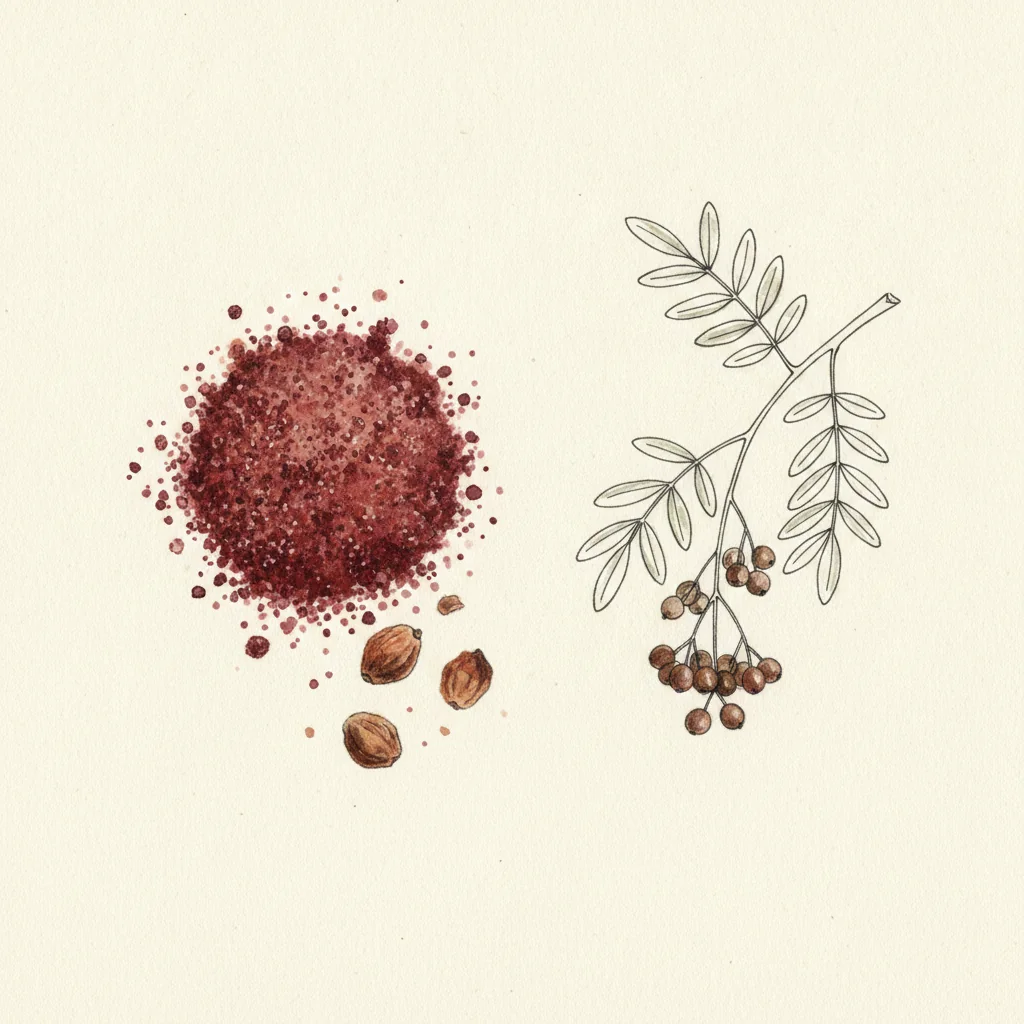
The spice to finish hummus is sumac, the dried crushed berry of Rhus coriaria, and the red dusting on a bowl of hummus is almost always sumac, not paprika. Hummus is rich and slightly flat from the tahini, and it wants acid on top to lift it. Sumac brings a clean, fruity, lemon-tart sourness with a faint tannin, and unlike a squeeze of lemon it adds no water, so the dip stays thick. The move: spread the hummus, pool good olive oil in the well, then dust sumac across the surface. The oil carries the powder and the wine-red color reads instantly against the pale chickpea, which is half the reason cooks reach for it. Buy deep burgundy, not brown, since color is the freshness tell, and taste first because cheap sumac is often cut with salt. About $9 for a 4 oz bag.
Our recommendation
Spice · Spice berry
Sumac
Aleppo and the coastal mountains, plus neighboring Lebanon, Syria
tart lemon · dried red berry · light tannin
Hummus is rich, fatty and a little flat from the tahini, and it begs for acid on top. Sumac is the classic answer because it brings a clean, fruity tartness without the water that more lemon juice would loosen the dip with. Dusted over the olive oil it grips, sours and stains the surface burgundy in one move. About $9 a bag, and a little goes a long way.
Intensity 6/10
Where to buy it
Links checked on
| Merchant | Price | Action |
|---|---|---|
| Amazon US | — | Amazon US |
| Burlap & Barrel | — | Burlap & Barrel |
| Spicewalla | — | Spicewalla |
| Sous Chef UK | — | Sous Chef UK |
Prices may vary depending on current promotions on the merchant site.
Affiliate links — La Pincée may earn a commission on some sales, at no extra cost to you. Read more.
The catch
That red dust on restaurant hummus isn't paprika, and swapping in paprika is the common mistake. Paprika gives you color and a faint sweet-smoke, but zero acid, so the hummus stays as rich and flat as it started. Sumac is what's actually doing the work: real sourness that cuts the tahini fat. Use paprika if you want a pretty bowl; use sumac if you want it to taste finished.
Chef's note
Make a shallow well in the spread hummus with the back of a spoon, pool a tablespoon of good olive oil in it, then dust the sumac over the oil, not the bare chickpea. The oil grabs the powder so it doesn't drift, and the contrast of green oil, pale base and burgundy sumac is the look. Add it just before serving; sumac dampens and dulls if it sits on the surface for hours.
Tasting note
tart lemon · dried berry · soft tannin · rich tahini · about $9 for a 4 oz bag and a pinch finishes a whole bowl. Worth it, and far better value than the salt-cut supermarket jars.
These three sections appear on every one of our pairing pages — our methodology.
Frequently asked questions
- What is the red spice sprinkled on hummus?
- Sumac, the dried crushed berry of Rhus coriaria. Its wine-red powder gives hummus a fruity, lemon-tart finish that cuts the tahini's richness, and the color against the pale chickpea is part of the appeal.
- Is sumac or paprika better on hummus?
- Different jobs. Paprika adds color and a mild sweet-smoky note but no acid. Sumac adds genuine sourness that cuts the fat, which is usually what a rich hummus is missing. For tang, reach for sumac.
- How do you finish hummus with sumac?
- Spread the hummus, pool good olive oil in the well, then dust sumac over the top. The oil carries the spice and keeps it from blowing away, and the burgundy color reads instantly.
This pairing was validated according to our methodology. Purchase links are marked sponsored and may earn a commission — details on our Affiliations page.