
Comparison
Tamari vs furikake: which umami seasoning?
These aren't rivals so much as different tools. Tamari is a wheat-free, whole-soy liquid umami — for dipping, glazing and finishing — about $6. Furikake is a dry seasoning of nori, sesame, bonito and salt you shower over rice and eggs, about $9. Want depth stirred into a dish, tamari; want a savory, crunchy topping, furikake.
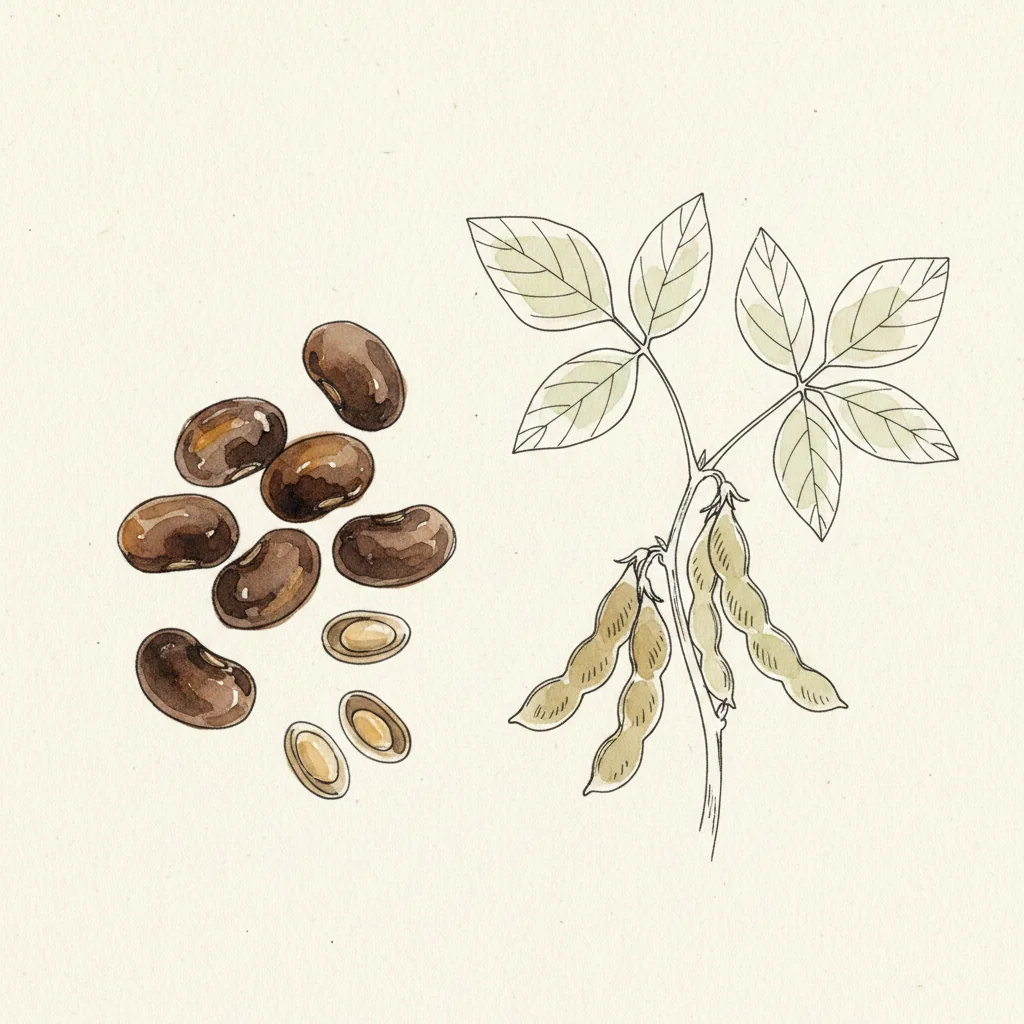
Spice · Oils, vinegars & honeys
Traditional Tamari
Aichi, Gifu and Mie — the Tōkai region around Nagoya, the historic home of whole-soybean (mame) brewing and Hatchō miso, Japan
deep roasted soy · round umami · low bitterness
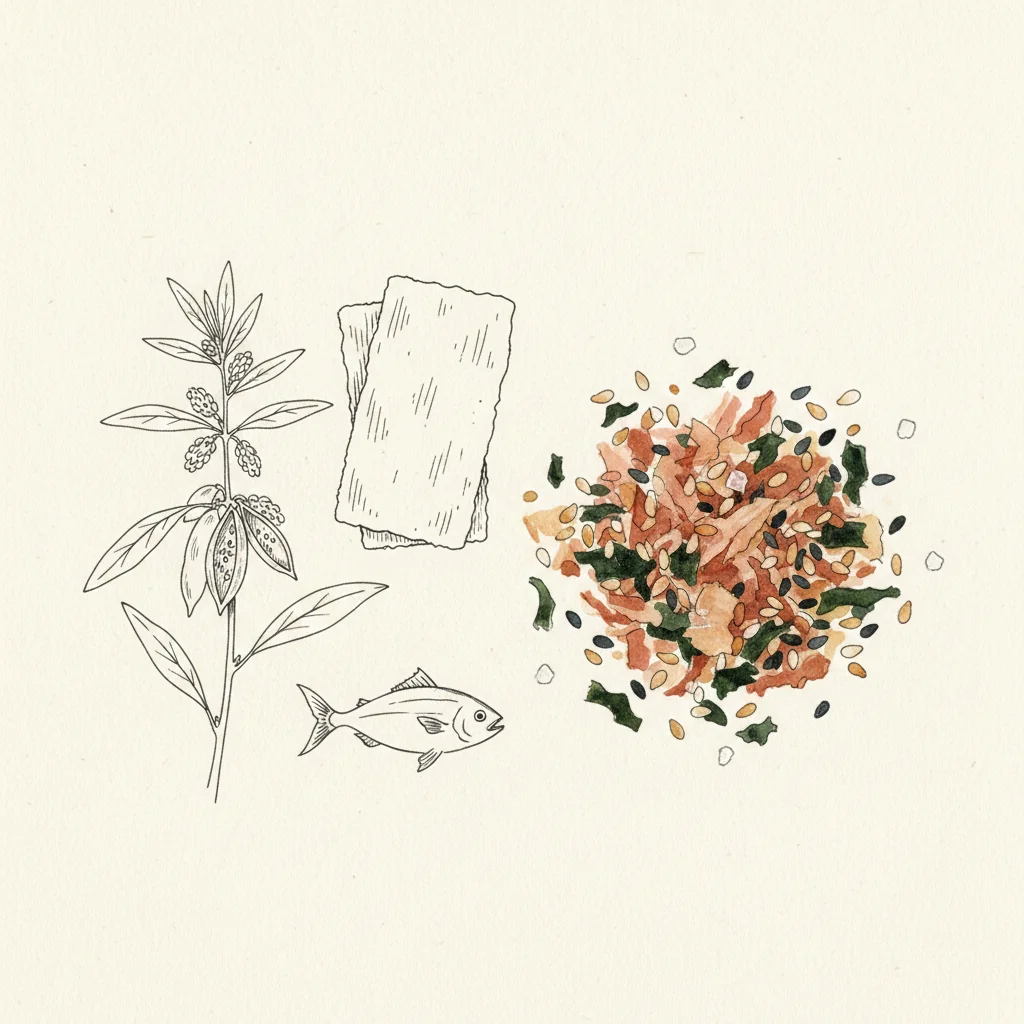
Spice · Blend
Furikake
Kumamoto Prefecture (industrial birthplace, Marumiya 1959) and nationwide, Japan
briny iodine from nori · deep bonito umami · toasted sesame
Our verdict
Tamari for liquid umami in cooking and dipping, furikake for dry crunch on rice.
At a glance
| Criterion | Traditional Tamari | Furikake |
|---|---|---|
| Origin | Japan — Aichi, Gifu, Mie (Tokai region) | Japan — Kumamoto and nationwide |
| Form | Liquid, brewed from whole soybeans, wheat-free | Dry composed blend of nori, sesame, bonito, salt |
| Intensity | 8/10 — deep, round umami | 5/10 — savory pop, lighter overall |
| Main notes | Deep roasted soy, round umami, low bitterness | Briny nori iodine, deep bonito umami, toasted sesame |
| Best use | Dipping sashimi, glazes, marinades, finishing off heat | Plain rice, onigiri, grilled salmon, eggs, popcorn |
| Median price | ~$6 / 300 ml bottle | ~$9 / ~50 g jar |
| Value | A staple bottle; gluten-free and versatile | Concentrated; a teaspoon per bowl, salt adds up fast |
When to choose Traditional Tamari
Reach for tamari when you want deep, liquid umami you can stir, splash or dip. Brewed from whole soybeans in the Tokai region around Nagoya, it's rounder and less sharp than ordinary soy sauce, with deep roasted-soy depth and low bitterness — and because it's wheat-free, it's the gluten-free cook's soy. It plays both ends of the heat: splash it in to finish a stir-fry or fried rice off the burner, whisk it into a glaze for salmon or seared tuna, build it into a marinade, or use it raw as a dipping sauce for sashimi and sushi where its body carries the fish. A teaspoon or two finishes a pan; for dipping, pour a shallow saucer and don't dilute — good tamari needs no help. At about $6 for a 300 ml bottle it's an everyday staple that lasts, and the better ones taste of fermented depth rather than flat salt. The one thing it isn't is a texture or a topping — it's wet umami, not crunch. When you want a savory, sesame-and-nori topping to shower over a bowl, that's furikake's job, and no amount of tamari gets you there.
When to choose Furikake
Reach for furikake when a finished dish needs a savory, crunchy, umami-rich topping. It's a dry composed blend — nori, toasted sesame, dried bonito and salt — built to be showered over food at the last second, never cooked. The classic home is a bowl of plain white rice, but it's just as good on onigiri, grilled salmon, scrambled eggs, steamed vegetables, even buttered popcorn, where it adds briny nori iodine, deep bonito umami and toasted-sesame crunch in one shake. The discipline is restraint on the salt: about a teaspoon per 300 g bowl of rice, no more, because furikake is concentrated and the salt climbs fast if you treat it like a garnish to pile on. Quality varies — some blends lean heavy on filler and MSG, the better ones taste distinctly of real nori and bonito — so taste before you commit a jar. At about $9 for a roughly 50 g jar it's cheap per use given how little you need. What furikake can't do is dissolve into a sauce, glaze a piece of fish or serve as a dip — it's a dry finishing texture, full stop. For wet, stirrable umami in the cooking itself, reach for tamari instead.
Where to buy?
Traditional Tamari
Links checked on
| Merchant | Price | Action |
|---|---|---|
| Amazon US | — | Amazon US |
| San-J | — | San-J |
| Sous Chef UK | — | Sous Chef UK |
Prices may vary depending on current promotions on the merchant site.
Furikake
Links checked on
| Merchant | Price | Action |
|---|---|---|
| Amazon US | — | Amazon US |
| Jacobsen Salt Co. | — | Jacobsen Salt Co. |
| Spicewalla | — | Spicewalla |
Prices may vary depending on current promotions on the merchant site.
Frequently asked questions
- Can furikake replace tamari?
- No. Tamari is liquid umami for cooking, glazing and dipping; furikake is a dry topping you shower on at the end. One dissolves into a dish, the other adds crunch and texture on top. They solve completely different problems.
- Which is saltier?
- Both carry real salt, but furikake's adds up fast because it's concentrated — keep to a teaspoon per bowl. Tamari is salty too, yet you control the dose drop by drop. Treat both with a light hand.
- Is tamari just gluten-free soy sauce?
- Essentially yes, and a bit more. Traditional tamari is brewed from whole soybeans with little or no wheat, giving a rounder, deeper, less sharp flavor than regular soy sauce, plus the gluten-free benefit. Always check the label, though — some tamari contains a little wheat.
- Can I use furikake in cooking?
- Not really. Its nori and bonito are meant to stay raw and crisp on top of a finished dish. Cook it in and you lose the texture and dull the aroma. Add it at the table, the last second before eating.
The best pairings
With Traditional Tamari
With Furikake
Comparison prepared according to our methodology. Sponsored purchase links — see our affiliations.