
Comparison
Tasmanian pepperberry vs grains of paradise: what's the difference?
Both stand in for pepper, but they head opposite ways. Tasmanian pepperberry is intense, fruity-dark — wild blueberry, licorice, violet — and it bleeds purple, so it's a bold finisher for game and chocolate. Grains of paradise are gingery, cardamom-bright, citrusy — a versatile peppery seed for marinades, brewing and blends. Both run ~$10–14. Pepperberry for drama; grains for everyday lift.
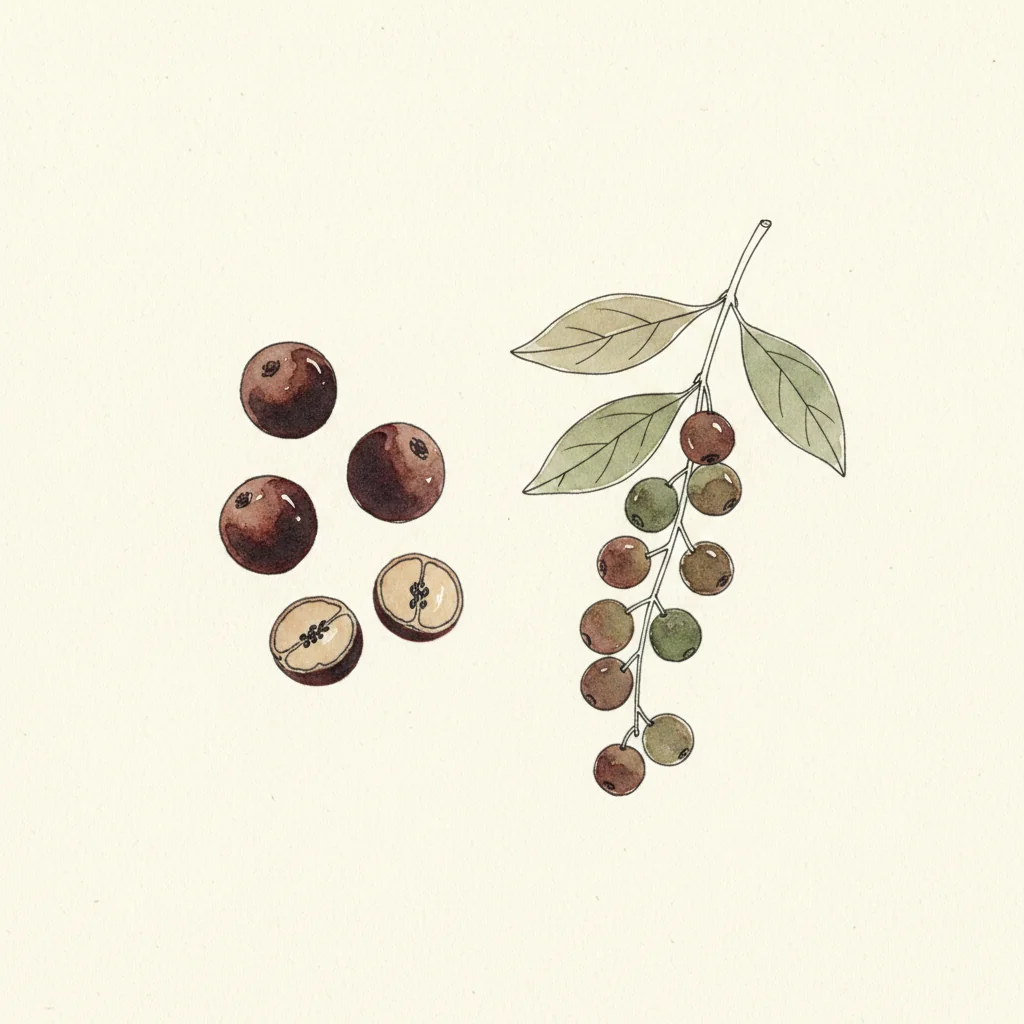
Pepper · Berry
Tasmanian Pepperberry
Tasmania, temperate rainforest understory, Australia
wild blueberry · black licorice · violet ink
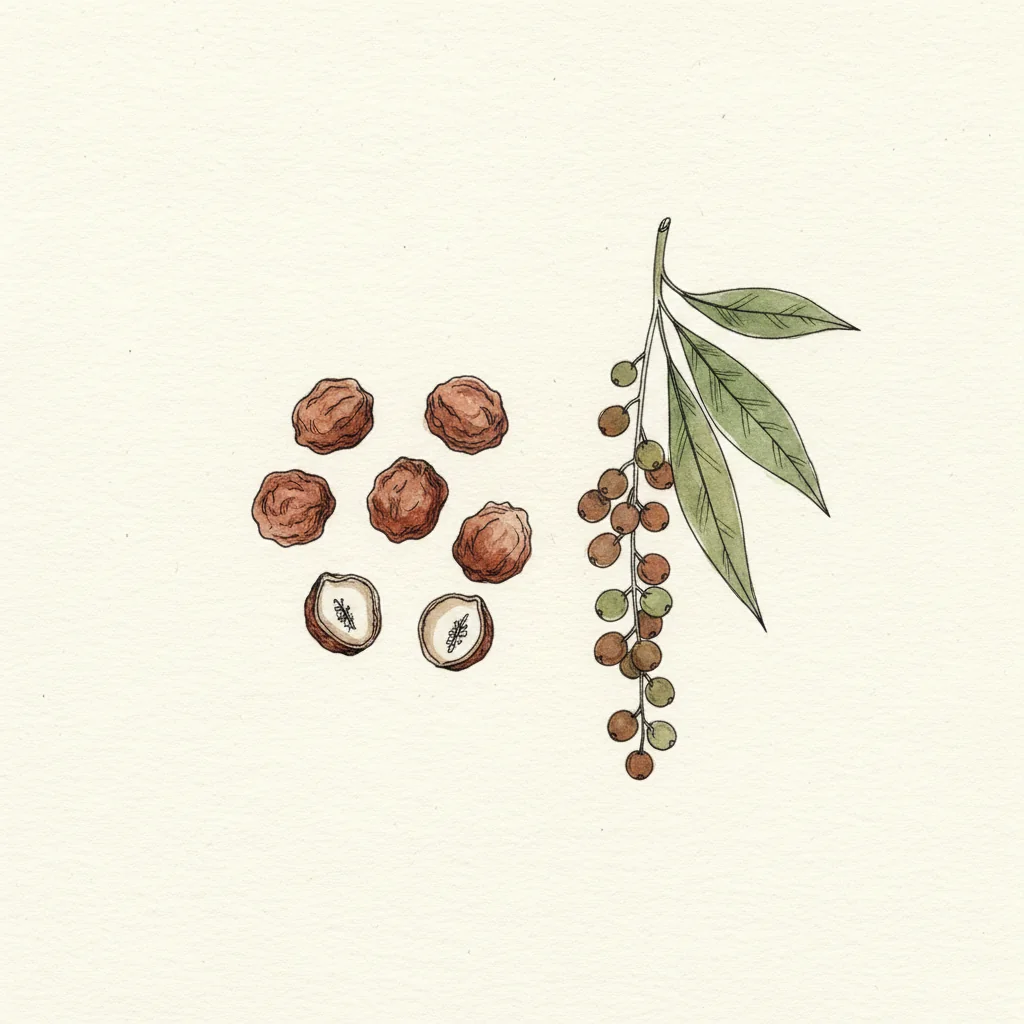
Pepper · Pepper cousin
Grains of Paradise
Gulf of Guinea coast (Ghana, Togo, Liberia, Côte d'Ivoire), Ghana
fresh ginger · green cardamom · citrus peel
Our verdict
Pepperberry for intense dark finishing; grains of paradise for a brighter, more versatile peppery seed.
At a glance
| Criterion | Tasmanian Pepperberry | Grains of Paradise |
|---|---|---|
| Botanical name | Tasmannia lanceolata | Aframomum melegueta |
| Origin | Australia — Tasmanian rainforest | Ghana / Gulf of Guinea coast |
| Form | Whole dried berries | Small seeds, cracked to order |
| Intensity | 9/10 — very intense, fruity-hot | 7/10 — warm, peppery, citrusy |
| Main notes | Wild blueberry, black licorice, violet ink | Fresh ginger, green cardamom, citrus peel |
| Watch-out | Bleeds purple into pale dishes | Camphor edge can clash in sweet creams |
| Best for | Venison, duck, blue cheese, chocolate, beets | Beer brewing, fish marinades, ras el hanout, gingerbread |
| Median price | ~$14 / ~1.4–2 oz jar | ~$10.50 / 1–2.6 oz jar |
| Value | A little goes far — worth it for the drama | Versatile and affordable — worth it |
When to choose Tasmanian Pepperberry
Reach for Tasmanian pepperberry when you want intensity and drama, and the dish is already dark in color. Harvested from the understory of Tasmania's temperate rainforest, these berries (Tasmannia lanceolata) are one of the most potent 'peppers' you can buy — a 9/10 that opens fruity and almost sweet, like wild blueberry, then turns to black licorice and an inky violet depth before a slow-building heat arrives. It's a finishing spice and a bold one. Crush it over venison and game, seared duck breast, roasted beets, and crumbled blue or fresh goat cheese, where its dark berry note matches the richness. It's superb on dark chocolate ganache too. The defining catch is the color: pepperberry bleeds a strong purple, so it stains pale sauces and bright salads an unappetizing grey-violet. Keep it to dishes that are already dark or where the color won't show, and use a light hand — it's potent enough that a little goes a long way, which is part of why a small jar at about $14 is still good value. Store the whole dried berries in an opaque jar; they hold their punch about 18 months, and light fades both the violet color and the aroma. Skip it on delicate white fish, which it flattens, and on anything pale you don't want tinted. Against grains of paradise, pepperberry is the more extreme, more situated choice: intense, dark, fruity, and built for bold finishing on rich proteins and chocolate, not for the everyday peppery work that grains handle so easily.
When to choose Grains of Paradise
Reach for grains of paradise when you want a bright, versatile peppery seed that plays well across savory and sweet — it's the more useful everyday spice of the two. Botanically a relative of cardamom and ginger (Aframomum melegueta, from the Gulf of Guinea coast), it tastes the part: fresh ginger and green cardamom up front, citrus peel underneath, with a warm peppery heat that's gentler and more rounded than black pepper. That makes it a genuine all-rounder. It's a classic in craft brewing — saisons and spiced beers — and a backbone spice in ras el hanout. It lifts fish marinades, glazed carrots, and mussels in cream, and brings warmth to spiced cakes and gingerbread. Crack the seeds only as you need them and add late in the cook or as a finish to keep the bright top notes. The one caution: that faint camphor edge can clash in delicate cream desserts, so it's better in savory and robustly spiced sweets than in a subtle custard. Don't bury it in a heavy reduction or an already over-spiced dish, where its lift is wasted. It keeps 12 to 18 months in an opaque jar. On value it's the affordable, low-drama pick — about $10.50 a jar — and unlike pepperberry it won't stain a thing, so you can use it freely in pale dishes and bright marinades. Against Tasmanian pepperberry, grains of paradise is the one to own first: more flexible, less intense, no color risk, and at home in everything from a fish rub to a gingerbread to a homebrew. Reach for pepperberry when you specifically want dark, fruity drama; reach for grains for the peppery lift you'll use every week.
Where to buy?
Tasmanian Pepperberry
Links checked on
| Merchant | Price | Action |
|---|---|---|
| Amazon US | — | Amazon US |
| Steenbergs UK | — | Steenbergs UK |
Prices may vary depending on current promotions on the merchant site.
Grains of Paradise
Links checked on
| Merchant | Price | Action |
|---|---|---|
| Amazon US | — | Amazon US |
| Burlap & Barrel | — | Burlap & Barrel |
| Steenbergs UK | — | Steenbergs UK |
Prices may vary depending on current promotions on the merchant site.
Frequently asked questions
- Why does Tasmanian pepperberry turn my sauce purple?
- The berries carry strong anthocyanin pigments — the same compounds that make blueberries blue-purple — and they bleed into liquid. In a pale cream sauce or bright salad that reads as an unappetizing grey-violet. Keep pepperberry to dishes that are already dark, or use it as a dry finish where it won't dissolve and bleed.
- Do grains of paradise taste like pepper?
- Sort of — they bring a warm, rounded peppery heat, but wrapped in ginger, green cardamom and citrus, because the plant is a cardamom relative, not a true pepper. They're milder and brighter than black pepper, which is why they work in marinades, brewing and spiced baking as well as on the savory plate.
- Which is more intense?
- Tasmanian pepperberry, by a wide margin — 9/10 versus 7/10. It's fruity and dark with a slow heat, and a small amount goes a long way. Grains of paradise are gentler and more versatile. If you want a bold, dramatic finish, reach for pepperberry; for everyday peppery lift, grains.
- Can I use either as an everyday black-pepper substitute?
- Grains of paradise, yes — they're versatile, won't stain, and bring a pleasant peppery warmth across most dishes. Tasmanian pepperberry, no — it's too intense and bleeds purple, so it's a special-occasion finishing spice for dark, rich plates rather than a daily grind.
The best pairings
With Tasmanian Pepperberry
With Grains of Paradise
Comparison prepared according to our methodology. Sponsored purchase links — see our affiliations.