
Comparison
Urfa biber vs ancho chile: which smoky chili?
Both taste of cocoa, raisin and dark fruit, but they work opposite ends. Urfa biber is a near-black finishing flake you dust on at the end, 3/10 heat. Ancho is a whole dried poblano you toast and rehydrate into the base of mole and chili, also low heat. Finish with Urfa, build a sauce with ancho.
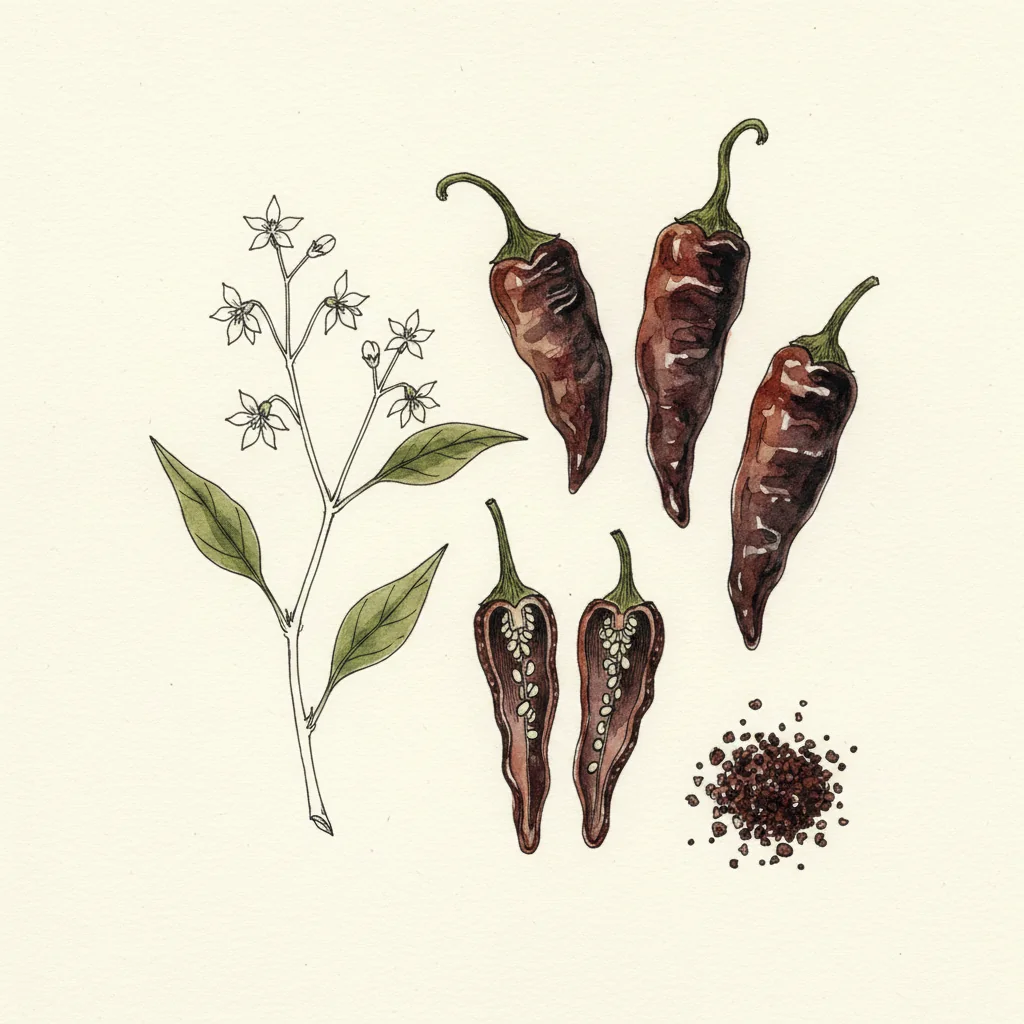
Spice · Chile
Urfa Biber
Şanlıurfa, southeastern Anatolia, Turkey
raisin · dark chocolate · tobacco
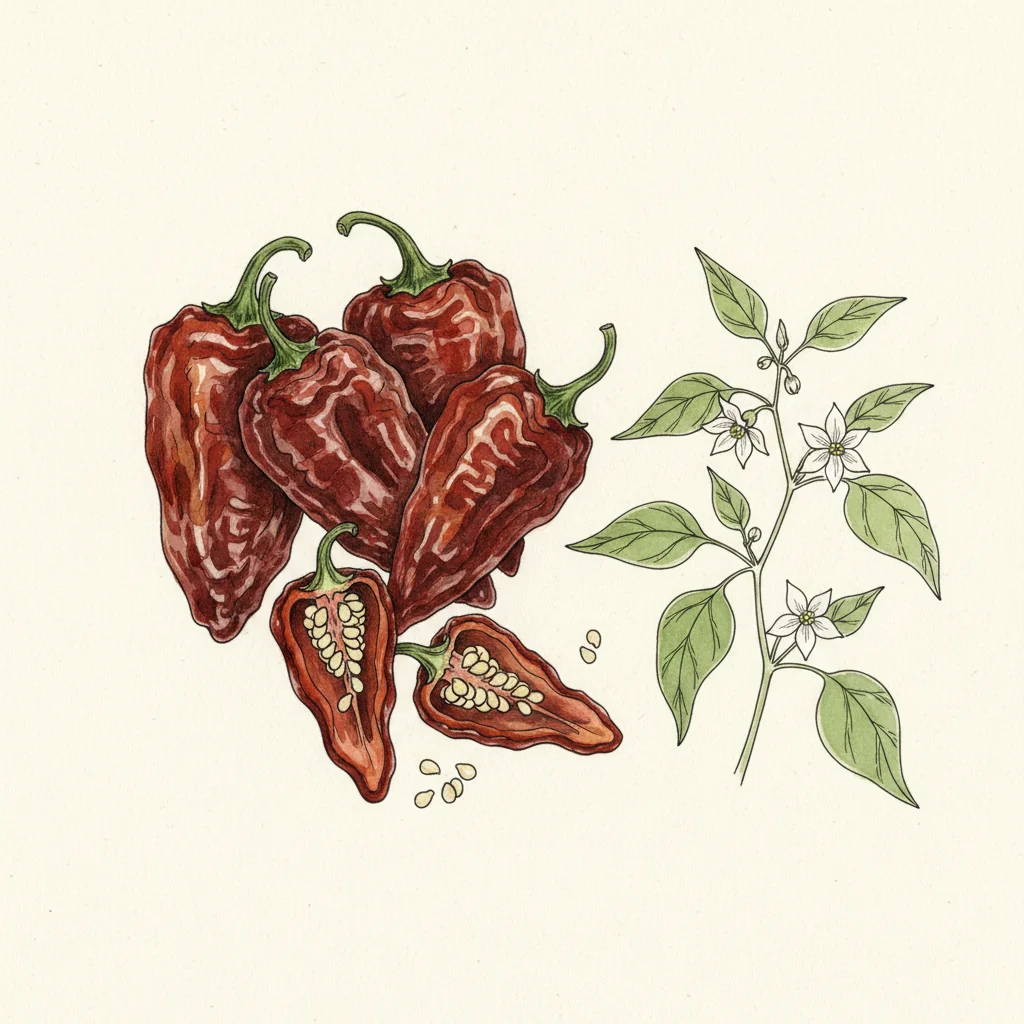
Spice · Chile
Ancho Chile
Puebla and Zacatecas, plus the central highlands of Guanajuato and Durango, Mexico
dried plum and raisin · cocoa · tobacco leaf
Our verdict
Urfa to finish a plate, ancho to build a Mexican sauce base.
At a glance
| Criterion | Urfa Biber | Ancho Chile |
|---|---|---|
| Origin | Sanliurfa, southeastern Turkey | Puebla, Zacatecas, central Mexican highlands |
| What it is | Sweat-cured Capsicum annuum flakes | The dried, ripe poblano (whole pods) |
| Flavor profile | Raisin, dark chocolate, tobacco; faint smoke | Dried plum and raisin, cocoa, tobacco leaf |
| Intensity | 3/10, heat trails the flavor | 3/10, arrives late, never grips |
| When it goes in | Finishing, or stirred into oil off the heat | Early, toasted and rehydrated into a sauce base |
| Best use | Grilled lamb, eggs, eggplant, dark-chocolate desserts | Mole, red enchilada sauce, chili con carne, adobo |
| Median price | ~$9.50 / 50g jar | ~$10 / jar of powder or 8 oz of whole pods |
When to choose Urfa Biber
Urfa biber is the finishing flake, and you choose it when the cocoa-raisin depth goes on at the very end. From Sanliurfa in southeastern Turkey, sold as isot biber, it's sun-dried by day and wrapped tight by night to sweat, which gives it near-black, faintly oily flakes and a raisin, cocoa and tobacco flavor. The heat is a low 3 out of 10 that trails the flavor instead of leading it. Its whole identity is the dusting, which is the opposite of ancho's slow-cooked role. Four scenarios where Urfa wins over ancho. First, grilled lamb and kebabs, dusted on after the char, where you want the cocoa note as a finish, not cooked into a sauce. Second, fried or poached eggs, with the flakes stirred into warm oil or butter off the heat. Third, roasted eggplant and squash, where the molasses-fig undertone meets caramelized edges. Fourth, and this is where it pulls clear: dark-chocolate desserts and caramel, where you'd never reach for a whole rehydrated poblano but Urfa's cocoa-raisin flakes belong. The rule: finish with it, one to two teaspoons for four, roughly 2 grams a portion, or stir it into oil and butter off the heat. Don't put it through a long braise that scorches the oily flakes and turns them bitter, the exact cook ancho is built for. The flakes should stay matte burgundy-black and faintly oily; if they dull toward gray-brown, the oils are gone, so use within about 15 months. If you want that dark cocoa-and-tobacco depth as a last-second finish, especially on something sweet, Urfa is the one. Around $9.50 a 50g jar.
When to choose Ancho Chile
Ancho chile is the sauce-builder, and you choose it when the cocoa-and-dried-fruit flavor has to be the base of a long cook. The ancho is simply a poblano left to ripen red on the plant, then dried until it goes a wrinkled, deep oxblood. It's the backbone chile of Mexican cooking, the base of mole and red sauce, and it barely registers as heat, a 3 out of 10 that arrives late and never grips, think dried plum, cocoa and tobacco instead of fire. Four scenarios where ancho wins over Urfa. First, mole and red enchilada sauce, where whole pods are toasted and rehydrated into the foundation, a job a finishing flake simply can't do. Second, chili con carne and beef stews, where the flesh dissolves into a deep, fruity base over a long simmer. Third, adobo marinades for pork and chicken, where the rehydrated pulp clings and flavors the meat. Fourth, barbecue rubs for brisket, where the bloomed powder builds a sweet, dark crust. The rule: go in early, toasted and rehydrated into the base of a sauce, or bloomed as powder in hot fat. Two to three whole pods for a pot serving four, or 1 to 2 teaspoons of powder. Don't use it as a raw finish, where the leathery skin stays bitter, that's Urfa's territory, not ancho's. Buy whole, supple pods over pre-ground powder when you can: the flavor lives in the flesh, and a pod that snaps cleanly has dried out and lost its aroma. Whole pods keep about 12 to 18 months; powder fades faster, so buy it small and use within six months. At around $10 a jar of powder or an 8 oz bag of pods, ancho is the indispensable base chile. Where this beats Urfa: if you're building a Mexican sauce or braise from the ground up, this is the workhorse.
Where to buy?
Urfa Biber
Links checked on
| Merchant | Price | Action |
|---|---|---|
| Burlap & Barrel (Black Urfa Chili) | — | Burlap & Barrel (Black Urfa Chili) |
| Amazon US | — | Amazon US |
| Sous Chef UK | — | Sous Chef UK |
Prices may vary depending on current promotions on the merchant site.
Ancho Chile
Links checked on
| Merchant | Price | Action |
|---|---|---|
| Burlap & Barrel (Ancho Chili) | — | Burlap & Barrel (Ancho Chili) |
| Spicewalla (Ancho Chili Powder) | — | Spicewalla (Ancho Chili Powder) |
| Amazon US (whole pods) | — | Amazon US (whole pods) |
| Sous Chef UK (Cool Chile Co whole anchos) | — | Sous Chef UK (Cool Chile Co whole anchos) |
Prices may vary depending on current promotions on the merchant site.
Frequently asked questions
- They taste similar, so can I swap them?
- The flavors do overlap, both carry cocoa, raisin and tobacco, but the form and use don't. Urfa is a finishing flake; ancho is a whole pod for sauce. You can't toast and rehydrate Urfa into a mole base, and ancho's leathery skin stays bitter as a raw finish. Match the form to the job.
- Which is hotter?
- Neither, really, both sit around 3 out of 10. Urfa's heat trails the flavor; ancho's arrives late and never grips. If you want these flavors with more burn, pair ancho with guajillo in a sauce, or finish with a chipotle morita.
- Is Urfa smoky like ancho?
- Both have a faint smokiness, but it's subtle in each. Urfa's comes from the sweat-cure, ancho's from the sun-dry. Neither is a true smoked chili; for real wood smoke in this flavor family, reach for a chipotle morita or smoked paprika.
- Can I finish a mole with Urfa?
- You can, as a dusting, and it works because the cocoa-raisin note echoes the ancho base. But Urfa won't build the sauce, that's ancho's job. Use ancho (and friends) for the body, and a pinch of Urfa on top if you want extra dark-fruit lift.
The best pairings
With Ancho Chile
Comparison prepared according to our methodology. Sponsored purchase links — see our affiliations.