
Urfa Biber, or isot biber — sweated, sun-cured Capsicum annuum flakes from Şanlıurfa
In brief — Near-black, faintly oily flakes from Şanlıurfa in southeastern Turkey, sold locally as isot biber. The pods ripen to deep maroon, then go through the signature trick: sun-dried by day and wrapped tight by night to sweat, which deepens the color and pulls out a raisin, cocoa and tobacco flavor. The heat is low, around 3 out of 10. This is a finishing pepper you reach for the savory-sweet depth, not the burn. Its aromatic profile develops notes of raisin, dark chocolate, tobacco, extended by molasses and dried fig, for an intensity of 3/10. In the kitchen, it's best added as a finishing touch, dusted over the plated dish, or stirred into oil and butter off the heat and it pairs with grilled lamb and kebabs, fried or poached eggs, roasted eggplant and squash. Recommended dosage: 1 to 2 teaspoons for four people as a finish, roughly 2 g a portion. Expect from $7.00 to $12.00 per 1.8 oz (50 g) jar (median $9.50).
Origin : Şanlıurfa, southeastern Anatolia, Turkey
Capsicum annuum
« A dark, low-heat flake that tastes of raisin, cocoa and tobacco more than fire, and it turns out to be brilliant on both grilled lamb and chocolate. It loses a few tenths because the oily flakes scorch bitter the moment you cook with them, so it is strictly a finisher. »
Near-black, faintly oily flakes from Şanlıurfa in southeastern Turkey, sold locally as isot biber. The pods ripen to deep maroon, then go through the signature trick: sun-dried by day and wrapped tight by night to sweat, which deepens the color and pulls out a raisin, cocoa and tobacco flavor. The heat is low, around 3 out of 10. This is a finishing pepper you reach for the savory-sweet depth, not the burn.
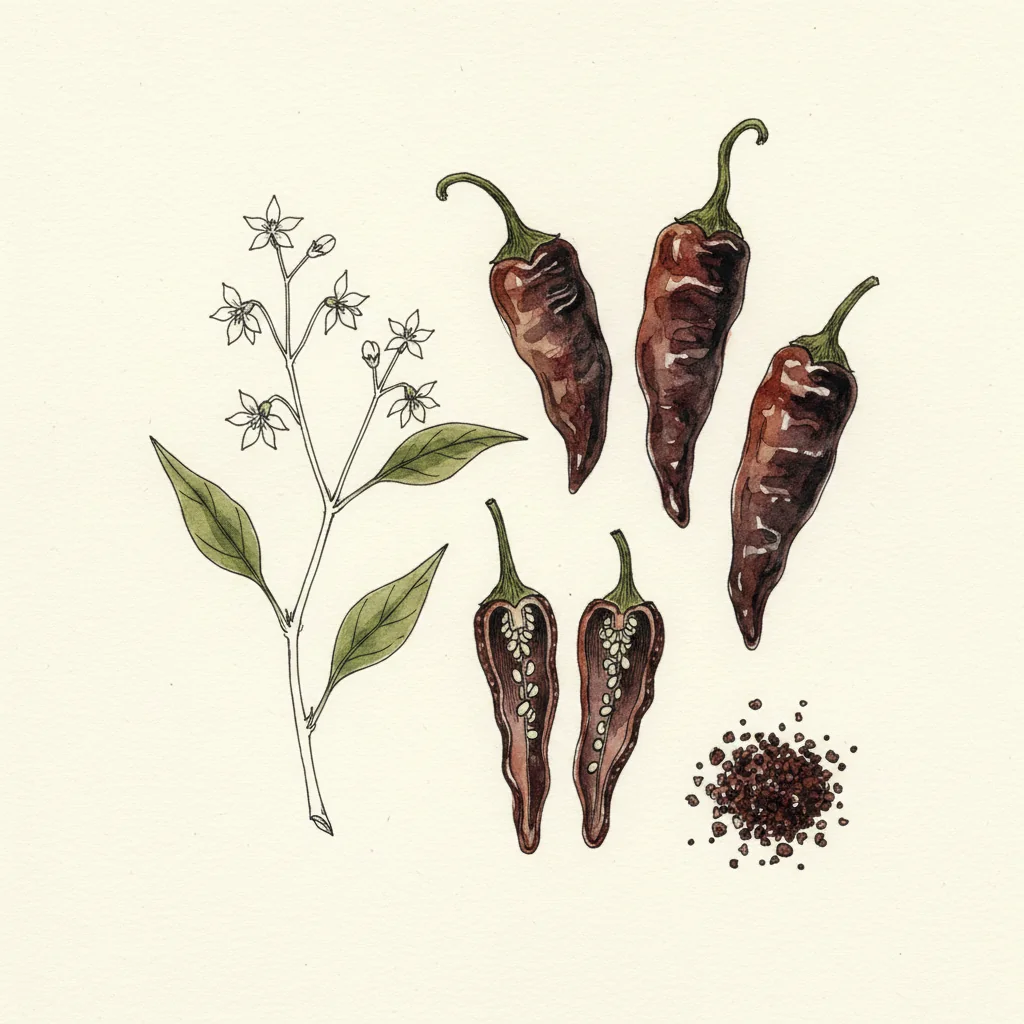
Spice · Chile
Urfa Biber
Şanlıurfa, southeastern Anatolia, Turkey
raisin · dark chocolate · tobacco
Aromatic profile
| Family | Capsicum annuum |
|---|---|
| Intensity | ●●○○○ (3/10) |
| Main notes | raisin · dark chocolate · tobacco |
| Secondary notes | molasses · dried fig · a faint smoky-savory edge |
| Mouthfeel | an oily, low, slow-building warmth that lingers more than it bites; the heat trails the flavor instead of leading it |
| Finish length | long, finishing on bittersweet cocoa and dried fruit |
Culinary use
- When to add : finishing, dusted over the plated dish, or stirred into oil and butter off the heat
- Dosage : 1 to 2 teaspoons for four people as a finish, roughly 2 g a portion
- Ideal pairings : grilled lamb and kebabs, fried or poached eggs, roasted eggplant and squash, hummus and labneh, dark-chocolate desserts and caramel, lentil and bean stews
- Avoid with : long braises that scorch the oily flakes and turn them bitter, delicate white fish that the smoke-and-cocoa note swamps, anything already carrying heavy roasted or chocolate flavors
The grain in detail
Urfa biber takes its name from Urfa, the old name for Şanlıurfa in southeastern Anatolia, and it is a Capsicum annuum cultivar handled in a way no other chili flake is. Where Aleppo and Maraş peppers are simply sun-dried, Urfa is sweated: the ripe maroon pods are sun-dried through the day, then gathered and wrapped tight overnight so they hold their own moisture and ferment-cure gently. Repeated over a week or more, this cycle turns the flesh near-black, drives off the bright fruit, and concentrates a dark, raisiny, almost chocolate-and-tobacco flavor. The flakes are then deseeded, coarsely milled, and cut with salt and a little oil, which fixes the deep color and keeps the aromatic oils from drying out. Good Urfa reads matte burgundy-black and feels faintly damp to the touch, never dusty. The heat sits low, around 3 out of 10, and it arrives late, trailing the flavor rather than leading it, which is the whole appeal: this is a finishing pepper you reach for depth, not punishment. It is the everyday chili of southeastern Turkey, scattered over kebabs, eggs and lentils, and Burlap & Barrel did much to carry it into Western kitchens, where chefs now run it over grilled lamb and, more surprisingly, into dark-chocolate and caramel desserts, where the cocoa note clicks into place. Don't confuse it with Aleppo or Maraş, which are sweet-sour, red and sun-dried; Urfa is the dark, smoky-fruited cousin, a separate thing entirely. Heat dulls the fruit and the oily flakes can scorch bitter, so add it late: over the dish, off the flame, or melted into warm oil or butter just before serving.
History & origin
Urfa biber is tied to Şanlıurfa, one of the oldest continuously inhabited regions on earth, near Göbekli Tepe. The pepper itself arrived from the Americas only after the Columbian exchange, but the sweating-and-sun-curing method that defines isot biber developed locally over the following centuries and became the signature of the region's cooking. Production remains centered on Şanlıurfa and exports heavily as a specialty flake. No protected designation of origin exists for it to date.
Provenance & authenticity
What sets the real thing apart — appellation, species and verification cues.
- Species
- Capsicum annuum
Indicative price
Reference format : 1.8 oz (50 g) jar — from $7.00 to $12.00 (median : $9.50).
Storage
Airtight, opaque jar, away from light and heat. The flakes should stay matte burgundy-black and feel faintly oily; if they dry out and dull toward gray-brown, the aromatic oils have gone and so has the cocoa-raisin depth. Keeps about 15 months.
Where to buy?
Where to buy it
Links checked on
| Merchant | Price | Action |
|---|---|---|
| Burlap & Barrel (Black Urfa Chili) | — | Burlap & Barrel (Black Urfa Chili) |
| Amazon US | — | Amazon US |
| Sous Chef UK | — | Sous Chef UK |
Prices may vary depending on current promotions on the merchant site.
Alternatives if unavailable
Tags
- Turkey
- Sanliurfa
- Urfa
- isot biber
- isot
- Anatolia
- Capsicum annuum
- flake
Frequently asked questions
- How do you store Urfa Biber?
- Airtight, opaque jar, away from light and heat. The flakes should stay matte burgundy-black and feel faintly oily; if they dry out and dull toward gray-brown, the aromatic oils have gone and so has the cocoa-raisin depth. Keeps about 15 months.
- What dosage for Urfa Biber?
- 1 to 2 teaspoons for four people as a finish, roughly 2 g a portion
- When should you add Urfa Biber in cooking?
- It's best used finishing, dusted over the plated dish, or stirred into oil and butter off the heat.
- What should you avoid pairing Urfa Biber with?
- Avoid with: long braises that scorch the oily flakes and turn them bitter, delicate white fish that the smoke-and-cocoa note swamps, anything already carrying heavy roasted or chocolate flavors.
Go further
The dishes where this urfa biber shines
Also a recommended alternative for
As a complementary pairing with
See every dish where this product is mentioned →
Other spices to discover
Featured in these gift sets
Page prepared according to our methodology. Purchase links marked sponsored and liable to earn a commission — details on our Affiliations page.