
Comparison
Voatsiperifery vs Kampot black pepper — which to choose?
For everyday cooking, Kampot black pepper (Piper nigrum, PGI, about $12.50 for 50 g) is the better buy — clean, fresh heat on steak, eggs and fish. Voatsiperifery (Piper borbonense, wild, ~$11 for 20 g) is the special-occasion finishing pepper, perfumed wood and amber for game, duck and chocolate. Workhorse versus showpiece.
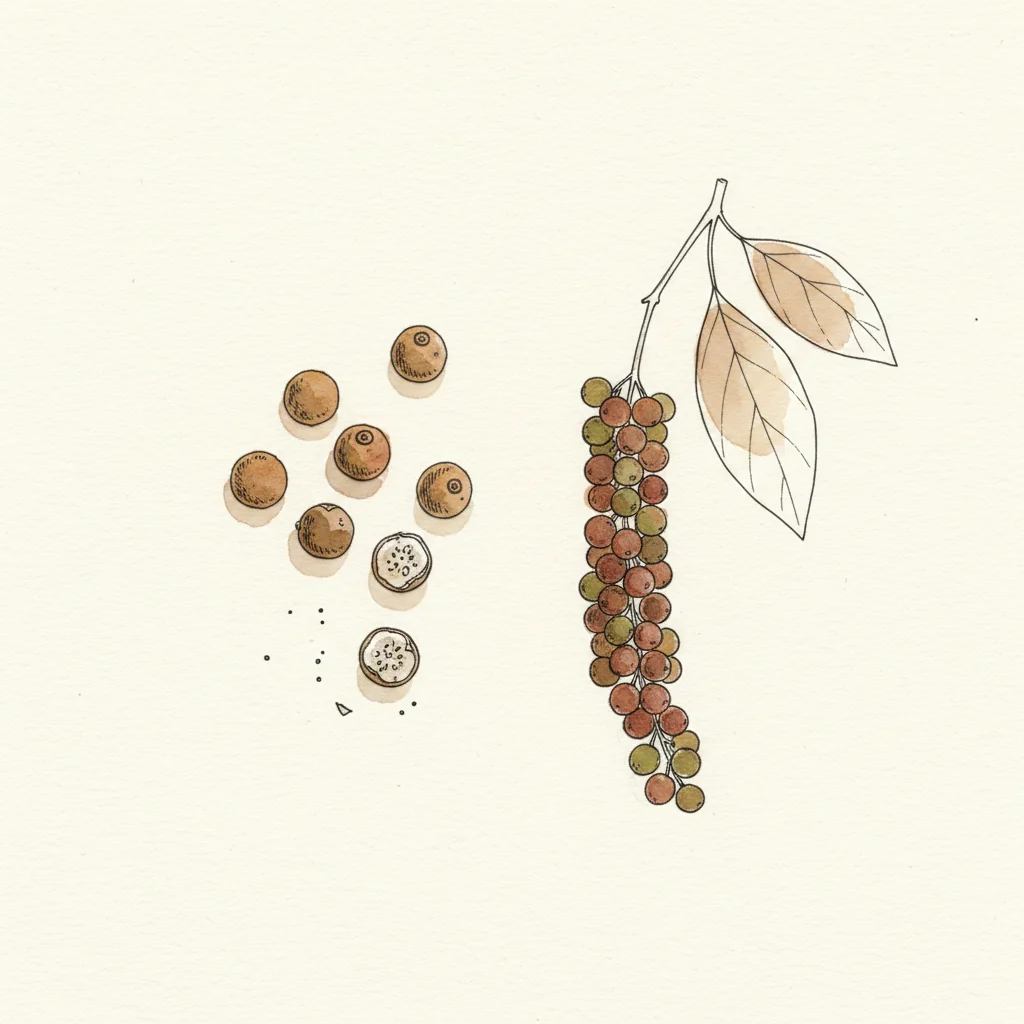
Pepper · Black pepper
Voatsiperifery Pepper
East-coast rainforest, Manakara and Mananjary districts, Madagascar
precious wood · fresh citrus · wild flowers
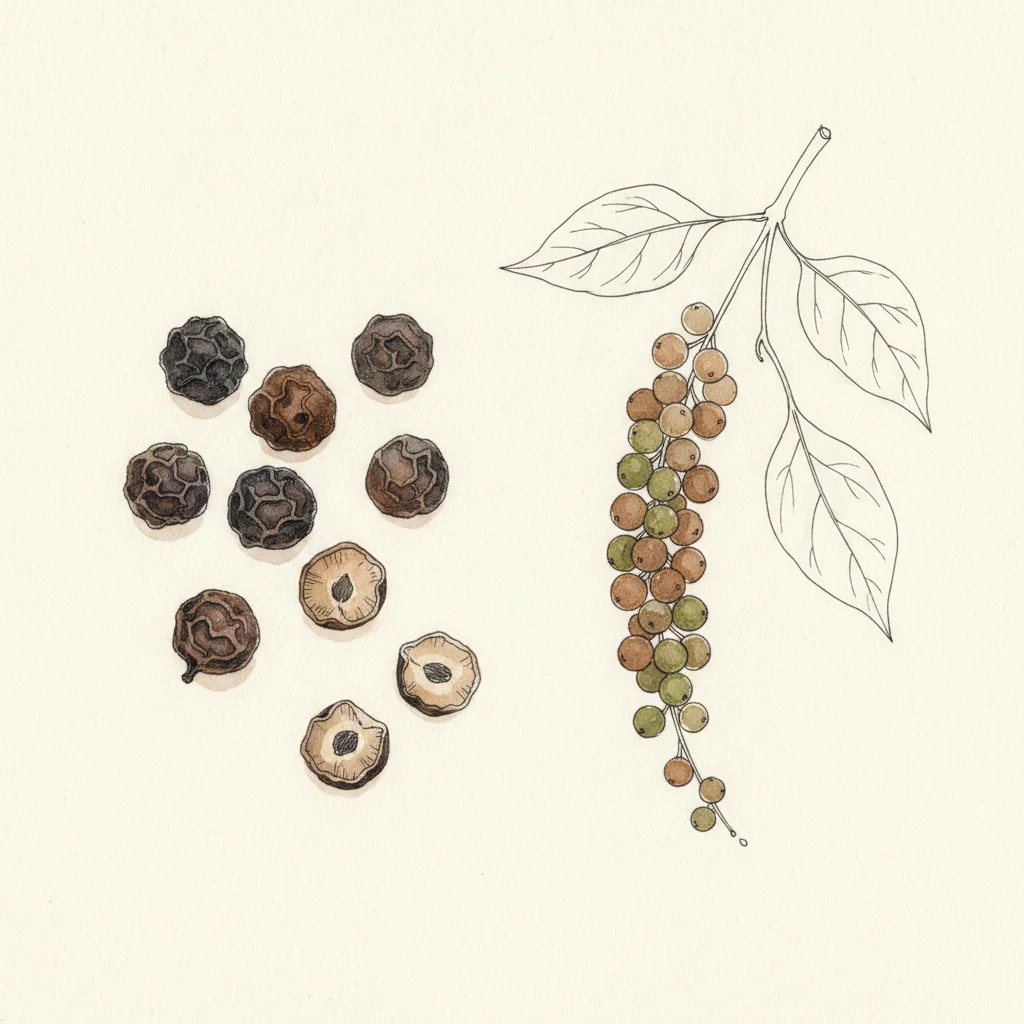
Pepper · Black pepper
Kampot Black Pepper
Kampot and Kep provinces, Cambodia (PGI)
eucalyptus · dried white flowers · green citrus
Our verdict
Kampot for clean daily heat across the board; voatsiperifery for perfumed finishing on game and chocolate.
At a glance
| Criterion | Voatsiperifery Pepper | Kampot Black Pepper |
|---|---|---|
| Botany | Piper borbonense, a wild pepper | Piper nigrum, cultivated |
| Origin / status | Madagascar, east-coast rainforest, wild-harvested | Cambodia, Kampot and Kep, PGI-protected |
| Intensity | 7/10 — moderate, perfumed, resinous | 8/10 — clean, fresh, saliva-waking heat |
| Main notes | Precious wood, fresh citrus, wild flowers | Eucalyptus, dried white flowers, green citrus |
| Best on | Game, seared duck, dark chocolate, lobster | Seared steak, crab, roasted fish, eggs, cheese |
| Price | ~$11 / 20 g jar | ~$12.50 / 50 g tube |
| Value | Splurge — finishing only, used sparingly | Worth it — your everyday upgrade pepper |
When to choose Voatsiperifery Pepper
Pick voatsiperifery when the occasion is special and the plate is rich. It's a wild Piper borbonense from Madagascar, and its heat is moderate and almost perfumed, with a light resinous edge rather than a sharp bite — precious wood, fresh citrus and wild flowers over amber honey. That perfume is what Kampot, clean and direct, doesn't offer. Four scenarios where it wins. First, game and venison, where the woody warmth flatters the meat. Second, seared duck breast, where the perfume cuts the fat with elegance. Third, dark chocolate ganache, where the amber-honey note deepens the cocoa. Fourth, grilled lobster, where it lifts the sweet flesh. The move: crush two or three berries coarse and add off the heat at the very end. Long braises and long marinades cook off or fade the aromatics, and anything already resinous makes the notes collide. At around $11 for 20 g it's a splurge per gram, strictly a finishing pepper for a few plates at a time. This is not the pepper for your daily eggs or pasta water — that's a waste of a special grain. For everyday seasoning, the table mill, the scramble, the roast chicken, you want Kampot's clean PGI heat doing the everyday work. Save voatsiperifery for the Sunday game, the celebration duck, the chocolate dessert where its perfume earns the premium and the occasion justifies the spend.
When to choose Kampot Black Pepper
Pick Kampot for almost everything, every day. It's a true Piper nigrum from Cambodia, PGI-protected, and its heat is a clean, fresh heat that wakes up the saliva without the rough burn of a supermarket peppercorn — eucalyptus, dried white flowers and green citrus over cedar. That reliability across dishes is exactly what a wild finishing pepper can't match. Four scenarios where Kampot wins. First, seared steak, where a few turns at the end give clean heat without smothering the meat. Second, scrambled eggs, where its freshness lifts a plain plate. Third, roasted fish and sautéed crab, where the green-citrus note flatters seafood. Fourth, aged cheese and green mango salad, where it's bright and clean. The move: two or three turns of the mill, ground at the end of cooking or raw over the plate — Kampot is a finisher, so don't waste it at the start of a long simmer, where the fresh top notes cook off. Avoid it on dishes already heavy on eucalyptus or menthol, where it doubles up, and on acidic marinades. At around $12.50 for a 50 g tube it's your everyday upgrade — the pepper that earns its keep on the table mill. Where voatsiperifery is the better call: the special occasion, the game, the chocolate dessert, where you want perfume and a story, not just clean heat. Kampot is the workhorse you reach for daily; voatsiperifery is the showpiece you reach for to mark a meal. Both belong in the cupboard, doing different jobs.
Where to buy?
Voatsiperifery Pepper
Links checked on
| Merchant | Price | Action |
|---|---|---|
| Amazon US | — | Amazon US |
| World Spice | — | World Spice |
| Sous Chef UK | — | Sous Chef UK |
Prices may vary depending on current promotions on the merchant site.
Kampot Black Pepper
Links checked on
| Merchant | Price | Action |
|---|---|---|
| Amazon US | — | Amazon US |
| Sous Chef UK | — | Sous Chef UK |
| Kampot Pepper USA | — | Kampot Pepper USA |
Prices may vary depending on current promotions on the merchant site.
Frequently asked questions
- Which is the better everyday pepper?
- Kampot, no contest. It's a PGI-protected Piper nigrum with clean, fresh heat that works on steak, eggs, fish and cheese alike. Voatsiperifery is a wild finishing pepper for special plates — too precious and too pricey per gram for daily seasoning.
- Is voatsiperifery worth the premium?
- On the right plate, yes. Its perfumed wood and amber honey make game, duck and dark chocolate sing in a way Kampot's clean heat can't. At around $11 for 20 g it's a splurge, but used a few berries at a time on special occasions, a jar lasts and earns it.
- Can I cook with either of them?
- Both are finishers. Kampot's fresh top notes cook off in a long simmer, so add it at the end or raw. Voatsiperifery is even more volatile — crush it off the heat at the very last moment. For long braises, use a sturdier black pepper as the base and finish with these.
- What does PGI mean for Kampot?
- PGI is Protected Geographical Indication — it certifies the pepper comes from the Kampot and Kep region of Cambodia and meets defined standards. It's the same kind of provenance guarantee as a wine appellation, and it's why genuine Kampot commands its price. Voatsiperifery has no such status; its value is its wild origin.
The best pairings
With Voatsiperifery Pepper
With Kampot Black Pepper
Comparison prepared according to our methodology. Sponsored purchase links — see our affiliations.