
Comparison
Voatsiperifery vs Tasmanian pepperberry — which wild pepper?
Both shine on game and dark chocolate, but they're built differently. Voatsiperifery (Piper borbonense, a true wild Madagascan pepper, ~$11 for 20 g) is perfumed wood and gentle amber heat. Tasmanian pepperberry (Tasmannia lanceolata, not pepper, ~$14 a jar) is dark blueberry-licorice with several times black pepper's heat. Perfume or punch decides.
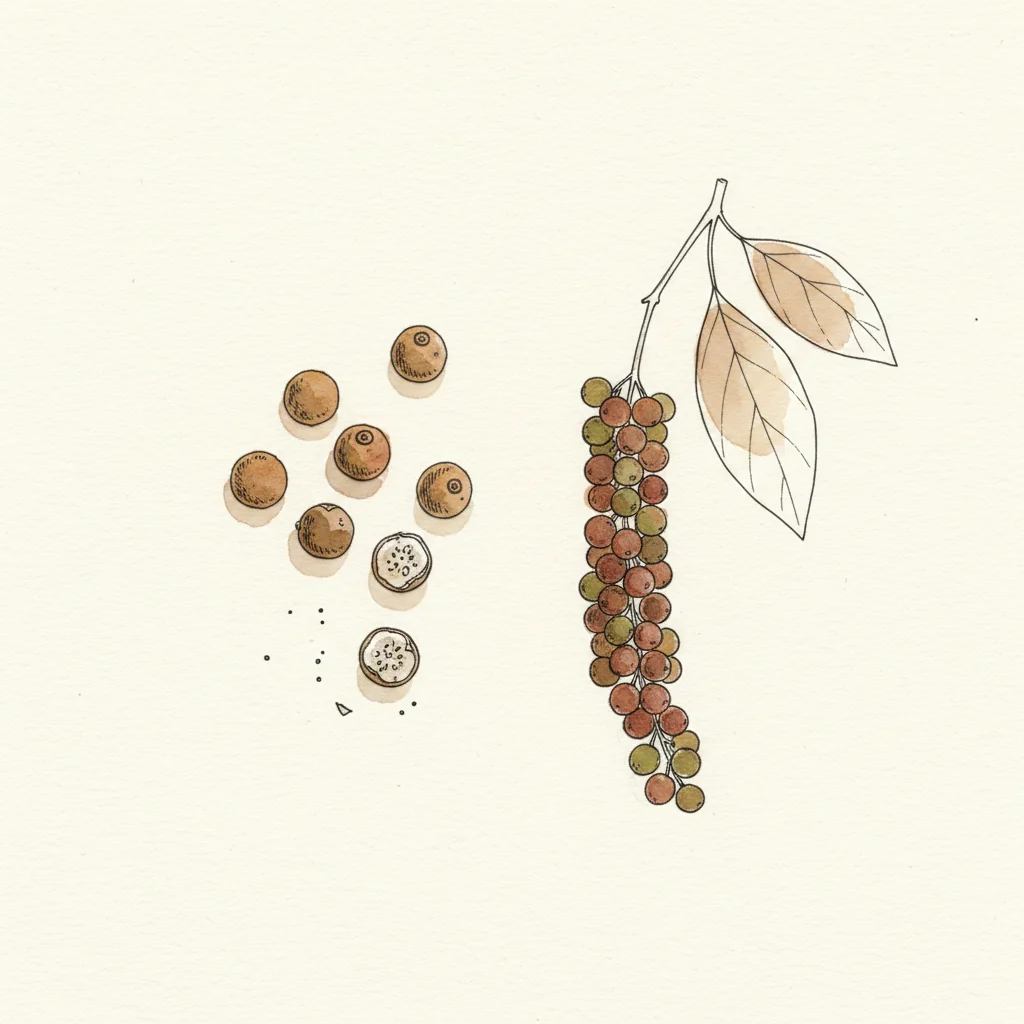
Pepper · Black pepper
Voatsiperifery Pepper
East-coast rainforest, Manakara and Mananjary districts, Madagascar
precious wood · fresh citrus · wild flowers
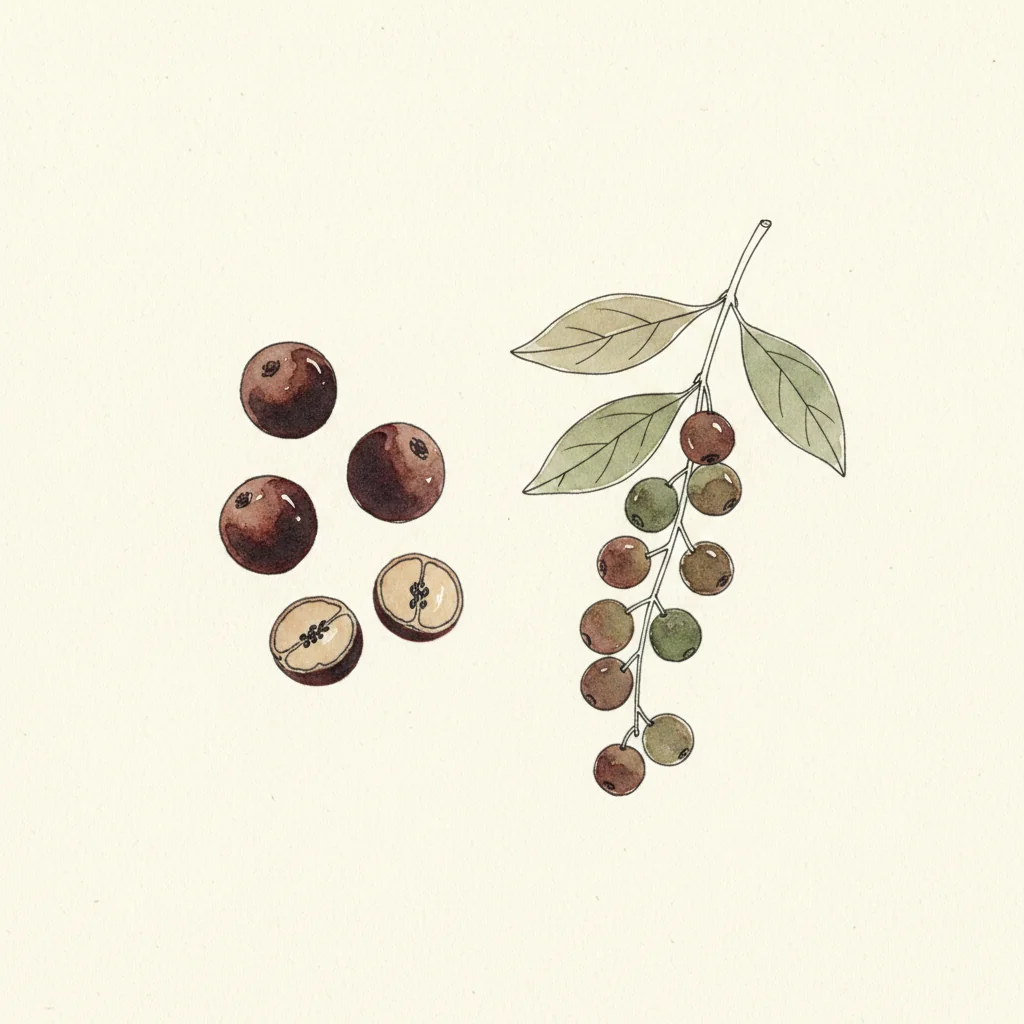
Pepper · Berry
Tasmanian Pepperberry
Tasmania, temperate rainforest understory, Australia
wild blueberry · black licorice · violet ink
Our verdict
Voatsiperifery for perfumed, gentle warmth; pepperberry when you want darker fruit and a bigger hit of heat.
At a glance
| Criterion | Voatsiperifery Pepper | Tasmanian Pepperberry |
|---|---|---|
| Botany | Piper borbonense, a true wild pepper | Tasmannia lanceolata (not a true pepper) |
| Origin | Madagascar, east-coast rainforest | Australia, Tasmanian rainforest understory |
| Intensity | 7/10 — moderate, perfumed, resinous | 9/10 — delayed heat that floods and lingers |
| Main notes | Precious wood, fresh citrus, wild flowers | Wild blueberry, black licorice, violet ink |
| Best on | Game, seared duck, dark chocolate, lobster | Venison, seared duck, blue cheese, dark chocolate |
| Price | ~$11 / 20 g jar | ~$14 / small jar |
| Value | Splurge — a finishing pepper, used sparingly | Worth it — one or two berries dose a dish |
When to choose Voatsiperifery Pepper
Pick voatsiperifery when you want perfume and restraint on rich, savory plates. It's a true wild Piper from Madagascar, and its heat is moderate and almost perfumed, with a light resinous edge rather than a sharp bite — precious wood, fresh citrus and wild flowers over pine resin and amber honey. Where pepperberry floods the palate, voatsiperifery lifts it gently. Four scenarios where it wins. First, game and venison, where the woody warmth complements without overpowering the meat. Second, seared duck breast, where its perfume cuts the fat while staying elegant. Third, dark chocolate ganache, where the amber-honey note deepens the cocoa subtly. Fourth, grilled lobster, where it flatters sweet flesh that pepperberry would bulldoze. The move: crush two or three berries coarse and add off the heat at the very end. Long braises burn off the aromatics, and long marinades let the perfume fade; keep it from anything already resinous, like a juniper cure, where the notes collide. At around $11 for 20 g it's a splurge per gram, but used a few berries at a time it lasts. Where pepperberry is the better call: when you want a bigger, darker hit — a venison sauce that needs to read bold, a chocolate dessert built on cassis-dark fruit. Voatsiperifery is the choice when subtlety and perfume matter more than punch, and when you want a genuine pepper rather than a berry that bleeds purple.
When to choose Tasmanian Pepperberry
Pick Tasmanian pepperberry when you want dark fruit and real intensity on game or chocolate. The heat is several times black pepper's and arrives strangely — a delayed heat that builds for a few seconds, then floods in and lingers far longer than pepper — while the flavor is wild blueberry, black licorice and violet. Where voatsiperifery is perfumed and restrained, pepperberry is dark and forceful. Four scenarios where it wins. First, venison and game, where the dark fruit meets the iron of the meat head-on. Second, seared duck breast, where the licorice edge cuts the fat. Third, blue cheese or fresh goat cheese on toast, where the berry plays the tang. Fourth, dark chocolate ganache, where one crushed berry reads like cassis. The move: crush just one or two berries, never a pinch — the intensity is several times black pepper's, so a heavy hand turns a sauce bitter. It also bleeds purple, so keep it off pale or clear sauces, and off delicate white fish, which it bulldozes. At around $14 a jar it looks pricey, but two berries dose a whole dish. Where voatsiperifery is the better call: when you want perfume over punch — a delicate lobster, an elegant duck where subtlety wins, or any dish where you'd rather not have a berry stain the sauce. Pepperberry is the bolder, fruitier hammer; voatsiperifery the perfumed scalpel. Both finish game and chocolate, but they make very different statements.
Where to buy?
Voatsiperifery Pepper
Links checked on
| Merchant | Price | Action |
|---|---|---|
| Amazon US | — | Amazon US |
| World Spice | — | World Spice |
| Sous Chef UK | — | Sous Chef UK |
Prices may vary depending on current promotions on the merchant site.
Tasmanian Pepperberry
Links checked on
| Merchant | Price | Action |
|---|---|---|
| Amazon US | — | Amazon US |
| Steenbergs UK | — | Steenbergs UK |
Prices may vary depending on current promotions on the merchant site.
Frequently asked questions
- Is either one a true pepper?
- Only voatsiperifery. It's Piper borbonense, a genuine wild pepper harvested from rainforest vines in Madagascar. Tasmanian pepperberry is Tasmannia lanceolata, a rainforest shrub from Australia, not Piper at all. That's why pepperberry reads as dark berry and voatsiperifery as woody pepper.
- Which is hotter?
- Pepperberry, by a clear margin. Its heat is several times that of black pepper and floods the palate, lingering. Voatsiperifery is moderate and perfumed, more aromatic than hot. If you want a big hit on game, pepperberry; if you want elegant warmth, voatsiperifery.
- Why does pepperberry turn my sauce purple?
- The berry bleeds a strong violet pigment, so it stains pale or clear sauces. Use it on dark sauces, game gravies and chocolate where the color disappears, or accept a bruised tint. Voatsiperifery, being a brown pepper, doesn't have this problem.
- Can I swap one for the other?
- Roughly, on game and chocolate, but the result shifts. Voatsiperifery gives perfumed, gentle warmth; pepperberry gives darker fruit and far more heat. Use voatsiperifery on lobster and delicate duck, pepperberry on bold venison and forceful desserts. Match the grain to how loud you want the dish.
The best pairings
With Voatsiperifery Pepper
With Tasmanian Pepperberry
Comparison prepared according to our methodology. Sponsored purchase links — see our affiliations.