
Aji Amarillo (dried mirasol chile, Peru)
In brief — Aji amarillo is the soul of Peruvian cooking: a yellow-orange chile (Capsicum baccatum) with the fruit of a passion fruit and only a medium, slow-building heat. Dried, it's the mirasol pod you rehydrate; you'll find it as whole pods, ground powder, or the jarred paste most cooks reach for. A 4 oz bag of dried pods runs about $9; the 7.5 oz paste jar is about $5. Its aromatic profile develops notes of ripe yellow fruit, passion fruit and mango, warm sunny heat, extended by raisin and apricot from the drying and faint smoke, for an intensity of 6/10. In the kitchen, it's best added during cooking and it pairs with ceviche and tiradito, aji de gallina, papa a la huancaina. Recommended dosage: one or two rehydrated pods blended into a sauce, or a tablespoon of paste per portion; start low, the heat builds. Expect from $7.00 to $11.00 per 4 oz bag of whole dried pods (median $9.00).
Origin : Peruvian coast and Andean valleys, Peru
Capsicum baccatum
« Peru's backbone chile: tropical fruit with a slow, friendly heat, not fire. Keep the paste for weeknights, dried pods for sauces that earn it. Skip the powder; it fades fast. »
Aji amarillo is the soul of Peruvian cooking: a yellow-orange chile (Capsicum baccatum) with the fruit of a passion fruit and only a medium, slow-building heat. Dried, it's the mirasol pod you rehydrate; you'll find it as whole pods, ground powder, or the jarred paste most cooks reach for. A 4 oz bag of dried pods runs about $9; the 7.5 oz paste jar is about $5.
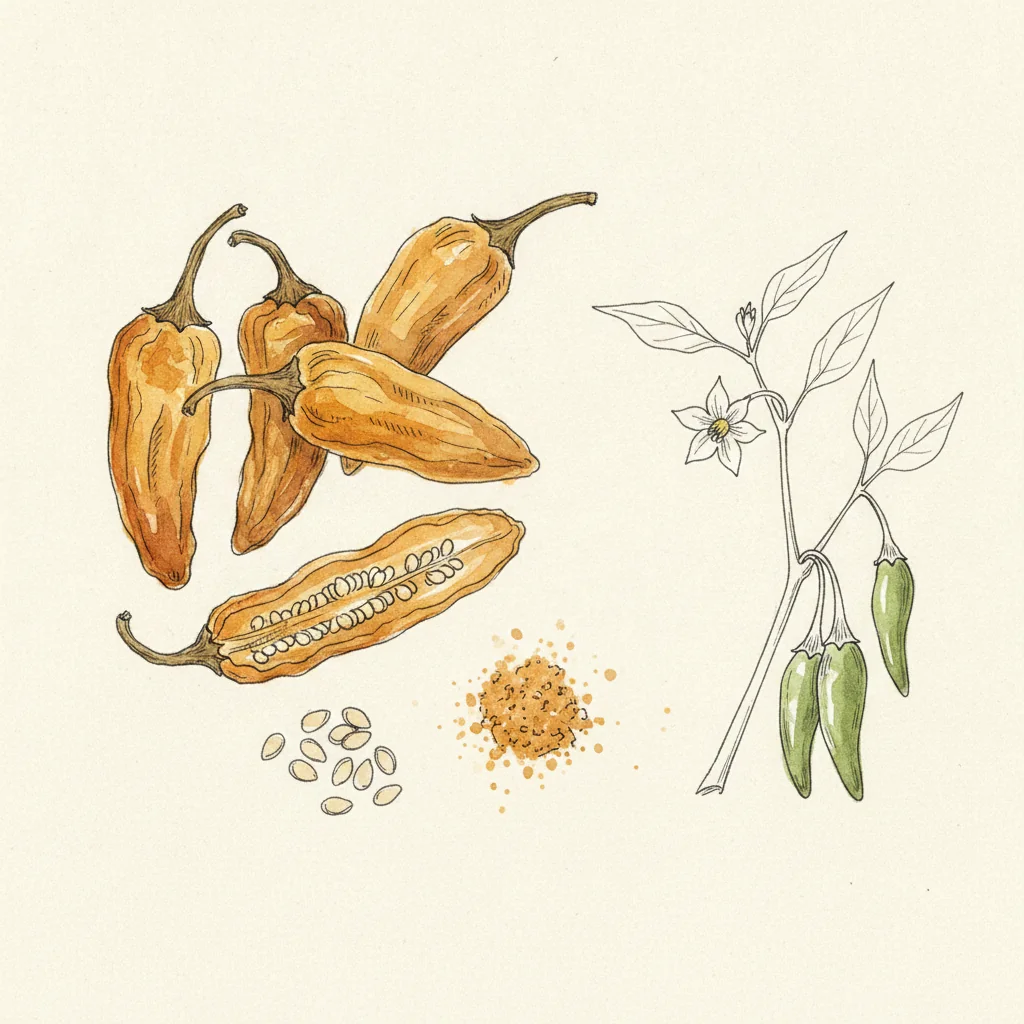
Spice · Dried chile
Aji Amarillo
Peruvian coast and Andean valleys, Peru
ripe yellow fruit · passion fruit and mango · warm sunny heat
Aromatic profile
| Family | Capsicum baccatum (yellow chile) |
|---|---|
| Intensity | ●●●○○ (6/10) |
| Main notes | ripe yellow fruit · passion fruit and mango · warm sunny heat |
| Secondary notes | raisin and apricot from the drying · faint smoke |
| Mouthfeel | a slow, fruity warmth that builds at the back of the throat rather than slapping the front of the tongue, no harsh bite |
| Finish length | long and fruity, the heat fades but the citrus stays |
Culinary use
- When to add : cooking
- Dosage : one or two rehydrated pods blended into a sauce, or a tablespoon of paste per portion; start low, the heat builds
- Ideal pairings : ceviche and tiradito, aji de gallina, papa a la huancaina, pollo a la brasa marinade, yellow rice and stews, mayonnaise and aioli for fries
- Avoid with : dishes where you want clean unadorned heat (this chile is all fruit), delicate raw fish if you only have the powder (rehydrate the pod or use paste instead)
The grain in detail
Aji amarillo (Capsicum baccatum) is the chile Peruvian cooking is built on. Despite the name amarillo, yellow, the ripe pod is closer to deep orange, and its flavor is the point: ripe tropical fruit, somewhere between passion fruit, mango and apricot, carried by a heat that sits around 30,000 to 50,000 Scoville units. That's a real warmth but a slow, friendly one that climbs at the back of the throat instead of biting the front of the tongue. Dried, the pod is sold as mirasol, the same chile cured in the sun, which deepens it toward raisin and apricot. You buy it three ways. Whole dried pods you rehydrate in hot water for 15 to 20 minutes, then blend, the most flavorful route and the cheapest by weight. Ground powder, which is convenient but loses the brightest fruit notes fast once opened. And the jarred paste, pasta de aji amarillo, which most home cooks reach for because it's ready to spoon straight into a sauce. The paste is the backbone of the Peruvian canon: aji de gallina, papa a la huancaina, the marinade under pollo a la brasa, and the bright kick in a ceviche's leche de tigre. Blend it into mayonnaise and it makes the dipping sauce that comes with every plate of Peruvian fries. Heat-wise it's medium, so reach for it when you want flavor and color more than fire. If you only keep one form, keep the paste for weeknights and a bag of dried pods for when a sauce deserves the full fruit.
History & origin
Capsicum baccatum was domesticated in the lowlands of Peru and Bolivia thousands of years ago, with archaeological chile remains in coastal Peru dated to several millennia BCE. Aji amarillo became the defining chile of the Peruvian table, named amarillo for the color it turns sauces rather than the orange of the ripe pod. It carries no formal PDO, but it is inseparable from Peru's national dishes and the cooking that chefs like Gaston Acurio carried onto the world stage. Most of the dried pods, powder and paste sold abroad are still products of Peru.
Provenance & authenticity
What sets the real thing apart — appellation, species and verification cues.
- Species
- Capsicum baccatum
Indicative price
Reference format : 4 oz bag of whole dried pods — from $7.00 to $11.00 (median : $9.00).
Storage
Whole dried pods and paste keep best airtight, away from light and heat; refrigerate the paste once opened. Ground powder fades fastest, so buy it small and use it within a few months.
Where to buy?
Where to buy it
Links checked on
| Merchant | Price | Action |
|---|---|---|
| Amazon US | — | Amazon US |
| The Spice & Tea Exchange | — | The Spice & Tea Exchange |
Prices may vary depending on current promotions on the merchant site.
Tags
- Peru
- Capsicum baccatum
- aji amarillo
- mirasol
- yellow chile
- medium heat
Frequently asked questions
- How do you store Aji Amarillo?
- Whole dried pods and paste keep best airtight, away from light and heat; refrigerate the paste once opened. Ground powder fades fastest, so buy it small and use it within a few months.
- What dosage for Aji Amarillo?
- one or two rehydrated pods blended into a sauce, or a tablespoon of paste per portion; start low, the heat builds
- When should you add Aji Amarillo in cooking?
- It's best used cooking.
- What should you avoid pairing Aji Amarillo with?
- Avoid with: dishes where you want clean unadorned heat (this chile is all fruit), delicate raw fish if you only have the powder (rehydrate the pod or use paste instead).
Go further
The dishes where this aji amarillo shines
Page prepared according to our methodology. Purchase links marked sponsored and liable to earn a commission — details on our Affiliations page.