
Dried Hibiscus Calyces (Flor de Jamaica, Roselle)
In brief — Dried hibiscus, sold across Mexico as flor de Jamaica, is the tart ruby calyx of Hibiscus sabdariffa, not a tea leaf and not the showy garden flower. Steep it for agua fresca, simmer it into syrup, or chop the rehydrated petals into tacos. The flavor is pure cranberry-sour with a floral edge. A 4 oz bag runs about $6 and makes gallons. Its aromatic profile develops notes of cranberry tartness, bright vegetal acidity, deep ruby color, extended by dried-rose floral edge and faint pomegranate, for an intensity of 7/10. In the kitchen, it's best added by steeping or simmering and it pairs with agua de Jamaica and iced hibiscus tea, syrups for cocktails and sodas, poaching liquid for pears and apples. Recommended dosage: about 1 oz of dried calyces per quart of water for a strong tea; sweeten to taste since it's bracingly tart on its own. Expect from $5.00 to $9.00 per 4 oz bag (median $6.50).
Origin : Oaxaca and Guerrero (Mexican production hubs), Mexico
Hibiscus sabdariffa
« The most versatile sour in the pantry, and almost everyone wastes it on drinks alone. Buy it loose, eat the rehydrated calyces, and skip the dull brown bags. »
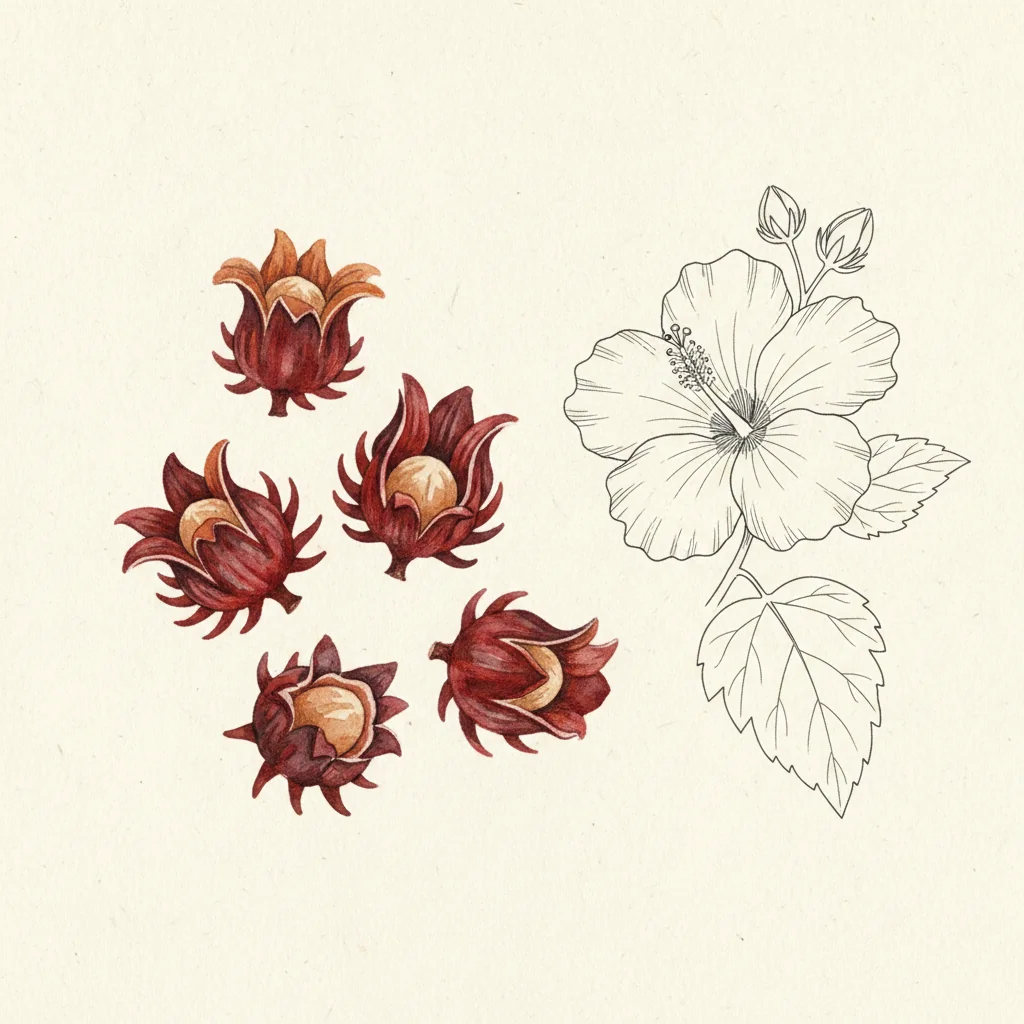
Dried hibiscus, sold across Mexico as flor de Jamaica, is the tart ruby calyx of Hibiscus sabdariffa, not a tea leaf and not the showy garden flower. Steep it for agua fresca, simmer it into syrup, or chop the rehydrated petals into tacos. The flavor is pure cranberry-sour with a floral edge. A 4 oz bag runs about $6 and makes gallons.
Spice · Dried flower
Dried Hibiscus (Flor de Jamaica)
Oaxaca and Guerrero (Mexican production hubs), Mexico
cranberry tartness · bright vegetal acidity · deep ruby color
Aromatic profile
| Family | Dried calyx, tart fruit acid |
|---|---|
| Intensity | ●●●●○ (7/10) |
| Main notes | cranberry tartness · bright vegetal acidity · deep ruby color |
| Secondary notes | dried-rose floral edge · faint pomegranate |
| Mouthfeel | sharp, mouth-puckering sourness up front that mellows into a clean fruity finish, plus a leathery chew if you eat the rehydrated calyces whole |
| Finish length | long, the acidity lingers and the color stains everything it touches |
Culinary use
- When to add : steeping or simmering
- Dosage : about 1 oz of dried calyces per quart of water for a strong tea; sweeten to taste since it's bracingly tart on its own
- Ideal pairings : agua de Jamaica and iced hibiscus tea, syrups for cocktails and sodas, poaching liquid for pears and apples, chopped into salsas and salads (Mexican tacos de Jamaica), cranberry-sauce stand-in for Thanksgiving turkey, sorrel drink and zobo
- Avoid with : delicate cream sauces (the acid can split dairy), anything you want to stay pale (it dyes everything red), dishes already sharply acidic, where it just doubles the sour
The grain in detail
Flor de Jamaica is one of the most useful things you can keep in a jar, and most people only ever drink it. The dark crimson pieces are the dried calyces of Hibiscus sabdariffa, the fleshy cup that holds the seed pod after the flower drops, not the ornamental bloom and not a true tea. Mexico grows and consumes it on a national scale, mainly in Oaxaca and Guerrero, where agua de Jamaica sits next to horchata and tamarindo at every taqueria. Steeped in cold or hot water it gives a bracing cranberry-sour drink with a faint dried-rose floral edge and a color so deep it stains the glass. Here's the part the lifestyle blogs skip: the calyces are food, not just flavoring. Once rehydrated in the steeping water they turn soft and leathery, and in Mexico cooks drain them, chop them, and fold them into salsas, fill tacos de Jamaica with them, or scatter them through a salad. The flavor is almost entirely acid, like cranberry with a little pomegranate, so it earns its place anywhere you'd reach for something sour: a syrup for cocktails and sodas, a poaching liquid that turns pears bright pink, a sharper stand-in for cranberry sauce next to the Thanksgiving turkey. In West Africa and the Caribbean the same calyx becomes sorrel and zobo. Buy it loose and whole rather than in tea bags. The pieces should be a deep wine red, slightly pliable, not dusty or brown; dull brown ones have lost their acid and their color.
History & origin
Hibiscus sabdariffa originates in West Africa and was carried across the tropics through trade and the colonial era, reaching Mexico where it took on the name Jamaica (pronounced ha-MY-ka) and became a staple aguas frescas flavor. The same plant travels under many names: sorrel in Jamaica and the Caribbean, bissap in Senegal, zobo in Nigeria, karkadeh in Egypt and Sudan. There is no protected appellation; it is grown across Mexico, Africa, and Asia. Mexican production centers on Oaxaca and Guerrero, with Nigeria and Sudan among the largest global exporters of the dried calyx.
Provenance & authenticity
What sets the real thing apart — appellation, species and verification cues.
- Species
- Hibiscus sabdariffa
Indicative price
Reference format : 4 oz bag — from $5.00 to $9.00 (median : $6.50).
Storage
Airtight jar away from light and humidity. Keeps its acid and color for about a year; once the pieces fade from wine-red to dull brown the flavor is gone.
Where to buy?
Where to buy it
Links checked on
| Merchant | Price | Action |
|---|---|---|
| Amazon US | — | Amazon US |
| Frontier Co-op | — | Frontier Co-op |
Prices may vary depending on current promotions on the merchant site.
Alternatives if unavailable
Tags
- Mexico
- flor de Jamaica
- hibiscus
- roselle
- agua fresca
- sorrel
- tart
Frequently asked questions
- How do you store Dried Hibiscus (Flor de Jamaica)?
- Airtight jar away from light and humidity. Keeps its acid and color for about a year; once the pieces fade from wine-red to dull brown the flavor is gone.
- What dosage for Dried Hibiscus (Flor de Jamaica)?
- about 1 oz of dried calyces per quart of water for a strong tea; sweeten to taste since it's bracingly tart on its own
- When should you add Dried Hibiscus (Flor de Jamaica) in cooking?
- It's best used steeping or simmering.
- What should you avoid pairing Dried Hibiscus (Flor de Jamaica) with?
- Avoid with: delicate cream sauces (the acid can split dairy), anything you want to stay pale (it dyes everything red), dishes already sharply acidic, where it just doubles the sour.
Go further
The dishes where this dried hibiscus (flor de jamaica) shines
See every dish where this product is mentioned →
Other spices to discover
Page prepared according to our methodology. Purchase links marked sponsored and liable to earn a commission — details on our Affiliations page.