
Gochugaru, Korean Sun-Dried Red Chili Flakes
In brief — Korean red chili dried in the sun, then crushed to a medium flake. The color is a bright red-orange and the heat is a gentle 5 out of 10. This is the backbone of kimchi, bibimbap and gochujang. Don't confuse it with Italian chili flakes: gochugaru doesn't bite on contact, it settles in. A 1 lb bag runs about $15 and lasts months. Its aromatic profile develops notes of ripe red fruit, baked apple, sun-dried tomato, extended by light honey and warm sun, for an intensity of 5/10. In the kitchen, it's best added stirred into a long marinade or partway through cooking; for kimchi, mixed to a paste with water and fish sauce and it pairs with napa cabbage kimchi, bibimbap, tteokbokki. Recommended dosage: 2 teaspoons per 2 lb of cabbage for kimchi; 1 teaspoon for a marinade serving four. Expect from $11.00 to $18.00 per 1 lb bag (median $15.00).
Origin : Yeongyang (Gyeongsang North) and Goesan (Chungcheong North), South Korea
Capsicum annuum
« Indispensable for real Korean cooking and a joy in kimchi, with a fruity, building heat that never scorches. It loses a few tenths because sun-dried and kiln-dried lots taste worlds apart, and the bag rarely tells you which one you're buying. »
Korean red chili dried in the sun, then crushed to a medium flake. The color is a bright red-orange and the heat is a gentle 5 out of 10. This is the backbone of kimchi, bibimbap and gochujang. Don't confuse it with Italian chili flakes: gochugaru doesn't bite on contact, it settles in. A 1 lb bag runs about $15 and lasts months.
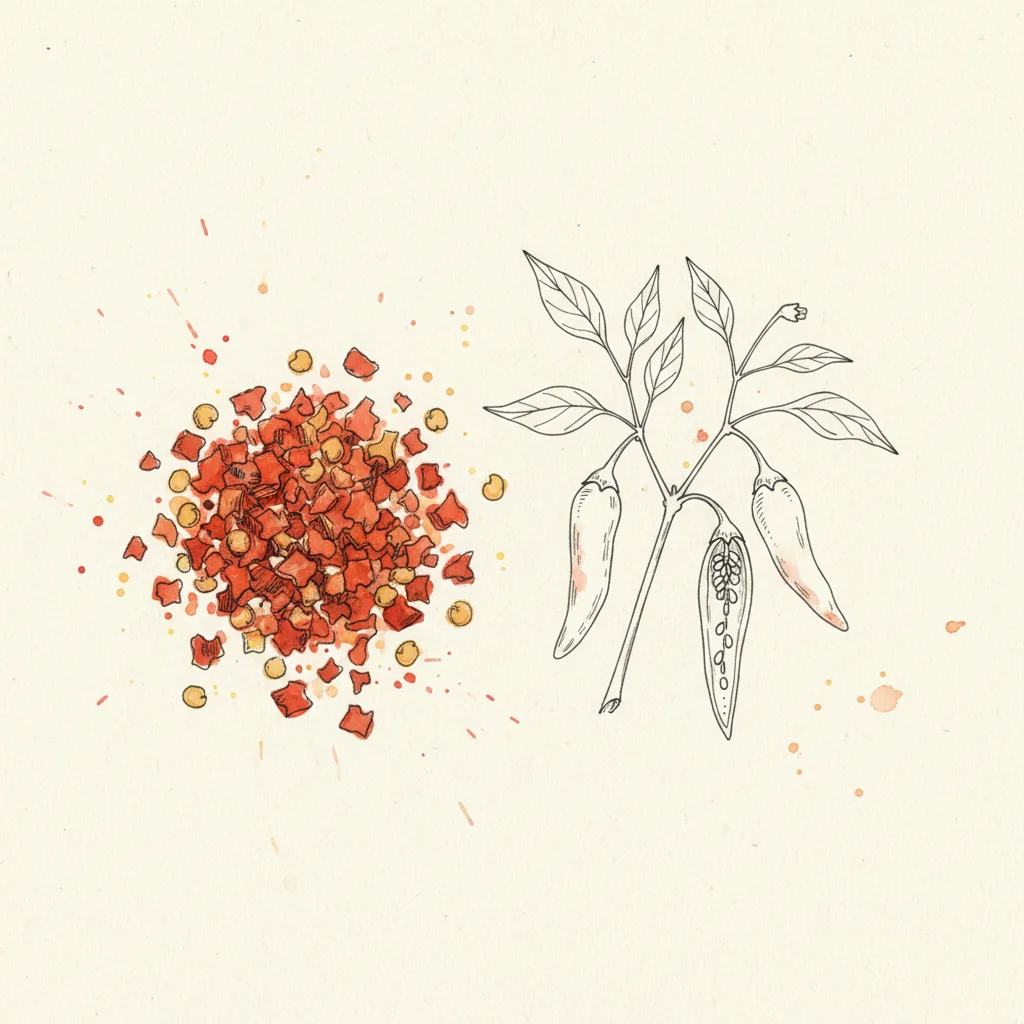
Spice · Chili flakes
Gochugaru
Yeongyang (Gyeongsang North) and Goesan (Chungcheong North), South Korea
ripe red fruit · baked apple · sun-dried tomato
Aromatic profile
| Family | Capsicum annuum |
|---|---|
| Intensity | ●●●○○ (5/10) |
| Main notes | ripe red fruit · baked apple · sun-dried tomato |
| Secondary notes | light honey · warm sun · candied citrus |
| Mouthfeel | a fruity heat that builds on the second taste rather than hitting up front, never harsh |
| Finish length | medium, with a faintly sweet finish |
Culinary use
- When to add : stirred into a long marinade or partway through cooking; for kimchi, mixed to a paste with water and fish sauce
- Dosage : 2 teaspoons per 2 lb of cabbage for kimchi; 1 teaspoon for a marinade serving four
- Ideal pairings : napa cabbage kimchi, bibimbap, tteokbokki, ssamjang, bulgogi marinade, homemade chili oil
- Avoid with : delicate sweets like panna cotta, clear oil-and-vinegar dressings, smooth fresh cheeses
The grain in detail
Gochugaru is the flake (gulgeun, coarse) or powder (goun, fine) of sun-dried Korean red chili, and it is the single ingredient that makes Korean food taste Korean. The cultivars are local Capsicum annuum selections bred over four centuries for a fruity, faintly sweet profile with very little bitterness. Yeongyang and Goesan are the two reference growing regions, both prized for volcanic soils and a dry September-October microclimate. The traditional method matters: the split peppers are sun-dried on mats for 10 to 15 days, turned daily. That slow drying is the whole point, because it preserves the natural sugars and gives gochugaru its vivid color and its red-fruit aroma. Kiln-dried industrial flakes flatten the flavor and pull the color toward brown, so read the bag and look for sun-dried. The heat sits somewhere around 1,500 to 10,000 Scoville depending on the cultivar, far milder than cayenne, which is why you can use it by the spoonful. Three jobs anchor it. Napa cabbage kimchi, fermented for weeks, needs a medium-coarse flake in real volume for color, texture and fermentation. Gochujang, the fermented paste, ages for months in earthenware. And the everyday work: a bulgogi marinade, a pot of kimchi jjigae, a bowl of ssamjang. The catch most US recipes get wrong is the swap. Don't reach for Hungarian paprika or Italian red pepper flakes; the chemistry is different and your kimchi will taste like neither. Moisture should stay between 15 and 25 percent, so once the bag is open, keep it cold. Good gochugaru smells of red fruit and warm sun, never of scorch.
History & origin
Chilies reached Korea in the late 16th century, carried by Portuguese traders by way of Japan. Before that, kimchi was made with mustard and black pepper. The chili rewired Korean cooking through the 17th century: red kimchi, gochujang, the marinades. Sun-drying stayed the traditional method, codified by farming families in Goesan and Yeongyang. Modern gochugaru standardized through the 20th century with no formal appellation, but with a real, informal split between sun-dried lots and industrial kiln-dried ones.
Provenance & authenticity
What sets the real thing apart — appellation, species and verification cues.
- Species
- Capsicum annuum
- Grade / standard
- Sun-dried Korean chilli flakes (taeyangcho = sun-dried premium)
How to verify the real one
- Korean Capsicum annuum, sun-dried (taeyangcho) = premium vs machine-dried
- Goesan/Yeongyang origin
- vivid red, mild-medium heat, no additives
Indicative price
Reference format : 1 lb bag — from $11.00 to $18.00 (median : $15.00).
Storage
Resealable bag or airtight jar, ideally refrigerated after opening to hold the color and the natural moisture. Keeps its punch for about 12 months.
Where to buy?
Where to buy it
Links checked on
| Merchant | Price | Action |
|---|---|---|
| Amazon US | — | Amazon US |
| Sous Chef UK | — | Sous Chef UK |
Prices may vary depending on current promotions on the merchant site.
Alternatives if unavailable
Tags
- South Korea
- kimchi
- Capsicum annuum
- chili flakes
- sun-dried
- mild chili
Frequently asked questions
- How do you store Gochugaru?
- Resealable bag or airtight jar, ideally refrigerated after opening to hold the color and the natural moisture. Keeps its punch for about 12 months.
- What dosage for Gochugaru?
- 2 teaspoons per 2 lb of cabbage for kimchi; 1 teaspoon for a marinade serving four
- When should you add Gochugaru in cooking?
- It's best used stirred into a long marinade or partway through cooking; for kimchi, mixed to a paste with water and fish sauce.
- What should you avoid pairing Gochugaru with?
- Avoid with: delicate sweets like panna cotta, clear oil-and-vinegar dressings, smooth fresh cheeses.
Go further
The dishes where this gochugaru shines
Also a recommended alternative for
As a complementary pairing with
See every dish where this product is mentioned →
Other spices to discover
Featured in these gift sets
Page prepared according to our methodology. Purchase links marked sponsored and liable to earn a commission — details on our Affiliations page.