
Raw Unfiltered Apple Cider Vinegar with the Mother
In brief — The one vinegar you'll reach for most. Raw, unfiltered, with the mother still in the bottle, it carries real apple, soft honey and a tartness rounder than any wine vinegar. The catch: it isn't a health tonic, it's a workhorse for slaws, pickles and Carolina mop sauce. Bragg's 16 oz runs about $6 in the US; Aspall's 500ml about £3 in the UK. Its aromatic profile develops notes of ripe apple, soft honey, clean tartness, extended by quince and fresh yeast, for an intensity of 5/10. In the kitchen, it's best added raw in dressings, a quick deglaze, brines and quick pickles and it pairs with coleslaw and slaw dressings, vinaigrette for soft greens, quick pickles for onions and cucumbers. Recommended dosage: one part vinegar to three parts oil in a dressing; a splash, not a glug, in a pan sauce. Expect from $4.00 to $9.00 per 16 oz / 500ml bottle (median $6.00).
Origin : Vermont (US) · Herefordshire (UK), traditional cider-apple country, United States / United Kingdom
Malus domestica
« The kitchen's most useful acid, full stop. Round apple tartness that wine vinegar can't match, ideal for slaws and pickles. Marked down only because the supermarket organic bottle is genuinely fine. »
The one vinegar you'll reach for most. Raw, unfiltered, with the mother still in the bottle, it carries real apple, soft honey and a tartness rounder than any wine vinegar. The catch: it isn't a health tonic, it's a workhorse for slaws, pickles and Carolina mop sauce. Bragg's 16 oz runs about $6 in the US; Aspall's 500ml about £3 in the UK.
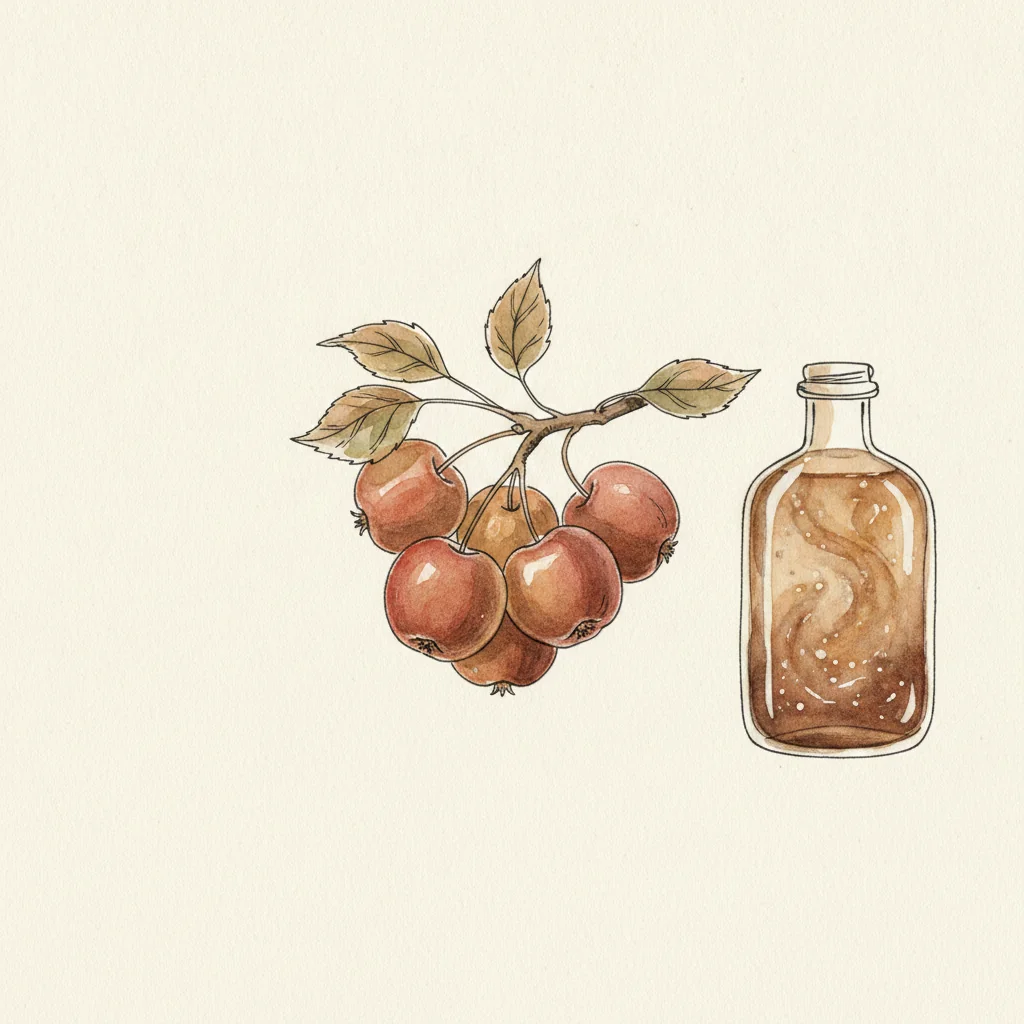
Vinegar · Raw cider vinegar
Raw Apple Cider Vinegar
Vermont (US) · Herefordshire (UK), traditional cider-apple country, United States / United Kingdom
ripe apple · soft honey · clean tartness
Aromatic profile
| Family | Malus domestica |
|---|---|
| Intensity | ●●●○○ (5/10) |
| Main notes | ripe apple · soft honey · clean tartness |
| Secondary notes | quince · fresh yeast · warm wood |
| Mouthfeel | round and bright, more mellow than wine vinegar, with a living slightly cloudy body |
| Finish length | medium, a fruity tail that finishes cleaner than it starts |
Culinary use
- When to add : raw in dressings, a quick deglaze, brines and quick pickles
- Dosage : one part vinegar to three parts oil in a dressing; a splash, not a glug, in a pan sauce
- Ideal pairings : coleslaw and slaw dressings, vinaigrette for soft greens, quick pickles for onions and cucumbers, marinades for chicken and pork, barbecue mop sauce (Carolina style), a splash in braised greens
- Avoid with : anything that needs a sharp clean acid (use white wine vinegar), delicate raw fish where the apple note muddies the dish, long high-heat reductions that cook off the fruit
The grain in detail
Raw apple cider vinegar is made by two fermentations: apple juice ferments to a dry cider, then acetic bacteria turn that cider to vinegar. "Raw" means it skips the pasteurization and fine filtering most supermarket vinegars get, so the mother stays in the bottle, a soft cloudy raft of cellulose and live bacteria that you can see when you hold it to the light. That mother is harmless and the sign you bought the real thing. Acidity lands around 5 percent, a touch softer than the 6 to 7 percent of a wine vinegar, which is exactly why it plays so well raw. The apples are the whole story. The best US bottles come out of Vermont, where producers like Vermont Village press organic cider apples and barrel-ferment slowly; the British classic comes from cider-apple country, the orchards of Herefordshire and the West Country, where sharp and bittersweet varieties give the vinegar more backbone than the bland industrial stuff pressed from juice concentrate. Expect ripe apple, a little honey, a whisper of quince and a clean yeasty edge. Use it where you want acid plus a hint of fruit: coleslaw and German-style slaws, a vinaigrette for soft greens like butter lettuce, quick pickles for red onion and cucumber, marinades for chicken and pork, and a Carolina barbecue mop where it's the backbone of the sauce. Keep a clean white wine vinegar alongside it for the jobs that need a sharp neutral acid, because the apple note that makes cider vinegar charming also gets in the way of a crisp mignonette. Skip the wellness marketing entirely; the gut-health and weight-loss claims are not why a cook keeps a bottle on the shelf. It earns its place because it's the friendliest acid in the kitchen and costs next to nothing. At the shelf, look for "raw," "unfiltered," "with the mother," and ideally organic. A visible sediment is a feature, not a fault.
History & origin
Cider vinegar is as old as cider itself, a byproduct of barrels that turned in the cellar before refrigeration. In the US it became a pantry staple through the 20th century, then a craze after Paul Bragg's family built a brand around its supposed tonic powers from the 1910s onward. In Britain, the cider orchards of Herefordshire and the West Country supplied a parallel tradition; Aspall has pressed cider and vinegar in Suffolk since 1728. The modern "raw, with the mother" revival rode the 2010s fermentation and wellness wave, but cooks had never stopped using it.
Provenance & authenticity
What sets the real thing apart — appellation, species and verification cues.
- Species
- Malus domestica
- Grade / standard
- Unpasteurised farmhouse cider vinegar with mother
How to verify the real one
- contains visible mother (mere)
- unpasteurised, unfiltered (cloudy)
- slow natural fermentation
- Brittany farm origin
Indicative price
Reference format : 16 oz / 500ml bottle — from $4.00 to $9.00 (median : $6.00).
Storage
Cap tight, away from light, at room temperature. A cloudy raft or sediment is the mother, perfectly edible. Keeps for years; it only mellows.
Where to buy?
Where to buy it
Links checked on
| Merchant | Price | Action |
|---|---|---|
| Amazon US | — | Amazon US |
Prices may vary depending on current promotions on the merchant site.
Tags
- vinegar
- apple cider vinegar
- raw
- unfiltered
- with the mother
- Vermont
- Herefordshire
- malus-domestica
Frequently asked questions
- How do you store Raw Apple Cider Vinegar?
- Cap tight, away from light, at room temperature. A cloudy raft or sediment is the mother, perfectly edible. Keeps for years; it only mellows.
- What dosage for Raw Apple Cider Vinegar?
- one part vinegar to three parts oil in a dressing; a splash, not a glug, in a pan sauce
- When should you add Raw Apple Cider Vinegar in cooking?
- It's best used raw in dressings, a quick deglaze, brines and quick pickles.
- What should you avoid pairing Raw Apple Cider Vinegar with?
- Avoid with: anything that needs a sharp clean acid (use white wine vinegar), delicate raw fish where the apple note muddies the dish, long high-heat reductions that cook off the fruit.
Go further
The dishes where this raw apple cider vinegar shines
Also a recommended alternative for
As a complementary pairing with
See every dish where this product is mentioned →
Other oils, vinegars & honeys to discover
Featured in these gift sets
Page prepared according to our methodology. Purchase links marked sponsored and liable to earn a commission — details on our Affiliations page.