
Comparison
Sumac vs nigella seeds: which to use?
These aren't rivals — they often share a plate. Sumac is a tart red powder that adds lemony acidity, dusted raw over fattoush, hummus, and grilled meat. Nigella seeds are toasty black seeds — onion and hazelnut — scattered on naan and salads for crunch and nutty depth. Both run ~$7. Want acidity, use sumac; want toasty crunch, use nigella.
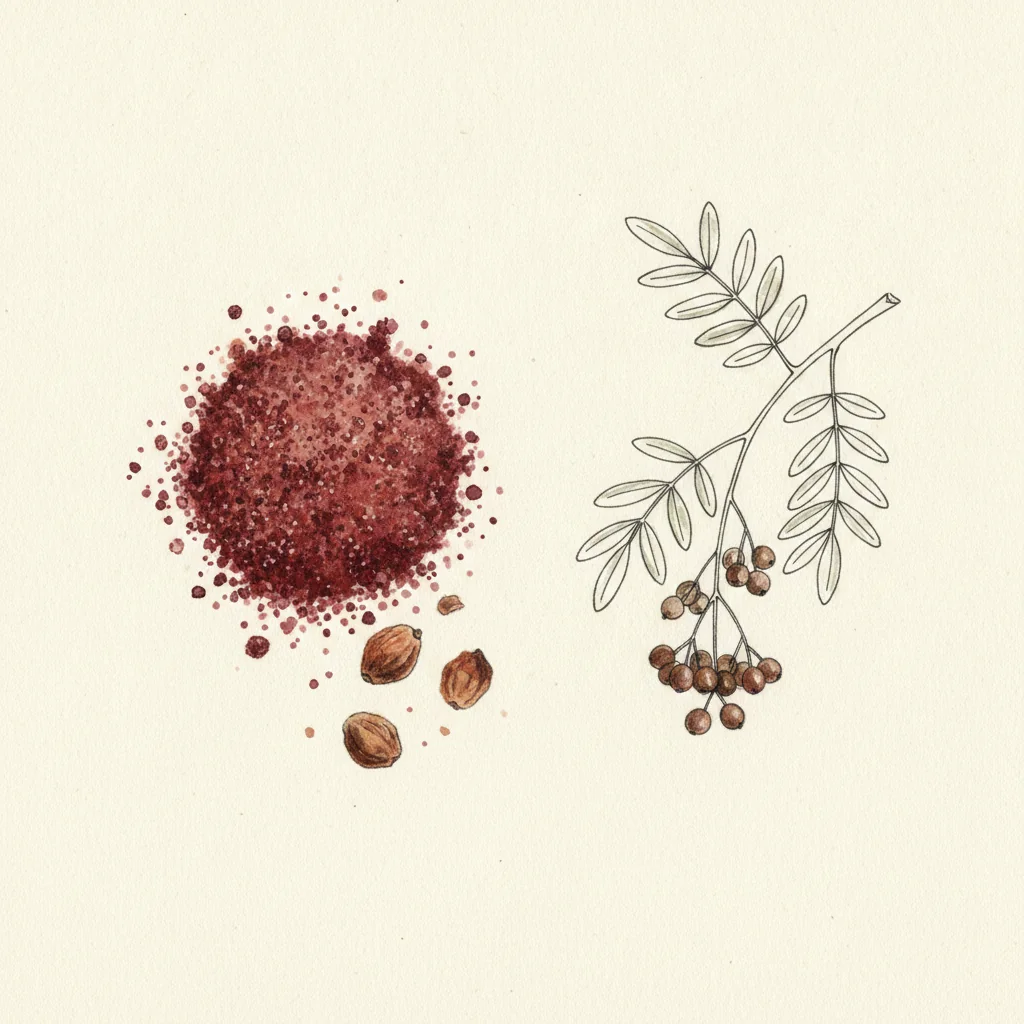
Spice · Spice berry
Sumac
Aleppo and the coastal mountains, plus neighboring Lebanon, Syria
tart lemon · dried red berry · light tannin
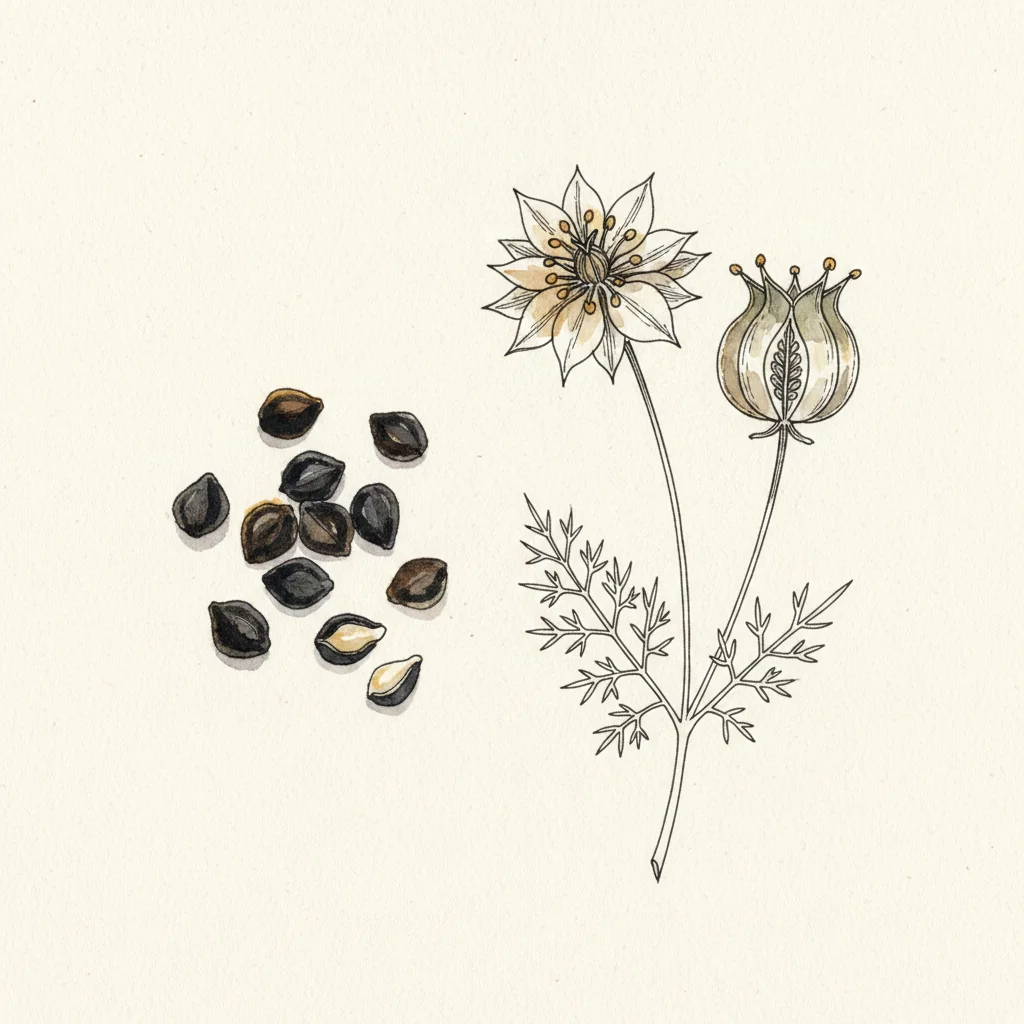
Spice · Spice seed
Nigella Seeds (Black Cumin)
Nile Valley, Upper Egypt, Egypt
toasted onion · hazelnut · mild pepper
Our verdict
Sumac for lemony tartness; nigella seeds for toasty onion-nut crunch — often best used together.
At a glance
| Criterion | Sumac | Nigella Seeds (Black Cumin) |
|---|---|---|
| Botanical name | Rhus coriaria | Nigella sativa |
| Origin | Syria / Levant | Egypt — Nile Valley |
| Form | Ground red powder | Whole black seeds |
| What it adds | Tart, lemony acidity | Toasty crunch and nutty-onion depth |
| Intensity | 6/10 — bright, tart | 6/10 — warm, toasty |
| Main notes | Tart lemon, dried red berry, light tannin | Toasted onion, hazelnut, mild pepper |
| How to use | Finishing only, dusted raw on the plate | Raw on dough before baking, or sprinkled to finish |
| Best for | Fattoush, hummus, grilled lamb, raw onions | Naan, labneh, cucumber salad, roasted squash, dal |
| Median price | ~$9 / 4 oz bag | ~$7 / 3.5 oz jar |
| Value | Cheap acidity in powder form — worth it | Cheap crunch and depth — worth it |
When to choose Sumac
Reach for sumac when you want bright, lemony acidity without adding liquid — it's the easiest way to put tartness onto a finished dish. Ground from the dried berries of Rhus coriaria (the spice comes from Syria, the Levant, and neighboring Lebanon), it tastes of tart lemon, dried red berry, and a light tannin, and it carries that sourness as a dry red powder. That dryness is the point: you can dust acidity over food without making it wet, which fresh lemon can't do. Use it as a finisher only, off the heat, straight onto the plate. It's the signature note of fattoush and chopped salads, a classic dusting on hummus and labneh, and it brings sharpness to grilled lamb and chicken skewers, raw red onions for kebabs, ripe tomatoes, and smashed avocado. It's also a core ingredient in za'atar blends. The rule is restraint and timing: don't pile it onto dishes already heavily acidic from lemon or vinegar, where you double the sour, and don't subject it to long dry roasting, which dulls the color and flattens the tartness. Color is the freshness gauge — when the red drifts toward brown, it's oxidizing; it keeps 12 to 18 months in an airtight jar away from light and damp. At about $9 a bag it's cheap tartness in powder form, and worth keeping within reach for exactly the dishes nigella can't help. Against nigella, sumac is the sour, not the savory: it brightens and sharpens where nigella toasts and deepens. Far from competing, the two are a classic pair — sumac for the acidic lift, nigella for the nutty crunch — and many Middle Eastern plates carry both. If you can only buy one and your cooking leans toward salads, grilled meat, and bright Levantine plates, sumac is the one that earns its shelf space first.
When to choose Nigella Seeds (Black Cumin)
Reach for nigella seeds when you want toasty crunch and a savory, onion-nut depth — they add texture and a warm note that no powder can. These small black seeds (Nigella sativa, from Egypt's Nile Valley, sometimes called black cumin though they're unrelated to cumin) taste of toasted onion, hazelnut, and a mild pepper. Their job is texture and aromatic depth rather than acidity. The classic move is scattering them raw on dough before baking — naan and pita wear them on top, where the oven toasts the seeds and releases their nutty-onion aroma. Off the bread, sprinkle them as a finish over fresh cheeses like labneh and ricotta, cucumber and tomato salads, roasted squash and sweet potato, and gentle lentil dal and vegetable curries. Toast only the pinch you're about to use, in a dry pan, to wake the oils; whole, the hard shell protects those oils so the seeds keep about 24 months at room temperature in an opaque jar — notably longer than ground spices. The cautions are about partners, not technique: the onion note can flatten delicate raw fish, and an overload of fresh dill muddies against the seeds, so keep those combinations in check. On value they're a bargain at about $7 a jar, and a little scattering goes a long way on a flatbread or a bowl of dal. Against sumac, nigella is the savory and the textural, not the sour: where sumac brightens with acidity, nigella deepens with toast and crunch. They're complements more than competitors — a plate of hummus dusted with sumac and scattered with nigella uses both at once. If you bake your own flatbread or want a crunchy, nutty finish on roasted vegetables and dal, nigella is the seed to reach for, and it's the one whose long shelf life makes it forgiving to keep on hand.
Where to buy?
Sumac
Links checked on
| Merchant | Price | Action |
|---|---|---|
| Amazon US | — | Amazon US |
| Burlap & Barrel | — | Burlap & Barrel |
| Spicewalla | — | Spicewalla |
| Sous Chef UK | — | Sous Chef UK |
Prices may vary depending on current promotions on the merchant site.
Nigella Seeds (Black Cumin)
Links checked on
| Merchant | Price | Action |
|---|---|---|
| Amazon US | — | Amazon US |
| Burlap & Barrel | — | Burlap & Barrel |
| Sous Chef UK | — | Sous Chef UK |
Prices may vary depending on current promotions on the merchant site.
Frequently asked questions
- Do sumac and nigella seeds do the same thing?
- No — they're complements, not substitutes. Sumac adds tart, lemony acidity as a dry red powder; nigella seeds add toasty crunch and a savory onion-nut depth. Many Middle Eastern dishes use both at once, like hummus dusted with sumac and scattered with nigella. Pick by whether you want sourness or texture.
- Can I cook with sumac?
- It's best used raw as a finisher, off the heat. Long dry roasting dulls its color and flattens the tartness, so dust it straight onto the plated dish — fattoush, hummus, grilled meat — rather than simmering it into a sauce. Add it last, the way you'd squeeze lemon at the end.
- Are nigella seeds the same as black cumin?
- They're often labeled black cumin, but they're botanically unrelated to cumin — nigella is Nigella sativa, a different plant entirely. The flavor is toasted onion and hazelnut, not cumin's earthy warmth. Don't confuse them with caraway or true cumin in a recipe; the result would be off.
- Which lasts longer in the pantry?
- Nigella seeds, easily. Whole, their hard shell protects the oils inside, so they keep about 24 months. Sumac, being a ground powder, oxidizes faster — 12 to 18 months — and you can track it by color: once the red drifts toward brown, it's fading.
The best pairings
With Nigella Seeds (Black Cumin)
Comparison prepared according to our methodology. Sponsored purchase links — see our affiliations.