
Comparison
Sumac vs za'atar: what's the difference?
This isn't really a contest — za'atar is a blend that usually contains sumac, plus wild thyme, toasted sesame and salt. Sumac alone gives you pure tart-lemon brightness, about $9. Za'atar gives you herb, nuttiness, salt and tartness in one scoop, about $9.50. Want only sourness, sumac; want a whole flavor in one spoon, za'atar.
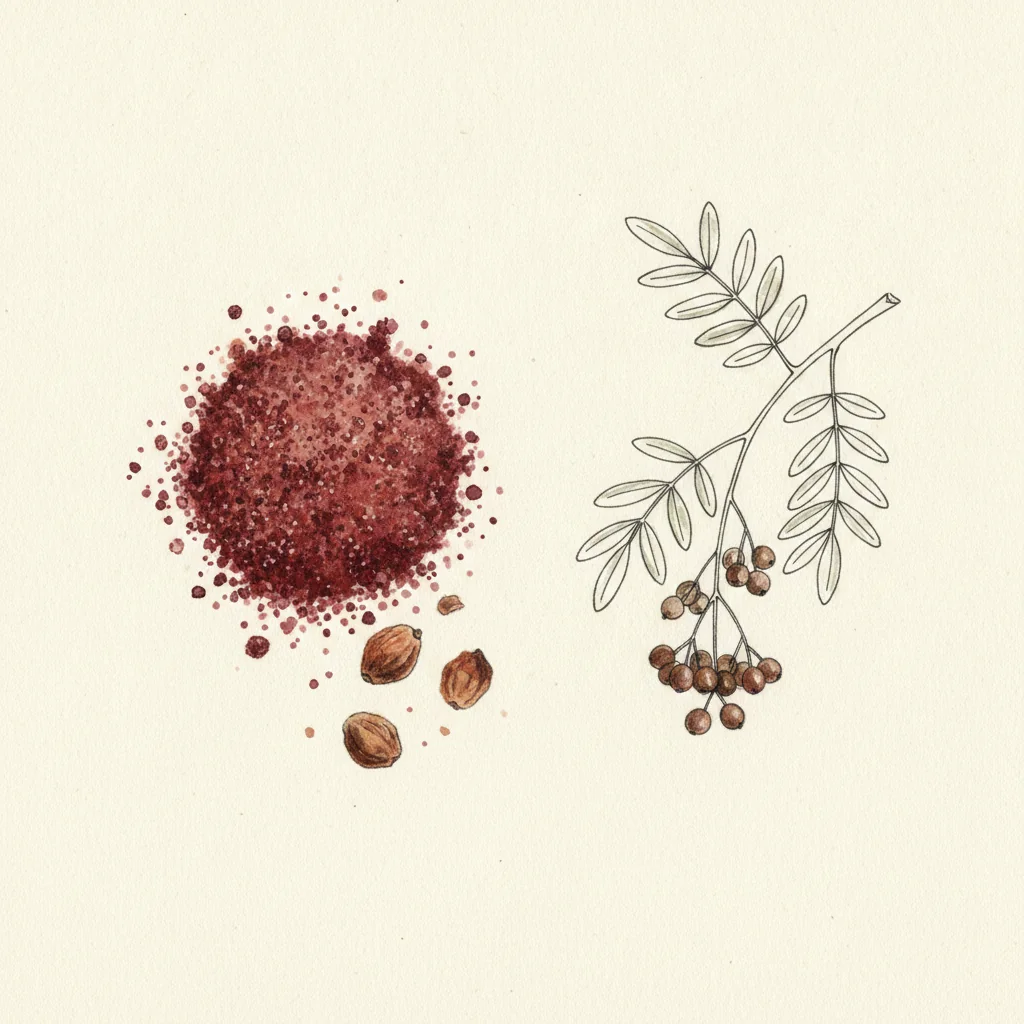
Spice · Spice berry
Sumac
Aleppo and the coastal mountains, plus neighboring Lebanon, Syria
tart lemon · dried red berry · light tannin
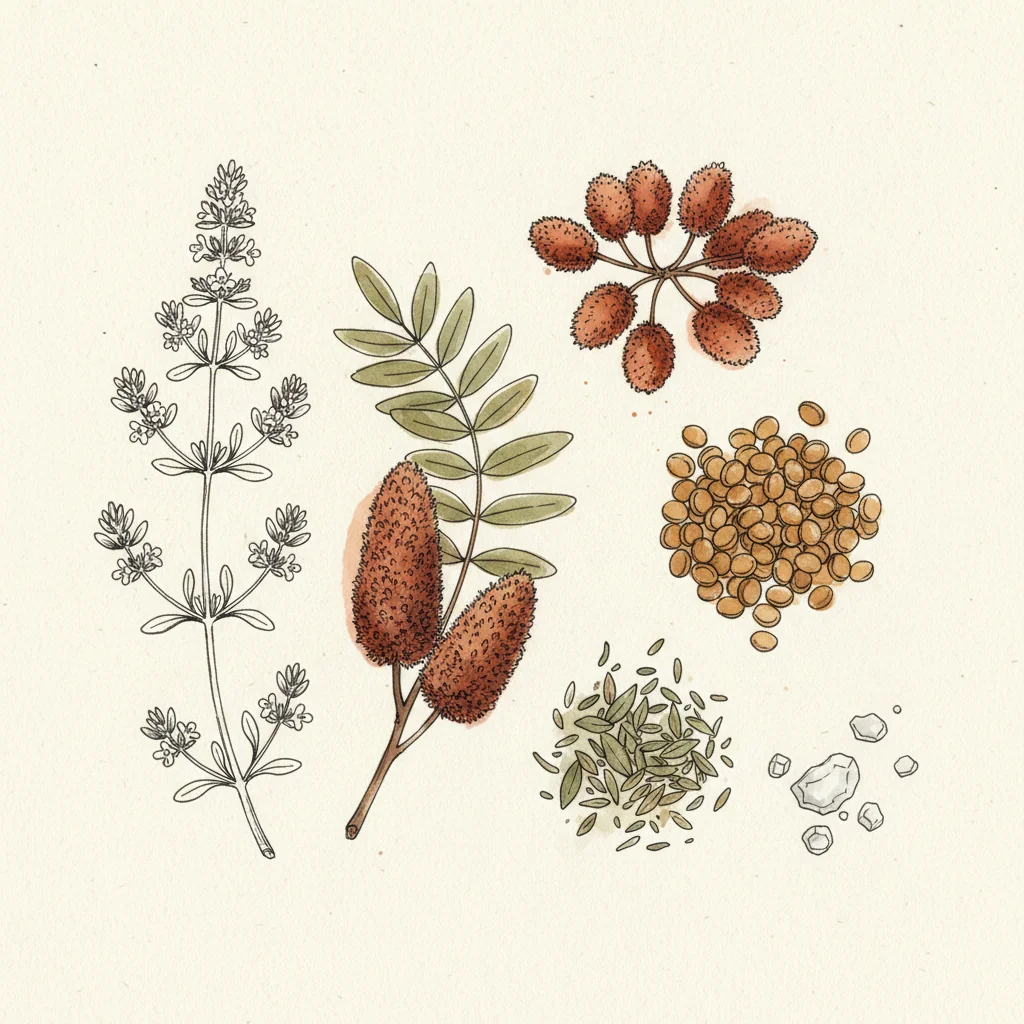
Spice · Blend
Za'atar
Levant, with distinct house styles in Beirut, Damascus and Nablus, Lebanon / Syria / Palestine
fresh wild thyme · tart sumac · toasted sesame
Our verdict
Sumac is one spice; za'atar is a blend that contains it. Different jobs.
At a glance
| Criterion | Sumac | Za'atar |
|---|---|---|
| Origin | Syria — Aleppo and coastal mountains (Rhus coriaria) | Levant — Beirut, Damascus, Nablus house styles |
| Type | Single spice (dried crushed berries) | Composed blend: wild thyme, sumac, sesame, salt |
| Intensity | 6/10 — pure tartness, one dimension | 5/10 — layered: herbal, nutty, tart, salty |
| Main notes | Tart lemon, dried red berry, light tannin | Fresh wild thyme, tart sumac, toasted sesame |
| Best use | Finishing tartness on meat, salads, hummus, onions | Flatbread, labneh, eggs, dipping with oil |
| Median price | ~$9 / 4 oz bag | ~$9.50 / 2 oz jar |
| Value | Cheap, precise, also a za'atar ingredient | One scoop does the work of several spices |
When to choose Sumac
Reach for sumac when you want sourness and nothing else getting in the way. It's a single spice — dried crushed Rhus coriaria berries — and it delivers one clean thing: bright, dry, tart-lemon brightness with a dried-berry edge and a faint tannic grip. That precision is the whole reason to keep it separate from za'atar. When you're dusting raw red onions for a kebab, finishing grilled lamb, brightening hummus or labneh, or hitting ripe tomatoes, you often want the acidity alone, dialed exactly where you put it, without thyme or sesame riding along. Scatter one to two teaspoons over a dish for four, off the heat, at the table. It's also the tart engine inside za'atar itself, so a jar of straight sumac lets you both season cleanly and bump up a blend that's gone light on acidity. At about $9 for a 4 oz bag it's cheap and forgiving, and the better Aleppo-style ones smell faintly fruity rather than flatly sour. Buy sumac when the dish needs a souring agent you can aim with a teaspoon — and when you'd rather not commit a whole flavor profile to the plate.
When to choose Za'atar
Reach for za'atar when you want a finished flavor in a single scoop. It's a blend, not a spice — wild thyme (or a thyme-oregano-savory mix), sumac, toasted sesame and salt — so one spoon gives you herbal, nutty, tart and salty all at once. That's its genius and the reason it's a Levantine staple: you don't season a man'oushe flatbread with five things, you brush it with za'atar loosened in olive oil and bake. The same move works over labneh and good olive oil, on fried or scrambled eggs, on sliced tomatoes, or as a dip for warm pita dragged through oil then the blend. Use it generously — a heaped tablespoon per flatbread or bowl of labneh — and always slacken it with oil first so it clings instead of dusting off dry. House styles vary a lot: a Nablus za'atar leans green and herbal, a Beirut one can be heavier on sumac and sesame, so taste before you commit. At roughly $9.50 for a 2 oz jar it earns the splurge by replacing several jars at once. The one thing it can't do is give you pure, controllable tartness — the thyme and sesame come too. When you want only the sour note, reach past the blend for straight sumac.
Where to buy?
Sumac
Links checked on
| Merchant | Price | Action |
|---|---|---|
| Amazon US | — | Amazon US |
| Burlap & Barrel | — | Burlap & Barrel |
| Spicewalla | — | Spicewalla |
| Sous Chef UK | — | Sous Chef UK |
Prices may vary depending on current promotions on the merchant site.
Za'atar
Links checked on
| Merchant | Price | Action |
|---|---|---|
| Burlap & Barrel | — | Burlap & Barrel |
| Amazon US | — | Amazon US |
| Sous Chef UK | — | Sous Chef UK |
Prices may vary depending on current promotions on the merchant site.
Frequently asked questions
- Is za'atar just sumac with herbs?
- Close — za'atar is a blend built around sumac, adding wild thyme, toasted sesame and salt. Sumac is one of its core ingredients, which is exactly why the two get confused. One is a spice, the other a finished seasoning.
- Can I substitute one for the other?
- Only loosely. Use sumac when you want pure tartness; use za'atar when you want the whole herbal-nutty-tart-salty profile. Swapping sumac for za'atar leaves a dish flat and herbless; the reverse adds flavors you may not want.
- Which is more versatile?
- Za'atar does more in one scoop — bread, labneh, eggs, dips. Sumac is more precise: it adds only acidity, which makes it the better tool when you want to control the sourness without committing other flavors.
- Should I buy both?
- Yes, if you cook this food often. Sumac lets you finish with clean tartness and top up a tired za'atar; za'atar gives you a one-scoop seasoning. They're cheap, and together they cover more ground than either alone.
The best pairings
With Za'atar
Comparison prepared according to our methodology. Sponsored purchase links — see our affiliations.