
Comparison
Baharat vs shichimi togarashi: which spice blend?
Different blends, different moments. Baharat is a warm, peppery Levantine-Gulf blend you rub on meat and bloom in fat. Shichimi togarashi is a bright, citrusy Japanese seven-spice you sprinkle raw at the table. Cook with baharat; finish with shichimi. They're not rivals — they live at opposite ends of the pan.
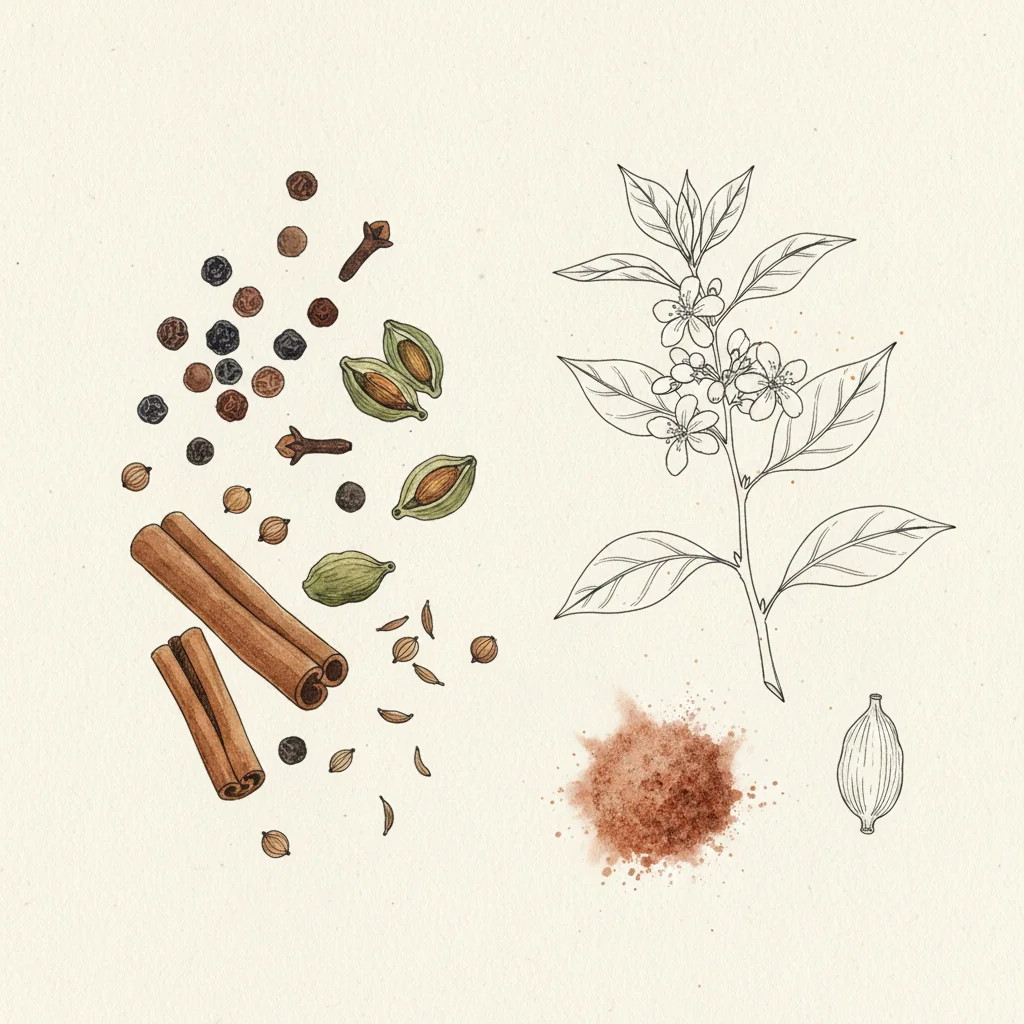
Spice · Blend
Baharat
Made across the Arab world, with distinct house recipes in Lebanon, Syria, Turkey and the Gulf states, Levant & Gulf
warm allspice and clove · black pepper bite · toasted cumin and coriander
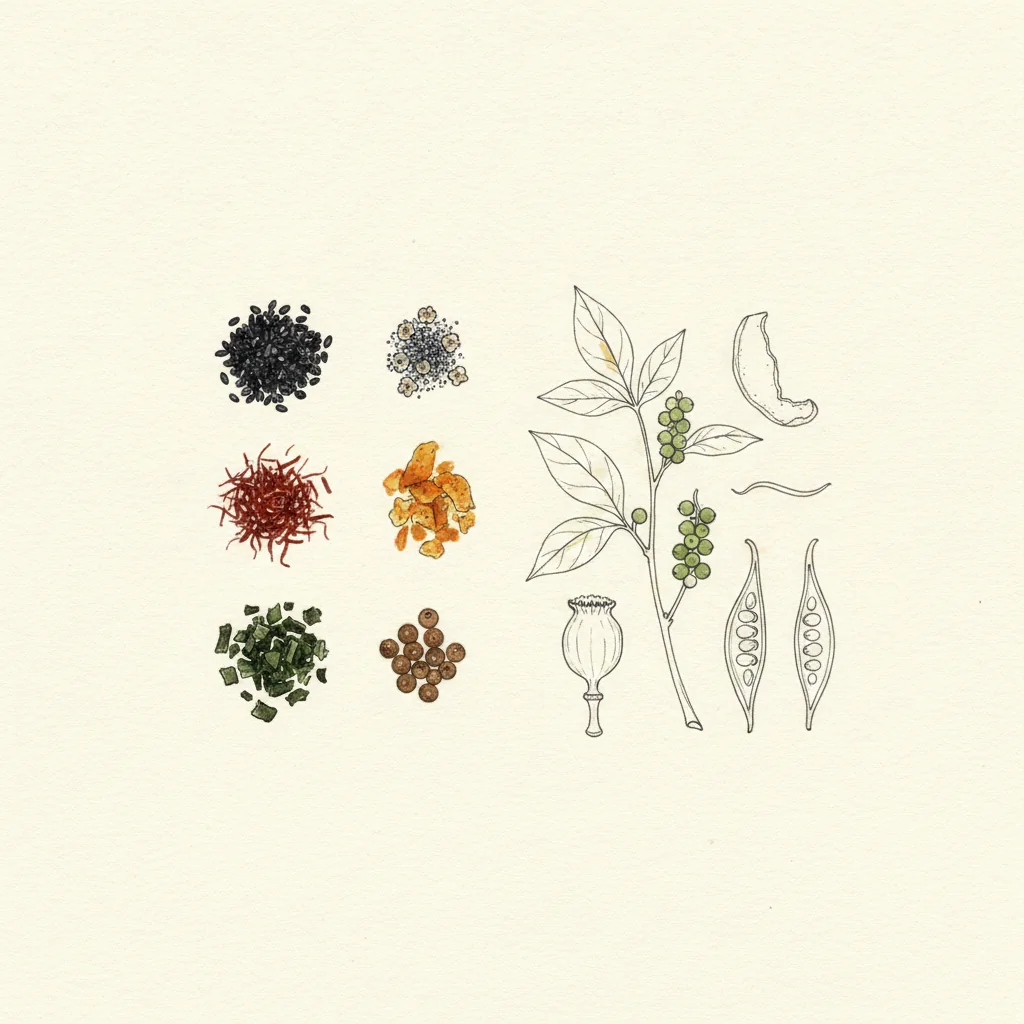
Spice · Blend
Shichimi Togarashi
Born in Edo (now Tokyo) at the Yagenbori apothecary; chili itself grown in Nagano and nationwide, blended by houses across the country, Japan
toasted citrus peel · nutty sesame · dry chili heat
Our verdict
Baharat to build a dish; shichimi togarashi to finish one at the table.
At a glance
| Criterion | Baharat | Shichimi Togarashi |
|---|---|---|
| Profile | Warm allspice and clove, black pepper bite, toasted cumin and coriander | Toasted citrus peel, nutty sesame, dry chili heat, marine nori |
| Intensity | 6/10 — rounded and warming, peppery up front with a sweet finish | 5/10 — bright citrus-and-chili lift, faint sanshō tingle |
| Price | ~$7 for a 50-75 g jar | ~$6 for a 15 g bottle |
| Best use | Rubbed on kofta, shawarma, kibbeh, roast chicken, lentil soup | Sprinkled raw over udon, gyudon, yakitori, miso soup, grilled salmon |
When to choose Baharat
Reach for baharat when you want warm, peppery depth cooked into a Middle Eastern dish. It's the all-purpose blend of the Levant and the Gulf — warm allspice and clove, a black-pepper bite, toasted cumin and coriander, with house recipes from Lebanon to the Gulf states. At 6/10 it's rounded and warming, peppery up front with a sweet finish. Four jobs it owns. First, lamb and beef kofta, where baharat is worked into the raw mince. Second, shawarma and kebab rubs, where it's massaged onto the meat before cooking. Third, kibbeh, the spiced bulgur-and-meat staple. Fourth, rice and freekeh pilaf, roast chicken and lentil soup. The technique that matters: rub it onto meat before cooking, or bloom it in the fat at the start — not dusted raw over the finished plate. These are mostly whole spices ground together, and the volatile oils in the pepper, cumin and clove need heat and fat to open up; raw at the end, it tastes dusty. Buy a small jar, 50 to 75 g for around $7, because those oils hold only about 12 months before the blend goes flat. Recipes vary by house — some lean sweet with cassia and cardamom, some sharp with extra pepper, and a few Gulf versions add dried lime or rose — so taste before you commit a whole batch. Baharat is a builder; it does its work in the pan, not at the table.
When to choose Shichimi Togarashi
Reach for shichimi togarashi when a finished Japanese dish needs a bright, citrusy lift at the very last second. Born in Edo at the Yagenbori apothecary, this seven-spice blend leads with toasted citrus peel, nutty sesame and a dry chili heat, then a faint sanshō tingle and a whisper of marine nori. At 5/10 it's lively, not hot. Four jobs it owns. First, udon and soba in hot broth, the classic table shake. Second, gyudon beef bowls, where it cuts the sweet-savory richness. Third, yakitori and grilled skewers. Fourth, miso soup, tempura and grilled salmon. The technique is the point and the opposite of baharat: sprinkle it raw at the table, off the heat, as a finishing dust — never bloom it in fat like a cooking blend. The citrus peel and nori are delicate; cook them and you lose the brightness that makes the blend worth having. That fragility is also the catch on storage: the citrus and nori fade first, so buy a small bottle — around $6 for 15 g — and use it within about 6 to 9 months. The toasted sesame keeps it from going stale fast, but a flat nose means it's past its best. Keep it in an airtight, opaque shaker away from light and heat. Where baharat builds a dish from the start, shichimi lands at the end; reaching for one to do the other's job wastes both.
Where to buy?
Baharat
Links checked on
| Merchant | Price | Action |
|---|---|---|
| The Spice Way (Amazon US) | — | The Spice Way (Amazon US) |
| Burlap & Barrel | — | Burlap & Barrel |
| Steenbergs UK | — | Steenbergs UK |
Prices may vary depending on current promotions on the merchant site.
Shichimi Togarashi
Links checked on
| Merchant | Price | Action |
|---|---|---|
| Amazon US | — | Amazon US |
| Sous Chef UK | — | Sous Chef UK |
Prices may vary depending on current promotions on the merchant site.
Frequently asked questions
- Can I cook with shichimi togarashi like baharat?
- No. Shichimi is a raw finishing dust — its citrus peel and nori fade with heat. Baharat is a cooking blend you bloom in fat. Sprinkle one at the table, build the dish with the other.
- Which is spicier?
- Baharat reads warmer at 6/10 with its peppery, clove-forward depth; shichimi is 5/10 and more about bright citrus-and-chili lift than real heat. Neither is fiery.
- Which goes off faster?
- Shichimi, because the citrus peel and nori fade first — use it within 6 to 9 months. Baharat holds about 12 months. Both are worth buying small.
- Are they ever interchangeable?
- Not really. They sit at opposite ends of the pan and belong to different cuisines — warm Levantine cooking versus bright Japanese finishing. Use each for its own job.
The best pairings
With Baharat
With Shichimi Togarashi
Comparison prepared according to our methodology. Sponsored purchase links — see our affiliations.