
Shichimi Togarashi, Japanese seven-spice blend
In brief — Shichimi means "seven flavors": Japanese chili, sanshō pepper, roasted orange peel, black and white sesame, nori, hemp and poppy seed. It was first sold as a digestive remedy at the Yagenbori apothecary in 17th-century Edo, and it is still a table condiment, not a cooking spice. Sprinkle it raw on udon or yakitori at the very end — cook it and the citrus and nori vanish. The S&B Nanami bottle runs about $5 and is the easy starter. In the kitchen, it's best added sprinkled raw at the table, off the heat, as a finishing dust — never bloomed in fat like a cooking blend and it pairs with udon and soba in hot broth, gyudon beef bowls, yakitori and grilled skewers. Recommended dosage: a pinch per bowl, about 1/4 teaspoon, added at the table to taste. Expect from $4.00 to $12.00 per 15 g (0.52 oz) bottle (median $6.00).
Origin : Born in Edo (now Tokyo) at the Yagenbori apothecary; chili itself grown in Nagano and nationwide, blended by houses across the country, Japan
« A table condiment that earns its place on every bowl of udon or yakitori — citrus, sesame and a sanshō tingle in one shake, all for a few dollars. It loses a little because cheap blends drop the sanshō and nori and become plain chili. Buy one that names its seven. »
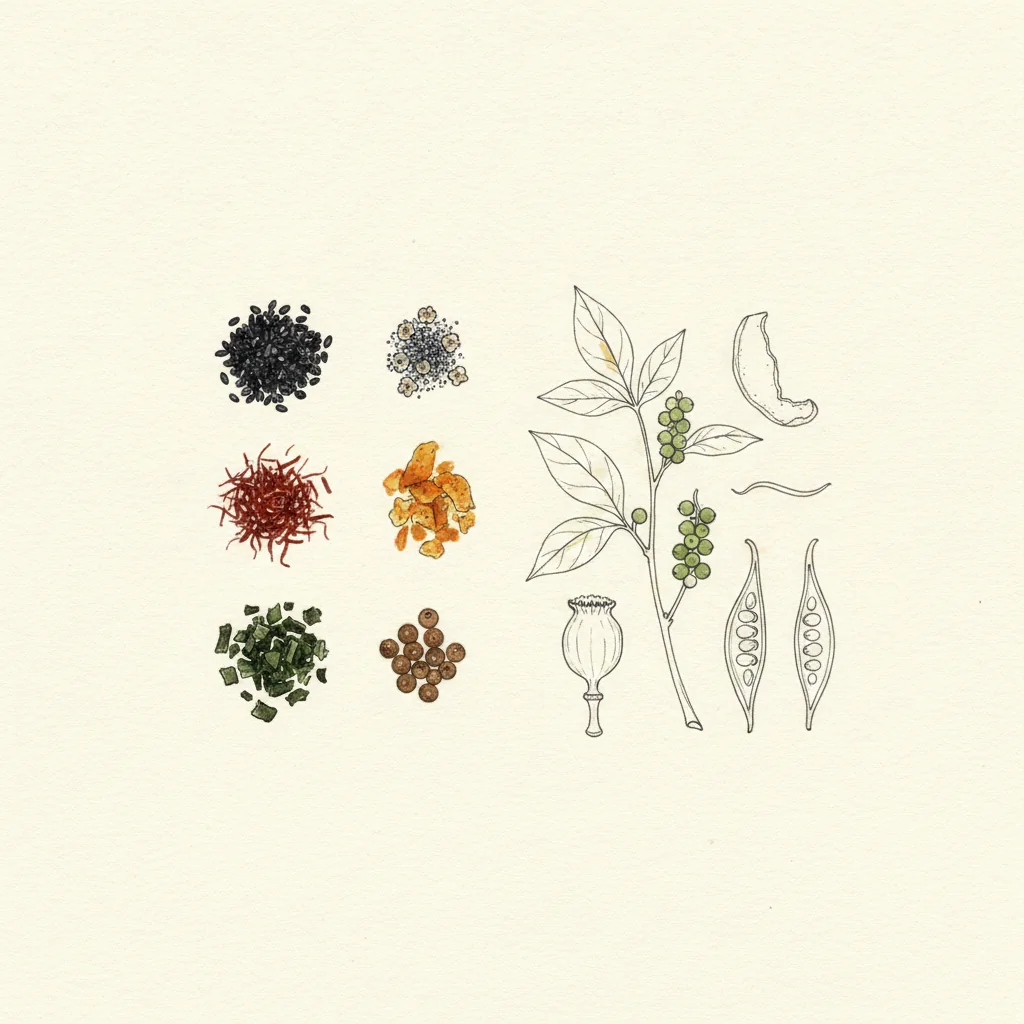
Shichimi means "seven flavors": Japanese chili, sanshō pepper, roasted orange peel, black and white sesame, nori, hemp and poppy seed. It was first sold as a digestive remedy at the Yagenbori apothecary in 17th-century Edo, and it is still a table condiment, not a cooking spice. Sprinkle it raw on udon or yakitori at the very end — cook it and the citrus and nori vanish. The S&B Nanami bottle runs about $5 and is the easy starter.
Spice · Blend
Shichimi Togarashi
Born in Edo (now Tokyo) at the Yagenbori apothecary; chili itself grown in Nagano and nationwide, blended by houses across the country, Japan
toasted citrus peel · nutty sesame · dry chili heat
Aromatic profile
| Family | composed blend |
|---|---|
| Intensity | ●●●○○ (5/10) |
| Main notes | toasted citrus peel · nutty sesame · dry chili heat |
| Secondary notes | marine nori · tingling sanshō · warm poppy and hemp seed |
| Mouthfeel | a bright citrus-and-chili lift up front, then a faint sanshō tingle, never a flat burn |
| Finish length | short to medium, a clean toasted-sesame fade |
Culinary use
- When to add : sprinkled raw at the table, off the heat, as a finishing dust — never bloomed in fat like a cooking blend
- Dosage : a pinch per bowl, about 1/4 teaspoon, added at the table to taste
- Ideal pairings : udon and soba in hot broth, gyudon beef bowls, yakitori and grilled skewers, miso soup, tempura, grilled salmon and tofu
- Avoid with : delicate desserts, long braises where the citrus and nori cook out, smooth cream sauces
The grain in detail
Shichimi togarashi (七味唐辛子, "seven-flavor chili") is Japan's everyday table blend, and the count is the whole identity: seven components, balanced so no single one dominates. The constants are togarashi (Japanese red chili) for heat, sanshō for the citrusy tingle, roasted mandarin or orange peel (chimpi) for brightness, black and white sesame for nut and body, nori or aonori for a marine note, and hemp (asanomi) and poppy (keshi) seed for texture and warmth. Ground ginger and shiso turn up in regional recipes. There is no single formula — the three reference houses each lean a different way. Yagenbori, the Edo original, keeps a punchy, chili-forward balance. Shichimiya Honpo in Kyoto, founded in 1655, builds a more aromatic, sanshō-and-citrus blend tuned to the soft Kyoto palate. Yawataya Isogoro in Nagano, the chili-growing heartland, pushes a hotter, coarser grind. The catch most Western cooks miss is the job: shichimi is a finishing condiment, full stop. The orange peel and nori are volatile, the sesame is already toasted, and the sanshō tingle dies under sustained heat — so this goes on at the table, raw, off the flame. Dust it into a simmering pot and you have paid for citrus and seaweed that boiled away an hour ago. Use it the way it is meant: a pinch over a bowl of hot udon, on gyudon, on yakitori straight off the coals, on grilled salmon or a bowl of miso soup. Don't confuse it with ichimi togarashi, which is plain ground chili and nothing else, or with the generic "togarashi" blends some Western brands sell, which often drop the sanshō and the nori. Buy a blend that names its seven and smells of citrus and toasted sesame the moment the bottle opens; a flat, dusty one has lost the peel and the seaweed and is mostly just heat.
History & origin
Shichimi was created around 1625 by Tokuemon, founder of the Yagenbori apothecary in the Ryōgoku district of Edo, who blended medicinal herbs and chili into a tonic sold near the Yagenbori temple. It caught on as a flavoring for the soba and udon that fed the working city, and spread along the Tōkaidō road. The two other historic houses followed: Shichimiya Honpo opened by Kiyomizu temple in Kyoto in 1655, and Yawataya Isogoro in Nagano in 1736. Each codified its own seven-spice ratio as a house signature passed down for centuries. The blend carries no protected designation; it is defined by the count of seven and the maker's hand, not by an appellation.
Indicative price
Reference format : 15 g (0.52 oz) bottle — from $4.00 to $12.00 (median : $6.00).
Storage
Airtight, opaque shaker away from light and heat. The citrus peel and nori fade first, so buy small and use within about 6 to 9 months; the toasted sesame keeps it from staling fast, but a flat nose means it is past its best.
Where to buy?
Where to buy it
Links checked on
| Merchant | Price | Action |
|---|---|---|
| Amazon US | — | Amazon US |
| Sous Chef UK | — | Sous Chef UK |
Prices may vary depending on current promotions on the merchant site.
Alternatives if unavailable
Tags
- Japan
- blend
- seven spice
- togarashi
- sanshō
- table condiment
Frequently asked questions
- How do you store Shichimi Togarashi?
- Airtight, opaque shaker away from light and heat. The citrus peel and nori fade first, so buy small and use within about 6 to 9 months; the toasted sesame keeps it from staling fast, but a flat nose means it is past its best.
- What dosage for Shichimi Togarashi?
- a pinch per bowl, about 1/4 teaspoon, added at the table to taste
- When should you add Shichimi Togarashi in cooking?
- It's best used sprinkled raw at the table, off the heat, as a finishing dust — never bloomed in fat like a cooking blend.
- What should you avoid pairing Shichimi Togarashi with?
- Avoid with: delicate desserts, long braises where the citrus and nori cook out, smooth cream sauces.
Go further
The dishes where this shichimi togarashi shines
Also a recommended alternative for
See every dish where this product is mentioned →
Other spices to discover
Featured in these gift sets
Page prepared according to our methodology. Purchase links marked sponsored and liable to earn a commission — details on our Affiliations page.