
Comparison
Dukkah vs furikake: which seed topping?
Pick by the plate. Egyptian dukkah — hazelnut, sesame, coriander, cumin — is a coarse, nutty crunch for bread and oil, eggs and roast vegetables. Furikake — nori, sesame, bonito, salt — is briny umami built for rice and grilled salmon. Both are last-second, never cooked. Dukkah for crunch, furikake for the sea.
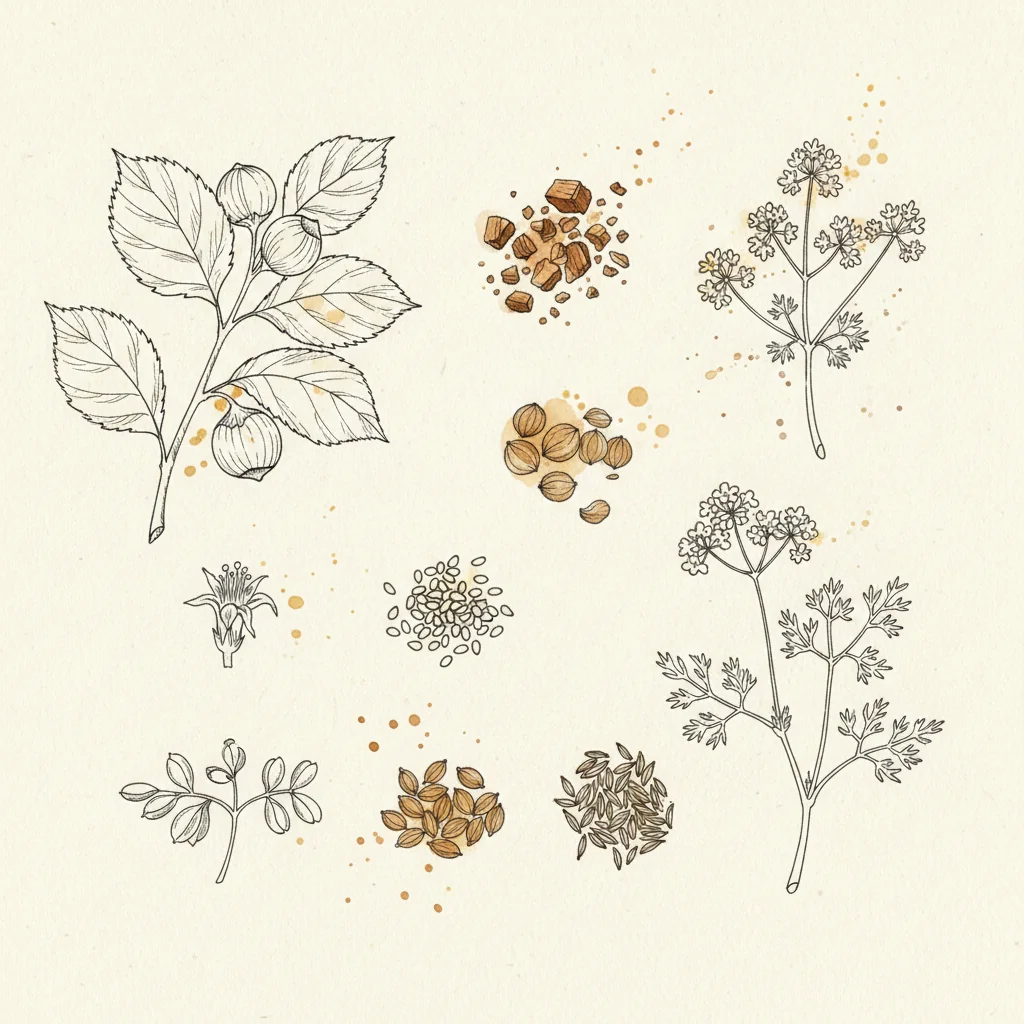
Spice · Blend
Egyptian Dukkah
Cairo and the Nile Delta, where it is a street-food and home-pantry staple eaten with bread and oil, Egypt
toasted hazelnut · warm sesame · earthy cumin
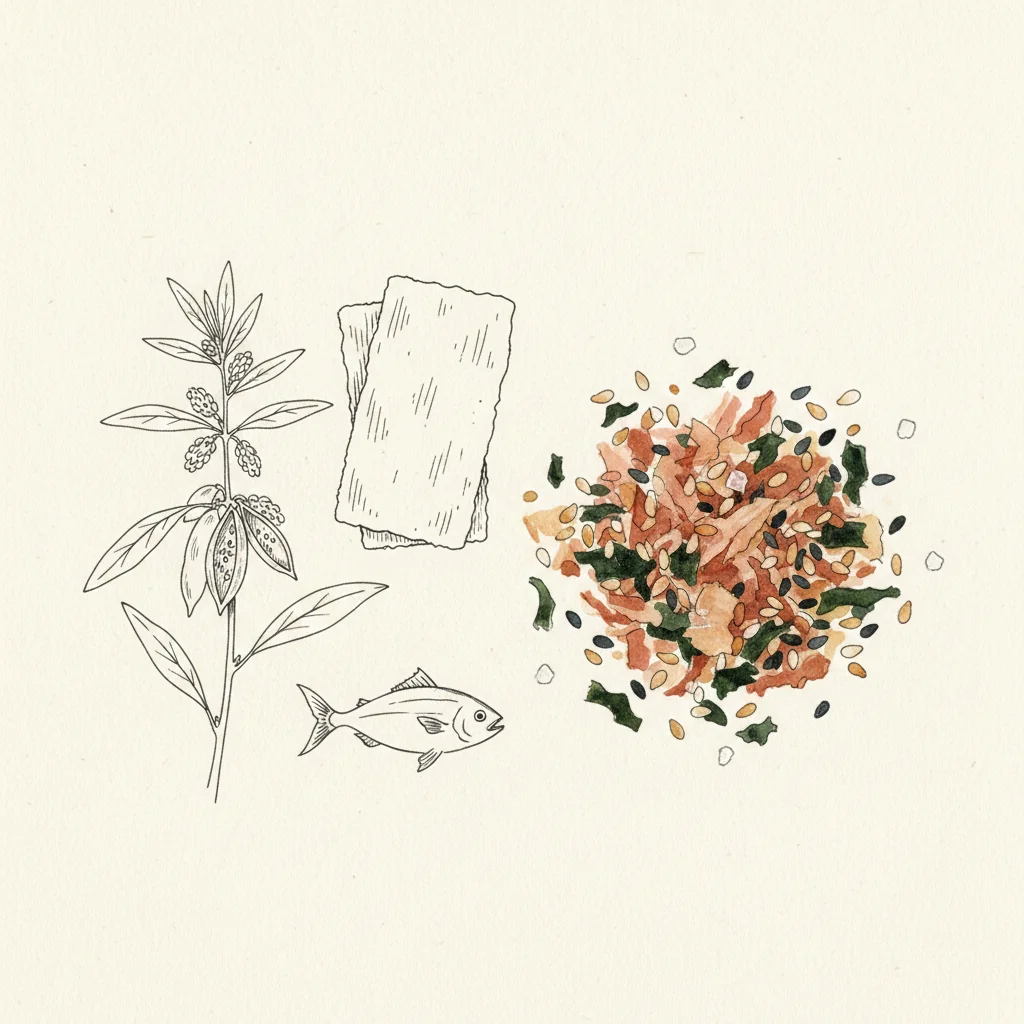
Spice · Blend
Furikake
Kumamoto Prefecture (industrial birthplace, Marumiya 1959) and nationwide, Japan
briny iodine from nori · deep bonito umami · toasted sesame
Our verdict
Dukkah for nutty crunch on bread and vegetables; furikake for briny umami on rice.
At a glance
| Criterion | Egyptian Dukkah | Furikake |
|---|---|---|
| Origin | Egypt — Cairo and the Nile Delta | Japan — born in Kumamoto, Marumiya 1959 |
| What it is | Toasted nut-and-seed blend: hazelnut, sesame, coriander, cumin | Composed blend: nori, toasted sesame, bonito, salt |
| Profile | 5/10 — coarse, crumbly, roasted-nut warmth | 5/10 — salty-umami with sesame crackle, no heat |
| Main notes | Toasted hazelnut, warm sesame, earthy cumin | Briny nori iodine, deep bonito umami, toasted sesame |
| Best use | Oiled flatbread, eggs, labneh, roasted vegetables, lamb | White rice, onigiri, grilled salmon, eggs, popcorn |
| Price | ~$9 for a 2 oz / 55 g jar | ~$9 for a ~50 g jar (basic bottle ~$6, Jacobsen ~$12) |
| Value | Buy small and fresh — the nuts go rancid in 3 to 6 months | A teaspoon seasons a whole rice bowl; basic bottles are cheap |
When to choose Egyptian Dukkah
Choose dukkah when you want texture — coarse, nutty, crumbly crunch — rather than a savory wash. It's Egypt's toasted nut-and-seed condiment, hazelnut or almond with sesame, coriander and cumin, crushed with salt and pepper, and the whole point is that it's a texture, not a spice. You eat it dry, dipping oiled bread into it, or scatter it at the last second over food. Four scenarios where dukkah is the right pick. First: warm flatbread torn and dipped first in good olive oil, then into a bowl of dukkah — the original street-food move. Second: a soft-boiled or fried egg, where the roasted-nut warmth meets the runny yolk. Third: roasted carrots, cauliflower or squash, where the crunch lands against soft, caramelized flesh. Fourth: grilled or seared lamb, where the cumin-coriander side reads as a dry rub you didn't cook in. It also turns labneh, hummus and avocado toast into something with bite. The one rule: never cook it in. The crunch is everything, so it goes on raw at the very end — added to a hot sauce or sent back under heat, it goes soft and loses its reason to exist. A generous tablespoon per portion, scattered at the table, or set out a small bowl alongside one of olive oil for dipping. Where dukkah parts ways with furikake is the flavor axis entirely: it's nutty and earthy, with no marine or umami note at all, so it belongs to bread, eggs, vegetables and lamb, not to a bowl of rice. The catch is freshness, and it's a real one. Because dukkah is mostly nuts and seeds, the oils turn rancid within about 3 to 6 months of opening — far faster than a ground spice — and stale dukkah tastes of cardboard. So buy small, in a coarse blend (not a fine powder, which means it's over-processed), smell for fresh toasted nut before you commit, and refrigerate it in a hot climate. A 2 oz / 55 g jar runs about $9. Store it airtight and opaque, away from light and heat, and use it within months. If a blend smells dull or flat, it's already gone — toss it, because no amount of olive oil rescues rancid hazelnut.
When to choose Furikake
Choose furikake when the plate is rice — or wants the sea and a hit of umami. It's the dry Japanese rice seasoning of nori flakes, toasted white and black sesame, shaved bonito (katsuobushi) and salt, and the flavor is briny and umami the moment it hits warm rice. The mass-market version was born in 1959, when Marumiya in Kumamoto bagged the first commercial blend, Noritama. Four scenarios where furikake is the right pick. First: a bowl of plain white rice, the dish it was invented for, where one teaspoon turns it into a meal. Second: onigiri rice balls, mixed through or pressed on the outside. Third: grilled salmon, where the bonito doubles down on the fish's own umami. Fourth: scrambled eggs, steamed vegetables, even buttered popcorn — anywhere you want salty-marine crackle. Like dukkah, it's a finishing sprinkle, full stop: heat turns the nori bitter and flattens the bonito, so it never goes back under the broiler or into a sauce. The dosage matters more than with dukkah because the salt adds up fast — one teaspoon per bowl of rice (about 300 g), no more. Where it splits from dukkah is the entire flavor direction: furikake is marine, salty and umami-driven with no nuttiness or earthy spice, so it owns rice and fish but would taste wrong scattered on a roast carrot or torn flatbread. Price runs about $9 for a roughly 50 g jar; a basic Japanese bottle is closer to $6, while the Oregon-made Jacobsen blend is about $12 for a 1.73 oz jar. Because the sesame is oily, decant into an opaque glass jar after opening and keep it airtight and away from light — best within 6 months of opening, 12 months sealed. Some versions skip the bonito for a vegan nori-and-sesame blend, worth checking the label if that matters. If you already cook a lot of rice and grilled fish, furikake earns a permanent spot on the table; if your kitchen leans Mediterranean and nutty, dukkah is the one to reach for instead.
Where to buy?
Egyptian Dukkah
Links checked on
| Merchant | Price | Action |
|---|---|---|
| Amazon US | — | Amazon US |
| The Spice Way | — | The Spice Way |
| Sous Chef UK | — | Sous Chef UK |
Prices may vary depending on current promotions on the merchant site.
Furikake
Links checked on
| Merchant | Price | Action |
|---|---|---|
| Amazon US | — | Amazon US |
| Jacobsen Salt Co. | — | Jacobsen Salt Co. |
| Spicewalla | — | Spicewalla |
Prices may vary depending on current promotions on the merchant site.
Frequently asked questions
- Are dukkah and furikake interchangeable?
- No. They share a format — a dry, last-second seed sprinkle — but pull opposite directions. Dukkah is nutty and earthy for bread, eggs and roast vegetables; furikake is briny and umami for rice and grilled fish. Swap one for the other and the dish tastes off.
- Can either one be cooked into a dish?
- Neither. Both are finishing condiments added off the heat. Cook dukkah and you lose its crunch; cook furikake and the nori turns bitter while the bonito flattens. Scatter both at the very last second, on the plate.
- Which goes stale faster?
- Dukkah, by a clear margin. It's mostly nuts and seeds, so the oils turn rancid within 3 to 6 months of opening and stale dukkah tastes of cardboard. Furikake holds about 6 months open, 12 sealed — but decant it into opaque glass because the sesame is oily too.
- What's a fair price for each?
- About $9 for a 2 oz / 55 g jar of dukkah, and roughly the same for a 50 g jar of furikake — though a basic Japanese furikake bottle runs closer to $6 and a premium Oregon-made blend about $12. Buy small with both, since freshness fades fast.
The best pairings
With Egyptian Dukkah
With Furikake
Comparison prepared according to our methodology. Sponsored purchase links — see our affiliations.