
Egyptian Dukkah, toasted nut-and-seed condiment (hazelnut, sesame, coriander, cumin)
In brief — Dukkah is Egypt's toasted nut-and-seed condiment — hazelnut or almond, sesame, coriander and cumin, coarsely crushed with salt and pepper. It is a texture, not a spice: you eat it dry, dipping oiled bread into it, or scattering it over eggs, labneh and roasted vegetables at the last second. Never cook it in. Buy a fresh, coarse blend and use it within months — stale dukkah tastes of cardboard, and the nuts go rancid faster than ground spices fade. In the kitchen, it's best added added raw at the very end, sprinkled or used as a dip — its whole point is texture, so it is never cooked into a sauce and it pairs with warm flatbread dipped in olive oil, soft-boiled or fried eggs, labneh and thick yogurt. Recommended dosage: a generous tablespoon per portion, scattered at the table; or set out a small bowl alongside one of good olive oil for dipping. Expect from $6.00 to $14.00 per 2 oz / 55 g jar or pouch (median $9.00).
Origin : Cairo and the Nile Delta, where it is a street-food and home-pantry staple eaten with bread and oil, Egypt
« A texture, not a spice — buy it coarse and fresh or skip it. The nuts go rancid fast, so the supermarket jar that has sat a year tastes of cardboard. Fresh, it earns its crunch on eggs and bread. »
Dukkah is Egypt's toasted nut-and-seed condiment — hazelnut or almond, sesame, coriander and cumin, coarsely crushed with salt and pepper. It is a texture, not a spice: you eat it dry, dipping oiled bread into it, or scattering it over eggs, labneh and roasted vegetables at the last second. Never cook it in. Buy a fresh, coarse blend and use it within months — stale dukkah tastes of cardboard, and the nuts go rancid faster than ground spices fade.
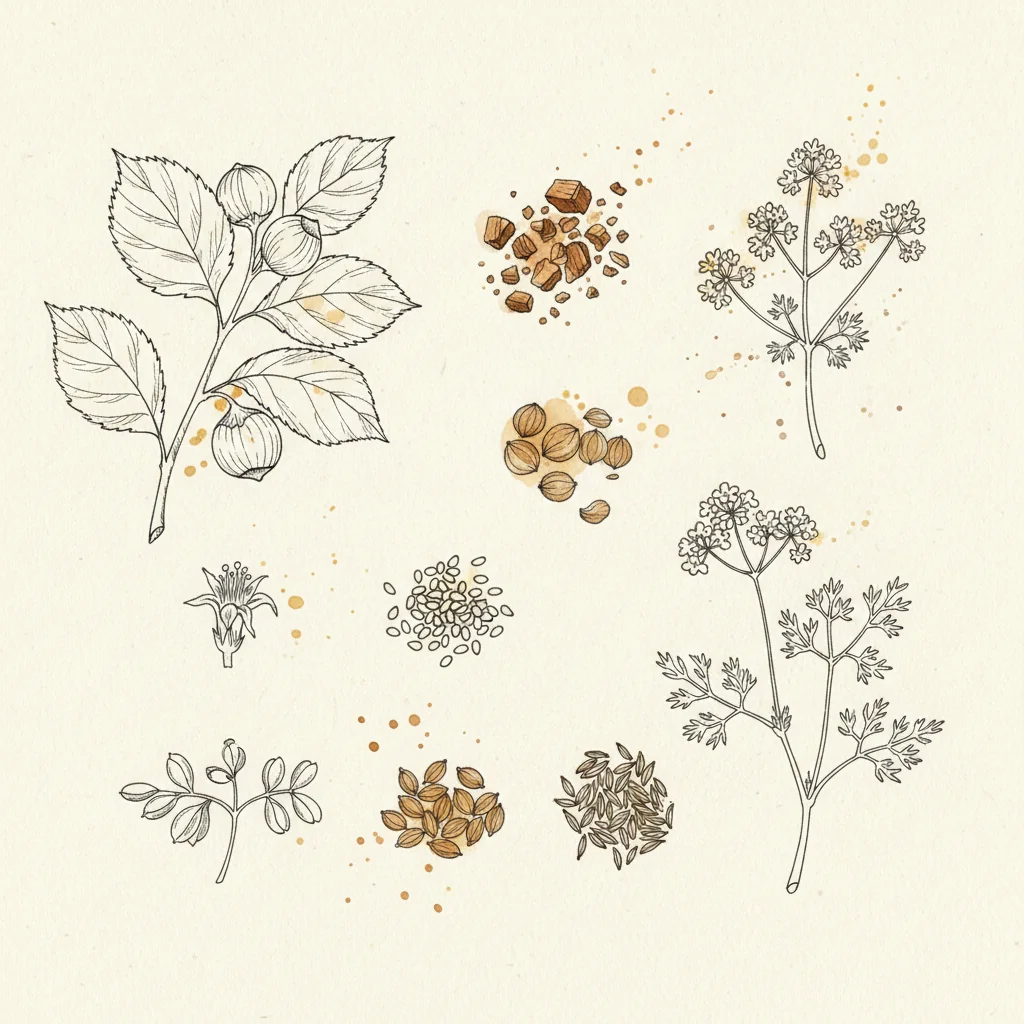
Spice · Blend
Egyptian Dukkah
Cairo and the Nile Delta, where it is a street-food and home-pantry staple eaten with bread and oil, Egypt
toasted hazelnut · warm sesame · earthy cumin
Aromatic profile
| Family | toasted nut-and-seed blend |
|---|---|
| Intensity | ●●●○○ (5/10) |
| Main notes | toasted hazelnut · warm sesame · earthy cumin |
| Secondary notes | citrusy coriander seed · cracked black pepper · savory salt |
| Mouthfeel | coarse and crumbly, nutty richness up front with a dry, savory crunch — never a fine powder |
| Finish length | medium, a roasted-nut warmth that fades clean |
Culinary use
- When to add : added raw at the very end, sprinkled or used as a dip — its whole point is texture, so it is never cooked into a sauce
- Dosage : a generous tablespoon per portion, scattered at the table; or set out a small bowl alongside one of good olive oil for dipping
- Ideal pairings : warm flatbread dipped in olive oil, soft-boiled or fried eggs, labneh and thick yogurt, roasted carrots, cauliflower and squash, grilled or seared lamb, hummus and avocado toast
- Avoid with : anything that goes back over heat after it is added, delicate raw fish, clean broths where the crunch is lost
The grain in detail
Dukkah (Arabic دقة, from the verb "to pound") is an Egyptian condiment of toasted nuts and seeds, coarsely crushed — not a powdered spice but a crumbly, savory rubble you eat for its crunch. The classic build is hazelnut or almond, sesame seed, coriander seed and cumin, with salt and black pepper; regional and house versions fold in chickpea, fennel, nigella, mint or dried chili. Everything is toasted separately, then pounded in a mortar just enough to break it down while keeping the texture coarse. Grind it to powder and you have ruined it — the whole point is the rubble. In Egypt it is breakfast and street food: a paper cone of dukkah and a small bottle of olive oil, with warm flatbread you dip first in the oil, then in the dukkah so it clings. Beyond bread it is a finishing condiment — scattered over soft eggs, swirled into labneh, pressed onto seared lamb, or thrown over roasted carrots and cauliflower for crunch. It always goes on raw, at the end, off the heat. Here is the catch on sourcing: because dukkah is mostly nuts and seeds, it goes rancid far faster than a ground spice. A jar that has sat on a shelf for a year tastes of stale oil and cardboard, no matter how good the recipe was. Buy small, buy recently made, and smell for fresh toasted nuts — not a flat, papery dustiness. In the US, The Spice Way makes an additive-free Egyptian blend, and the small-batch houses like Spicewalla and Burlap & Barrel carry their own versions; in the UK, Steenbergs blends an organic 55 g jar and Sous Chef stocks the Olives et Al and Terre Exotique blends. Honest dukkah looks coarse and uneven — you should see whole sesame seeds and broken nut pieces, never a uniform tan powder. If it pours like sand, it is over-ground or padded with filler.
History & origin
Dukkah is one of Egypt's oldest everyday foods, its name taken from the Arabic verb daqqa, "to pound" — a direct reference to the mortar work that defines it. It belongs to the Eastern Mediterranean and Levantine tradition of toasted seed-and-nut blends, alongside the related zaatar, but dukkah is distinctly Egyptian and built around nuts rather than dried herb. For centuries it was sold loose from street vendors in twists of paper, eaten with bread and oil by laborers and families as a cheap, portable, protein-rich meal. By its nature it carries no protected designation: it is a folk blend, defined by household and regional variation rather than a fixed recipe.
Indicative price
Reference format : 2 oz / 55 g jar or pouch — from $6.00 to $14.00 (median : $9.00).
Storage
Airtight, opaque jar away from light and heat. Because it is mostly nuts and seeds, the oils turn rancid within about 3 to 6 months of opening — far faster than a ground spice. Buy small, smell for fresh toasted nut, and refrigerate in hot climates.
Where to buy?
Where to buy it
Links checked on
| Merchant | Price | Action |
|---|---|---|
| Amazon US | — | Amazon US |
| The Spice Way | — | The Spice Way |
| Sous Chef UK | — | Sous Chef UK |
Prices may vary depending on current promotions on the merchant site.
Alternatives if unavailable
Tags
- Egypt
- Levant
- blend
- nut and seed
- condiment
- flatbread
Frequently asked questions
- How do you store Egyptian Dukkah?
- Airtight, opaque jar away from light and heat. Because it is mostly nuts and seeds, the oils turn rancid within about 3 to 6 months of opening — far faster than a ground spice. Buy small, smell for fresh toasted nut, and refrigerate in hot climates.
- What dosage for Egyptian Dukkah?
- a generous tablespoon per portion, scattered at the table; or set out a small bowl alongside one of good olive oil for dipping
- When should you add Egyptian Dukkah in cooking?
- It's best used added raw at the very end, sprinkled or used as a dip — its whole point is texture, so it is never cooked into a sauce.
- What should you avoid pairing Egyptian Dukkah with?
- Avoid with: anything that goes back over heat after it is added, delicate raw fish, clean broths where the crunch is lost.
Go further
The dishes where this egyptian dukkah shines
Also a recommended alternative for
As a complementary pairing with
See every dish where this product is mentioned →
Other spices to discover
Featured in these gift sets
Page prepared according to our methodology. Purchase links marked sponsored and liable to earn a commission — details on our Affiliations page.