
Comparison
Egyptian Dukkah vs Baharat
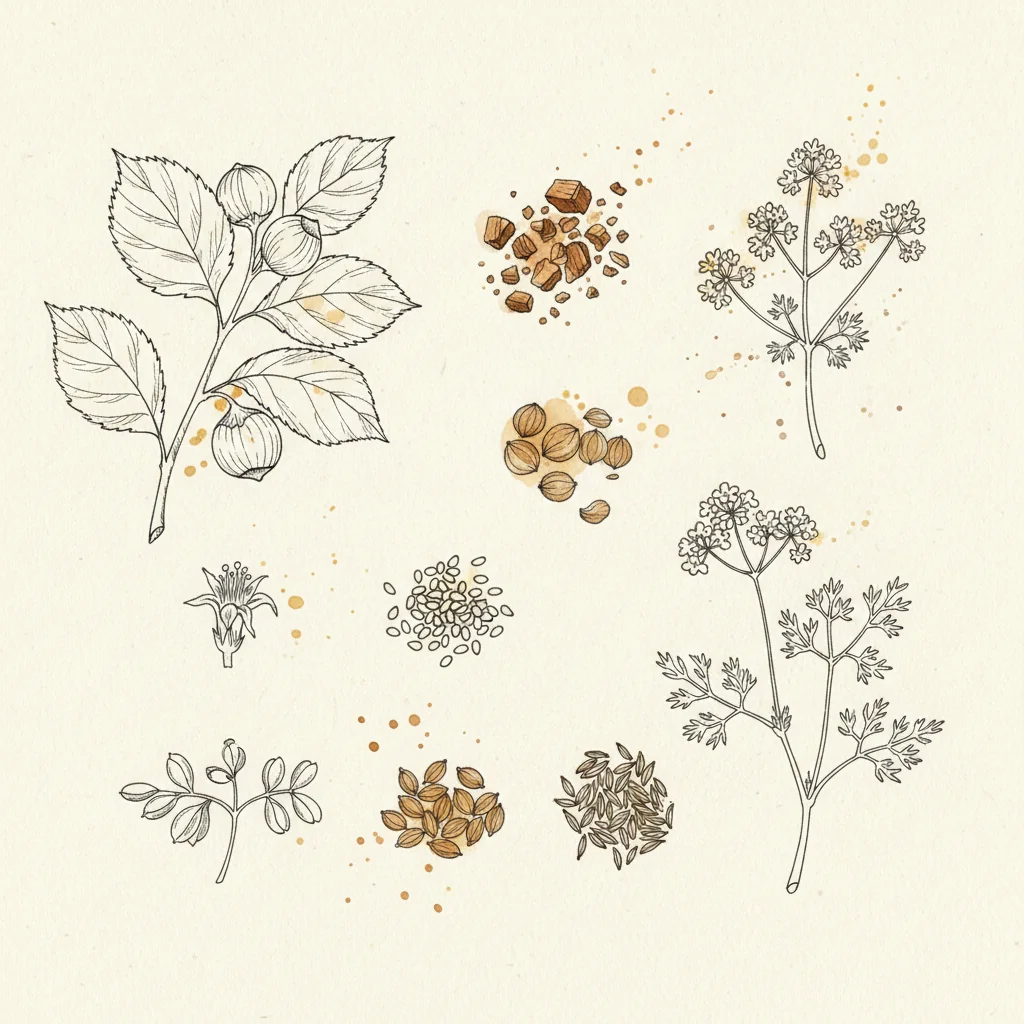
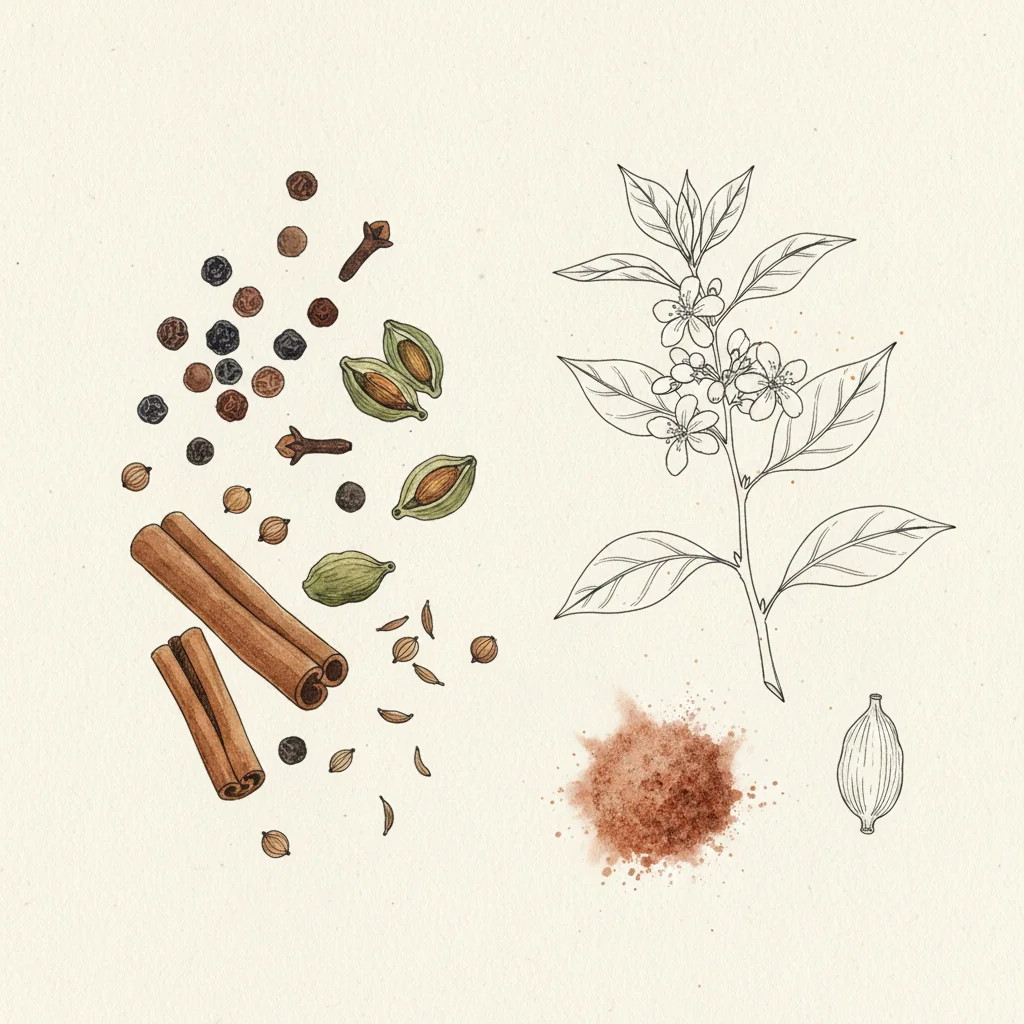
These are opposites. Dukkah is a coarse, raw nut-and-seed condiment — toasted hazelnut, sesame, coriander — eaten dry for texture, never cooked. Baharat is a fine warm cooking blend — pepper, allspice, cumin, clove — bloomed in fat or rubbed on meat before it cooks. Use dukkah to finish bread, eggs and roasted vegetables with crunch; use baharat to season and cook meat, stews and pilaf.
Spice · Blend
Egyptian Dukkah
Cairo and the Nile Delta, where it is a street-food and home-pantry staple eaten with bread and oil, Egypt
toasted hazelnut · warm sesame · earthy cumin
Spice · Blend
Baharat
Made across the Arab world, with distinct house recipes in Lebanon, Syria, Turkey and the Gulf states, Levant & Gulf
warm allspice and clove · black pepper bite · toasted cumin and coriander
Our verdict
At a glance
| Criterion | Egyptian Dukkah | Baharat |
|---|---|---|
| Egypt — Cairo and the Nile Delta | Levant and Gulf — house recipes across the Arab world | |
| Toasted hazelnut, sesame, earthy cumin, citrusy coriander | Warm allspice and clove, black pepper, toasted cumin and coriander | |
| Coarse and crumbly, 5/10 — nutty crunch, never a powder | Fine ground, 6/10 — rounded and warming, peppery | |
| Raw, sprinkled or dipped at the very end — never cooked | Bloomed in fat or rubbed on meat at the start | |
| Oil-dipped bread, eggs, labneh, roasted vegetables, lamb | Kofta, shawarma rubs, kibbeh, pilaf, roast chicken, stews | |
| 3–6 months once opened; nut oils turn fast | About 12 months; volatile oils fade after |
When to choose Egyptian Dukkah
Dukkah is the choice when you want texture and a raw, nutty finish, not a cooked-in seasoning. It's Egypt's toasted nut-and-seed condiment — hazelnut or almond, sesame, coriander and cumin, coarsely crushed with salt and pepper, never a fine powder. The whole point is the crunch: you eat it dry, dipping oiled bread into it, or scattering it over soft eggs, labneh, roasted carrots and cauliflower, seared lamb and avocado toast at the very last second. The one hard rule is that it's never cooked in — heat kills the crunch that's its reason to exist, so add it raw at the table, a generous tablespoon per portion, or set a small bowl beside one of good olive oil for dipping. The honest warning is shelf life: because it's mostly nuts and seeds, the oils turn rancid within 3 to 6 months of opening, far faster than a ground spice fades. Buy small, smell for fresh toasted nut, refrigerate in hot climates — stale dukkah tastes of cardboard. Where baharat builds a dish from the base, dukkah crowns the finished plate with bite.
When to choose Baharat
Baharat is the choice when you want warm seasoning cooked into the dish. Arabic for 'spices,' it's the all-purpose backbone of Levant and Gulf savory cooking — the equivalent of garam masala — built on black pepper, allspice, cumin, coriander, cassia, clove, cardamom and paprika. It's finely ground, rounded and warming, peppery up front with a sweet baking-spice tail. You build with it: rub it onto lamb and beef kofta, shawarma and kebab, work it into kibbeh, season rice and freekeh pilaf, roast chicken, deepen lentil soup. The rule is to bloom it in fat at the start or rub it on meat before cooking — never dust it raw, where it tastes dusty and flat, which is exactly the opposite of how dukkah is used. About a tablespoon per pound of ground meat, or a teaspoon for a pot serving four. It keeps longer than dukkah too, about 12 months before the volatile oils fade, since it has no perishable nut content. At about $7 a jar, it's the warm cooking foundation dukkah was never meant to be.
Where to buy?
Egyptian Dukkah
Links checked on
| Merchant | Price | Action |
|---|---|---|
| Amazon US | — | Amazon US |
| The Spice Way | — | The Spice Way |
| Sous Chef UK | — | Sous Chef UK |
Prices may vary depending on current promotions on the merchant site.
Baharat
Links checked on
| Merchant | Price | Action |
|---|---|---|
| The Spice Way (Amazon US) | — | The Spice Way (Amazon US) |
| Burlap & Barrel | — | Burlap & Barrel |
| Steenbergs UK | — | Steenbergs UK |
Prices may vary depending on current promotions on the merchant site.
Frequently asked questions
- Can dukkah and baharat be swapped?
- No. Dukkah is a coarse, raw, nutty condiment for finishing, and baharat is a fine warm blend for cooking. They enter the dish at opposite moments and serve different purposes — texture versus seasoning. Cooking dukkah destroys its crunch; sprinkling baharat raw leaves it dusty.
- Which can I cook with?
- Baharat — it's made to be bloomed in fat or rubbed on meat before cooking, which releases its volatile oils. Dukkah is strictly a raw, last-second condiment; heat kills the crunch and toasts the nuts to bitterness. Add dukkah only at the table.
- Which goes stale faster?
- Dukkah, by a wide margin. Its nuts and seeds turn rancid within 3 to 6 months of opening, while baharat holds about 12 months. Buy dukkah small and smell it before each use; baharat is more forgiving but still best bought in modest amounts.
- Do they taste anything alike?
- They share toasted cumin and coriander, so there's a faint family resemblance. But dukkah leads with toasted hazelnut and crunch, while baharat leads with warm allspice, clove and pepper. One is nutty and textural, the other warm and aromatic — close on paper, far apart on the plate.
The best pairings
With Egyptian Dukkah
With Baharat
Comparison prepared according to our methodology. Sponsored purchase links — see our affiliations.