
Comparison
Nigella seeds vs star anise: what's the difference?
They aren't rivals, they're opposites. Nigella seeds are a finishing sprinkle: toasted onion and hazelnut, scattered raw on naan or labneh. Star anise is an early-simmer spice: a tenacious licorice-anise trail that defines pho and five-spice. One you add at the end, the other at the start. Pick by the dish, not the jar.
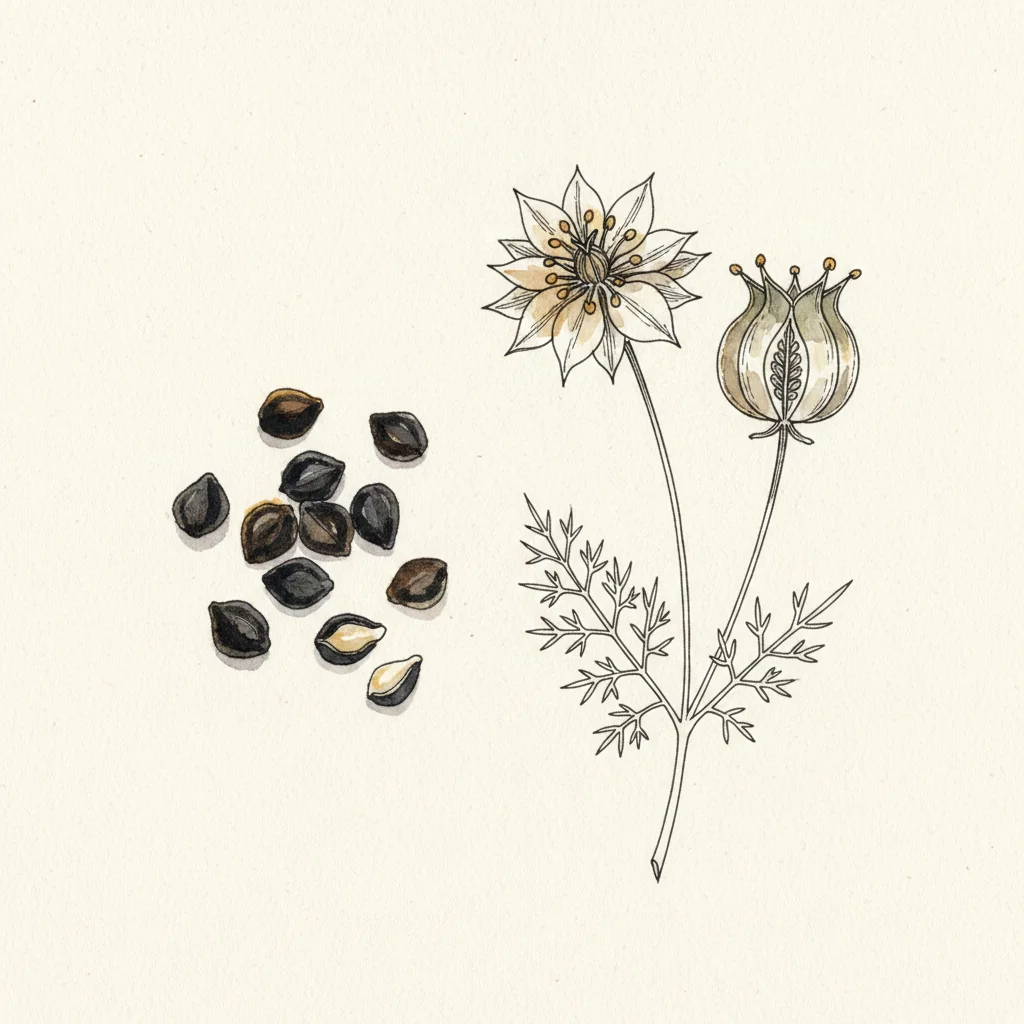
Spice · Spice seed
Nigella Seeds (Black Cumin)
Nile Valley, Upper Egypt, Egypt
toasted onion · hazelnut · mild pepper
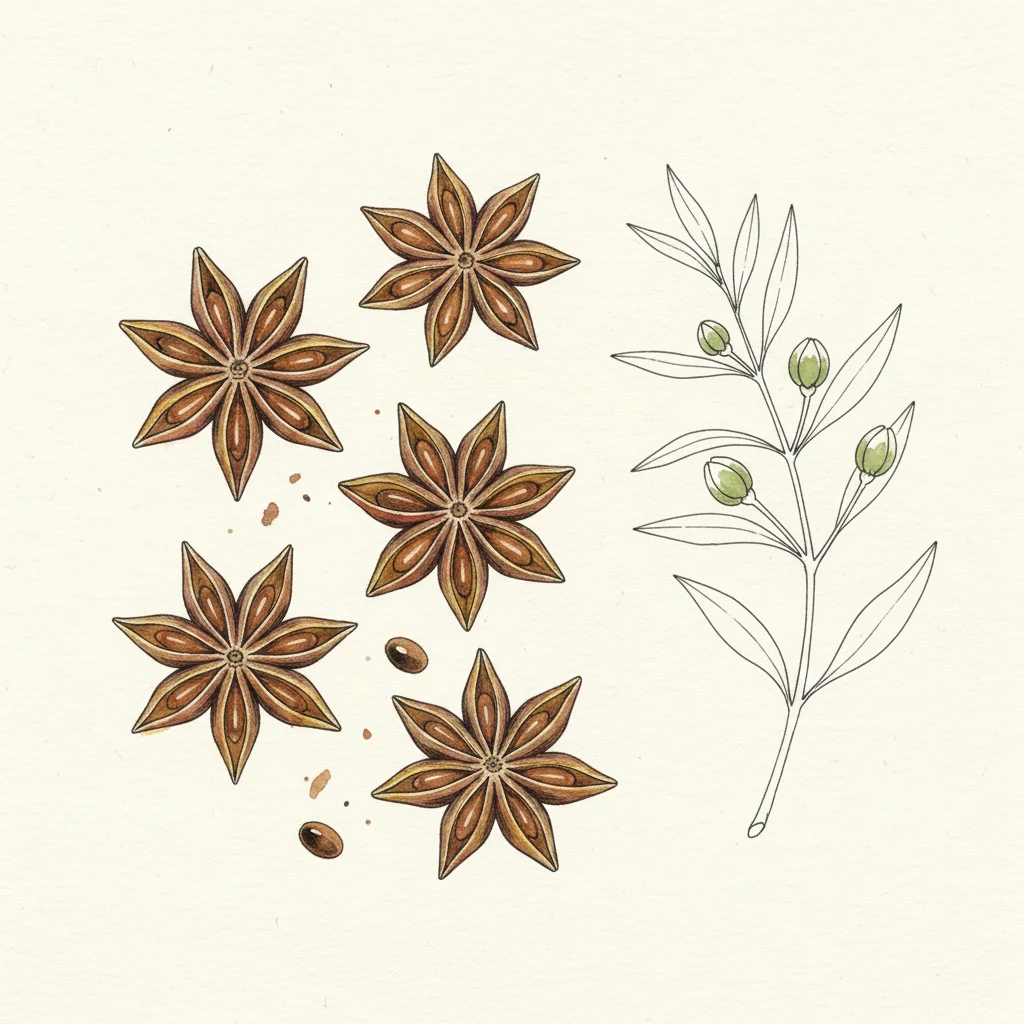
Spice · Whole spice
Star Anise
Lang Son province, on the Chinese border, Vietnam
anise · licorice · fennel
Our verdict
Nigella to finish a flatbread, star anise to build a broth.
At a glance
| Criterion | Nigella Seeds (Black Cumin) | Star Anise |
|---|---|---|
| Origin | Egypt, the Nile Valley (Nigella sativa) | Vietnam, Lang Son (Illicium verum) |
| Flavor | Toasted onion, hazelnut, mild pepper, a whisper of oregano | Anise, licorice, fennel, sweet wood |
| Intensity | 6/10 — gentle, nutty | 8/10 — round, sweet, very long |
| When to add | Raw finish, scattered on dough or the plate | Early in a long simmer or braise, never at the end |
| Best use | Naan, pita, labneh, roasted squash | Pho broth, five-spice, mulled wine, poached pears |
| Price | ~$7 / 100g jar | ~$10 / 100g of whole stars |
| Value | Cheap and lasts 24 months whole. Worth it. | Cheap for what it does, a bag lasts a year. Worth it. |
When to choose Nigella Seeds (Black Cumin)
Reach for nigella when you want texture and a savory top note on something that's already cooked, or about to bake. It's a finishing seed, full stop. Scatter a rounded teaspoon over a flatbread before it goes in the oven, or toast the pinch ten seconds in a dry pan and shower it over labneh, a cucumber-tomato salad, roasted sweet potato or a gentle lentil dal. The flavor is toasted onion and hazelnut with a soft peppery prickle that fades fast, and a clean little crunch up front that no ground spice gives you. That crunch is the whole reason it sits on naan and pita: it's a textural finish first, a flavor second. Don't try to cook with it in quantity, because the onion note flattens and you lose the point. Keep it off delicate raw fish, where that same onion note bulldozes the fish, and don't double it up with a heap of fresh dill, since the two muddy each other into something murky. The grain to buy is whole Egyptian seed from the Nile Valley, the most aromatic lots, in an airtight opaque jar where it holds 24 months because the hard shell protects the oils inside. Toast only what you're about to use. At about $7 a jar it's one of the cheapest upgrades on the spice shelf, and a little goes a long way. If your jar is labeled black cumin or kalonji, that's the same seed, but read on, because the name is a lie: nigella isn't cumin and never was, it's a buttercup-family seed that got saddled with the wrong common name. None of which matters at the counter, except that you should not swap it for actual cumin in a recipe. Buy it for the crunch and the toasted-onion lift, and use it raw.
When to choose Star Anise
Reach for star anise when you're building a liquid that will cook for a while. It's packed with anethole, the same molecule that scents anise seed and fennel, but at a far higher and far more heat-stable concentration, which is exactly why it's the spice for long-simmered broth and not a finishing sprinkle. Drop one to two whole stars into two liters of pho broth, into a red-braised pork belly, a duck stock or a pot of mulled wine, and let it infuse from the start. The licorice-and-fennel trail holds through hours of heat where a fresh herb would vanish. It also carries the sweet side of the kitchen: poached pears, apple compote, mulled cider. The catch is dosage, because overdo it and the licorice turns soapy and cold, so one or two stars per two liters is the ceiling, not a suggestion. Keep it away from dishes already loaded with raw fennel, away from a glug of pastis or absinthe that doubles the anise and tips it medicinal, and well away from delicate white fish, where it bulldozes everything on the plate. The grain to buy is whole Vietnamese stars from Lang Son, some of the best-formed and most fragrant, where whole stars hold their aroma 24 to 36 months. Skip the pre-ground, which fades fast, and grind only what you need for a five-spice blend. At about $10 to $13 for a 100g bag it's genuinely cheap for what it does, and a bag lasts a year of broths.
Where to buy?
Nigella Seeds (Black Cumin)
Links checked on
| Merchant | Price | Action |
|---|---|---|
| Amazon US | — | Amazon US |
| Burlap & Barrel | — | Burlap & Barrel |
| Sous Chef UK | — | Sous Chef UK |
Prices may vary depending on current promotions on the merchant site.
Star Anise
Links checked on
| Merchant | Price | Action |
|---|---|---|
| Amazon US | — | Amazon US |
| Burlap & Barrel | — | Burlap & Barrel |
| Steenbergs | — | Steenbergs |
Prices may vary depending on current promotions on the merchant site.
Frequently asked questions
- Can I swap nigella seeds for star anise?
- No, never. They taste nothing alike and work at opposite ends of the cook. Nigella is a raw toasted-onion finish; star anise is a licorice spice you simmer from the start. Swapping one for the other will wreck the dish in both directions.
- Is nigella the same as black cumin?
- It's sold as black cumin, but the name is a lie: nigella is Nigella sativa, a buttercup-family seed, not cumin at all. If a recipe calls for cumin, don't reach for nigella, and vice versa.
- Why does my star anise taste soapy?
- You used too much. Anethole goes cold and soapy past a certain dose, so stick to one or two whole stars per two liters of liquid. More is not better here.
- Which one keeps longer?
- Both hold well whole: nigella about 24 months, whole star anise 24 to 36 months. Ground star anise fades fast, so buy whole stars and grind only what you need.
The best pairings
With Nigella Seeds (Black Cumin)
With Star Anise
Comparison prepared according to our methodology. Sponsored purchase links — see our affiliations.