
Comparison
Shichimi Togarashi vs Furikake
Both are Japanese table seasonings sprinkled raw, but they do different jobs. Shichimi togarashi is a spice blend — chili, sanshō, citrus peel, sesame — for heat and a bright lift on noodles and skewers. Furikake is a rice seasoning — nori, bonito, sesame, salt — for briny umami with no heat. Want a spicy, citrusy kick: shichimi. Want savory umami on rice: furikake.
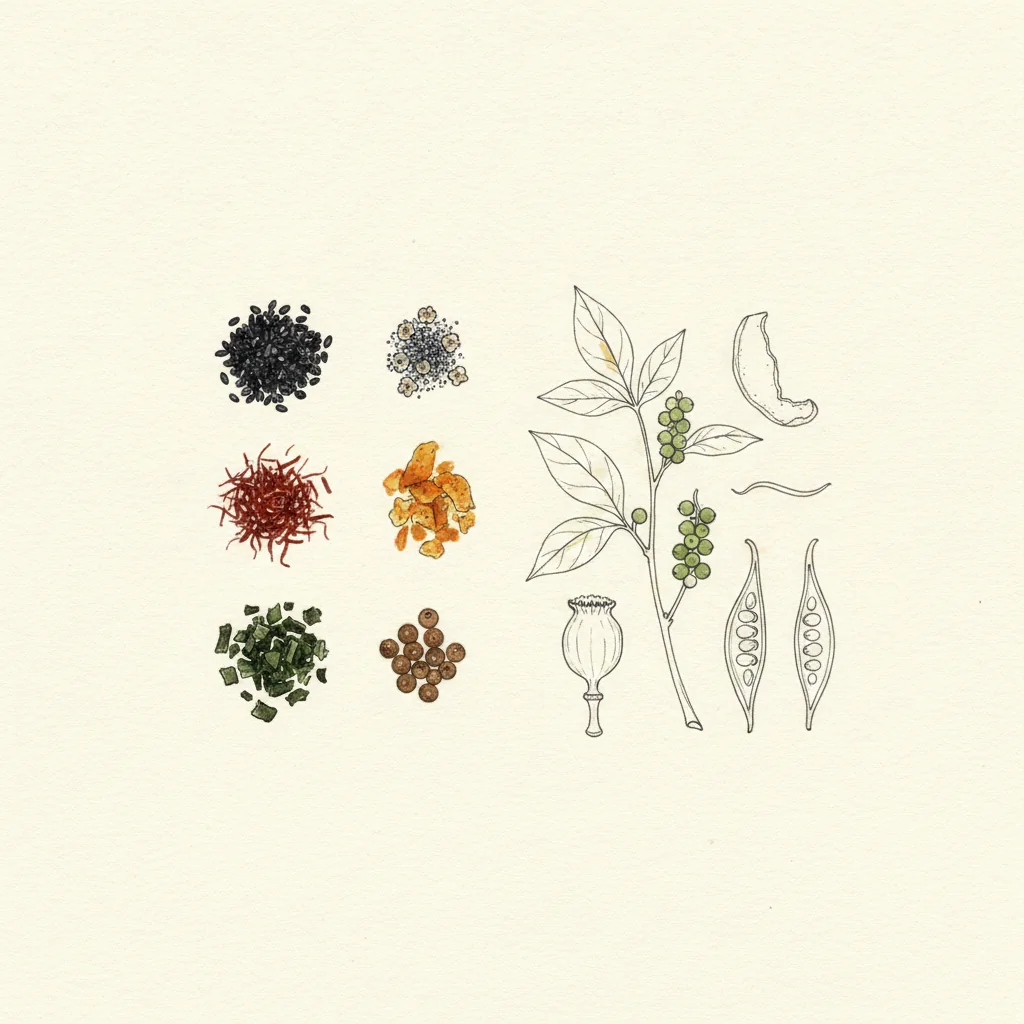
Spice · Blend
Shichimi Togarashi
Born in Edo (now Tokyo) at the Yagenbori apothecary; chili itself grown in Nagano and nationwide, blended by houses across the country, Japan
toasted citrus peel · nutty sesame · dry chili heat
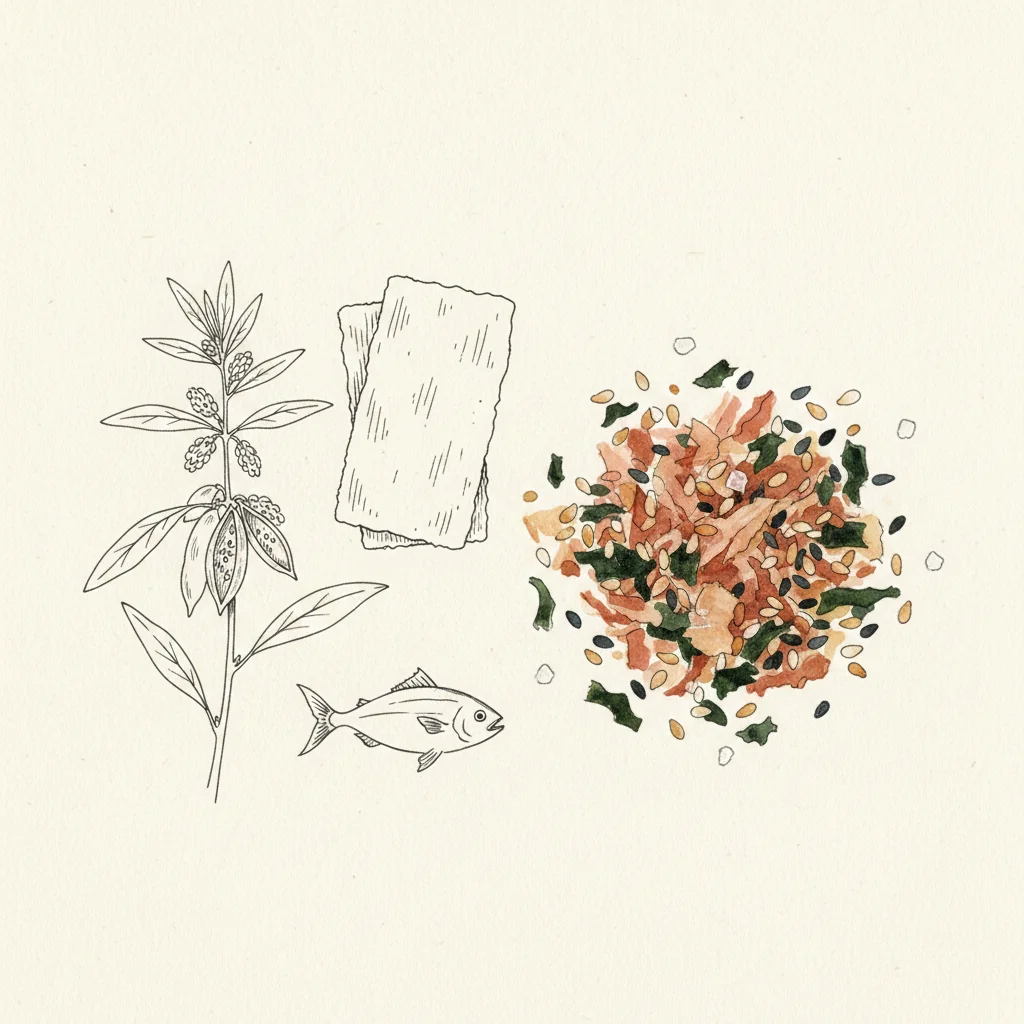
Spice · Blend
Furikake
Kumamoto Prefecture (industrial birthplace, Marumiya 1959) and nationwide, Japan
briny iodine from nori · deep bonito umami · toasted sesame
Our verdict
At a glance
| Criterion | Shichimi Togarashi | Furikake |
|---|---|---|
| Japan — born at the Yagenbori apothecary in 17th-century Edo | Japan — Kumamoto, Marumiya's 1959 Noritama | |
| Toasted citrus peel, nutty sesame, dry chili, tingling sanshō | Briny nori iodine, deep bonito umami, toasted sesame | |
| 5/10 — bright citrus-chili lift with a sanshō tingle | 5/10 — salty-umami crackle, no heat at all | |
| Udon, soba, gyudon, yakitori, miso soup, tempura | Plain rice, onigiri, grilled salmon, eggs, popcorn | |
| Sprinkled raw at the table, off the heat | Showered over the plated dish at the last second | |
| ~$5 for a 15 g bottle | ~$6 for a basic jar, ~$12 for the Jacobsen blend |
When to choose Shichimi Togarashi
Reach for shichimi togarashi when you want a spicy, citrusy lift. Shichimi means 'seven flavors': Japanese chili, sanshō pepper, roasted orange peel, black and white sesame, nori, hemp and poppy seed. It was first sold as a digestive remedy at the Yagenbori apothecary in 17th-century Edo and is still a table condiment, not a cooking spice. The character is a bright citrus-and-chili lift up front, then a faint sanshō tingle — never a flat burn — over noodles and skewers. It owns udon and soba in hot broth, gyudon beef bowls, yakitori, miso soup, tempura, grilled salmon and tofu. The rule is to sprinkle it raw at the table, off the heat, a pinch per bowl, about a quarter-teaspoon to taste. Don't bloom it in fat or stew it: cook it and the citrus peel and nori vanish, exactly as they do in furikake. The citrus and nori fade first in the jar too, so buy small and use within 6 to 9 months. The S&B Nanami bottle runs about $5 and is the easy starter — the chili-citrus kick furikake's pure umami can't deliver.
When to choose Furikake
Reach for furikake when you want savory umami on rice, not heat. It's the dry Japanese rice seasoning of nori flakes, toasted white and black sesame, shaved bonito (katsuobushi) and salt — the mass-market version born in 1959 when Marumiya in Kumamoto bagged the first commercial blend, Noritama. The flavor is briny and umami the moment it hits warm rice, salty with the crackle of sesame and no heat at all. It's a finishing sprinkle, full stop: a bowl of plain white rice, onigiri, grilled salmon, scrambled eggs, steamed vegetables, even buttered popcorn. Shower it over the plated dish at the last second — heat turns the nori bitter and flattens the bonito, so never cook it in. One teaspoon per bowl of rice, no more, because it's concentrated and the salt adds up fast. The sesame is oily, so decant into an opaque jar after opening and use within six months. A basic Japanese bottle runs about $6; the Oregon-made Jacobsen blend is closer to $12 for a 1.73 oz jar. Where shichimi brings chili and citrus, furikake brings pure briny umami — and no burn.
Where to buy?
Shichimi Togarashi
Links checked on
| Merchant | Price | Action |
|---|---|---|
| Amazon US | — | Amazon US |
| Sous Chef UK | — | Sous Chef UK |
Prices may vary depending on current promotions on the merchant site.
Furikake
Links checked on
| Merchant | Price | Action |
|---|---|---|
| Amazon US | — | Amazon US |
| Jacobsen Salt Co. | — | Jacobsen Salt Co. |
| Spicewalla | — | Spicewalla |
Prices may vary depending on current promotions on the merchant site.
Frequently asked questions
- Is shichimi togarashi spicy and furikake not?
- Yes. Shichimi carries real chili heat plus a sanshō tingle, while furikake has no heat at all — it's a salty-umami rice seasoning of nori, bonito and sesame. If you want a kick, shichimi; if you want savory depth without spice, furikake.
- Can I use one instead of the other?
- Only loosely. Both share sesame and nori and both get sprinkled raw, so a dash of either lifts plain rice. But shichimi adds chili and citrus, furikake adds briny bonito umami and salt. Swap them and the dish shifts from spicy-bright to savory-salty.
- Can I cook with either?
- No — both are raw, last-second table seasonings. Cook shichimi and the citrus peel and nori vanish; cook furikake and the nori turns bitter while the bonito flattens. Add either off the heat, at the table, to keep what you paid for.
- Which is the better starter buy?
- Either is cheap and easy. The S&B Nanami shichimi bottle runs about $5 and a basic furikake about $6, so pick by what you cook: shichimi if you eat noodles and skewers, furikake if you eat a lot of rice. Many kitchens keep both.
The best pairings
With Shichimi Togarashi
With Furikake
Comparison prepared according to our methodology. Sponsored purchase links — see our affiliations.